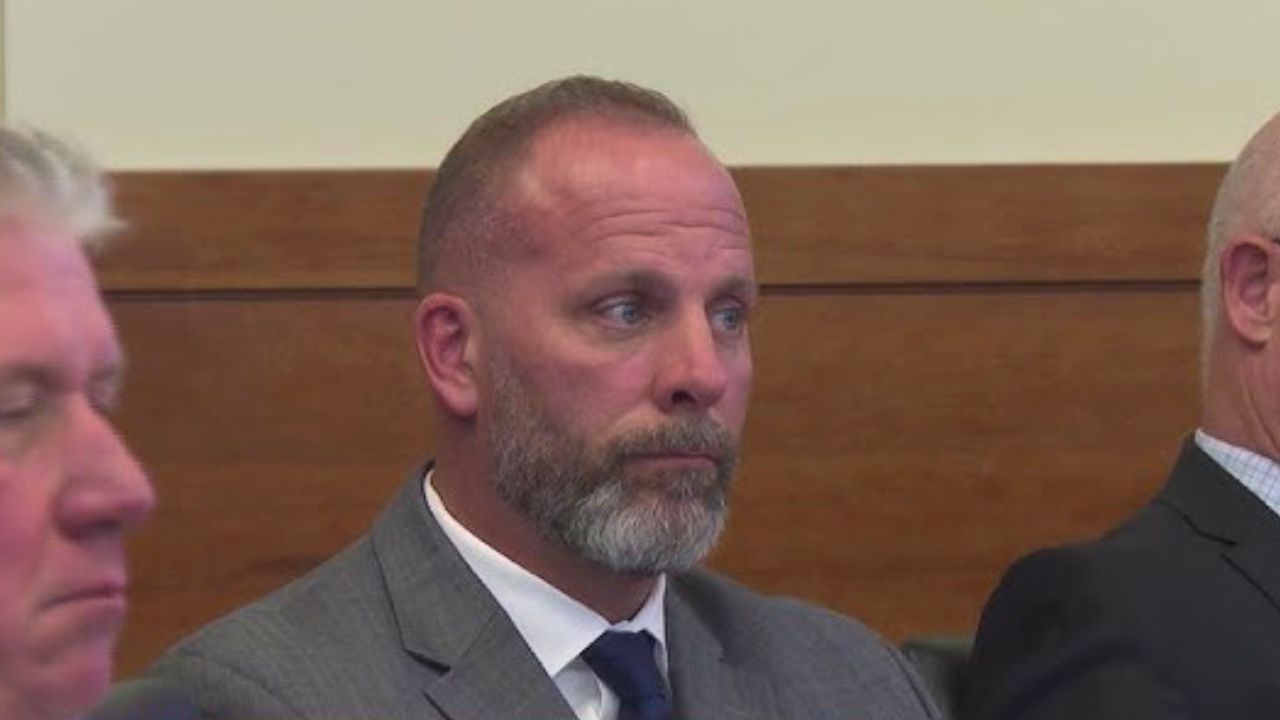
Former sheriff’s deputy convicted of reckless homicide after shooting Black man who was delivering sandwiches to his grandmother
A former Franklin County sheriff’s deputy has been convicted of reckless homicide for killing 23-year-old Casey Goodson Jr., a Black man who was returning home from a dentist appointment and carrying sandwiches for his grandmother. The verdict follows years of protests, legal delays, and a first trial that ended in a hung jury, turning a single encounter on a Columbus doorstep into a test of how the justice system handles police violence against Black residents.
Jurors rejected the most serious murder charge but found the ex-deputy criminally responsible for firing six shots at Goodson as he tried to enter his family’s home, a decision that now reverberates through debates over policing, race, and accountability in Ohio and beyond.
What happened
The case centers on the fatal shooting of Casey Christopher Goodson Jr. outside his family’s house in Columbus, Ohio. Goodson, who was 23, had just returned from a dental appointment and was carrying a bag of sandwiches for his grandmother when he was confronted by then Franklin County sheriff’s deputy Jason Meade. According to Goodson’s family, he was unlocking the door and holding a bag and his keys when Meade opened fire, striking him multiple times as he tried to enter the home.
Meade was working as part of a United States Marshals Service fugitive task force that day, but Goodson was not the subject of the operation. Authorities later said that Meade reported seeing Goodson wave a gun while driving past officers, then followed him to the house. Family members have consistently said they never saw a weapon in Goodson’s hands at the door, and that he collapsed just inside the threshold in front of loved ones.
Investigators recovered a handgun from the scene, and Meade’s defense argued that Goodson had been armed and that the deputy believed he faced an imminent threat. Prosecutors countered that Goodson was shot in the back and that Meade’s account did not match the physical evidence or eyewitness recollections from inside the home. They argued that the deputy fired recklessly into a man who was simply trying to go inside his own house.
After a lengthy investigation and public pressure in Columbus, a grand jury indicted Meade on charges of murder and reckless homicide. The first trial ended without a verdict when jurors could not reach agreement. A second trial went forward, and prosecutors again walked jurors through the final minutes of Goodson’s life, the bullet trajectories, and Meade’s own descriptions of the encounter.
During that retrial, jurors heard that Meade, who had since retired from the sheriff’s office and become a pastor, had previously spoken about using force in spiritualized terms. In recorded remarks, he talked about fighting in the line of duty and framed violence as part of a righteous struggle, comments that prosecutors used to challenge his judgment and mindset in the Goodson shooting.
Meade’s attorneys maintained that he followed his training, insisting that he believed Goodson posed a threat when he allegedly saw a gun and that he fired in self-defense. They emphasized that he had been assigned to a high-risk fugitive task force and argued that split-second decisions in that environment should not be second-guessed with hindsight.
After hearing testimony from law enforcement, medical experts, and Goodson’s relatives, the jury in the retrial acquitted Meade of murder but convicted him of reckless homicide. That verdict means jurors concluded that Meade’s actions caused Goodson’s death and that his conduct showed a heedless disregard for the risk he created, even if they were not convinced that he acted with the intent required for murder.
The conviction came in Franklin County Common Pleas Court and carries a potential prison sentence. Sentencing has not yet occurred, but the decision already marks a rare instance in which a former deputy has been held criminally liable for an on-duty shooting in the county.
Goodson’s relatives reacted to the verdict with a mix of relief and frustration. They had long called for a murder conviction, describing Casey as a gentle young man who loved his family and had no chance to defend himself on his own doorstep. Their attorneys have framed the case as a clear example of excessive force against a Black civilian who was not suspected of any crime at the time he was killed.
Local officials in Columbus had previously announced policy changes and training reviews in the wake of the shooting, but the family and community activists argued that accountability required more than administrative reforms. For them, the criminal case against Meade became a focal point for broader demands that officers who use deadly force without justification face real legal consequences.
National civil rights groups also took interest in the case, linking it to other high-profile shootings of Black men in and around their homes. The image of Goodson carrying sandwiches and keys, then dying at his own doorway, resonated with those who see a pattern of Black people being treated as threats in ordinary, everyday moments.
Why it matters
The conviction of Jason Meade on a reckless homicide charge matters on several levels, starting with the basic question of whether law enforcement officers can be held criminally responsible when their use of force crosses the line. In many police shooting cases, prosecutors decline to bring charges or juries acquit, often citing the legal standard that focuses on what a reasonable officer would have believed in the moment.
In this case, a jury concluded that Meade’s conduct was not just a tragic mistake but a crime. That finding sends a message to officers and agencies in Franklin County that jurors are willing to scrutinize split-second decisions, especially when the person killed was not the target of any investigation and was on their own property.
The outcome also speaks directly to racial justice concerns. Goodson was a young Black man, and his death joined a long list of cases that have fueled protests over policing in Black communities. Advocates argue that Black residents are more likely to be perceived as dangerous and to face aggressive tactics, even when they are engaged in everyday activities like driving home or unlocking a front door.
In Columbus, Goodson’s killing unfolded alongside other controversial incidents involving Black residents and local law enforcement. That context helped turn his name into a rallying cry for demonstrators who marched, held vigils, and demanded changes from city and county leaders. The verdict in Meade’s case does not resolve those broader tensions, but it provides a concrete example of the legal system responding to community outrage with a criminal conviction rather than only internal discipline.
The split verdict, with an acquittal on murder and a conviction on reckless homicide, also illustrates the difficulty of proving intent in police shooting cases. Jurors appeared unwilling to label Meade a murderer but still found that his decision to fire six shots at a man entering his own home was so careless and unjustified that it rose to the level of a felony. For legal analysts, that balance may hint at a path for prosecutors in future cases, where lesser homicide charges tied to recklessness or negligence might be more attainable than proving purposeful killing.
The case highlights how an officer’s words and prior statements can influence a jury’s view of their judgment. Meade’s transition from deputy to pastor, and his recorded comments about violence and faith, became part of the narrative in court. Prosecutors used those remarks to suggest that he approached his job with an aggressive, even crusading mindset, while the defense tried to portray him as a man of conscience who acted in good faith under pressure.
That clash over character and intent taps into a larger debate about police culture. Reform advocates argue that training and internal rhetoric sometimes encourage officers to see themselves as warriors in hostile territory, which can prime them to interpret ambiguous situations as threats. The Goodson case gave jurors a direct look at how one deputy talked about his work and invited them to decide whether that mentality contributed to a reckless decision to shoot.
The verdict also matters for the Goodson family’s pursuit of justice beyond the criminal courtroom. A conviction can influence related civil litigation, including any wrongful death claims against the county or the agencies involved in the task force. It may also shape how insurers and local governments evaluate the financial risks of failing to address problematic behavior or training gaps among deputies assigned to high-intensity operations.
At the community level, the outcome may affect trust in law enforcement and prosecutors. Some residents who doubted that any charges would ever stick against an officer now see a jury holding a former deputy accountable. Others, including some supporters of the Goodson family, may feel that the acquittal on murder falls short of full justice. That mix of reactions will likely influence how people view future incidents and whether they believe official promises about transparency and reform.
For law enforcement agencies, the case serves as a warning that shootings outside of active confrontations, especially at private homes, will draw intense scrutiny. Task forces that blend local deputies with federal partners may face renewed questions about oversight, communication, and the clarity of rules governing when officers can use deadly force against people who are not the primary targets of an operation.
The verdict may also feed into ongoing policy debates in Ohio over body cameras and documentation of use-of-force incidents. Goodson’s shooting was not captured on body camera video, which left investigators and jurors to sift through conflicting accounts, physical evidence, and limited eyewitness testimony. Advocates for more comprehensive recording requirements argue that such gaps make it harder to determine what truly happened and can prolong community anger.
Finally, the case resonates nationally because it encapsulates several themes that have animated protests over the past decade: a young Black man killed during a mundane task, a law enforcement officer describing a perceived threat that others say they never saw, and a legal process that stretches over years before reaching a partial measure of accountability. The Goodson family’s insistence that he was simply bringing food to his grandmother has become a powerful shorthand for the ordinary lives disrupted by police violence.
What to watch next
The next major milestone in the case will be Jason Meade’s sentencing on the reckless homicide conviction. The judge will weigh factors such as Meade’s lack of prior criminal record, his years of service as a deputy, his later work as a pastor, and the circumstances of the shooting. The Goodson family is expected to deliver victim impact statements that describe the emotional and practical toll of Casey’s death on his relatives and community.
Prosecutors are likely to argue for a significant prison term, emphasizing that Meade’s actions took the life of a young man who was not suspected of any crime and who died on his own doorstep. The defense, by contrast, may ask for leniency, pointing to Meade’s service history and his claim that he believed he was confronting an armed threat. The sentence will send a signal about how seriously Ohio courts treat reckless use of deadly force by former law enforcement officers.

Leo’s been tracking game and tuning gear since he could stand upright. He’s sharp, driven, and knows how to keep things running when conditions turn.