French soldier killed in northern Iraq; Macron says attack crossed a serious line
A French officer has been killed and six of his comrades wounded in a drone strike on a military base in northern Iraq, a loss that President Emmanuel Macron has condemned as a grave breach of the rules protecting foreign forces. The attack, which hit a site used for counterterrorism training, has sharpened debate over France’s exposure in the Middle East and prompted Macron to warn that those responsible have “crossed a serious line.”
The death of Officer Arnaud Frion, aged 42, is the first French combat fatality linked to the current Middle East war and has turned a relatively low‑visibility deployment into a test of how far Paris is willing to go to shield its troops while insisting its role remains purely defensive.
The attack in Iraqi Kurdistan
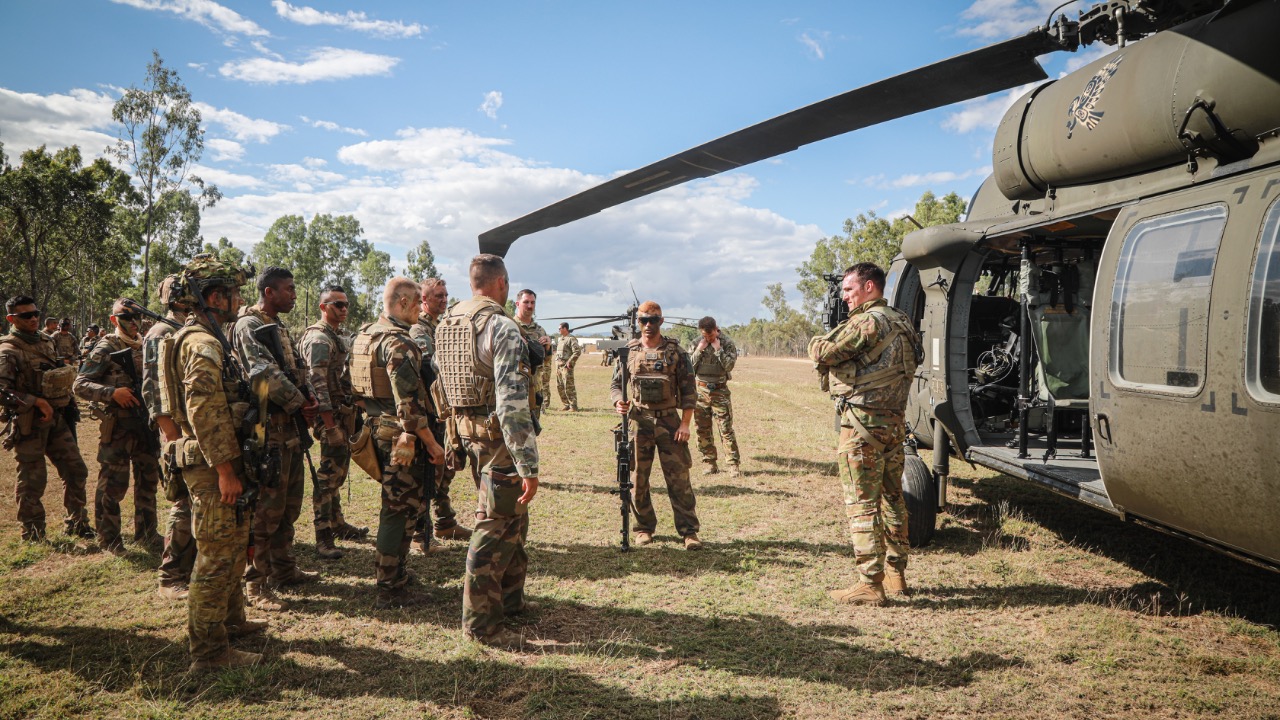
The strike took place at a base near Erbil in Iraq’s autonomous Kurdish region, where French troops were working with Iraqi partners on counterterrorism training. The French military said that drones hit the facility, which it described as a site that housed French soldiers taking part in joint operations with Iraqi forces against armed groups, including cells linked to the group that once called itself the Islamic State, according to an account shared by the Institut kurde report.
Military officials said the attack involved drones that targeted the coalition base, catching personnel during a period of training and routine activity. The use of unmanned aircraft has become a hallmark of regional conflict, and in this case the devices were able to reach a location that hosts international forces despite existing air defenses and security procedures. The strike unfolded in the semi‑autonomous Kurdish area, which has generally been considered more stable than other parts of Iraq but has increasingly been drawn into wider tensions.
Witness accounts from the base described explosions that tore through parts of the facility and left vehicles and infrastructure damaged. The assault highlighted the vulnerability of even well‑defended sites to relatively low‑cost drones, a pattern that has emerged in conflicts from Ukraine to Yemen and that is now firmly present in northern Iraq.
Who was Officer Arnaud Frion?
The French defense ministry identified the fallen officer as Arnaud Frion, a 42‑year‑old member of the French armed forces whose unit had been deployed to Iraq as part of the broader coalition effort against extremist groups. According to a statement cited in one report, Arnaud Frion, 42, in the drone strike and six other soldiers were wounded, some of them seriously.
Officer Arnaud Frion’s commanding officers described him as an experienced professional who had taken part in demanding overseas missions before being sent to Iraqi Kurdistan. His career reflected the profile of many French troops in the region, combining counterinsurgency experience from earlier deployments with specialized training in advising partner forces. His death has been framed by French leaders as a sacrifice made in the service of collective security far from home.
For the French armed forces, the loss of a senior officer in a theater that had been relatively quiet for their contingent carries symbolic weight. France has spent years shifting its military footprint from large‑scale combat operations in places like Mali toward advisory roles and targeted counterterrorism missions. The killing of Officer Frion underlines that even support roles in partner countries can carry lethal risk when regional tensions escalate.
Macron’s reaction: “unacceptable” and a line crossed
President Emmanuel Macron quickly confirmed the death and injuries, describing the attack as an act that could not be tolerated. In public remarks, he said that a French soldier had been killed and several others wounded in Iraq and that the strike on troops engaged in counterterrorism training was “unacceptable” and “unjustified.” He stressed that the ongoing conflict involving Iran and its network of armed groups “cannot justify” a drone strike on French personnel, according to details shared in a Politico summary.
In a separate appearance, Emmanuel Macron vowed that “nothing will deter us” from continuing the mission against terrorist threats and warned that those behind the strike had crossed a serious threshold by targeting French forces directly. He framed the attack as an assault not only on France but also on the international coalition presence in Iraq, which operates with the consent of the Iraqi government and in coordination with local commanders.
Macron’s language was calibrated to convey both outrage and resolve. By describing the incident as a serious line being crossed, he signaled that Paris views the strike as more than a random battlefield hazard. It is instead seen as a deliberate challenge to the legitimacy of foreign troops operating in Iraq under existing agreements, and a test of France’s willingness to respond.
France’s “strictly defensive” posture in the Middle East
Alongside his condemnation, Macron has been careful to restate that France’s presence in the region is limited in scope. French officials have said that their forces in the Middle East are deployed in a “strictly defensive” posture, focused on protecting French interests, deterring attacks on allies, and supporting Iraqi and Kurdish partners against extremist groups. The French military earlier emphasized that the troops targeted in Iraqi Kurdistan were involved in counterterrorism training and that France’s role in the current regional war is “strictly defensive,” a point highlighted in a French military account.
Macron has repeated that France is not seeking escalation with Iran or any other regional actor. Instead, he argues that French forces are in Iraq at the invitation of the Iraqi authorities and in coordination with the broader international coalition that has been present since the campaign against the group that once held large parts of Iraq and Syria. This framing is designed to insulate France from accusations that it is an occupying force or a direct participant in other regional confrontations.
At the same time, the attack has exposed the tension between a defensive mandate and the reality that French troops are operating in an environment where multiple armed factions, including Iraqi Shiite militias aligned with Iran, have the capability and sometimes the intent to strike foreign bases. The fact that drones were able to hit a coalition site despite defensive measures raises questions about whether France will need to adjust its posture or invest in additional protection for its contingents.
Iran‑linked militias and the Shahed drone threat
Initial assessments from French and coalition sources have pointed to an Iran‑made drone as the weapon used in the attack. One summary described the assault as an attack from a Shahed drone, with suspicion focusing on Iraqi Shiite militia networks that have access to such systems and have previously targeted foreign forces in Iraq. According to a Reuters account, the attack from a Shahed drone was attributed to Iraqi Shiite militia elements that oppose the continued presence of Western troops.
Shahed drones, which are associated with Iranian production and have been widely used in conflicts from Ukraine to the Gulf, provide a relatively inexpensive way to strike distant targets. Their use in Iraq reflects a broader trend in which Iranian‑linked groups rely on such systems to pressure foreign militaries without engaging in direct conventional confrontation. In this case, the drone was able to penetrate defenses around the base near Erbil and cause lethal damage inside a facility that hosts coalition personnel.
For France, the implication is clear. Even a limited advisory mission can be drawn into the shadow war between Tehran’s allies and Western forces. Macron’s insistence that the war involving Iran “cannot justify” attacks on French troops is a direct response to this dynamic, and an attempt to draw a line between France’s counterterrorism objectives and the wider confrontation between Iran and its adversaries.
First French death in the current Middle East war
French officials have described the killing of Officer Frion as the first French military death linked to the current phase of conflict in the Middle East. Macron publicly announced that this was France’s first soldier to be killed in the Middle East war, framing the loss as a stark reminder that the country’s involvement in regional security is not cost‑free. One detailed report noted that France’s first soldier died at a base about 40 km southwest of Erbil.
The fact that this is the first such fatality matters politically in Paris. For years, French public debate about military casualties has focused on operations in the Sahel, where multiple soldiers were killed in fighting against jihadist groups. The shift of attention to Iraq and the Middle East reflects both the geographic reorientation of French deployments and the changing nature of security threats that Paris believes could ultimately affect Europe.
Macron has argued that fighting terrorism in the Middle East helps prevent attacks on French soil, a line of reasoning that has shaped France’s participation in the coalition against the Islamic State group since its early days. The death of a French officer in Iraqi Kurdistan gives that argument a human face, and it may force a more explicit conversation within France about the balance between risk and strategic benefit.
Macron’s calls with Iraqi leaders and demand for protection
In the hours after the attack, Macron moved to shore up political support from Baghdad. He said he would speak with the prime minister of Iraq to demand clarification on how such an attack could occur on Iraqi territory against coalition forces that are present with the government’s consent. In a televised appearance, he indicated that he would have a conversation with the Iraqi leader “today in the afternoon” and stressed that French soldiers had become a target despite their defensive mission, according to remarks captured in a video address.
Shortly afterward, Macron thanked the Iraqi prime minister for measures taken to enhance the protection of French forces after the soldier’s death in Kurdistan. He reiterated that the attack was unacceptable but also reaffirmed France’s “purely defensive” stance in the conflict, as described in a summary of their.
These contacts highlight the delicate balance for Iraq’s leadership. On one side, Baghdad relies on support from the international coalition, including France, to maintain pressure on extremist cells and strengthen its own security forces. On the other, it faces domestic pressure from factions that oppose foreign troops and have the capacity to launch attacks. By publicly thanking the Iraqi prime minister for new protection measures, Macron signaled that Paris expects Baghdad to take concrete steps against groups that threaten French personnel.
Details on the wounded and the base near Erbil
Along with Officer Frion’s death, French authorities confirmed that six other soldiers were wounded in the attack. Some suffered serious injuries that required evacuation and specialized medical care. Earlier statements from France had indicated that six soldiers were hurt in a drone strike on a base in Iraq before the death was officially confirmed, an evolution later described in a Politico news brief.
The base itself lies near Erbil, capital of the Kurdistan region, and is part of the network of coalition facilities that host training, logistics, and advisory operations. A video report described how a French soldier died and several others were wounded in a drone attack on a military base near Airbil in the semi‑autonomous Kurdish region, underscoring the proximity of the strike to a major urban center that also hosts foreign consulates and international organizations, as seen in a news segment from.
For local Kurdish authorities, the attack is a reminder that their territory, which has often been portrayed as a haven of relative calm, is not insulated from the broader contest between regional powers and foreign militaries. The presence of French and other coalition troops in the area has long been seen as a stabilizing factor, but it also makes the region a potential target for those seeking to pressure Western governments.
France’s broader role in Iraq and the coalition
French troops in Iraq are part of a wider international coalition that emerged from the campaign against the Islamic State group and has gradually shifted into a training and advisory mission. France has maintained a contingent in the country, including special forces and trainers, who work with Iraqi and Kurdish units on counterterrorism operations, intelligence sharing, and capacity building.
Macron has portrayed this engagement as central to France’s security strategy. He argues that by helping Iraqi forces contain extremist groups, France reduces the risk of attacks on its own territory and contributes to regional stability. The French contingent in Iraqi Kurdistan is a visible symbol of this commitment, and the death of an officer there is likely to prompt questions in Paris about whether the mission’s mandate and resources are still adequate.
At the same time, France has been keen to differentiate its role from that of other Western powers with larger footprints. Officials stress that French operations are limited in scope and subject to Iraqi sovereignty. This emphasis on partnership rather than domination is meant to blunt criticism from Iraqi factions that oppose foreign troops and to reduce the political cost for Baghdad of hosting coalition forces.
Domestic reaction in France and political stakes
The news of Officer Frion’s death has resonated strongly in France, where memories of casualties in Afghanistan and the Sahel are still fresh. Political figures across the spectrum have expressed condolences to his family and solidarity with the wounded, while also pressing the government to explain how the attack could occur and what steps will be taken to prevent a repeat.
Macron, who has already faced domestic criticism over foreign policy decisions in Africa and Europe, now confronts scrutiny of his Middle East strategy as well. Opponents may question whether the benefits of the Iraq mission justify the risks, especially if the threat from Iranian‑linked militias grows. Supporters are likely to argue that abandoning partners in Iraq would embolden extremist networks and damage France’s credibility as a security actor.
Public opinion on foreign deployments in France tends to be sensitive to casualties. A single high‑profile death can shift the tone of debate, particularly if it appears linked to broader geopolitical rivalries that many citizens feel are remote from their daily lives. Macron’s insistence that the attack is “unacceptable” and that a serious line has been crossed is in part aimed at reassuring the French public that he will not allow their soldiers to be targeted with impunity.
International implications and coalition cohesion
The drone strike in Iraqi Kurdistan has implications beyond France. Other coalition members, including the United States and European partners, also maintain troops at bases in Iraq and Syria that could be vulnerable to similar attacks. The use of an Iran‑made Shahed drone and the suspected role of Iraqi Shiite militias will feed into ongoing discussions within the coalition about how to respond to such provocations without triggering a wider war.
Macron has positioned France as a voice for de‑escalation in the Middle East, even as he insists on the right to defend French forces. In comments summarized by Reuters reporting from, he has argued that France’s position in the Middle East is defensive and that the attack on its soldiers is both unacceptable and unjustified. That message is aimed at both regional actors and allies, signaling that Paris does not seek escalation but will not ignore assaults on its troops.
Within the coalition, the incident is likely to strengthen calls for improved air defenses, intelligence sharing, and coordination with Iraqi authorities to track and disrupt militia networks that possess drones. It may also encourage partners to present a united diplomatic front toward Tehran, pressing it to rein in allied groups that target foreign forces. At the same time, there is a shared interest in avoiding steps that could spiral into a direct confrontation with Iran.
Information flows and Kurdish perspectives
Local Kurdish institutions and media have played a role in documenting and reacting to the attack. The bnk.institutkurde.org archive and related platforms connected to the Institut kurde have circulated information about the incident in Iraqi Kurdistan and its impact on French forces stationed there. Kurdish outlets such as Kurd1 radyo and social media channels, including the Institut kurde pages on Facebook and Twitter, have amplified details about the strike and the broader context of French‑Kurdish cooperation.
For Kurdish authorities, France is an important political and security partner. French support for the Kurdistan region has included military training, political backing, and humanitarian assistance over the years. The death of a French officer on Kurdish soil is therefore seen not only as a tragedy but also as a challenge to a valued partnership. Local leaders have an incentive to work with Baghdad and Paris to prevent further incidents that could undermine international support.
At the same time, Kurdish media coverage reflects concern that their region is being drawn deeper into regional rivalries. The presence of foreign troops is a deterrent to some threats but also a magnet for others. Balancing these realities will be a central task for Kurdish and Iraqi leaders in the months ahead.
Media amplification and political messaging
The attack and Macron’s response have been widely circulated through global and regional news platforms, including video segments and social media posts. One clip titled “COALITION BASE HIT” showed how a French soldier was killed in a drone attack in Iraq’s autonomous Kurdistan region, with President Emmanuel Macron confirming the death and emphasizing that French troops are stationed there as part of a coalition presence, as presented in a video report on.

Leo’s been tracking game and tuning gear since he could stand upright. He’s sharp, driven, and knows how to keep things running when conditions turn.