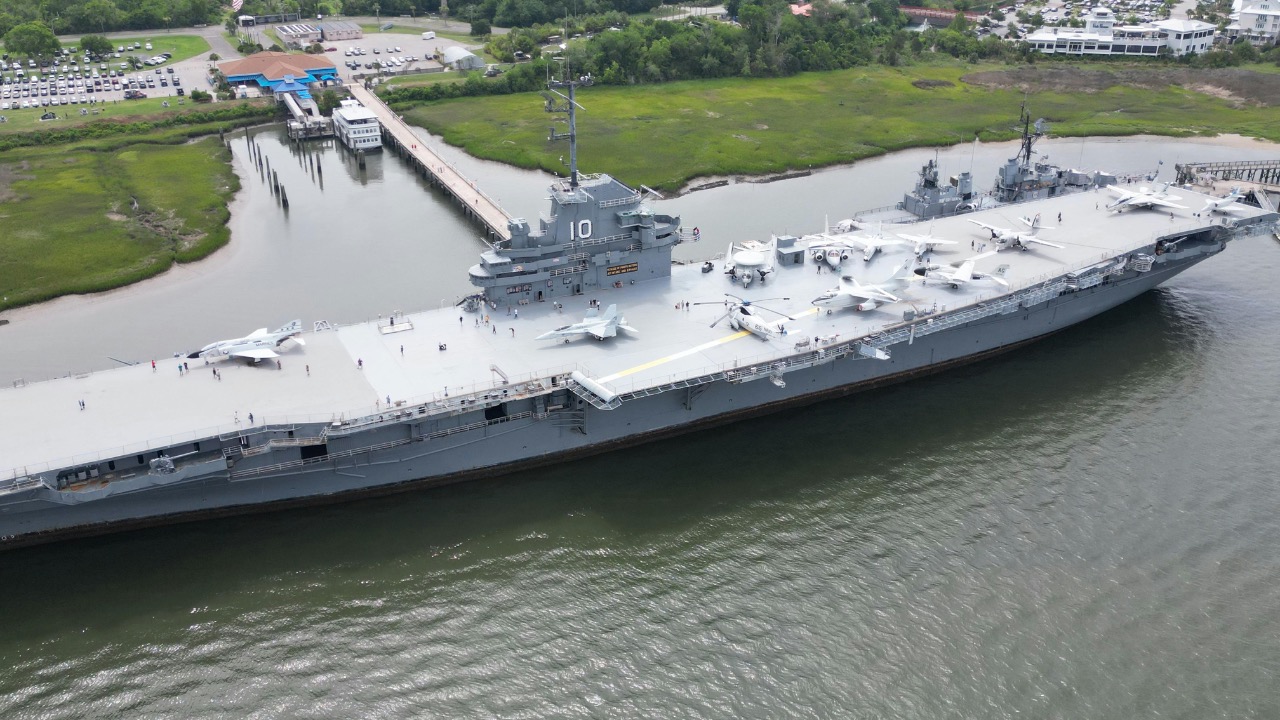
8 U.S. WWII Battleships You Can Visit Today as Museums
Across the United States, eight surviving World War II battleships have been preserved as museum ships, transforming former instruments of war into walkable archives of twentieth century history. Each one offers a different window into the conflict at sea, from the Atlantic escort missions of older dreadnoughts to the Pacific carrier battles that defined the later years of the war. I see them as a national fleet of floating classrooms, spread from New Jersey to Alabama, that still carry the scars and stories of the era when battleships were symbols of American power.
When I step onto these decks, I am not just looking at steel and rivets; I am entering spaces where sailors endured convoy duty, kamikaze attacks, and the long boredom between battles. The eight ships that survive as museums, including The USS Alabama and Commemoration Texas, are scattered across coastal cities and riverside towns, making them surprisingly accessible for anyone willing to build a road trip around them. Together they trace the arc of U.S. naval warfare in World War II and the long Cold War service that followed for several of them.
Why only eight U.S. battleships became museum ships

I start with the basic number because it shapes everything that follows: only eight United States battleships were ultimately preserved as museums or memorials. One detailed account of The USS Alabama notes that The Mobile, Alabama, attraction is one of eight United States battleships that have been converted to museums or memorials, underscoring how selective this preservation really was. Most of the dozens of battleships built before and during World War II were scrapped once jets, missiles, and submarines pushed big-gun capital ships to the margins.
Those eight survivors, which include Commemoration Texas as the first and oldest of the group, represent a narrow slice of classes and eras that happened to intersect with strong local campaigns and state support. The list that preservation advocates often cite runs from older veterans like Texas to newer fast battleships such as Iowa, New Jersey, Missouri, Wisconsin, North Carolina, Massachusetts, and Alabama. When I look at that roster, I see not just steel tonnage but communities that decided these ships were worth saving when The Navy was ready to let them go.
USS Texas and the birth of the museum battleship
Commemoration Texas occupies a special place in this story because it was the first and oldest of the eight U.S. battleships that became permanent floating museums. According to a detailed history, The Navy decommissioned her in 1946 and donated her to the state of Texas to be converted into a war memorial and museum, and in 1948 she opened to the public. That decision created a template for later efforts, proving that a battleship could survive in peacetime as a publicly accessible artifact rather than as scrap metal.
Advocates around the ship, organized today through The Battleship Texas Foundation, have spent years trying to keep that experiment alive. Recent updates indicate that The Battleship Texas Foundation hopes to reopen the ship to the public by late 2026 or early 2027 after extensive repair work, which shows how fragile this kind of preservation can be. When I look at Texas, I see a century-old vessel that fought in both world wars and now depends on twenty first century fundraising and engineering to stay afloat for another generation of visitors.
USS Alabama and the Gulf Coast memorial park
On the Gulf Coast, The USS Alabama anchors a sprawling memorial complex that has turned The Mobile, Alabama, waterfront into a hub of military tourism. One detailed visitor account describes how the ship sits at the center of a park that also includes aircraft and other exhibits, and it emphasizes that the attraction is one of eight United States battleships preserved as museums or memorials. That framing underlines how Alabama, like Texas, survived because local leaders and veterans pushed hard to secure a permanent berth.
Walking through that park, I see more than a static monument. The ship and its surroundings function as a civic space where school groups, veterans, and families mix among gun turrets and memorial plaques. Another travel guide to major museum ships in the country highlights USS ALABAMA Battleship Memorial Park as part of a national circuit of preserved vessels, reinforcing how central the ship has become to the Gulf Coast’s historical tourism economy. For me, it is a reminder that preserving a battleship is as much about building a destination as it is about saving a hull.
USS Massachusetts and Battleship Cove in Fall River
Far to the north, USS Massachusetts sits in Fall River, Massachusetts, as the centerpiece of a cluster of historic vessels known collectively as Battleship Cove. Visitors who make the trip to Fall River, Massachusetts, can tour five different museum ships in one stop, and a national travel ranking has named Battleship Cove the No. 1 Best Museum Ship attraction in the country. That recognition shows how a single preserved battleship can anchor a broader maritime campus that deepens the educational impact.
USS Massachusetts herself has a distinguished World War II record, including heavy gunnery engagements in both the Atlantic and Pacific theaters. One detailed technical profile explains that The Battleship Massachusetts fired her guns in anger during the war and relied on a propulsion system that produced a combined 130,000 shaft horsepower, figures that remind me how much industrial power these ships concentrated. At Battleship Cove, that history is not abstract; it is embedded in the cramped passageways, the armored conning tower, and the gun mounts that visitors still climb on guided tours.
USS North Carolina and the Wilmington riverfront
USS North Carolina extends the museum battleship trail down the Atlantic seaboard, where she sits along the Cape Fear River in Wilmington. Preservation advocates often point out that she is one of the eight U.S. battleships that became permanent floating museums, alongside ships like Massachusetts and Alabama, and that context matters when I compare her story to the many sister ships that did not survive. North Carolina’s World War II service in the Pacific, including screening aircraft carriers and absorbing torpedo damage, gives her a combat pedigree that curators highlight in exhibits and tours.
The Wilmington setting also shapes how the ship functions today. Moored just across from the city’s historic downtown, North Carolina draws tourists who might have come for riverfront restaurants and instead find themselves walking past sixteen inch guns. Regional travel writers often describe how the ship pairs with local history museums and waterfront events, turning the riverbank into an open air classroom on naval warfare and home front industry. When I stand on her deck and look back at the skyline, I see how a warship has been woven into the civic identity of a small Southern city.
USS New Jersey, the most decorated battleship
USS New Jersey brings the story across the Delaware River, where she is moored in Camden with the Philadelphia skyline as a backdrop. According to the official history, USS New Jersey (BB-62) is the most decorated battleship in Navy history, earning distinction in World War II, the Korean War, the Vietnam War, and conflicts in the Middle East, a service record that stretches far beyond her World War II origins. That same history notes the hull number 62, and I find that detail telling because it ties the ship’s identity to the broader Iowa class lineage that also includes Iowa, Missouri, and Wisconsin.
When I visit New Jersey, I am struck by how her story spans multiple eras of technology and politics. The ship that once shelled Pacific islands later fired modern artillery in Southeast Asia and eventually supported operations in the Middle East, and now she sits as a museum that draws visitors from both sides of the river. Online guides that direct tourists to the Camden waterfront, including map listings that pinpoint the battleship museum’s address, underscore how central the ship has become to local redevelopment plans. I see that as a case study in how a Cold War veteran can help anchor a new waterfront identity.
USS Iowa and the future National Museum of the Surface Navy
On the West Coast, Battleship IOWA carries the story into the next phase of museum development. The organization that operates the ship has announced the National Museum of the Surface Navy Launching in 2026 aboard Battleship IOWA (Battleship USS IOWA), describing a family friendly museum that will use the ship as a platform for exhibits on the past, present, and future of surface fleets. When I read that plan, I see a shift from preserving a single vessel’s history to using that vessel as the core of a broader institutional mission.
The Iowa story also connects back to the media ecosystem that has helped popularize these ships. Enthusiast outlets and social feeds tied to WWII Battleships That Are Now Museums, including accounts on platforms like Jalopnik, bsky.app, Flipboard, twitter.com, and threads.net, have repeatedly highlighted Iowa’s role as a living museum. In my view, that kind of digital attention helps sustain fundraising and public interest, which are essential if the planned National Museum of the Surface Navy is going to thrive once it opens aboard the ship.
USS Missouri and USS Wisconsin, from warships to waterfront icons
USS Missouri and USS Wisconsin round out the Iowa class representation among museum battleships, and both carry powerful symbolic weight. Missouri is famous as the site of the Japanese surrender in World War II, while Wisconsin represents the later Cold War service of the class, and both are among the seven ships listed alongside Commemoration Texas as permanent museum battleships. When I compare them, I see Missouri as the ceremonial bookend of World War II and Wisconsin as a bridge into the missile age, yet both now function as tourist draws rather than active combatants.
Wisconsin’s modern home in Norfolk, Virginia, also connects her to a broader maritime institution. The ship is integrated into a waterfront complex that includes a Maritime Discovery Center operated by Nauticus, which describes itself as a facility in downtown Norfolk, Virginia, that offers a unique perspective on the sea, industry, and the military. That partnership shows how a battleship can be folded into a larger educational mission, rather than standing alone at a pier. When I walk through that campus, I see families moving from interactive science exhibits straight onto a World War II era battleship, a combination that makes the ship’s history more approachable.
How media and rankings keep these ships in the public eye
Preserving a battleship is only half the battle; keeping it in the public imagination is just as critical. Travel rankings that spotlight museum ships, such as lists that name Battleship Cove in Fall River, Massachusetts, the No. 1 Best Museum Ship attraction, help steer casual tourists toward places they might not have considered. I have watched how a single accolade can send a ripple of new visitors to a site, which in turn strengthens the financial base that keeps maintenance crews working and decks open.
Media coverage focused on WWII Battleships That Are Now Museums also travels widely through social and aggregation platforms. The original feature that laid out the eight U.S. WWII battleships now serving as museums has been shared through WWII battleship profiles, cross posted on USA TODAY partners, and surfaced on lists of major museum ships. I see that ecosystem at work every time a friend shares a link about The Battleship Massachusetts firing her guns in combat or about a quirky gathering semi submersible called Gimik that appears in related coverage, because those stories keep the ships feeling current rather than frozen in the past.

Leo’s been tracking game and tuning gear since he could stand upright. He’s sharp, driven, and knows how to keep things running when conditions turn.