Growing Concerns Over Militarization and Illegal Arms in Civilian Contexts as Global Instability Rises
As wars and political crises stretch from Eastern Europe to the Sahel, the line between military and civilian life is blurring. Heavy weapons, surveillance systems, and private security units are moving into spaces once governed by ordinary policing and commercial rules. At the same time, the global trade in legal and illegal arms is seeding conflicts and empowering non-state actors in ways that outpace existing safeguards.
These shifts are not just a matter of hardware. They reshape who holds power in fragile states, how governments relate to citizens, and how violence spreads across borders. The trend is especially visible where public institutions are weak and private business interests intersect with armed forces and foreign arms suppliers.
What happened
Across the global South, armed forces have become deeply involved in commercial ventures that reach far beyond traditional defense industries. In several countries, military-owned companies now control logistics, construction, mining, and consumer goods. Research on military and private shows that uniformed institutions often use their regulatory and coercive power to secure market access, pressure competitors, and shape investment decisions.
These arrangements pull military structures directly into civilian economic life. Officers sit on corporate boards, state contracts are steered toward military-linked firms, and soldiers are redeployed to guard mines, ports, and industrial zones. In some cases, armed units have been tasked with running fuel depots, food distribution networks, or large-scale infrastructure projects that affect daily life for millions of civilians.
Meanwhile, the global arms trade has expanded in volume and complexity. The United States remains the largest exporter, and a detailed assessment of U.S. arms sales finds that weapons provided in the name of stability often flow into volatile environments. Recipient governments use advanced aircraft, armored vehicles, and precision-guided munitions in internal conflicts, counterinsurgency campaigns, and border operations that heavily affect civilian populations.
Once delivered, these weapons are difficult to track. Battlefield losses, corruption, and defections can move rifles, rockets, and vehicles into the hands of militias and criminal networks. Black markets in regions such as the Sahel, the Horn of Africa, and parts of Latin America have been replenished by stockpiles originally supplied through official channels. In parallel, private arms brokers and transport companies exploit gaps in oversight to redirect shipments or obscure end users.
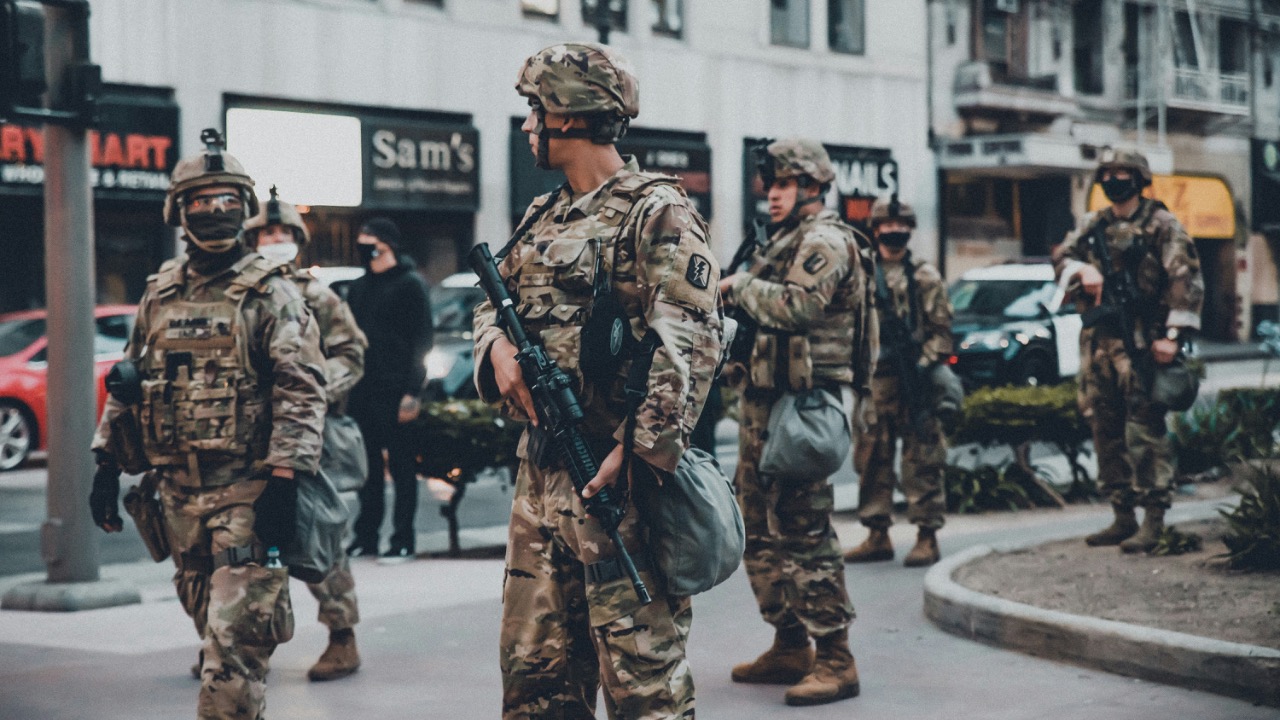
Domestic security policies in several countries have also shifted toward militarized responses. Police forces increasingly train with military units, acquire surplus armored vehicles, and deploy battlefield-style gear in urban neighborhoods. Border guards and coast guards receive military-grade equipment and intelligence systems designed for war zones, then apply them to migration control and anti-smuggling campaigns. The presence of assault rifles and tactical vehicles at protests, checkpoints, and ports reinforces a sense that civilian spaces are being governed with wartime tools.
In many fragile states, governments have outsourced key security functions to private military and security companies. These firms guard oil installations, mining concessions, and large infrastructure projects, often with heavy weapons and broad legal immunity. Their operations intersect with both legal arms imports and illicit trafficking networks, since they need a steady flow of equipment and ammunition to remain operational.
Why it matters
When militaries become major economic players, they gain direct stakes in commercial outcomes that can conflict with public accountability. The research on military market access in the global South highlights how officers can leverage security prerogatives to tilt regulations, licensing, and customs rules in favor of their own enterprises. That distorts competition, deters independent investors, and erodes trust in civilian regulators.
Such entanglement also complicates democratic control over armed forces. Civilian leaders who rely on military-owned companies for infrastructure or basic goods may hesitate to challenge senior officers on human rights abuses or budget transparency. The more revenue that flows through opaque military business networks, the harder it becomes for parliaments and audit institutions to trace spending or impose sanctions on misconduct.
The security consequences of expansive arms transfers are equally significant. The assessment of U.S. arms exports shows that weapons delivered to partner governments in unstable regions can reduce short-term vulnerability for those regimes while increasing the overall risk of conflict. When governments feel shielded by advanced arsenals, they may choose coercion over negotiation, escalate internal repression, or pursue aggressive regional policies.
For civilians, this often means more intense and prolonged fighting. Precision-guided munitions and surveillance systems can reduce some forms of collateral damage, but they also enable high-tempo operations in densely populated areas. When such campaigns target insurgents or criminal groups embedded in communities, displacement, infrastructure damage, and long-term trauma follow.
Illegal arms flows amplify these harms. Assault rifles, machine guns, and explosives that leak from state stockpiles or diversion schemes feed banditry, kidnapping economies, and cartel violence. In parts of the Sahel, lightly armed community self-defense groups have evolved into heavily equipped militias once they gained access to looted or trafficked weapons. Similar patterns appear in Central America, where firearms originally sold to state forces have resurfaced in gang arsenals.
The spread of military-grade equipment into routine policing also affects civil liberties. Officers trained to treat urban neighborhoods as battlefields are more likely to rely on force, conduct aggressive raids, and view demonstrators as enemy combatants rather than citizens. Communities that already face discrimination, such as ethnic minorities or migrants, are often the first to experience these tactics.
Economically, militarization can crowd out social investment. Defense budgets that fund both arms purchases and military-owned businesses leave fewer resources for health, education, and civilian infrastructure. In countries where soldiers manage ports or industrial zones, labor disputes and regulatory debates are reframed as security issues, which narrows space for unions and civil society groups to negotiate.
The international system also absorbs costs. Arms transfers that aim to secure short-term alliances can undermine long-term stability, generating refugee flows, piracy, and transnational crime that draw in neighboring states. When conflicts fueled by imported weapons spill across borders, peacekeeping missions, humanitarian agencies, and regional organizations must respond, often with limited resources and political backing.
What to watch next
Several policy debates now revolve around how to curb the most destabilizing aspects of militarization and arms proliferation. One key question is whether exporting states will tighten conditions on arms sales, including human rights benchmarks, end-use monitoring, and suspension mechanisms when partners misuse equipment. The analysis of U.S. transfers suggests that stronger safeguards, combined with more rigorous conflict risk assessments, could reduce the likelihood that weapons fuel repression or regional wars.
Another area to watch is transparency around military-owned businesses. Civil society groups and some reformist officials in the global South have called for public registries of military enterprises, independent audits, and clear rules separating defense budgets from commercial revenues. If such measures gain traction, they could reduce corruption and limit the ability of armed forces to dominate key civilian markets.
On the enforcement side, international efforts to track illicit arms flows may expand. Technologies such as marking and tracing systems, satellite monitoring of airstrips and ports, and better data sharing among customs agencies can make diversion more difficult. Regional agreements that harmonize firearms laws and strengthen border cooperation are also under discussion in several conflict-affected zones.
At the domestic level, debates over police militarization are likely to intensify. Legislatures and courts in some countries are already examining limits on the transfer of surplus military equipment to local law enforcement, as well as stricter rules on the deployment of tactical units. Community groups are pressing for investment in nonviolent crisis response teams, mental health services, and neighborhood mediation programs as alternatives to heavily armed patrols.
Private military and security companies will remain under scrutiny. Governments that rely on these actors to protect strategic assets face pressure to clarify legal frameworks, including rules on the use of force, liability for abuses, and obligations to share information with civilian authorities. Multinational corporations that hire such firms are being pushed by shareholders and advocacy groups to vet contractors more carefully and avoid arrangements that entrench conflict economies.

Leo’s been tracking game and tuning gear since he could stand upright. He’s sharp, driven, and knows how to keep things running when conditions turn.