Handguns That Fall Short for Self-Defense
When you’re choosing a handgun for self-defense, you’re betting on reliability, shootability, and practical performance under stress. That means manageable recoil, consistent triggers, usable sights, and enough capacity to solve a problem quickly. Some handguns miss that mark. They may be fun at the range, historically interesting, or easy to conceal, but when you measure them against modern defensive standards, they come up short.
You can carry almost anything with training and discipline. But certain designs stack the odds against you. Here are handguns that tend to fall behind when you’re talking serious self-defense.
Bond Arms Derringers
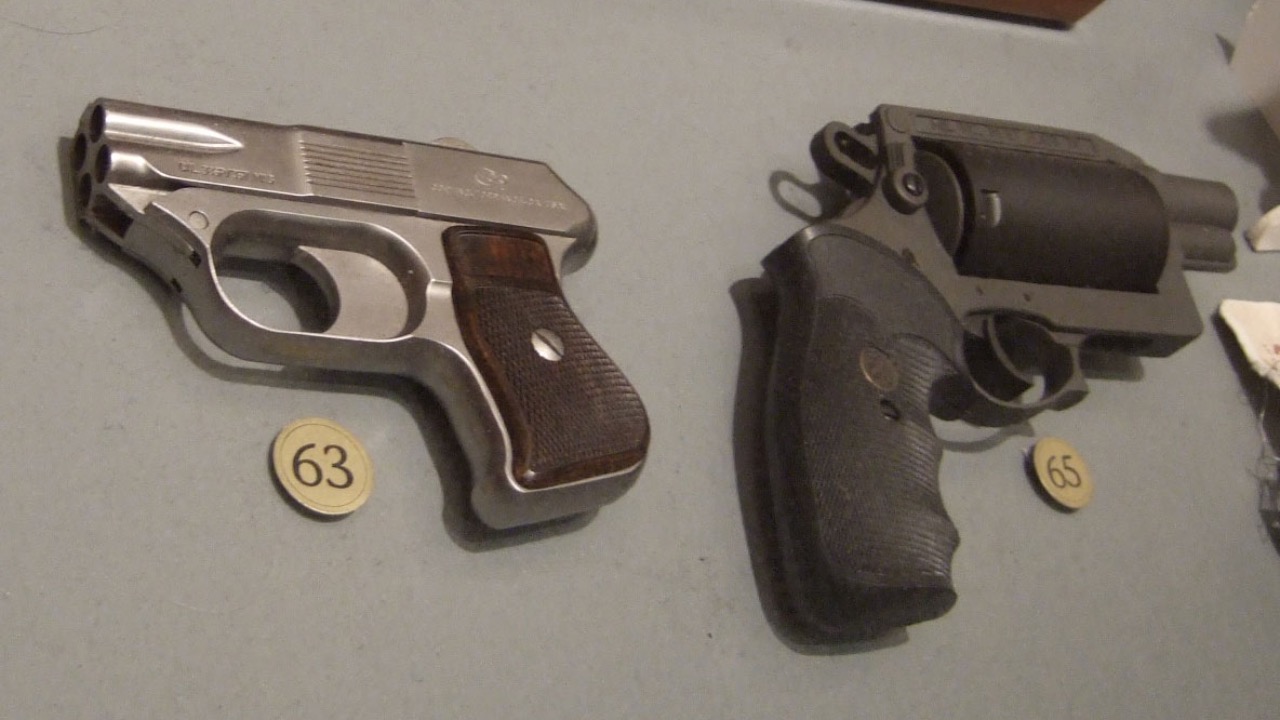
Derringers from Bond Arms are beautifully machined and chambered in serious calibers like .45 Colt and .410. On paper, that sounds formidable. In your hand, it’s a different story. You get two shots, heavy recoil, and a short sight radius that makes precise placement difficult beyond a few yards.
Under stress, limited capacity becomes a real liability. Reloading is slow and requires fine motor skills you may not have when adrenaline spikes. The trigger pull is typically heavy, and follow-up shots are slow due to recoil and muzzle flip. As a deep concealment backup, maybe. As a primary defensive handgun, you’re working with serious limitations.
KelTec P-32
The KelTec P-32 is lightweight and easy to carry, and that’s where most of its strengths end. Chambered in .32 ACP, it offers minimal recoil, but terminal performance lags behind modern 9mm defensive loads. When you’re relying on a small caliber, shot placement becomes even more critical.
The sights are small and difficult to pick up quickly. The trigger is long and relatively heavy, which doesn’t help accuracy under pressure. While some examples run reliably, others are sensitive to ammunition. For deep concealment, it has a role, but you’re sacrificing power and shootability compared to slightly larger micro-9mm pistols.
Hi-Point C9
The Hi-Point C9 is known for affordability and a lifetime warranty. It also has a bulky slide, heavy trigger, and awkward balance. The blowback design requires a large slide mass, which makes the gun top-heavy and slow to recover between shots.
Magazine capacity is modest, and the ergonomics don’t favor fast reloads. While many C9 pistols function reliably with proper maintenance, they’re not refined tools. The trigger pull and sight picture can make consistent, rapid defensive shooting harder than it needs to be. When better options exist in the same price range, it’s tough to recommend as a primary defensive handgun.
North American Arms Mini-Revolvers
North American Arms mini-revolvers are easy to hide almost anywhere. That concealability comes at a cost. Most are chambered in .22 LR or .22 Magnum, and while .22 Magnum has more punch, you’re still dealing with a rimfire cartridge.
Rimfire ammunition is inherently less reliable than centerfire. Add a tiny grip, minimal sights, and a single-action design that requires cocking the hammer before every shot, and you have a platform that’s slow and difficult to shoot accurately. Reloading is tedious. As a last-ditch option, they have a place. As a primary defensive tool, they leave too much to chance.
Taurus Judge (Short-Barrel Models)
The short-barrel Taurus Judge gets attention for firing both .45 Colt and .410 shotshells. In practice, the defensive usefulness of .410 from a handgun-length barrel is limited. Buckshot patterns spread quickly, and penetration can be inconsistent.
Chambering .45 Colt gives you a more conventional option, but accuracy from the short barrel and heavy frame isn’t ideal. The revolver is large, heavy, and holds only five rounds. Recoil with defensive loads can be stout, slowing follow-up shots. It’s a versatile range gun, but as a dedicated self-defense handgun, it asks you to compromise in too many areas.
Heritage Rough Rider
The Heritage Rough Rider is an affordable single-action .22 revolver designed primarily for plinking. It requires manual cocking before every shot, which slows response time dramatically in a defensive scenario.
You’re also relying on rimfire ammunition and a cartridge that struggles with consistent penetration. Capacity may be adequate, but reload speed is extremely slow compared to modern defensive pistols. The manual safety on many models adds another step to manage under stress. It’s a fun range companion. When your safety depends on speed and reliability, it’s not the right tool.
AMT Backup (Early Models)
The early AMT Backup pistols were compact and chambered in serious calibers like .380 ACP and even 9mm. They also developed a reputation for heavy recoil and inconsistent reliability in some production runs.
The all-stainless construction made them heavy for their size, and the trigger pull was often long and stiff. Small sights and sharp recoil made accurate follow-up shots challenging. While later production improved some issues, early models in particular earned mixed reviews from users. In a defensive handgun, you want predictability. With some AMT Backups, that wasn’t always guaranteed.
Cobra Derringer (Older Models)
Older Cobra derringers were inexpensive and easy to conceal, often chambered in .38 Special or .22. Build quality varied widely, and triggers were frequently heavy and uneven.
Two rounds, slow reloads, and stout recoil limit practical defensive capability. The sight picture is minimal at best. Under stress, the combination of heavy trigger and short barrel makes accurate placement difficult. While concealability is appealing, you’re trading away capacity, speed, and shootability. For modern self-defense standards, that’s a steep trade.
When you’re choosing a handgun to protect yourself, you need consistency, manageable recoil, and enough capacity to deal with uncertainty. Many of these guns can work in a narrow role. But if you’re serious about defending yourself, you’re better served by a reliable, modern centerfire pistol that gives you every advantage you can reasonably carry.

Asher was raised in the woods and on the water, and it shows. He’s logged more hours behind a rifle and under a heavy pack than most men twice his age.