How Simo Häyhä became the “White Death” with over 500 kills in one winter
In one of the coldest campaigns of the Second World War, a quiet Finnish farmer named Simo Häyhä became the most lethal sniper ever recorded, credited with more than 500 Soviet soldiers killed in a single winter. His tally, achieved in about 100 days of combat during the Winter War between Finland and the Soviet Union, has turned him into a near-mythic figure in military history. Behind the legend lay a mix of skill, preparation and brutal conditions that shaped both his story and the war around him.
Häyhä did not see himself as a celebrity or a symbol, yet his record has become a benchmark for snipers and historians who study how a single individual can influence a battlefield. Looking at how he operated, and why his enemies named him the “White Death,” reveals as much about the nature of modern war as it does about one man’s marksmanship.
What happened
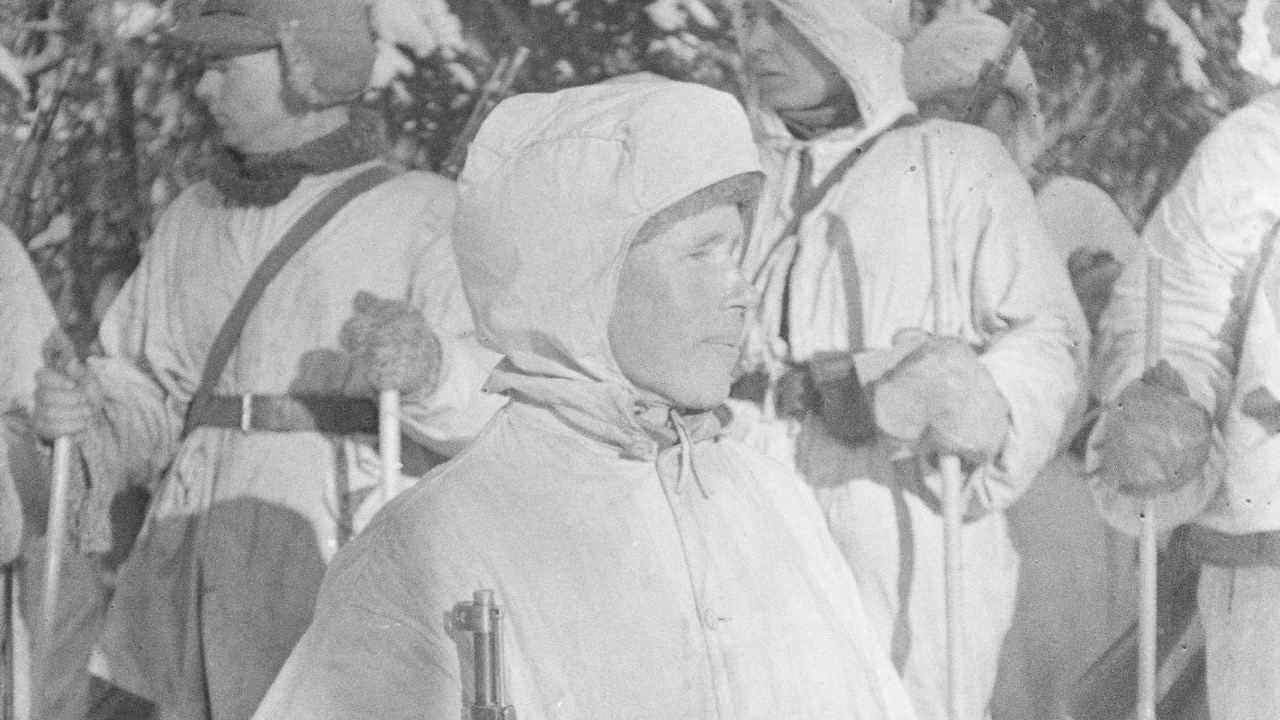
Simo Häyhä was a small, reserved man from rural Karelia who spent his youth hunting and competing in shooting matches long before he joined the Finnish Army. Years of practice with a bolt-action rifle prepared him for the Winter War, when the Soviet Union invaded Finland in late 1939 and Finnish reservists like Häyhä were called up to defend the border. According to detailed military accounts, he served with the 6th Company of Infantry Regiment 34 in the Kollaa region, one of the most fiercely contested sectors of the front.
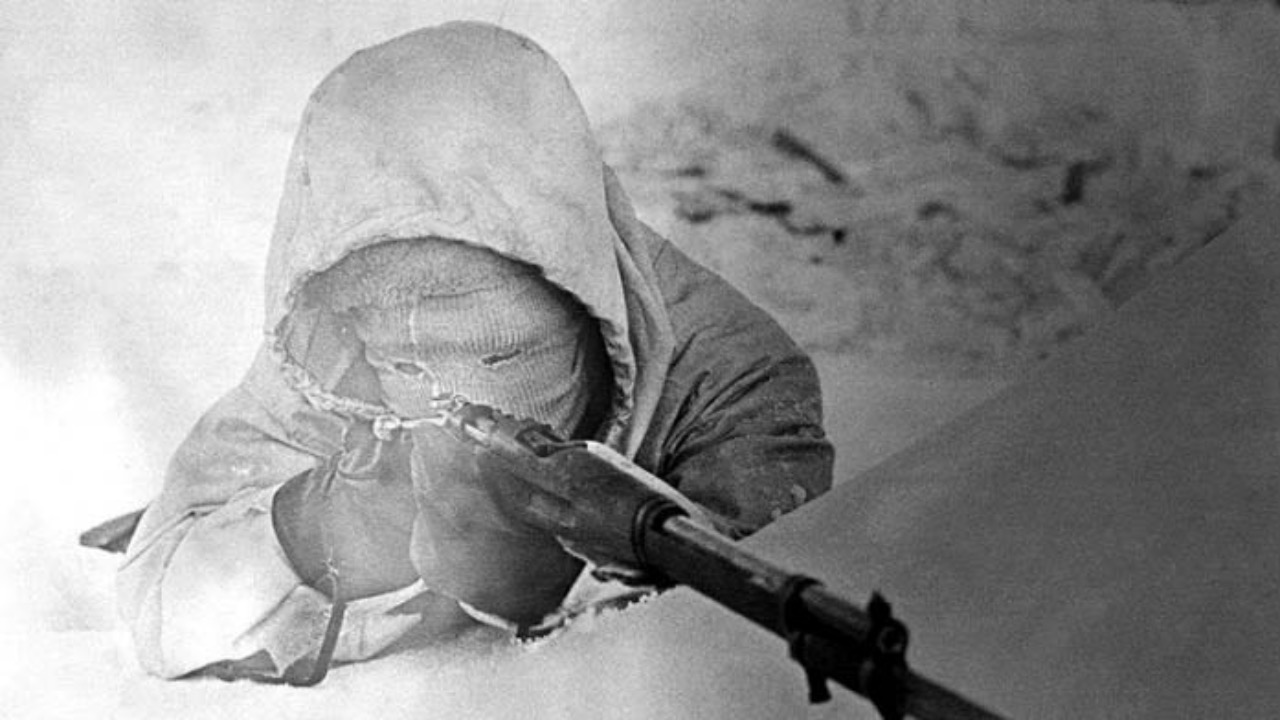
In forests where temperatures often dropped below minus 20 degrees Celsius, Häyhä used the terrain and weather to his advantage. He wore all-white camouflage, packed snow in front of his firing position to prevent muzzle blast from kicking up a telltale puff, and even kept snow in his mouth so his breath would not steam in the air. Contemporary Finnish records and later research credit him with more than 500 confirmed kills, largely with a standard-issue Mosin-Nagant rifle fitted with iron sights rather than a scope, which reduced glare and made his firing position harder to spot. A detailed profile on his service notes that this figure, achieved in roughly three months, is the highest confirmed sniper tally in recorded military history, with some sources placing his total at 542 enemy soldiers killed.
Häyhä’s reputation grew rapidly among both Finns and Soviets. Finnish comrades began tracking his daily count, while Soviet troops, unnerved by the invisible shooter who seemed to strike without warning, began calling him the “White Death.” As Soviet forces launched repeated assaults against the thin Finnish lines at Kollaa, he moved between prepared hides, often spending hours motionless in deep snow. One investigation into his wartime record describes how he sometimes went out before dawn and stayed in position until dark, in temperatures that could freeze exposed skin in minutes.
His effectiveness drew the attention of Soviet commanders, who reportedly tried to eliminate him with counter-snipers and artillery. Under that pressure, Häyhä continued to raise his tally until March 1940, when he was finally taken out of action. A Soviet soldier fired an explosive bullet that struck his lower face, shattering his jaw and cheek. Fellow Finns initially thought he had been killed, and he lay in a coma for days before waking up in a field hospital. The Winter War ended shortly afterward, with Finland forced to cede territory but preserving its independence.
After extensive reconstructive surgery, Häyhä recovered enough to live a long postwar life, though his face remained visibly scarred. He returned to farming and later to breeding hunting dogs, avoiding the spotlight despite his status as a national hero. Interviews late in his life depict a man who saw his actions as a duty to defend his country rather than a personal achievement.
Why it matters
The scale of Häyhä’s confirmed kills has made him a reference point in military history. A recent feature on his wartime record describes him as the sniper with the most verified kills in any conflict, a figure that surpasses even the most celebrated marksmen of later wars in Vietnam, Iraq and Afghanistan. That record has turned him into a case study in how training, environment and mindset can combine to produce extraordinary battlefield impact.
His story also illuminates the nature of the Winter War itself. Finland faced a vastly larger Soviet force, with more tanks, aircraft and artillery, yet Finnish units inflicted heavy casualties through mobility, local knowledge and small-unit tactics. Häyhä’s success as a sniper, operating with a simple bolt-action rifle and minimal equipment, symbolized that asymmetry. One analysis of his career highlights how his use of iron sights, his habit of firing from low, stable positions and his meticulous fieldcraft allowed him to dominate sections of the front despite overwhelming enemy numbers.
Modern military instructors still point to Häyhä when teaching sniper fundamentals. A breakdown of his methods notes that he relied on a few core principles: precise zeroing of his rifle, careful range estimation without electronic aids, and patient target selection that prioritized enemy officers, machine gunners and other high-value threats. He did not chase long-distance shots for personal glory, instead focusing on reliable hits inside ranges where he knew his capabilities. That discipline, combined with his ability to remain still for hours in extreme cold, helped produce his extraordinary consistency.
Yet the legend of the “White Death” also raises questions about how societies remember and frame lethal efficiency. Popular accounts sometimes treat his kill count as a kind of macabre scoreboard, but interviews and historical research suggest Häyhä himself spoke little about the number. One narrative of his life cites him saying only that he “did what he was told, as well as he could.” The contrast between public fascination and personal reticence highlights the tension between celebrating tactical skill and confronting the human cost of war.
The Soviet perspective adds another layer. Reports from the Kollaa front describe Soviet units suffering severe losses in repeated frontal attacks against Finnish positions, often in deep snow and poor visibility. Häyhä’s presence contributed to a climate of fear among attacking troops, who knew that a single unseen shooter could pick off advancing soldiers one by one. The psychological effect of such a sniper can be disproportionate to the actual number of casualties, disrupting morale and slowing operations far beyond the immediate area of engagement.
His legacy has also shaped cultural memory inside Finland. Profiles of his later life describe how he became a quiet symbol of national resilience, especially as stories of the Winter War were retold to new generations. His survival after a devastating facial wound and his return to ordinary rural life reinforced a narrative of endurance that resonated in a country that had endured invasion, territorial loss and Cold War pressure.
What to watch next
Interest in Simo Häyhä shows no sign of fading. Recent long-form pieces on his career, such as a detailed investigation into his confirmed kills, have brought archival material and Finnish-language sources to a wider audience. These works have helped clarify disputed details, such as the exact number of his kills and the specific units he targeted, while confirming that his tally remains unmatched in documented military history. Readers who want to understand the broader context of his actions can turn to in-depth histories of the Winter War that place his sniping within Finland’s overall defensive strategy.
Several modern analyses look beyond the raw numbers to examine how Häyhä trained and how those methods translate to current doctrine. One exploration of his story emphasizes his prewar experience as a competitive shooter and hunter, which gave him an intuitive feel for wind, light and bullet drop long before he entered combat. Another account of his battlefield techniques highlights his choice to avoid telescopic sights, arguing that this decision reduced the risk of reflection and allowed him to maintain a lower profile in the snow.

Leo’s been tracking game and tuning gear since he could stand upright. He’s sharp, driven, and knows how to keep things running when conditions turn.