

How U.S.-sourced firearms end up in cartel violence
American-made guns are central to the bloodshed that grips Mexican communities, yet most of those weapons begin their journey in ordinary U.S. storefronts and parking lots. From there, they move through a loose network of buyers, smugglers, and corrupt officials until they surface in cartel arsenals and crime scenes. Tracking that path reveals how gaps in U.S. law and enforcement have turned the southern border into a conduit for industrial-scale violence.
The “iron river” of U.S. guns into Mexico
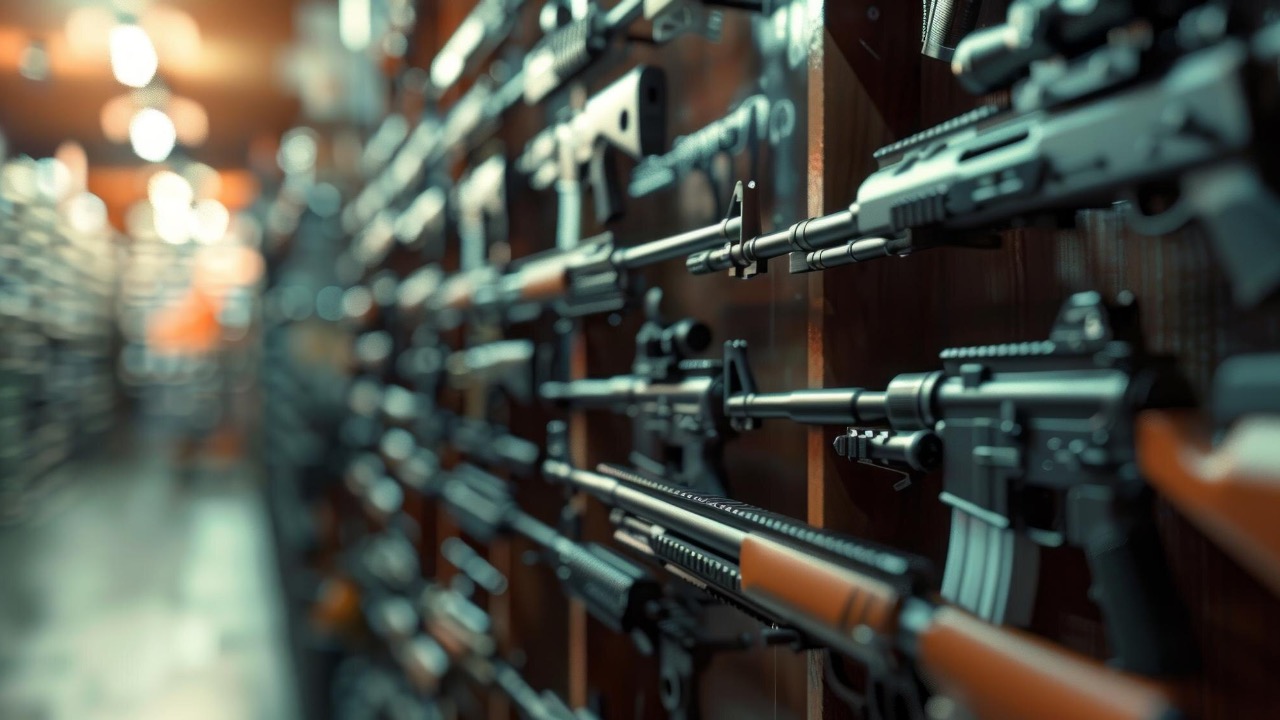
Researchers describe the flow of weapons from the United States into Mexico as The Iron River, a steady stream of pistols, rifles, and high-caliber weapons that dwarfs Mexico’s limited legal market. While it is possible to buy a gun legally in Mexico, strict rules and a single official store mean that cartels overwhelmingly rely on U.S. sources. Illicit gun-smuggling from the United States to Mexico has increasingly fueled cartel firepower and expanded the brutality of their conflicts.
From 2019 to 2024, roughly two-thirds of firearms recovered at Mexican crime scenes and traced by the ATF were sourced to the United States, according to federal trace data. That pipeline has helped power a conflict that one analysis says has claimed more than 100,000 lives, with American firearms at the center of the killing.
How legal sales become cartel stockpiles
The chain often begins with a perfectly legal purchase. In Texas, for example, a buyer can walk into a store, pass a background check, and purchase multiple rifles at once. As one report put it, can buy as as long as you clear the check, and cartels recruit people with clean records to act as “straw” purchasers.
Independent firearm businesses play an outsized role in this market. A study of trafficking cases found that Independent gun shops like Zeroed In Armory were the largest suppliers of crime guns traced to Mexico. In one case, a trafficker named Soto bought firearms from such a store, then flipped the weapons to the cartel. The pattern repeats across the border states, where small dealers can sell high volumes of military-style rifles with minimal federal oversight.
After those initial sales, the guns are often resold in informal parking-lot deals or moved through networks that specialize in smuggling. A leaked dataset, analyzed after USA Today obtained internal records, identified nearly 80,000 firearms illegally trafficked from U.S. gun shops to Mexico. That figure, 80,000, reflects only the weapons that were recovered and traced, not the full scale of the flow.
Smuggling routes and border blind spots
Smugglers rely on volume and concealment rather than sophisticated technology. Some pack trunks with rifles, then drive through ports of entry where inspections are sporadic and focused more on drugs than outbound weapons. Others break up shipments into smaller loads, a pattern researchers describe as Ant trafficking, to reduce the risk that any single seizure will disrupt the supply.
On the Mexican side, corrupt officials and cartel lookouts help shepherd the guns past checkpoints. A recent investigation described how smugglers told of simply stacking rifles under blankets in pickup trucks, then paying bribes or relying on overwhelmed border agents to wave them through, a pattern echoed in firsthand accounts from the frontier.
Once inside Mexico, the weapons fan out along cartel-controlled corridors. In some cases, they are traded for drugs or used as payment to local enforcers. Short-barreled rifles and handguns are distributed to foot soldiers, while .50-caliber sniper rifles and belt-fed machine guns are reserved for elite units tasked with confronting the Mexican military.
From U.S. shop counters to cartel warlords
The journey from retail shelf to cartel armory is starkly illustrated by the arsenal linked to Nemesio Rub Oseguera Cervantes, better known as El Mencho. After the Mexican military killed the cartel leader, officials detailed how his organization had amassed a stockpile of weapons smuggled from the United States, with Mexican officials saying that about half of the recovered guns could be traced to U.S. sources, according to Mexican officials.
High-caliber rifles are a particular concern. In one sample of weapons seized from cartels, 496 were rifles and 227 were made by Barrett, a Tennessee company that specializes in high-caliber sniper rifles, according to seizure data. Those .50-caliber rifles can pierce armor and disable helicopters, turning cartel gunmen into a quasi-military force.
At the street level, the economics are simple. One video report described how a young American can be paid between $100 and $1,000 to buy a rifle and hand it off to a trafficker, according to recorded interviews. For cartels, that modest outlay yields a weapon that can control territory, intimidate communities, and outgun local police.
Legal battles and political friction
Mexico has tried to push back in U.S. courts. The Mexican government filed a $10 billion lawsuit arguing that American gunmakers knowingly facilitated cartel violence by marketing military-style weapons and ignoring obvious trafficking patterns. The Supreme court blocked Mexico from pursuing that claim under U.S. law, reinforcing broad legal shields for the firearms industry.

Asher was raised in the woods and on the water, and it shows. He’s logged more hours behind a rifle and under a heavy pack than most men twice his age.


