How weather patterns quietly control deer movement
Whitetail deer rarely move at random. Their daily patterns, seasonal migrations, and sudden bursts of daylight activity tend to track with subtle shifts in temperature, wind, rain, and pressure that roll through long before most people notice a change. For hunters, land managers, and wildlife watchers, learning how those weather cues quietly steer deer behavior can turn a confusing woods into a far more predictable place.
From the first cool mornings of early fall to the deep freeze of winter, the same fronts that send people reaching for a jacket are also telling deer when to feed, when to bed, and when to risk daylight travel. The result is a kind of invisible schedule written in wind and clouds, one that rewards anyone who learns how to read it.
Why weather matters more than most people think
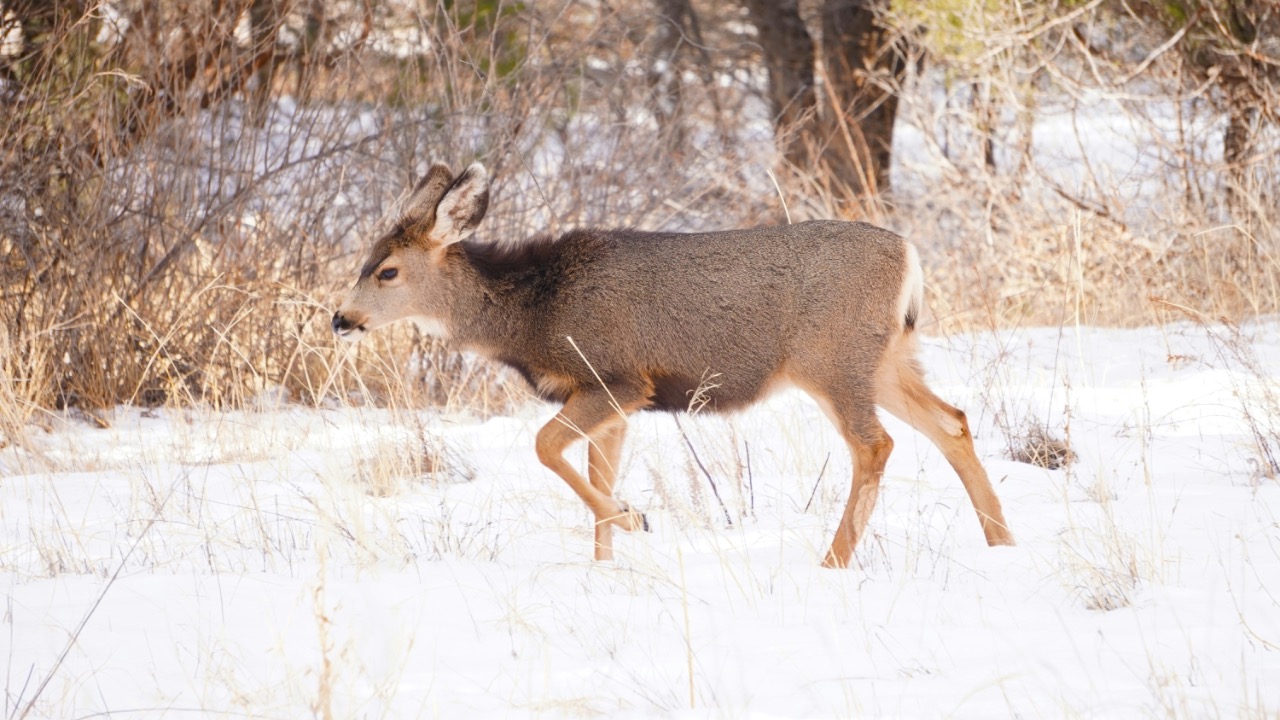
Deer are built to survive outside, which means their bodies and instincts are tuned to small environmental changes that humans often miss. Biologists describe whitetails as naturally crepuscular, meaning they are most active at first and last light, and that baseline pattern is already shaped by the daily cycle of temperature and light. Reporting on rut behavior notes that deer tend to ramp up movement around sunrise when cooler air, fading darkness, and rising anticipation of breeding all converge, especially in the peak chasing phase of the season, according to research on understanding weather changes.
Layered on top of that daily rhythm, weather shifts change how safe deer feel, how far they can smell, and how much energy they burn. A stiff wind can strip scent out of the woods, heavy rain can muffle a hunter’s approach, and a sudden cold snap can flip a metabolic switch that makes deer feed aggressively. Those pressures do not override breeding cycles or basic needs, but they fine-tune exactly when and where deer choose to move.
Hunters often talk about “perfect” days when deer seem to be on their feet everywhere. Data from movement studies, camera logs, and field biologists suggest that those windows are not random lucky breaks. They usually line up with specific combinations of temperature, pressure, wind, and precipitation that make deer more comfortable and more confident in daylight.
Temperature: the comfort range that drives movement
Among all the variables, temperature is one of the clearest levers on deer activity. Analysis of whitetail behavior shows that deer have a distinct “comfort range” and tend to move more when the thermometer sits inside that band. One long-term look at buck travel found that activity peaked at relatively cool readings and again at somewhat warmer levels, with noticeably less movement between those two peaks for any temperature in the middle, a pattern highlighted in research on how weather impacts.
Cold fronts are especially influential. When a strong system drops temperatures sharply over roughly a day, hunters often see a surge of deer on their feet. One analysis of a major front described a “Drastic 36 Hour Weather Cold Front Deer Movement Influence,” with a clear jump in daylight movement as the air dried out and cooled. That 36-hour window, outlined in a breakdown of cold front influence, has become a reference point for hunters who watch forecasts closely.
Temperature cuts both ways. In early season heat, deer often limit movement to shaded routes and water sources, or simply wait until the last sliver of light to leave cover. A review of field reports on temperature effects notes that very warm conditions tend to push deer toward specific features such as water holes and dense shade, while cooler snaps within the same period bring them back into more open terrain.
At the opposite extreme, deep winter cold can suppress movement rather than spark it. Observations from Ojibway park in Windsor, Ontario, describe how winter conditions lead whitetail deer to travel less each day as severe cold settles in, a survival adjustment documented in a field update on how winter affects. In that setting, deer conserve calories by shortening daily travel and clinging to thermal cover near reliable food.
Wind: a double edged factor that shapes risk
Wind is one of the most debated weather variables among hunters, and for good reason. On one hand, a steady breeze is a survival tool for deer, delivering scent from predators and other deer straight to their nose. On the other, very high gusts can disrupt their ability to hear and smell, and that sensory overload often makes them hunker down. Field notes on Deer Movement in describe how strong gusts can disrupt a deer’s sense of security and reduce movement in exposed areas.
Research and hunter logs suggest that moderate wind often helps movement rather than hurts it. A consistent breeze lets deer angle their travel to keep the wind in their favor, scent-check openings, and stay ahead of danger. One analysis of how air currents affect whitetails explains that when wind and air currents pick up but do not reach damaging levels, deer will often shift into leeward slopes and protected draws where they can still smell trouble while avoiding the worst of the gusts, according to a breakdown of wind and air.
Some biologists have also pointed out that wind interacts with the rut. During peak breeding, bucks often keep moving even in less comfortable conditions because the drive to find receptive does outweighs the discomfort. A review of wind effects on rut travel notes that hunters should not ignore traditional funnels and transition lines simply because a blustery forecast makes them uneasy, since bucks may still cruise those routes in search of does, a point raised in an analysis of how wind affects.
For hunters, the practical takeaway is twofold. First, wind direction matters more than wind speed most days because it dictates how scent moves through the cover. Second, very strong gusts can suppress movement in open terrain while concentrating deer in sheltered pockets, which can be productive if access routes stay quiet.
Rain: from light showers to soaking storms
Rain triggers some of the sharpest disagreements among hunters, yet the biology is straightforward. Whitetails still need to feed and breed when it is wet, and multiple sources agree that the short answer to “Do Deer Move in the Rain?” is yes. A detailed look at rut behavior in wet conditions notes that deer continue to travel and chase during showers, although their exact routes and timing can change, as described in a breakdown of How Weather Impacts.
Light to moderate rain often encourages daytime movement. Overcast skies soften harsh light, raindrops dampen sound, and the steady patter can make deer feel less exposed. One practical guide notes that deer movement increases during light rain, especially when showers fall through the morning and early afternoon, a pattern highlighted in a discussion of why hunting in. Those conditions often coax mature bucks to leave cover a bit earlier than usual, particularly in the pre-rut and rut windows.
Heavy downpours, on the other hand, can suppress movement temporarily. Deer often ride out intense squalls in secure bedding cover, then surge to feed as soon as the rain tapers. A wildlife biologist who monitored deer during storms reported that scouting right after a soaking shower may reveal fresh tracks and feeding sign that were not visible before, and that several tagged bucks were ultimately shot while it was still raining, according to a field account on whether deer move.
Rain also affects scent and sound. Wet leaves are quieter, which helps both predators and hunters approach undetected. At the same time, rain can wash away older ground scent, forcing deer to rely more on fresh air currents for information. A detailed breakdown of Deer Move in notes that rain is another factor that can encourage deer to move more confidently when conditions are otherwise marginal, especially if the showers line up with the natural crepuscular peaks.
Short-form field clips echo the same pattern. In one explanation, Kayla from Wild Camo describes how the sound of rain on leaves can make deer feel safer as they move, and that many hunters see an uptick in activity shortly after a shower, a point illustrated in a video on why deer move.
Barometric pressure and fronts: the hidden rut factor
Barometric pressure is harder to feel than cold or rain, yet many experienced hunters swear by the barometer. Research on what drives whitetail movement has tried to sort out whether pressure itself matters or if it simply tracks with other conditions like temperature and wind. One long-term study summarized in a review of What Makes Deer found no significant direct link between barometric readings and movement once other variables were controlled, although the authors noted that pressure often changes alongside more obvious triggers such as cold fronts.
That has not stopped hunters from watching for rising or falling readings. Some field reports describe deer moving more before storms when the barometer starts to drop, a pattern that aligns with the idea that animals sense approaching weather and feed ahead of difficult conditions. A short explanation from Kayla at Wild Camo, titled “Why Do Deer Move More Before Storms? #shorts,” suggests that falling pressure may cue deer to get on their feet and feed before the worst of the system arrives, an idea shared in a clip from Wild Camo.
During the rut, some hunters also look for pressure peaks. A breakdown of The Hidden Rut Factor argues that while temperature and precipitation are more obvious, barometric pressure significantly shapes how much daylight activity hunters see when it is either rising or peaking, particularly in combination with other favorable conditions, as discussed in an analysis of how critical weather.
The safest interpretation is that pressure itself may be less important than the fronts it signals. When a barometer climbs after a storm and cooler, drier air settles in, deer often respond with visible movement. When it falls ahead of a severe system, they may feed more aggressively. For hunters, tracking those swings can be a practical way to time sits, even if the underlying driver is a bundle of related weather changes rather than pressure alone.
Seasonal shifts: how deer adapt over a 365 day year
Weather does not act in a vacuum. Seasonal patterns shape how deer respond to the same type of front in September versus January. A detailed look at seasonal deer movement notes that deer hunting is a 365-day pursuit, and that understanding how deer adapt throughout the year is essential for predicting where they will be when a given storm hits, according to a guide on Seasonal Deer Movement.
In early fall, deer are shifting from summer patterns of open field feeding to more nocturnal habits as hunting pressure and changing daylight push them toward thicker cover. Warm spells can keep them locked in those night-focused routines, while the first meaningful cold snaps often trigger more daylight browsing along edges and staging areas.
During the rut, weather tweaks the intensity and timing of activity rather than creating it. Biologists point out that the peak of breeding is driven primarily by photoperiod, so it will happen on roughly the same schedule each year regardless of rain or shine. However, day-to-day conditions still matter for how visible that breeding activity becomes. A review of rut timing explains that the peak will occur “rain or shine,” but hunters may see more chasing in daylight on cooler, overcast days with manageable wind, a pattern described in research on weather and the.
Post-rut and late season bring another shift. Bucks are worn down, food sources shrink, and cold becomes a more serious threat. During this period, deer often key tightly to remaining groceries such as standing grain, mast pockets, or high-quality browse near thermal cover. One analysis of late-season behavior notes that during the post-rut period, deer were more likely to move during colder conditions that aligned with their need to rebuild fat reserves, a pattern highlighted in a summary of post rut weather.
In deep winter, as seen around Ojibway in Windsor, Ontario, deer shift into survival mode and cut daily travel in severe cold. A separate short video on February conditions notes that whitetails travel less each day as winter progresses, especially when severe cold sets in, reinforcing the idea that energy conservation eventually outweighs the drive to move, a point captured in a clip from how winter affects.
Cloud cover, light, and the daily movement window
Cloud cover and light levels subtly shape when deer feel safe leaving cover. On clear days, bright sun can make open fields feel risky, especially for mature bucks that have learned to avoid skylines and long sight lines. A breakdown of best weather conditions for whitetail deer hunting notes that cloudy days often extend the window of movement in the morning and evening because deer feel less exposed without harsh sunlight, a pattern outlined in a guide to how cloud cover.
Light also interacts with the crepuscular nature of deer. Research on best hunting times notes that the first and last hour of daylight consistently produce the highest levels of movement, especially when those windows line up with comfortable temperatures and low to moderate wind, as summarized in a discussion of best conditions for. Cloud cover can stretch those periods slightly by softening the transition from dark to light, which helps deer stay on their feet a bit longer.
Moon phase often enters the conversation as well, although recent analysis suggests that weather remains a stronger predictor of movement than lunar cycles. In a discussion of moon versus weather, Dylan notes that even when it has been raining heavily, hunters still prepare to go once the forecast shows the system passing and better conditions arriving, underscoring that improving weather often trumps moon phase in predicting buck movement, a point mentioned in a video on Moon Vs Weather.

Asher was raised in the woods and on the water, and it shows. He’s logged more hours behind a rifle and under a heavy pack than most men twice his age.