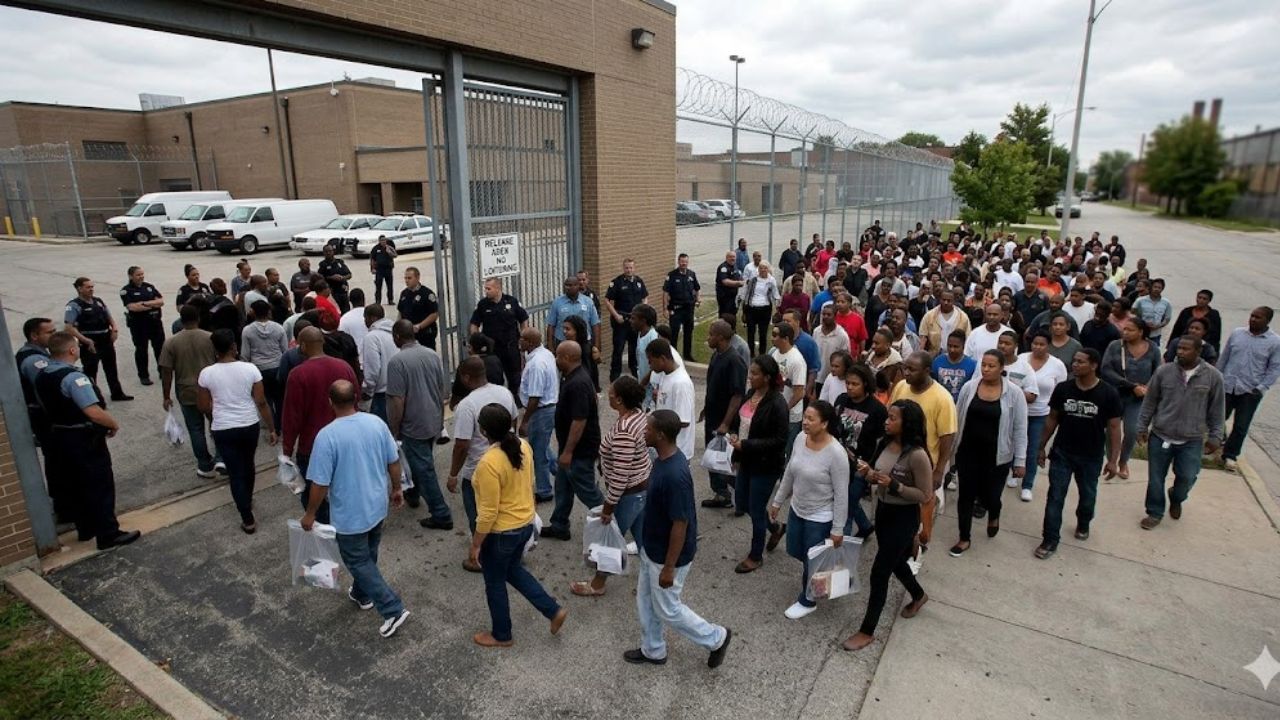
Hundreds of Immigrants with Criminal Records Were Released in Illinois
Reports and political claims alleging that hundreds of immigrants with prior criminal records were released in Illinois have sparked renewed debate over immigration enforcement and public safety policy in the state. The situation has been discussed in political circles and media commentary as an example of how inconsistent immigration enforcement can become when federal and local systems overlap.
At the center of the issue is disagreement over what “released” actually means in practice. In many cases, individuals may be released after serving time for unrelated offenses, after court hearings, or because immigration authorities did not issue a valid detention request. Supporters of stricter enforcement argue that any release involving criminal history is concerning, while others say the legal system does not allow indefinite detention without proper process.
How immigration custody and release decisions work
In Illinois, immigration-related custody decisions often involve multiple layers of authority, including local law enforcement, state courts, and federal immigration agencies. Local jails may hold individuals temporarily, but continued detention typically requires a federal immigration detainer or a separate legal basis. Without that, individuals can be released even if immigration status is unresolved.
This structure creates situations where outcomes vary widely depending on timing and paperwork. For example, someone may complete a criminal sentence in a county jail and be released if no valid federal hold is in place. Officials and legal experts often emphasize that this is not a discretionary political decision by the state alone, but the result of how federal and state systems interact.
Why criminal history becomes a political flashpoint
The phrase “criminal records” adds a strong emotional weight to the debate, which is why these cases often become politically charged. Critics of current policies argue that individuals with prior convictions should be prioritized for federal custody and removal proceedings, saying gaps in coordination can lead to avoidable releases.
Supporters of Illinois’ approach respond that criminal history alone does not automatically create legal authority for indefinite detention. They argue that due process still applies, and that immigration enforcement must follow court procedures and federal guidelines. This disagreement has become a recurring divide in immigration policy discussions across multiple states, not just Illinois.
The role of sanctuary policies and state limits
Illinois is often described in political debate as a state with sanctuary-style policies, meaning local law enforcement is generally limited in how much it cooperates with federal immigration enforcement. Supporters say these policies are meant to build trust between immigrant communities and local police, encouraging people to report crimes without fear of immigration consequences.
Opponents argue that reduced cooperation can make enforcement less effective, especially in cases involving individuals with prior offenses. However, legal experts often point out that sanctuary policies do not prevent federal immigration enforcement; instead, they restrict how local resources are used to assist it. That distinction is often lost in public debate, which leads to conflicting interpretations of what the policies actually do.
Data limitations and how numbers get interpreted
Claims involving “hundreds” of individuals are often based on aggregated data over long periods of time or across multiple jurisdictions. That can make the numbers sound more immediate or concentrated than they actually are. In reality, immigration enforcement data can include overlapping categories such as arrests, detentions, releases, and court decisions.
Because of this, experts caution that raw numbers don’t always explain the full context of each case. Some individuals may have minor offenses, some may have old convictions, and others may have no conviction at all but still be involved in immigration proceedings. Without breakdowns, large figures can be interpreted in very different ways depending on political perspective.
Federal vs. local responsibility in enforcement
A key issue in this debate is the division of responsibility between federal and local authorities. Immigration enforcement is primarily a federal responsibility, while local agencies handle criminal law enforcement. This separation means that coordination is required for immigration detainers to be effective, and that coordination is not always consistent across jurisdictions.
When detainers are not issued or are not honored due to legal limitations, local authorities may be required to release individuals even if federal immigration action is pending. This system is often criticized for being fragmented, but it is also shaped by constitutional limits on detention and state authority.
Ongoing political debate and public reaction
The claims about releases in Illinois have become part of a larger national conversation about immigration enforcement, border policy, and public safety. Politicians on different sides use cases like this to support broader arguments about whether the current system is too lenient or appropriately balanced with legal protections.
Public reaction tends to split along similar lines. Some view the situation as evidence that enforcement needs to be stricter and more centralized, while others see it as a misunderstanding of how legal processes work across federal and state systems. As with many immigration-related issues, the facts and the interpretation of those facts often diverge depending on perspective.
What happens next in the policy discussion
At this stage, discussions around immigration enforcement in Illinois are likely to continue at both the state and federal level. Lawmakers and agencies may look at improving coordination, adjusting detainer processes, or clarifying reporting standards to reduce confusion in public data.
However, major structural changes would require federal involvement, since immigration law is controlled at the national level. For now, the debate remains active, with ongoing disagreement over how to balance enforcement priorities, legal constraints, and public safety concerns.

Leo’s been tracking game and tuning gear since he could stand upright. He’s sharp, driven, and knows how to keep things running when conditions turn.