Iran claims heavy U.S. military losses in early conflict — what’s verified
The opening phase of the war between the United States and Iran has produced a fog of competing casualty claims. Iranian officials and media insist U.S. forces have suffered devastating losses, while the Pentagon has released far smaller figures and accused Tehran of propaganda. The gap between those narratives is already shaping public perception of a conflict that is still unfolding.
Sorting confirmed deaths and injuries from inflated numbers is not just an academic exercise. It goes to the credibility of both governments, the political stakes for leaders in Washington and Tehran, and the way Americans understand the human cost of the campaign.
What Iran is claiming about U.S. losses
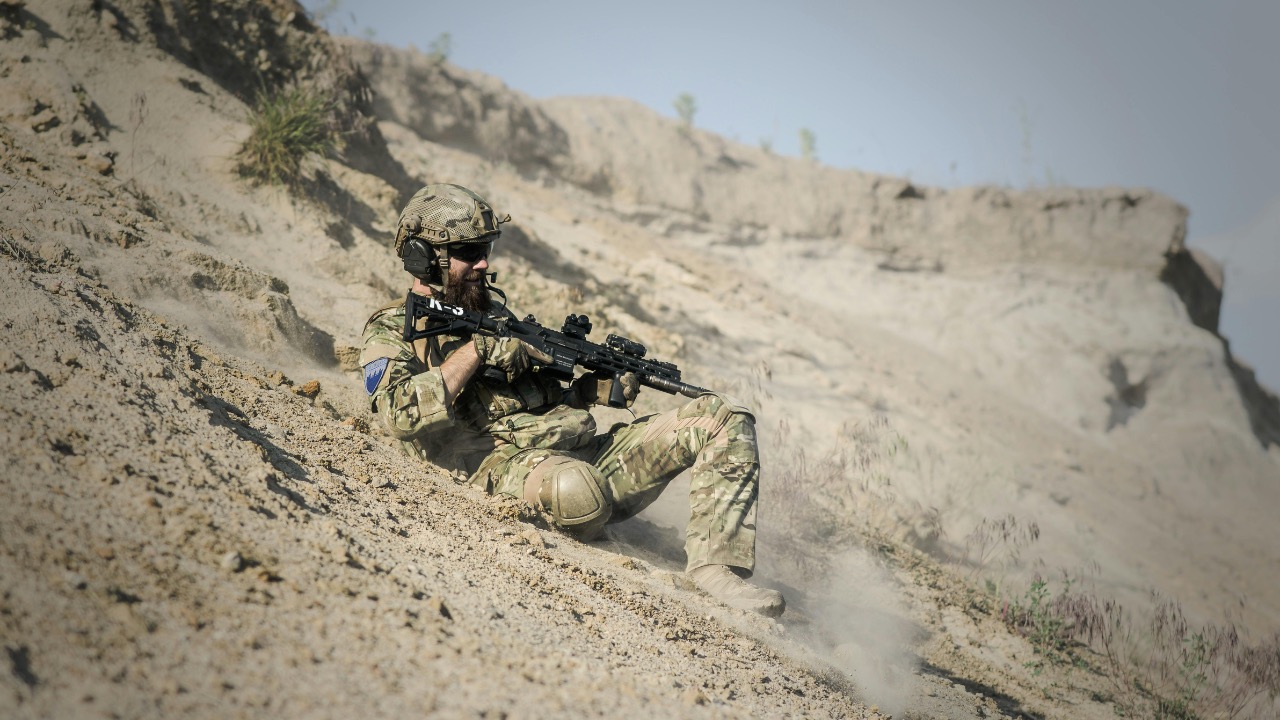
Iranian state-linked outlets have presented a picture of U.S. forces suffering thousands of casualties in a matter of days. One widely cited figure comes from Press TV, which reported that at least 200 American soldiers were killed and more than 3,000 were wounded within the first week of the Iran US war, for a total of 3,200 casualties described as very serious.
Another account attributed to a senior Iranian intelligence official repeats the claim that at least 200 US troops were killed and over 3000 wounded, reinforcing the same basic narrative of catastrophic American losses. A separate report on Military Losses Mount cites Press TV again to argue that U.S. forces have taken heavy casualties and that Washington is hiding the scale of the damage.
Iran’s Islamic Revolutionary Guard Corps has gone even further. In one statement, the IRGC said that 560 US soldiers were killed or wounded, a figure that Washington rejects while insisting operations remain ongoing. Another Iranian report claimed that within the first week of the war, U.S. forces had lost 41 aircraft and 43% of US weapons stocks, with images of the transfer of the body of an American soldier who died in Iran’s retaliatory strikes presented as visual proof of the toll.
The narrative has also been pushed through social platforms. One viral clip asserts that Iranian media has made a dramatic claim that the United States has suffered over 3,200 casualties in the early phase of the war. A separate video segment from TOI.in, flagged with Playing Picture and TOI, highlights claims that 200 American soldiers were injured as Trump admits he was caught off guard, again suggesting a far higher level of damage than U.S. officials concede.
Larijani and other Iranian officials raise the stakes
Beyond anonymous briefings and state television, senior Iranian figures have personally amplified the casualty narrative. Iran’s top security official, Ali Larijani, has been at the center of this effort. In one interview, Larijani claimed more than 500 US soldiers have been killed since the war began and accused Trump of dragging the American people into a disaster.
That figure of 500 dead is significantly higher than even other Iranian-linked accounts, which focus on the 200 killed and 3,000 wounded line. It signals a political goal as much as a battlefield assessment. By pairing the 500 claim with criticism of Trump of reckless leadership, Larijani is trying to frame the war as both a military and moral failure for Washington.
The focus on American casualties also dovetails with broader Iranian messaging that positions the conflict as a defensive response to U.S. and Israeli aggression. Official biographies and profiles of Ali Larijani emphasize his role in Iran’s security establishment, which gives his casualty statements added weight inside the country even when they are sharply disputed abroad.
What U.S. officials and allied sources have confirmed
On the American side, the numbers look very different. As the conflict entered its second week, U.S. Central Command said six U.S. service members had been killed so far in Iran operations since the U.S. and Israe strikes began. That figure was echoed in multiple briefings, with Central Command confirming that the remains of 2 more service members were found, bringing the death toll to 6.
Earlier, U.S. military officials had reported that six U.S. soldiers were killed as the Iran war expanded in the Middle East, a figure also cited by NPR in coverage of how the conflict threatens to engulf the wider Middle East The. Another update on social media stated that, As of March 8, the U.S. military has confirmed seven American service members killed in combat operations related to the ongoing war, with the post asking how many American lives will be lost so far in Trump’s war.
By the following week, a detailed profile piece counted Thirteen American service members who have died in the war in Iran in the weeks since the U.S. and Israel launched the initial military strikes, noting that more service members had died as fighting continued. In parallel, a report on the 2026 Iran war compiled casualty data Per US and Israel, listing for Israel 2 soldiers killed, 20 civilians killed, 3,727 injured, and 14 military personnel injured, alongside separate U.S. figures for killed and wounded.
Those official and semi-official tallies are far below Iran’s claims of 200 or 500 killed and thousands wounded. They do, however, show a steady climb in the American death toll as operations intensify, from six to seven to Thirteen American service members over roughly the first two weeks of fighting.
How the numbers diverged so quickly
The early days of any conflict are fertile ground for information warfare, and the Iran war is no exception. Iranian officials and media have every incentive to present U.S. forces as reeling from heavy losses, both to bolster domestic morale and to signal strength to regional rivals. The use of large round numbers like 200 killed, 3,000 wounded, and a total of 3,200 casualties fits a familiar pattern of wartime exaggeration.
For its part, the U.S. military has been guarded in its disclosures. One Facebook post that began, As of March, framed the seven confirmed American dead as the official combat toll while hinting that more information could still emerge. A separate U.S. update acknowledged that at least 200 US troops have been injured as the US Israeli war on Iran continues, amid fears of oil disruption, although that figure referred to injuries rather than deaths and did not match the scale of Iranian claims.
The broader casualty picture is further muddied by the complex battlefield. According to the entry on the 2026 Iran war, fighting has involved not only U.S. and Iranian forces but also Israel and other regional actors, with Israel suffering 2 soldiers killed and 20 civilians killed alongside 3,727 injured. Those overlapping fronts make it easier for each side to highlight enemy losses and minimize its own.
Domestic politics and the Pentagon’s message
Casualty figures are not being debated in a vacuum. In Washington, the war with Iran has already triggered a scramble over money and strategy. At a Pentagon press briefing, Secretary of Defense Pete Hegseth faced questions about the cost of the conflict, with one viral clip showing him declining to deny a report that the Pentagon would seek more funding from Congress for the war with Iran. That clip, shared widely on Pentagon, fueled speculation that casualty and cost figures were being managed for political reasons.
Shortly afterward, a detailed report stated that Pentagon Claims It Needs Additional $200 Billion to Pay for War on Iran, describing a request that would significantly increase the Defense Department budget request for 2027. That Pentagon Claims It $200 Billion to Pay for War on Iran figure underscores how casualty numbers and budget politics are intertwined, since higher spending is often justified by the intensity and duration of combat.
Coverage of the U.S. military operation in Iran has also focused on the official casualty line. One report on Centcom raises the Epic Fury death toll to 6 service members noted that the U.S. military said on Monday that six U.S. service members have been killed so far in Iran operations since the U.S. and Israe strikes began, reinforcing the message that losses are serious but far from the thousands claimed by Tehran.

Leo’s been tracking game and tuning gear since he could stand upright. He’s sharp, driven, and knows how to keep things running when conditions turn.