Predators That Kill More Livestock Than Wolves — and Get Less Attention
Public debate about livestock losses often fixates on wolves, casting them as the main threat to cattle and sheep. Government data and field research tell a different story, with other predators, and even domestic animals, responsible for far more dead livestock than wolves in most regions. A closer look at those numbers reveals a gap between political rhetoric and what actually happens on the ground.
That gap matters for both ranchers and wildlife. When attention and funding are steered toward the wrong culprit, producers may miss practical ways to protect their animals, and native predators can be killed in large numbers without reducing losses. A clearer view of which species cause the most damage, and why they draw less public scrutiny, points toward more effective and less polarizing solutions.
What the numbers really say about wolves and livestock
Nationally, predators as a group account for only a sliver of overall livestock deaths compared with disease, weather, birthing problems and other causes. A federal report on cattle and calves shows that issues like respiratory illness and digestive disorders dwarf any category of predation. Independent analysis by The Humane Society of the United States used the same U.S. Department of Agriculture data and concluded that wolves have a negligible effect on the national cattle inventory, even in states where they are present, and that farmers and ranchers lose far more animals to nonpredator causes than to any carnivore.
Regionally, the picture is similar. In the Pacific Northwest, in Oregon and Washington, the USDA claimed that wolves killed 1,661 sheep and cattle from an inventory of more than 8.5 million animals. The Humane Society of the United States reviewed those figures and argued that, even accepting the government’s own tallies, wolves were responsible for a fraction of one percent of the herds in question. A separate report from The Humane Society of the United States examined what it called the USDA’s embellished predation numbers and again found that their data show that farmers and ranchers lose far more livestock to disease and weather than to wolves, reinforcing the conclusion that wolves are a minor factor in overall death loss.
Coyotes and dogs, the everyday livestock killers
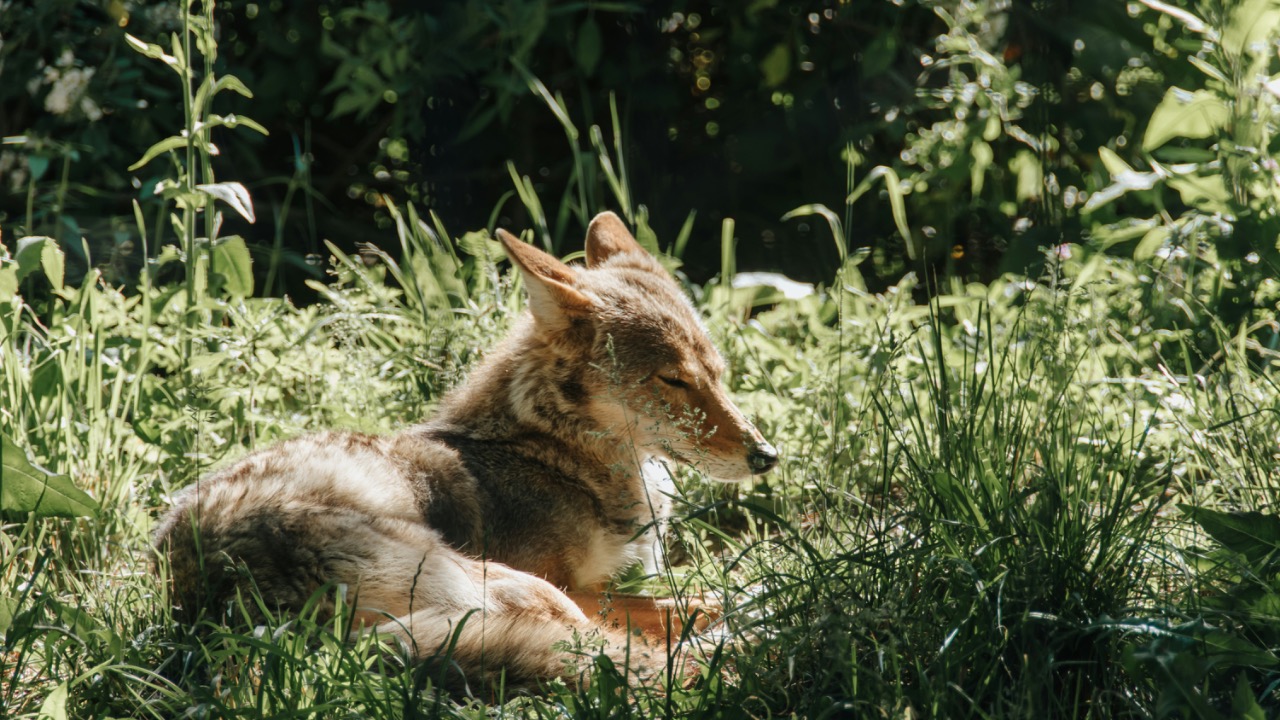
If wolves are not driving most losses, other predators are. Across much of North America, coyotes are the most persistent threat to sheep and young calves, in part because they are widespread and comfortable living near people. Extension specialists in Mississippi reported that predators were responsible for 5.5 percent of calf losses on beef operations in the state and that the majority of coyote activity and livestock damage occurred during winter and spring calving seasons, when vulnerable newborns are on the ground. Another section of the same Mississippi guidance notes that both domestic and feral dogs can be serious livestock predators and that animals unable to defend themselves may be killed, putting ordinary pets in the same category as wild carnivores when they roam unsupervised.
National sheep industry data underline how central canids are to predation losses. A fact sheet labeled ABOUT PREDATOR LOSSES, drawing on the U.S. Department of Agriculture’s Animal and Plant Health Inspection Service, reports that coyotes account for the largest share of documented sheep kills, with dogs also responsible for a significant portion. Research compiled at a livestock predator hub at the University of California found that, nationally, in 2014, dogs caused 21.4% of predator losses in adult sheep and 10.3% of predator losses in lambs, a reminder that unconfined dogs can be as damaging as any wild carnivore. Industry advisers who work directly with producers have gone so far as to describe, in a Mar analysis framed as “By the numbers,” that “most predation losses are from coyotes,” a conclusion echoed in many regional surveys.
Mountain lions, bears and birds that ranchers rarely talk about
In the western United States, large carnivores beyond wolves also prey on livestock, yet they feature less often in national arguments over predator policy. Mountain lions (also known as cougars) are solitary ambush hunters that occasionally take calves, sheep or goats, especially where wild prey is scarce or livestock graze in rugged, brushy country. A second overview of mountain lions notes that conflicts tend to cluster along the edges of human settlement, where deer and other natural prey overlap with ranchland. Yet because lions are elusive and kills can be hard to confirm, their role in livestock losses is often undercounted and discussed mainly in local forums rather than national debates.
Bears are another underappreciated source of damage. Guidance from the Internet Center for Wildlife Damage Management explains that bears (Black and Grizzly) prey on livestock and that black bears usually kill by biting the neck or by slapping the victim, leaving carcasses that are torn, mauled and partially consumed. Public search summaries for bears and a second entry on Bears emphasize their omnivorous diet, which can include young livestock when other food is scarce. Even some birds can be significant predators: black vultures have been documented killing or severely injuring newborn calves and lambs, a behavior reflected in wildlife summaries on Black Vultures and a second profile of black vultures. Ranchers in parts of the Midwest and South now report these birds as emerging threats, even though they receive far less national attention than wolves.
Why wolves dominate headlines anyway
If coyotes, dogs, bears, mountain lions and even vultures take more livestock, the question becomes why wolves occupy such an outsized place in public argument. Ecologists studying human predator conflict have long argued that visibility and symbolism matter as much as raw numbers. One analysis cites Yodzis, who suggests that attention invariably falls to predators because they are highly visible and frequently perceived as competitors with humans for the same prey. Wolves, with their pack structure and long history in folklore, fit neatly into that narrative in a way that coyotes or black vultures do not.
Social and political history add another layer. In parts of the American West, wolves were eradicated and later reintroduced, turning them into flashpoints in broader disputes over federal land management and rural identity. A feature on how farmers coexist with wolves notes that wolves and other large predators account for just a small percentage of all livestock losses in the United States, and that compared with disease or respiratory illness, predators are not significant drivers of overall herd mortality. Yet because wolves are tied to high profile lawsuits and ballot measures, they attract more media coverage and lobbying than species that quietly cause more day to day damage, such as coyotes and dogs.
What better data could mean for ranchers and wildlife
Shifting the focus from symbolic predators to the full cast of livestock killers could change how money and effort are spent. Guidance for sustainable and organic livestock producers notes that They can help you identify predators and offer remedies that will minimize the impact on wildlife, and that Each state’s Wildlife Servi office can provide technical support and information on nonlethal tools. Practical measures such as better fencing, guardian animals, night penning and carcass removal tend to work against a wide range of predators at once, whether the culprit is a coyote, a neighbor’s dog or a mountain lion.
For regulators and advocacy groups, more accurate messaging could also lower the temperature of predator politics. The Humane Society of the United States, in its wolf livestock reports, argues that Their review of USDA data shows wolves are a minor cause of losses and that heavy lethal control is unlikely to change the national bottom line for ranchers. At the same time, producers like Kristy Wardell, whose family’s sheep share grazing allotments with wolves, coyotes and grizzly bears, describe in a Jan profile how constant vigilance and targeted control remain part of their business reality, a story illustrated in a Photo courtesy of Mary Thom. Balancing those perspectives starts with acknowledging that wolves are only one piece of a larger predator puzzle, and that focusing on the full range of threats offers the best chance to protect both livestock and the wild animals that share the same ground.

Leo’s been tracking game and tuning gear since he could stand upright. He’s sharp, driven, and knows how to keep things running when conditions turn.