Israeli airstrike near Gaza school kills at least 10 as ceasefire efforts falter
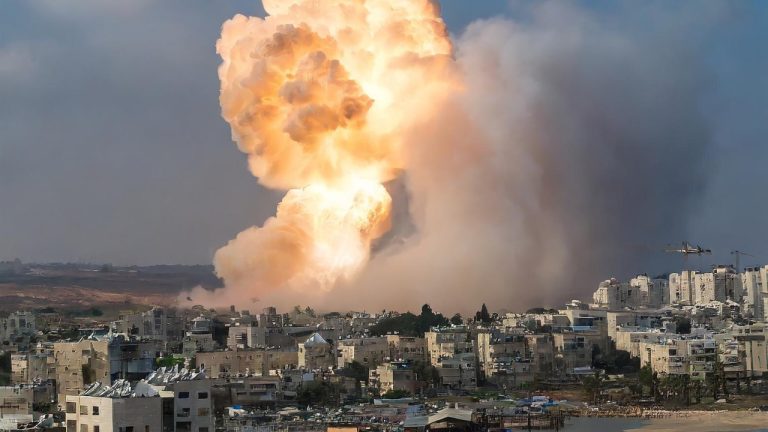
An Israeli airstrike near a school in the Gaza Strip has killed at least 10 people, according to local emergency services, in a strike that hit as families sought shelter from ongoing bombardment. The attack came as diplomats struggled to revive stalled ceasefire talks, deepening fears that the war will grind on with mounting civilian casualties.
The blast near the school, which was being used as a refuge by displaced residents, has again thrown a spotlight on the risks to civilians in densely populated areas and the limited progress of international efforts to halt the fighting.
What happened

Local civil defence officials in Gaza reported that at least 13 people were killed in a series of Israeli strikes across the enclave, including five children, with one of the deadliest incidents taking place close to a school that had become an improvised shelter. The agency said the strike near the school left at least 10 dead at the site, with more casualties reported in nearby streets and residential buildings hit in the same wave of attacks. The pattern of damage, with shattered classrooms and scorched playground equipment, suggested that the blast radius extended well beyond the intended target.
Rescue workers described pulling bodies and injured survivors from rubble near the school, where hundreds of people had gathered after fleeing earlier bombardments in other districts. According to the civil defence agency, the latest fatalities brought the toll from the overnight strikes to at least 13 across Gaza, a figure that included women and children among the dead. Local media reports, citing the same emergency officials and showing images of the crowded schoolyard turned into a disaster scene, echoed those details.
The Israeli military has said that its current campaign in Gaza is focused on targeting Hamas infrastructure, command sites and rocket launchers embedded in civilian areas. Military spokespeople argue that militants use schools, mosques and residential blocks to store weapons and plan attacks, a claim Israel has repeated in previous rounds of fighting. In the case of the strike near the school, Israeli officials indicated that the area contained what they described as a Hamas operational site, although they did not immediately provide detailed evidence or a full account of the specific target.
Residents and local officials in Gaza disputed that characterization, insisting that the school and its surroundings were filled mainly with displaced families who had moved there after being told to leave other neighbourhoods. Witnesses said there was no visible militant presence at the time of the attack and that the majority of those killed were civilians who had been sleeping in classrooms or lining up for food and water in the courtyard. The discrepancy between the military’s description of the target and the accounts from the ground has already become a focal point for rights groups monitoring potential violations of international humanitarian law.
The strike near the school came amid a broader escalation that saw Israeli aircraft hit multiple locations across the strip overnight, including apartment blocks and what the military described as weapons depots. Gaza’s civil defence agency said that in addition to the 13 people killed, dozens were wounded, overwhelming already stretched hospitals that have been struggling with shortages of fuel, medicine and electricity. The latest casualties add to a war toll that has climbed steadily over months of fighting, with health officials in Gaza reporting thousands of dead and injured since the conflict began.
Beyond Gaza, violence has also flared in the occupied West Bank, where Israeli forces have carried out repeated raids in cities and refugee camps. In one such operation, Palestinian officials reported that Israeli troops killed two Palestinians during raids in separate locations, part of what they described as a pattern of intensified arrests and armed clashes. The incident, in which two men were shot dead during confrontations with Israeli forces, underscored how the conflict in Gaza has been accompanied by rising tensions and lethal force in the West Bank, drawing concern from international observers who track the broader Israeli Palestinian conflict.
The combination of heavy airstrikes in Gaza and deadly raids in the West Bank has reinforced a sense among Palestinians that the conflict is widening rather than winding down. Families in Gaza who had moved from one supposed safe zone to another said they felt trapped, with schools, hospitals and United Nations facilities all coming under varying degrees of fire in recent months. The school hit in the latest strike had been one of the few remaining places where residents believed they could find relative safety, making the attack particularly shocking for those who had sought refuge there.
Why it matters
The attack near the school has sharpened international scrutiny of how Israel is conducting its military campaign in one of the most densely populated places in the world. Strikes that kill large numbers of civilians, especially children, tend to galvanize diplomatic pressure and public outrage, and this incident is no exception. Humanitarian organizations have repeatedly warned that operations in crowded urban areas, where schools and homes stand next to suspected militant sites, create a high risk of civilian deaths that may violate the principles of distinction and proportionality under international law.
Local civil defence officials in Gaza emphasized that among the 13 people killed in the latest wave of strikes were five children, a detail that has already circulated widely in regional media and on social platforms. The inclusion of children in the casualty figures has been a recurring feature of this war, and each new incident involving minors deepens questions about whether enough precautions are being taken to protect noncombatants. For families sheltering in schools and other public buildings, the strike reinforced a grim lesson that no location can be assumed safe as long as the bombing continues.
The timing of the attack is also significant because it coincides with faltering efforts to secure a ceasefire or even a sustained pause in the fighting. International mediators, including Egypt and Qatar, have tried to broker arrangements that would link a halt to Israeli airstrikes with steps by Hamas to stop rocket fire and release hostages. However, those talks have repeatedly stalled over disagreements about the scope of a truce, the sequencing of concessions and the long term governance of Gaza once the current phase of the conflict ends. The strike near the school, with its high civilian toll, risks hardening positions on both sides and making compromise more politically costly.
Financial markets and regional economies are also watching developments closely. Prolonged conflict in Gaza, combined with unrest in the West Bank and tensions along Israel’s other borders, has implications for investor confidence and trade flows in the wider Middle East. Analysts have pointed to the way repeated escalations between Israel and Palestinian factions can unsettle energy markets, disrupt cross border commerce and discourage foreign investment in neighbouring states. Reports tracking the conflict have linked the continuation of hostilities to rising regional risk premiums, with particular concern about how a drawn out war could affect sectors such as tourism, shipping and infrastructure projects.
The humanitarian impact inside Gaza is already severe and is likely to worsen if fighting continues at the current intensity. Hospitals that receive casualties from strikes like the one near the school are grappling with shortages of fuel for generators, limited surgical supplies and damaged facilities. Aid agencies have warned that displaced families living in schools, tent camps and overcrowded apartments face heightened risks from disease, malnutrition and exposure, especially as basic services break down. Each new strike that hits or comes close to a school, clinic or shelter accelerates that deterioration and complicates the work of humanitarian staff who must decide where it is safe to operate.
Politically, incidents involving large civilian casualties often influence public opinion in Israel, the Palestinian territories and abroad. Within Israel, the government faces pressure from some citizens to continue the campaign until Hamas is significantly weakened or removed from power, while others express growing concern about the humanitarian cost and the country’s international standing. Among Palestinians, images of destroyed schools and dead children fuel anger at Israel and can also shape attitudes toward Palestinian factions that claim to resist occupation through armed struggle. Internationally, governments that support Israel’s right to self defence still must respond to domestic audiences that are increasingly sensitive to civilian suffering.
The strike near the school also reverberates through the diplomatic arena at the United Nations, where member states have debated resolutions calling for ceasefires, humanitarian pauses and accountability for alleged violations of international law. Previous escalations in Gaza have prompted emergency sessions of the Security Council and the General Assembly, with sharply divided votes reflecting longstanding geopolitical alignments. The new incident adds fresh urgency to those debates and may influence whether additional resolutions are proposed or existing ones are revisited in light of the ongoing casualty figures.
Comparisons are already being drawn to earlier rounds of fighting, when schools and other civilian sites were hit during Israeli operations against militants in Gaza. In previous conflicts, international mediators including Egypt and United Nations officials eventually helped arrange short term ceasefires that reduced violence for periods ranging from days to months. Those arrangements often involved indirect talks between Israel and Palestinian factions, with Egypt serving as a go between and the United Nations providing monitoring and humanitarian coordination. The current situation, however, appears more entrenched, with both sides expressing skepticism that a limited truce would address their core concerns.
At the same time, the conflict in Gaza interacts with a broader pattern of Israeli Palestinian tensions across multiple fronts. The killing of two Palestinians during Israeli raids in the West Bank, reported by local authorities, illustrates how security operations in that territory have intensified alongside the war in Gaza. Rights groups have documented an increase in arrests, home demolitions and movement restrictions in West Bank cities and refugee camps, arguing that these measures contribute to a cycle of anger and resistance that can spill over into new clashes. The dual pressure on Gaza and the West Bank reinforces Palestinian perceptions of a unified struggle, while Israeli officials frame their actions as necessary to prevent attacks on Israeli civilians.
What to watch next
The immediate question after the strike near the school is whether it will accelerate or derail efforts to reach at least a temporary halt in the fighting. Diplomats from Egypt, Qatar and other regional states are expected to continue shuttle talks with Israeli and Palestinian representatives, seeking formulas that might include phased ceasefires, prisoner exchanges and guarantees on humanitarian access. Previous experience in Gaza suggests that even after severe escalations, it is sometimes possible to negotiate short pauses in violence, especially when civilian casualties rise sharply and international pressure mounts.

Leo’s been tracking game and tuning gear since he could stand upright. He’s sharp, driven, and knows how to keep things running when conditions turn.