Knives you can depend on in the field
Out in the field, dependability isn’t abstract. It’s whether a knife still cuts when your hands are cold, whether the handle stays put when it’s wet, whether the edge keeps working after it’s been pushed harder than planned. You don’t get bonus points for clever design when you’re miles from the truck. You get results, or you don’t.
Field-reliable knives share a few traits. Tough steels over fragile ones. Ergonomics that work with gloves or bare hands. Construction that doesn’t loosen, flex, or surprise you under pressure. These are knives you reach for without hesitation because they’ve already proven they won’t let you down.
ESEE 4

The ESEE 4 has become a benchmark for field reliability. Full tang construction and conservative blade geometry make it hard to overstress. You can baton, carve, or process game without worrying about edge failure.
1095 steel isn’t fancy, but it behaves predictably. It sharpens easily in the field and resists catastrophic damage when conditions aren’t ideal. The Micarta handle stays secure when wet or cold, and the balance favors control over finesse. It’s the kind of knife you trust because nothing about it feels fragile or rushed.
Mora Garberg
The Garberg takes Mora’s simple approach and adds real strength. Full tang construction gives it a solidity lighter Moras don’t have, which shows up immediately under load.
The Scandi grind bites aggressively into wood and hide, even when materials are stiff or frozen. Steel choice favors toughness over edge vanity, which keeps the knife usable after hard cuts. It’s easy to maintain, easy to control, and comfortable for long use. In the field, that combination matters more than looks.
Fallkniven F1
The F1 was designed for harsh environments, and it shows. Laminated steel construction gives you a hard cutting core backed by tougher outer layers, reducing the risk of chipping under stress.
The convex edge adds strength without sacrificing bite. The handle stays comfortable even when conditions force awkward grips. It doesn’t feel large, but it feels dense and controlled. When weather turns ugly or tasks pile up, the F1 stays predictable, which is exactly what you want when options are limited.
Bark River Bravo 1

The Bravo 1 feels built for long days and hard use. Thick stock and a convex grind distribute stress evenly, keeping the edge stable through abuse.
Steel choices like A2 favor toughness, and the heat treatment supports real-world use rather than edge chasing. The handle fills the hand naturally and stays comfortable during extended work. It’s not light, but it’s reassuring. In the field, that reassurance translates directly into confidence when you lean into a cut.
Ka-Bar USMC
The Ka-Bar isn’t refined, but it’s honest. Thick spine, proven steel, and a handle shape that’s seen decades of real use make it dependable in a wide range of tasks.
It handles wood processing, food prep, and general camp work without complaint. The edge isn’t fragile, and the blade doesn’t flex under pressure. You feel exactly what the knife is doing, which helps prevent mistakes. It’s been trusted in rough environments for a long time, and that track record still counts.
Cold Steel SRK
The SRK leans toward toughness first. Blade geometry and steel selection prioritize durability over refinement, which pays off when conditions aren’t forgiving.
It holds a working edge through abuse and sharpens easily when needed. The handle stays secure with gloves, and the knife doesn’t feel nervous when pushed hard. It’s not elegant, but it’s dependable. When you need a knife that won’t complain about how it’s used, the SRK delivers.
Helle Temagami
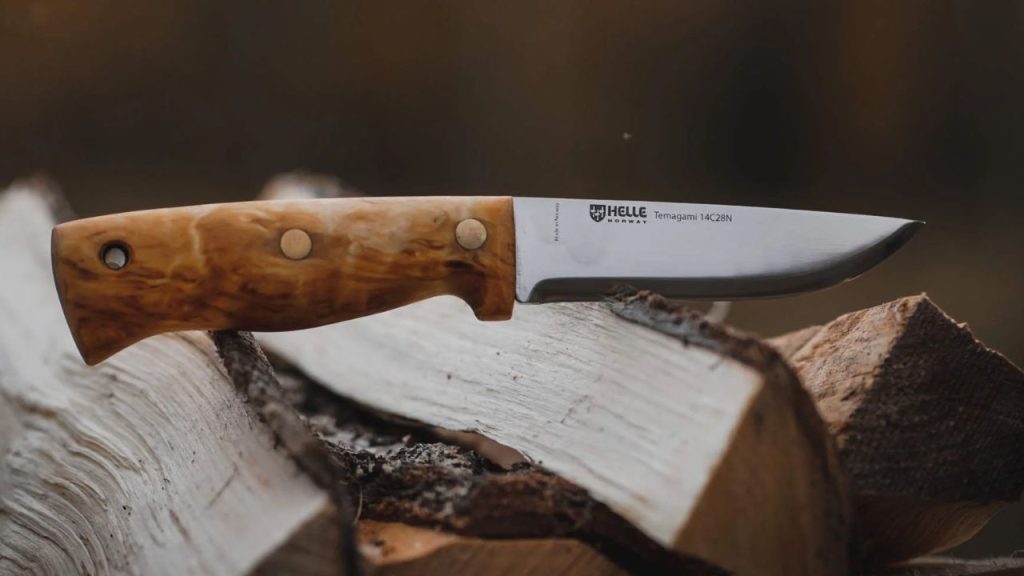
Helle knives are built with real outdoor use in mind, and the Temagami reflects that. Laminated steel offers a balance of edge retention and toughness, while the Scandi grind excels at controlled cutting.
The handle is comfortable even when hands are cold or tired. Balance stays neutral, and the knife doesn’t twist under pressure. It’s particularly well-suited for woodcraft and camp tasks where control matters more than brute force. In the field, it feels cooperative rather than demanding.
Benchmade Adamas
For a folder, the Adamas stands out as genuinely field-capable. Thick liners, robust lockup, and a wide blade give it a solidity most folding knives lack.
It tolerates dirt and moisture better than lighter designs, and the handle fills the hand enough to stay secure under pressure. While it won’t replace a fixed blade for heavy work, it’s one of the few folders you can rely on when a fixed blade isn’t practical. That reliability earns its place.
Spyderco Shaman
The Shaman bridges the gap between folding and fixed blades better than most. Thick blade stock and a strong lock keep it stable during demanding tasks.
Ergonomics encourage a relaxed but secure grip, which reduces fatigue. The blade geometry favors control and strength over thin slicing performance. It’s not delicate, and it doesn’t pretend to be. For field use where a folder must pull real weight, the Shaman holds up.
Dependable field knives aren’t about trends. They’re about showing up, cutting cleanly, and staying intact until the work is done. When a knife earns that trust, you stop thinking about it entirely, and that’s the highest compliment you can give any tool.

Leo’s been tracking game and tuning gear since he could stand upright. He’s sharp, driven, and knows how to keep things running when conditions turn.