Military Operations That Changed the Direction of Modern Wars
Across two centuries of conflict, certain campaigns have not only decided wars but also rewritten how wars are fought. From industrial-scale invasions to drone-enabled raids and information offensives, a handful of operations have repeatedly forced militaries to rethink strategy, technology, and the link between battlefield actions and political outcomes. Together, they trace how modern conflict has shifted from massed armies and clear fronts to dispersed forces, digital targeting, and battles over perception as much as territory.
Looking closely at these operations shows how each generation’s breakthrough becomes the next generation’s starting point. The pattern that emerges is one in which tactics, doctrine, and even legal frameworks evolve around a few landmark campaigns that reveal what future wars will look like long before doctrine catches up.
From Industrial War to Modern Warfare
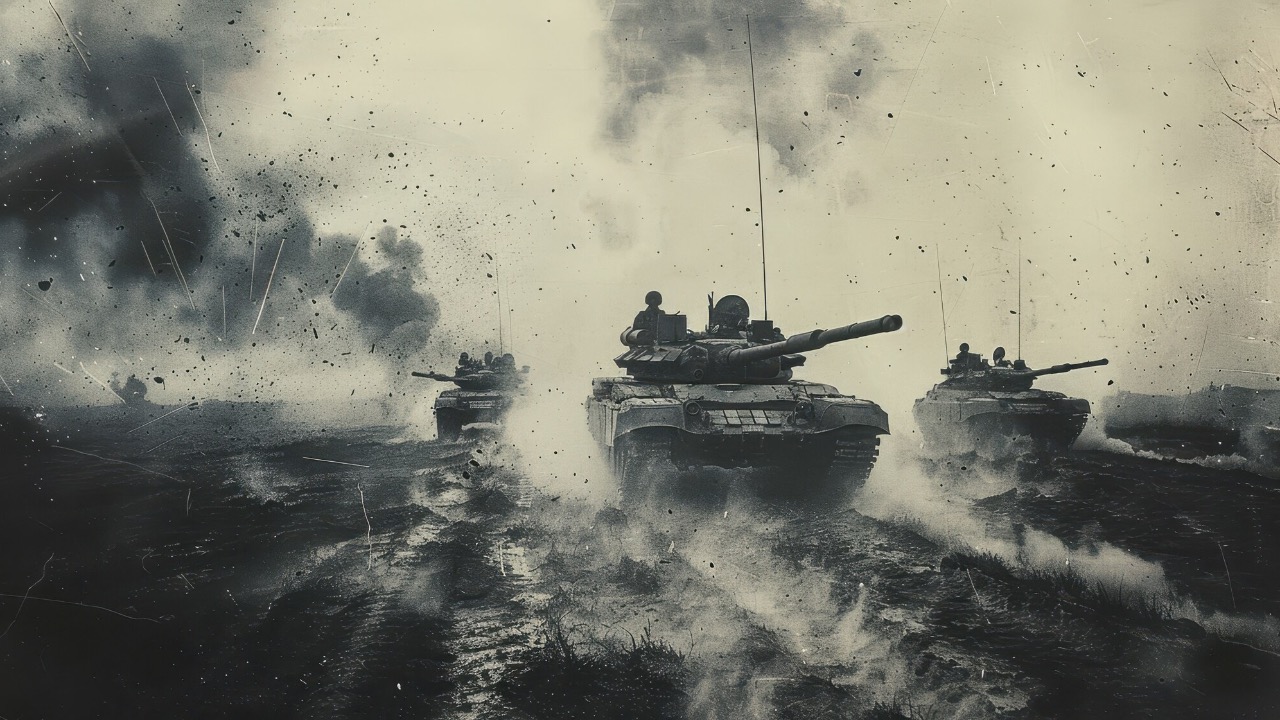
Modern warfare is often defined as conflict shaped by industrial firepower, mechanization, and later by nuclear weapons, precision strikes, and information operations. Analysts describe it as a shift from tightly packed formations to dispersed forces, driven by the increased lethality and range of weapons that have steadily reduced how densely troops can safely concentrate on a battlefield. One assessment of the changing character of war traces this trend from the Napoleonic era to current conflicts and shows how expanding range and lethality have made battlefields more complex and less predictable, with more actors and feedback loops than traditional linear planning models can handle. That analysis of the move from complicated to complex conflict is captured in work on changing context of.
Within that broader evolution, particular operations stand out because they crystallized new ways of fighting. Some showcased new technology at scale, others revealed the limits of existing doctrine, and still others forced alliances to redefine what military power is supposed to achieve. These campaigns also shaped public expectations about what war should look like, from the televised images of precision bombs in the early 1990s to live-streamed drone footage and online propaganda today.
Operation Overlord and the Age of Allied Joint Power
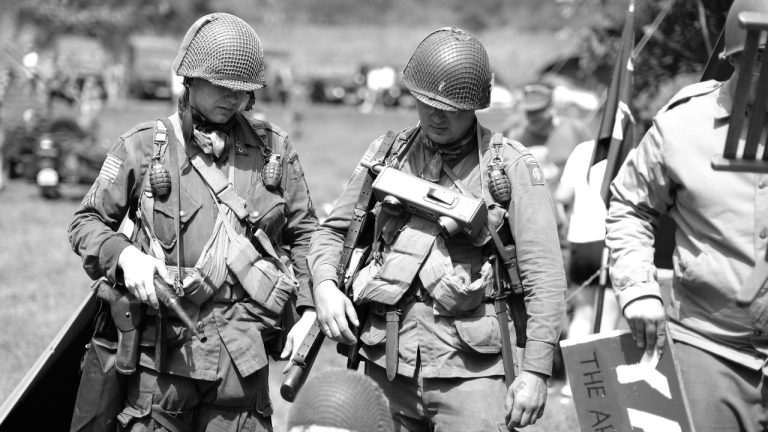
Operation Overlord, the Allied invasion of Nazi-occupied France, remains a template for large-scale joint and combined operations. It brought together land, sea, and air forces from multiple nations in a tightly coordinated assault that began on the beaches of Normandy and extended deep into occupied Europe. Historical summaries of major twentieth century battles describe how the campaign integrated deception plans, airborne drops, naval gunfire, and amphibious landings into a single operational design that depended on synchronized timing and logistics across the English Channel.
One account of Pivotal Military Operations highlights Operation Overlord as a defining example of alliance-led global military strategy. It notes how the Allies used artificial Mulberry harbors to sustain the beachhead and how air superiority allowed them to isolate the battlefield by cutting German rail and road networks. The operation showed that a coalition could plan and execute an immensely complex assault, provided there was a unified command structure and shared doctrine.
Overlord also helped institutionalize the idea that large operations must be designed as campaigns, not just battles. Commanders linked tactical objectives on individual beaches to operational goals such as seizing ports, then to the strategic aim of liberating Western Europe. That logic of nested objectives still guides modern joint planning, whether for humanitarian evacuations or high-intensity conflict.
Operation Desert Storm and the Precision Revolution
Operation Desert Storm, the coalition campaign to expel Iraqi forces from Kuwait, is frequently cited as the moment precision-guided munitions and networked command systems moved from experiment to operational norm. A short retrospective on January Desert Skies describes Operation Desert Storm Lau as a war that changed modern warfare forever, emphasizing how the air campaign opened with strikes designed to blind and paralyze Iraqi command and control before ground forces advanced.
Analysts of modern airpower argue that The Gulf War air campaign introduced profound changes in the planning and conduct of conflict. A study by the Aerospace Education Foundation notes that the campaign allowed planners to target leadership, infrastructure, and fielded forces in a tightly integrated sequence, using stealth aircraft, cruise missiles, and smart bombs guided by lasers and satellite navigation. That assessment, presented on a Page produced by the Aerospace Education Foundation, stresses that The Gulf War demonstrated how airpower could shape the entire theater before ground combat began.
The televised imagery of precision strikes created a powerful narrative about a new kind of clean, high-tech war. Later scholarship has highlighted the limits of that perception, especially when forces moved into urban areas. Yet the underlying shift was real. Over the last 50 years, according to one analysis of technology and conflict, Militaries have turned away from massed artillery barrages toward precision systems that can accurately strike targets all over the world. That trend, which accelerated after the Cold War, set the stage for today’s reliance on guided missiles, drones, and real-time targeting data.
Peace Enforcement in the Balkans and “Operations Other Than War”
The conflicts in the former Yugoslavia in the 1990s forced Western militaries to confront missions that did not fit traditional warfighting categories. A detailed review of peace enforcement in that decade notes that a quick victory in Iraq after the Vietnam War had validated an emphasis on decisive force, but Bosnia and later Kosovo required different tools. Operation efforts in the Balkans involved enforcing cease-fires, protecting humanitarian convoys, and separating warring factions, often under restrictive rules of engagement.
One analysis of military operations other describes how troops shifted from high-intensity combat training to tasks such as delivering food, water, and shelter while also deterring renewed violence. The experience revealed gaps in doctrine, logistics, and civil-military coordination, and it raised questions about how long armed forces should remain in stabilization roles once fighting stops.
The United States Army later codified these lessons in doctrine. An article explaining how history shapes current operations describes a field manual that institutionalizes hard-won insights from these peace enforcement missions. That same piece notes that As a keystone doctrinal publication, FM 3-07 linked past experiences to future stability operations, and it also recalls that As the first-ever ground operation conducted by NATO and the largest Western Allied military operation in Europe since World War I, the Bosnia mission required new coordination mechanisms among NATO, Western Allied governments, and local actors in Europe emerging from a bloody, ethnically motivated civil war in Bosnia. The article on history shaping current underscores how those campaigns shifted thinking about what military success looks like when the objective is not total defeat of an enemy but the creation of a secure environment for political settlement.
Overseas Contingency Operations and the Era of Counterterrorism
The attacks on the United States on Sept. 11 triggered a long period of conflict officially grouped under the label Overseas Contingency Operations. A Department of Defense casualty database lists Overseas Contingency Operations and identifies major campaigns including OEF, OIF, OND, OIR, and OFS. These designations cover combat and support missions from Afghanistan to Iraq and Syria, as well as operations aimed at dismantling terrorist networks and targeting leaders such as Osama bin Laden in Pakistan.
Public-facing summaries of where the United States has fought in the twenty-first century describe how AFGHANISTAN became the first major theater After al-Qaida attacked the United States on Sept. 11. A report on where the United States has intervened in the 21st century explains that the initial campaign toppled the Taliban government that had sheltered Qaida, then evolved into a long counterinsurgency and state-building effort. The same overview notes that the United States later opened another front in Iraq, then expanded into what it calls DRONE WARS as remotely piloted aircraft became central to targeting suspected militants across multiple countries. That shift is captured in the PBS examination of where the United.
These campaigns forced militaries to integrate intelligence, special operations forces, and drones into a continuous targeting cycle. They blurred the line between war and policing and raised legal and ethical debates about sovereignty, civilian casualties, and indefinite detention. They also accelerated the development of tactical robotics. One assessment of transition period warfare notes that Although robotics in combat are not new, the United States military’s counterterrorism and counterinsurgency operations of the early twenty-first century dramatically increased the pace of this development, as forces relied on unmanned systems for surveillance, bomb disposal, and precision strikes.
Drone Warfare and the New Operational Art
Unmanned aircraft have moved from niche tools to central actors in modern campaigns. An analysis of unmanned aircraft and the revolution in operational warfare explains how Integration with Conventional Forces has changed the tempo and style of operations. By maintaining persistent surveillance while simultaneously conducting precision strikes, drones allow commanders to track enemy movements, hit fleeting targets, and disrupt logistics hubs and lines of communication without exposing pilots to risk. That same assessment describes how unmanned systems now support everything from artillery spotting to electronic warfare.
Recent conflicts have shown how drones can shift from tactical gadgets to strategic enablers. A study of tomorrow’s drone-enabled maneuver warfare describes how the hum in the sky is growing louder, bringing not only firepower but the dawn of drone-enabled operational breakthroughs. It notes that Ukrai forces, for example, have used cheap quadcopters and longer-range systems to spot targets, adjust artillery in real time, and even conduct deep strikes against logistics nodes. This has made static trench lines more vulnerable and forced both sides to develop better air defenses and electronic countermeasures.
Another assessment of operational and tactical shifts in current conflicts observes that Amidst the chaos and unending saga of the ongoing conflicts in Ukraine and the Middle East, several shifts in the nature of warfare have become clear. It highlights the transparency and ubiquity of technology, where commercial satellites, smartphones, and social media combine with drones to create an almost continuous picture of the battlefield. That expert commentary on how modern wars are reshaping the battlefield, hosted by ORF, stresses that this level of visibility complicates surprise and deception but also increases the risk of rapid escalation if strikes appear to reach deep into an adversary’s territory.
These trends feed into broader debates about a new revolution in military affairs. One think tank analysis of 21st century conflict argues that The rise of non-state actors and the linkages between growing civil problems and civil conflicts force observers to rethink the role of what it calls the Revolution in Military Affairs, or RMA. It suggests that technology alone does not guarantee advantage, and that political context, legitimacy, and civil-military relations are at least as important as new weapons platforms.
Information Operations as a Central Line of Effort
Alongside drones and precision weapons, information operations have become core components of modern campaigns. A recent professional military article on public-facing information operations notes that However, while much of the attention focuses on how collected information is used to achieve tactical objectives, less attention is paid to how narratives and messaging shape public perception of conflict. That piece, which examines lessons from current wars, highlights how both state and non-state actors use social media, cyber tools, and traditional propaganda to influence domestic and international audiences.
The same analysis points out that information campaigns now run in parallel with kinetic operations. For example, when Ukrainian forces strike deep within Russia’s borders, the physical damage is only part of the effect. The psychological impact on Russian citizens, international observers, and Ukrainian morale is amplified through online video, commentary, and competing narratives about legality and proportionality. The article on information operations argues that commanders must think of messaging as another maneuver axis, not an afterthought.
Broader treatments of modern warfare emphasize that conflict now includes cyber and psychological dimensions. A survey of modern warfare notes that, in its widest sense, the term covers all warfare since the gunpowder revolution but that contemporary usage often focuses on industrial and post-industrial conflict that features mechanized forces, airpower, nuclear weapons, and now cyber and information warfare. Another essay on the reality of cyber conflict explains that Even more important, however, Anonymous and its imitators look like the non-state insurgencies that the United States has faced in Iraq and other theaters, in that they seek to destabilize and disrupt existing political authority through digital means rather than conventional attacks.
These developments have blurred the boundaries between peace and war. A chapter on conscription and statecraft notes that Secondly, a shift toward asymmetric warfare and involvement of non-state actors in warfare have challenged traditional notions of military preparedness. States must now consider how to defend against disinformation, cyber sabotage, and influence campaigns that may never cross the threshold of declared war but can still shape strategic outcomes.
From Complicated to Complex: Why Operations Now Reshape Doctrine Faster
Military theorists have long recognized that war is a contest of wills shaped by chance and uncertainty. Classic texts such as those hosted on Clausewitz-focused sites remind readers that friction and fog are inherent in conflict. Recent scholarship, however, argues that the character of war has moved from complicated systems, where cause and effect can be predicted with enough data, to complex systems, where interactions are nonlinear and outcomes often surprise planners.
The study on increased lethality and of weapons notes that the concentration of forces on the battlefield has steadily decreased since Napol-era conflicts. It argues that this dispersal, combined with more actors and faster information flows, has made war more complex. Commanders must now anticipate how local actions can have strategic effects, especially when images and narratives spread globally in minutes.
At the same time, the pace of technological change has compressed the cycle in which operations reshape doctrine. A Marine Corps analysis of 21st century maneuver warfare points out that The 19 years since the early 2000s have seen dramatic changes in warfare. The Marine Corps has participated in two major wars on land and countless smaller operations, and the pace of change remains remarkable. That experience has forced rapid adaptation in how forces organize, train, and equip, often in response to specific operations rather than long-term planning documents.
Another essay on winning future wars observes that There have been a number of RMAs just in the past century. It cites mechanization in World War I and the introduction of nuclear weapons as earlier examples, and it notes that newer concepts such as deterrence, precision strike, and network-centric operations continue that pattern. The implication is that each major operation that successfully integrates a new capability or concept can trigger a broader shift in how militaries think about deterrence, escalation, and victory.
Case Study: NATO Ground Operations and Alliance Learning
The Bosnia mission mentioned earlier did more than test peace enforcement. It also marked a turning point in how alliances conduct ground operations. An article on history shaping current operations emphasizes that As the first-ever ground operation conducted by NATO and the largest Western Allied military operation in Europe since World War I, the Bosnia deployment forced NATO to develop new command arrangements, rules of engagement, and coordination mechanisms with civilian organizations.
That same piece explains that As a keystone doctrinal publication, FM 3-07 drew directly on experiences from Bosnia and subsequent missions such as OPERATION JOINT GUARD to codify best practices for stability operations. It framed tasks such as supporting governance, rebuilding infrastructure, and training local security forces as core military responsibilities in certain phases of conflict, not peripheral activities. The article hosted on official Army site illustrates how specific operations can reshape doctrine across an entire alliance.
These experiences also influenced later interventions, including in Afghanistan and Libya, where NATO members had to balance national caveats with alliance goals. They highlighted the importance of interoperable communications, shared intelligence, and common training standards. Perhaps most significantly, they showed that political legitimacy and local partnerships are as decisive as armor or airpower when the mission involves rebuilding war-torn societies.
U.S. Interventions and the Geography of Modern Conflict
The geography of where the United States has deployed forces since 2000 reveals another shift in modern war. The PBS overview of U.S. interventions lists Afghanistan, Iraq, Syria, Libya, Pakistan, Yemen, Somalia, and other locations where American forces have conducted combat or support missions. It notes that the United States has been at war or engaged in significant military operations for more than 200 months of the early twenty-first century, often against non-state actors rather than conventional armies.
This pattern reflects broader trends described in research on 21st century conflict. The analysis of revolution in military and civil-military affairs argues that The rise of non-state actors and the linkages between growing civil problems and civil conflicts have made internal instability and transnational terrorism key drivers of intervention. Instead of clear front lines, U.S. forces often operate from expeditionary bases, ships, and partner facilities, conducting raids, training missions, and airstrikes in support of local allies.
At the same time, casualty data from the Overseas Contingency Operations database show that OEF, OIF, OND, OIR, and OFS have exacted a sustained toll on U.S. service members. These figures underscore that even limited-footprint operations can involve prolonged risk and sacrifice. They also highlight how the political appetite for large-scale invasions has diminished, while reliance on special operations forces, drones, and proxy partners has grown.

Leo’s been tracking game and tuning gear since he could stand upright. He’s sharp, driven, and knows how to keep things running when conditions turn.