NATO Jets Scrambled as Russia Conducts Extended Drone and Missile Assault on Ukraine
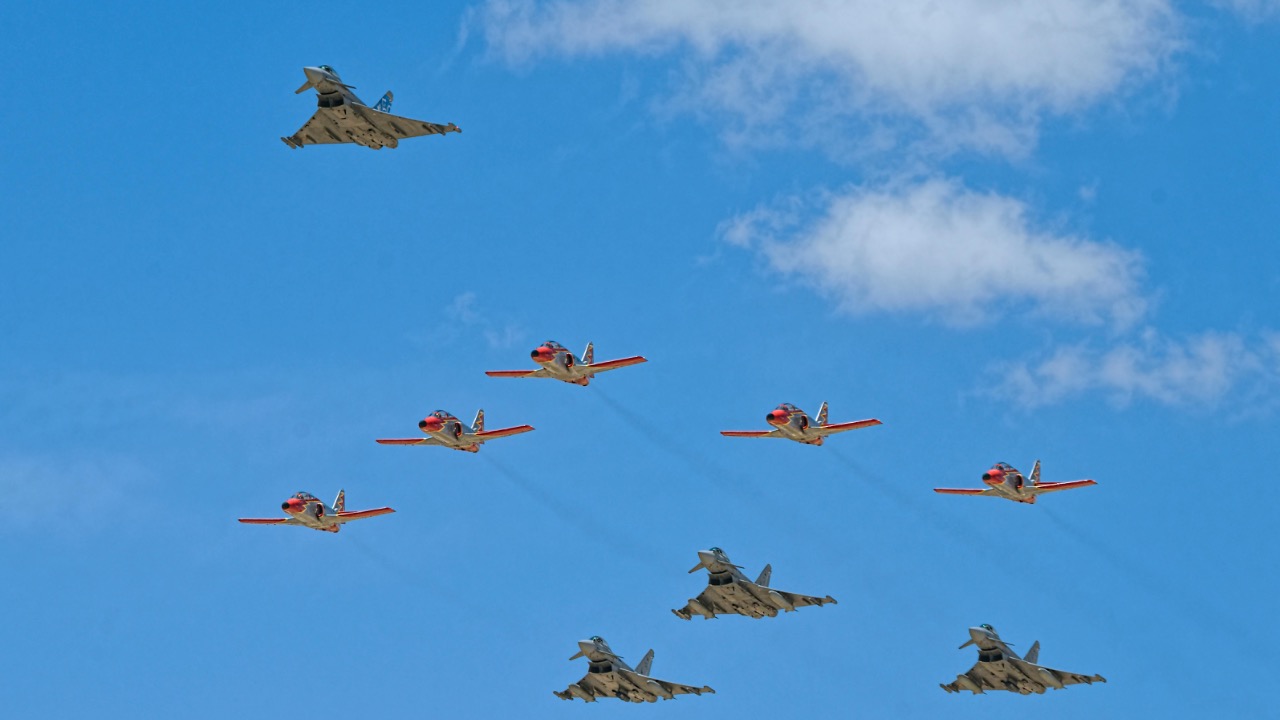
NATO aircraft were scrambled from bases in Eastern Europe after Russia launched a large-scale drone and missile assault on Ukraine that stretched through multiple regions overnight. The response came as explosions and air defense activity were reported across several Ukrainian cities, reflecting how frequent and intense aerial attacks have become in the ongoing war.
The scramble involved NATO fighter jets deployed for air policing missions near alliance borders, particularly in Romania, where Russian drones and missile activity near Ukrainian airspace has repeatedly triggered alerts. While NATO forces did not enter Ukrainian airspace or engage targets inside the conflict zone, the operations highlight how closely the alliance is now tracking Russian aerial movements near its eastern flank.
Scale of the Russian assault
The Russian attack involved hundreds of drones and multiple missile launches aimed at infrastructure and urban areas across Ukraine. Ukrainian officials reported that air defense systems intercepted most incoming drones, but several still reached their targets, causing damage to residential and energy infrastructure.
These types of mass drone-and-missile combinations have become a recurring pattern in the conflict, designed to overwhelm air defense systems. Even when interception rates are high, the volume of incoming threats puts sustained pressure on Ukraine’s defensive capabilities and emergency services responding on the ground.
NATO response and air policing operations
NATO’s response focused on monitoring and securing alliance airspace rather than direct engagement inside Ukraine. Fighter jets were activated as part of routine rapid reaction procedures when unidentified or potentially hostile aerial activity approaches NATO borders.
In Romania and other nearby member states, these missions have become more common due to repeated drone incidents and missile debris crossing into or near alliance territory. The goal is to confirm identification, track movement, and ensure that NATO airspace is not violated during large-scale strikes occurring just across the border.
Growing pressure along NATO’s eastern edge
The repeated need for NATO aircraft to scramble reflects how the war in Ukraine is increasingly affecting surrounding countries. Romania, Poland, and the Baltic states have all reported heightened air surveillance activity as Russian strikes continue near shared borders.
While NATO has maintained a policy of avoiding direct involvement in combat operations, the proximity of attacks has created a constant state of readiness. Each large Russian strike raises the risk of accidental spillover, misidentification, or debris crossing into alliance territory, which could quickly escalate tensions.
Why drone warfare is shaping the conflict
Much of the current fighting is being shaped by drone warfare, which allows large-scale strikes at relatively low cost compared to traditional missiles. Russia has relied heavily on swarms of unmanned aerial systems to pressure Ukrainian defenses and target infrastructure.
Ukraine, meanwhile, has adapted by improving interception rates and expanding its own drone capabilities for both defense and counterattacks. This back-and-forth has turned the aerial dimension of the war into a constant cycle of strike, intercept, and retaliation, with NATO monitoring closely from the sidelines.
What happens next
For now, NATO’s role remains focused on deterrence and defense of member airspace rather than direct involvement in Ukraine. However, the frequency of Russian strikes near NATO borders continues to keep forces on high alert.
As long as large-scale drone and missile attacks continue, rapid scramble responses are likely to remain a routine part of NATO operations in Eastern Europe. The bigger concern remains whether a future incident could cross a line unintentionally and widen the scope of the conflict beyond Ukraine’s borders.

Leo’s been tracking game and tuning gear since he could stand upright. He’s sharp, driven, and knows how to keep things running when conditions turn.