Navy Raises Concerns About China’s Expanding Nuclear Capabilities
You don’t have to spend much time around Navy leadership to hear the shift in tone. What used to be a long-term concern about China’s military modernization has turned into something far more immediate. Over the past few years, senior officers have been clear: China’s nuclear expansion is moving fast, and it’s changing the strategic math in the Pacific.
This isn’t Cold War nostalgia or political theater. The concern is rooted in numbers, infrastructure, and doctrine that’s evolving in real time. For the Navy, which carries a significant share of America’s nuclear deterrent, that shift has direct implications for fleet posture, submarine patrols, and how you think about deterrence at sea.
A Rapid Expansion of Warhead Numbers

You’re looking at a nuclear arsenal that has grown at a pace few analysts predicted a decade ago. Public defense assessments indicate China has moved from maintaining a relatively modest stockpile to fielding several hundred operational warheads, with projections pointing toward continued growth through the 2030s.
For Navy planners, that matters because deterrence is partly a numbers game. More warheads mean more delivery options and more flexibility for Beijing. It complicates calculations about survivability and second-strike capability. When another major power expands its arsenal quickly, you don’t ignore it—you adjust patrol patterns, readiness cycles, and long-term force planning to account for a more crowded nuclear landscape.
The Rise of China’s Ballistic Missile Submarines
China’s sea-based deterrent has matured with the introduction of the Type 094 Jin-class ballistic missile submarines and the development of the newer Type 096 platform. These boats carry submarine-launched ballistic missiles capable of reaching targets far beyond regional waters.
From a naval perspective, this is where the shift becomes tangible. A credible sea-based nuclear force makes detection and tracking more difficult. Submarines are hard to find even in peacetime; in a crisis, the fog thickens. You’re not only watching surface fleets in the South China Sea anymore—you’re tracking underwater assets that carry strategic payloads and operate under layers of secrecy.
New Missile Silo Construction in Western China
Satellite imagery over the past few years revealed the construction of hundreds of new missile silos in western China. That kind of infrastructure doesn’t appear overnight, and it signals a long-term commitment to expanding land-based intercontinental ballistic missile forces.
For the Navy, this isn’t an abstract land-war issue. A larger and more dispersed missile field increases the survivability of China’s nuclear forces. That, in turn, affects how U.S. strategic assets are tasked. If adversary systems are harder to neutralize, you rely even more on survivable platforms like ballistic missile submarines. The Navy’s role in maintaining deterrence becomes even more central.
Advances in Hypersonic Delivery Systems
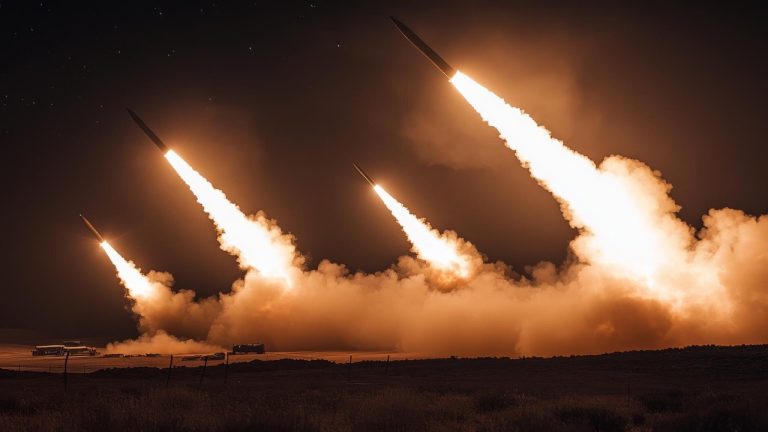
China has tested and fielded hypersonic glide vehicles designed to maneuver at high speeds and evade traditional missile defenses. These systems are intended to complicate early warning and interception efforts.
You can see why Navy leaders pay attention. Carrier strike groups and forward-deployed assets already operate within range of various missile systems. Add maneuverable hypersonic platforms to the mix, and response times shrink. That forces changes in defensive planning, sensor networks, and integration with other services. It’s not panic—it’s adaptation to a threat environment that’s moving faster and becoming more technically demanding.
Shifts in Nuclear Doctrine and Signaling
Historically, China emphasized a smaller arsenal with a stated no-first-use policy. Recent force developments, along with more visible exercises and missile tests, suggest a broader range of operational options under consideration.
For you, that means doctrine can’t be treated as static. If posture changes, so does deterrence theory. The Navy monitors not only hardware but also messaging—official statements, force deployments, and training patterns. When another nuclear power modernizes rapidly, signaling becomes part of the equation. Misreading intent in a crisis at sea could have consequences far beyond a conventional naval encounter.
Strain on U.S. Fleet Resources
As China’s nuclear and conventional forces expand together, the Navy faces pressure on multiple fronts. You’re balancing Indo-Pacific commitments with global obligations, all while maintaining a credible nuclear deterrent through ballistic missile submarines.
More capable adversary systems mean more demand for undersea warfare assets, intelligence collection, and missile defense integration. That stretches shipbuilding timelines, maintenance cycles, and personnel requirements. The concern isn’t that deterrence has failed—it’s that the margin for error narrows as capabilities grow. When another major power expands its nuclear footprint at sea and on land, you prepare accordingly, because standing still isn’t an option.

Asher was raised in the woods and on the water, and it shows. He’s logged more hours behind a rifle and under a heavy pack than most men twice his age.