New Mexico Senate advances sweeping gun restrictions during budget session
New Mexico lawmakers used a short budget session to push one of the most sweeping gun proposals the state has seen in years, advancing new restrictions on firearms sales and dealer practices through the Senate even as the clock ran out on final passage. The debate over how far to go, and how fast, exposed a sharp divide between legislators who frame the measures as basic public safety steps and opponents who see them as an attack on lawful gun ownership and small businesses.
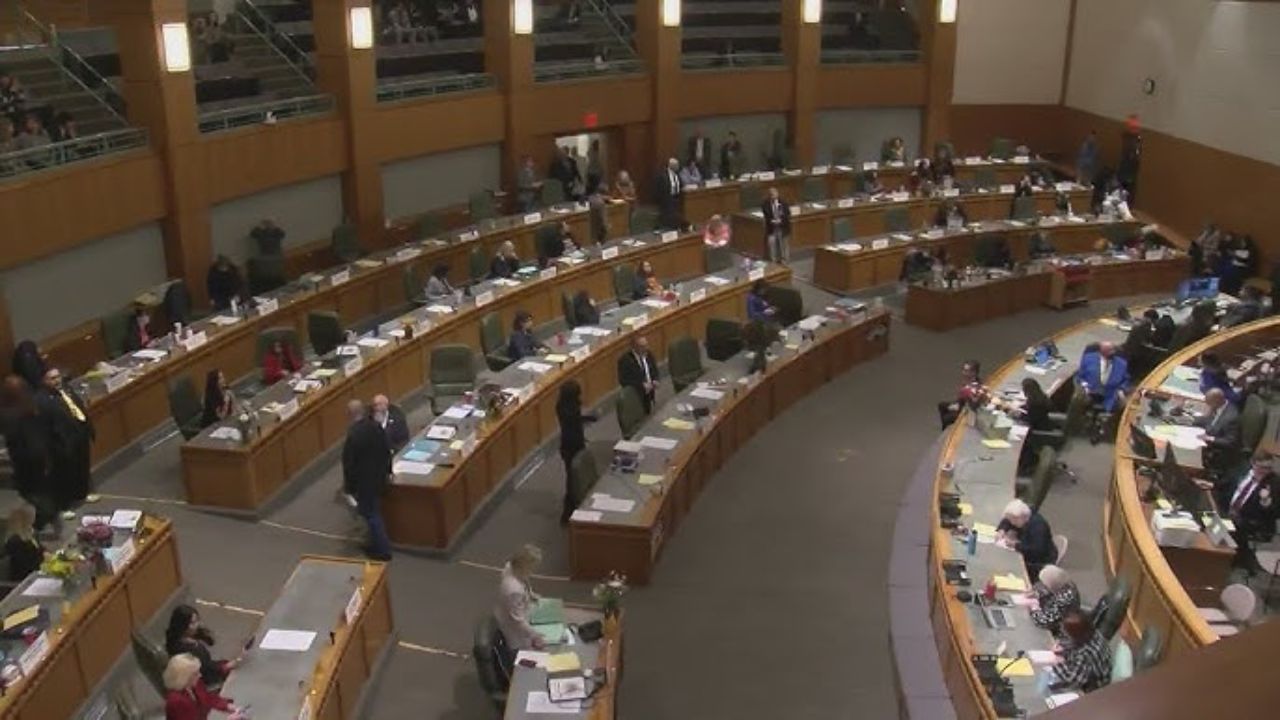
By the time the gavel fell on adjournment, the Senate had approved a broad package targeting what it calls “extremely dangerous” weapons and illegal trafficking, while the House had stalled on key pieces that gun violence prevention advocates describe as urgently needed. The result was a session that moved the political line on gun policy but left New Mexico’s law on the books largely unchanged for now.
Senate Bill 17 and the scope of the proposed crackdown
At the center of the fight is Senate Bill 17, a measure formally titled an ACT RELATING to FIREARMS, ENACTING THE STOP Illegal Gun Trade and Extremely Dangerous Weapons Act. The proposal combines dealer regulations with a new category of “extremely dangerous” guns that would be barred from sale or transfer in New Mexico. The text of the ACT RELATING to FIREARMS, ENACTING THE STOP framework lays out a multipart system that defines which semiautomatic rifles and related firearms fall under the new label and sets penalties for violations, signaling a strategic choice to regulate both the supply chain and the products themselves.
Supporters describe Senate Bill 17 as a response to persistent gun violence and trafficking concerns, arguing that current state law leaves too many gaps for straw purchases, theft and rapid fire weapons that they say are designed for battlefields, not neighborhoods. The legislation would require dealers to adopt tighter security practices and would restrict sales of certain semiautomatic rifles that meet the statutory definition of “extremely dangerous,” a category that critics say sweeps in popular platforms like AR 15 style and AK 47 style firearms. By embedding these details directly into Senate Bill 17, backers sought to codify a new baseline for what types of guns and business practices the state is willing to tolerate.
How the Senate advanced sweeping gun limits
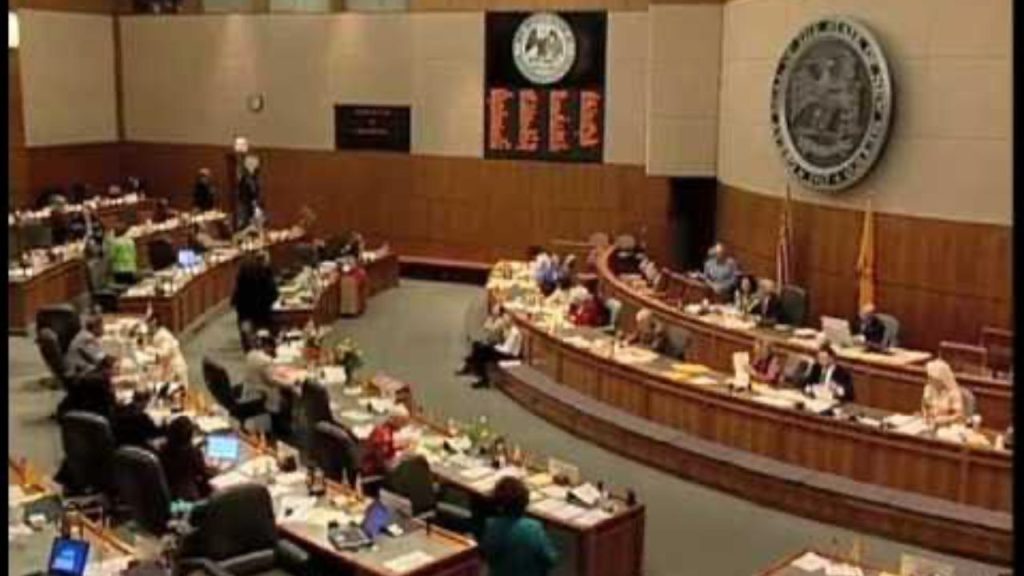
The New Mexico Senate moved first and fastest, turning the governor’s public safety agenda into concrete legislation during the early weeks of the 30 day session. Senators advanced a package that included Senate Bill 17 through committee hearings and floor debates, with supporters portraying the effort as a targeted attempt to curb illegal gun sales, theft and access to weapons that they say fuel high profile shootings. A recap of the session’s midpoint described how the chamber’s leadership prioritized the measure, listing Senate Bill 17 among the most contentious items as senators worked late into the night to keep it on track through the calendar.
Coverage of the upper chamber’s work highlighted that the New Mexico Senate had already passed related legislation aimed at curbing illegal gun trafficking and theft, described as New Mexico Senate Passes Bill To Curb Illegal Gun Sales, Theft Legislation, even before the second half of the 30 day session began. That earlier success set the tone for a body that appeared willing to embrace tighter rules on firearms commerce. By the time a weekend wrap up noted that the New Mexico Senate advances bill limiting gun sales, it was clear that Senate Bill 17 represented the centerpiece of a broader strategy rather than a one off proposal.
Dealer security, training and the new compliance burden
One of the most far reaching pieces of Senate Bill 17 focuses not on individual gun owners but on the businesses that sell to them. The measure would require gun shop operators to meet new security standards, including physical safeguards and inventory controls designed to reduce theft and illegal diversion. Earlier coverage of the proposal explained that the New Mexico Senate Health committee advanced a package that would train firearm dealers and require them to hire employees who are 21 or older, signaling a push to professionalize the retail side of the industry and reduce opportunities for underage or reckless sales.
Additional reporting on Senate lawmakers passing a bill to increase regulations for gun dealers described how the Senate wanted shops to adopt measures such as enhanced storage and possibly surveillance to prevent firearms from being stolen and later used in crimes. Backers argue that these dealer requirements would help stop illegal gun trade by cutting off easy access points for traffickers, while opponents warn that smaller retailers could struggle with the cost of compliance and that the rules treat law abiding businesses as if they were bad actors. The tension between public safety goals and the economic impact on gun stores runs through the entire dealer security section of Senate Bill 17.
Defining “extremely dangerous” weapons and the semi automatic ban
The most politically explosive piece of the package is the proposed ban on the sale of certain semiautomatic rifles labeled as “extremely dangerous” weapons. Reporting on the stalled bill explains that the sale of specific semiautomatic rifles, including AK 47s and AR 15s, would be banned under the proposal, placing some of the country’s most popular rifle platforms off limits for future retail transactions in New Mexico. Firearms retailers also face new obligations, which they describe as an attack on small businesses that already operate under federal and state oversight.
Another detailed account of the measure notes that a Senate bill would have outlawed a wide category of weapons and tightened dealer security, but that the effort stalled after hours of debate in a key committee. That report highlights how the bill, which was Published February and later Modified February, drew emotional testimony and raised questions about enforcement and definitions, including how regulators would distinguish between semi automatic rifles that fall under the “extremely dangerous” label and those that do not. The figure 35 appears in the discussion of the bill’s section structure, underscoring the complexity of the regulatory scheme that lawmakers were considering in SANTA Fe debate.
Committee drama, late night hearings and public testimony
As Senate Bill 17 and related measures moved deeper into the process, the most dramatic moments unfolded in committee rooms rather than on the Senate floor. An account of an NM Senate committee advancing a bill to train firearm dealers and ban sale of “extremely dangerous” guns describes how The New Mexico Senate Health panel sent the measure forward after hearing from supporters who framed it as a long overdue response to gun violence. That same hearing featured opponents who warned that the legislation would burden responsible gun owners and dealers, illustrating the polarized reaction that followed the bill at every step.
Later in the session, a KUNM news update recounted how Several members of the public attended a late night hearing and spoke against the bill, arguing that it imposed unfair restrictions on law abiding citizens and would not stop criminals who already ignore gun laws. The report added that the bill that would have banned extremely dangerous weapons and tightened dealer security ultimately stalled, with lawmakers acknowledging that they had run out of time to move such a complex package through the session this year. Those committee level decisions, made after hours of testimony and debate, effectively set the ceiling on how far the Legislature could go before adjournment.
House resistance and the narrow path through committees
While the Senate showed a clear appetite for aggressive gun policy, the House proved a far tougher audience. A morning recap described how, After hours of debate Wednesday evening, the New Mexico House committee narrowly advanced a gun bill, signaling that support in the lower chamber was fragile at best. That report noted that Earlier this month, SB17 passed out of the Senate and moved to the House, where members faced intense pressure from both gun safety advocates and gun rights organizations as they weighed whether to keep the measure alive.
The advocacy group Moms Demand Action later summarized the outcome bluntly, stating that the House Fails to Advance Critical Gun Violence Prevention Bill as 2026 New Mexico Legislative Session Ends. Their statement, framed under the heading House Fails to Advance Critical Gun Violence Prevention Bill as 2026 New Mexico Legislative Session Ends, argued that Senate Acts, House Fails and that Lawmakers Stall SB while New Mexico Suffers 3rd Highest Gun Death Rate in U.S., citing national mortality rankings to press their case. The group pointed to what they described as overwhelming public support for stronger laws and criticized House leaders for not bringing Senate Bill 17 to a final vote, a position they amplified through House Fails to.
Advocates, opponents and dueling national networks
National advocacy groups on both sides treated the New Mexico session as a test case for how far a state with a high gun death rate and a Democratic governor might go in tightening firearms laws. Gun violence prevention organizers used their networks to support Senate Bill 17 and related measures, highlighting that Senate Acts, House Fails and urging lawmakers to pass what they called critical gun violence prevention legislation. Their messaging emphasized that Lawmakers Stall SB While New Mexico Suffers 3rd Highest Gun Death Rate, arguing that the cost of inaction would be measured in lives lost and that the public backed stronger laws, a case they laid out in detail through Senate Acts, House.
Gun rights organizations responded with their own mobilization, warning that SB 17 and its companion bills would criminalize common firearms and undermine the Second Amendment. A detailed alert from the Sportsmen’s Alliance, titled What SB Means for New Mexico Sportsmen, argued that if passed, on July 1, 2026, SB 17 would ban the sale and transfer of a wide range of semiautomatic rifles classified as “extremely dangerous” weapons, including models that hunters and sport shooters regularly use. The group urged its members to help stop New Mexico’s public safety priority bill and framed the proposal as a direct threat to lawful recreation and self defense, a message echoed by other gun rights advocates who pointed supporters to What SB Means.
Adjournment, unfinished business and the NRA’s warning
When the Legislature adjourned sine die at noon on Thursday, Feb 19, 2026, the fate of Senate Bill 17 and related measures was sealed for the year. An update from the National Rifle Association’s lobbying arm framed the day by stating that Thursday, Today, New Mexico legislature adjourns and that Despi the governor’s push, several significant restrictions had failed to reach the finish line. The group celebrated the defeat of some proposals and warned members that the fight would resume in future sessions, pointing to ongoing efforts by gun control advocates and the governor’s office to revisit the issue.
In the same analysis, the NRA highlighted that the session had featured multiple attempts to restrict firearms that it argued are in common use for lawful purposes, referencing the Second Amendment’s “common use” standard as a legal benchmark. The group urged supporters to stay engaged through tools such as Thursday, Today, New, a call to action that dovetailed with broader national campaigns to register voters and influence state level elections. For gun rights advocates, the adjournment was both a relief and a warning that the political coalition behind SB 17 remains active.

Leo’s been tracking game and tuning gear since he could stand upright. He’s sharp, driven, and knows how to keep things running when conditions turn.