Federal agents say biker gang leader tried fleeing California after gun charges
Federal agents say a 27-year-old California biker gang leader tried to get out of the country just as a gun case around him was hardening into a federal prosecution. Instead of boarding an international flight, investigators say he was intercepted at a major airport and brought back into a system that now has him facing serious prison time. The case, centered on the founder of the Punjabi Devils Motorcycle Club, offers a stark look at how a local gun investigation can escalate into a broader test of how law enforcement handles emerging outlaw biker groups.
According to court filings described by investigators, the man at the center of the case, Jashanpreet Singh, has now admitted to unlawfully dealing in firearms and possessing a machine gun. His attempted departure from California, and the arsenal agents say they later found in his home, have turned a regional biker story into a cautionary tale about guns, explosives and the reach of federal law.
The biker boss at the center of the case
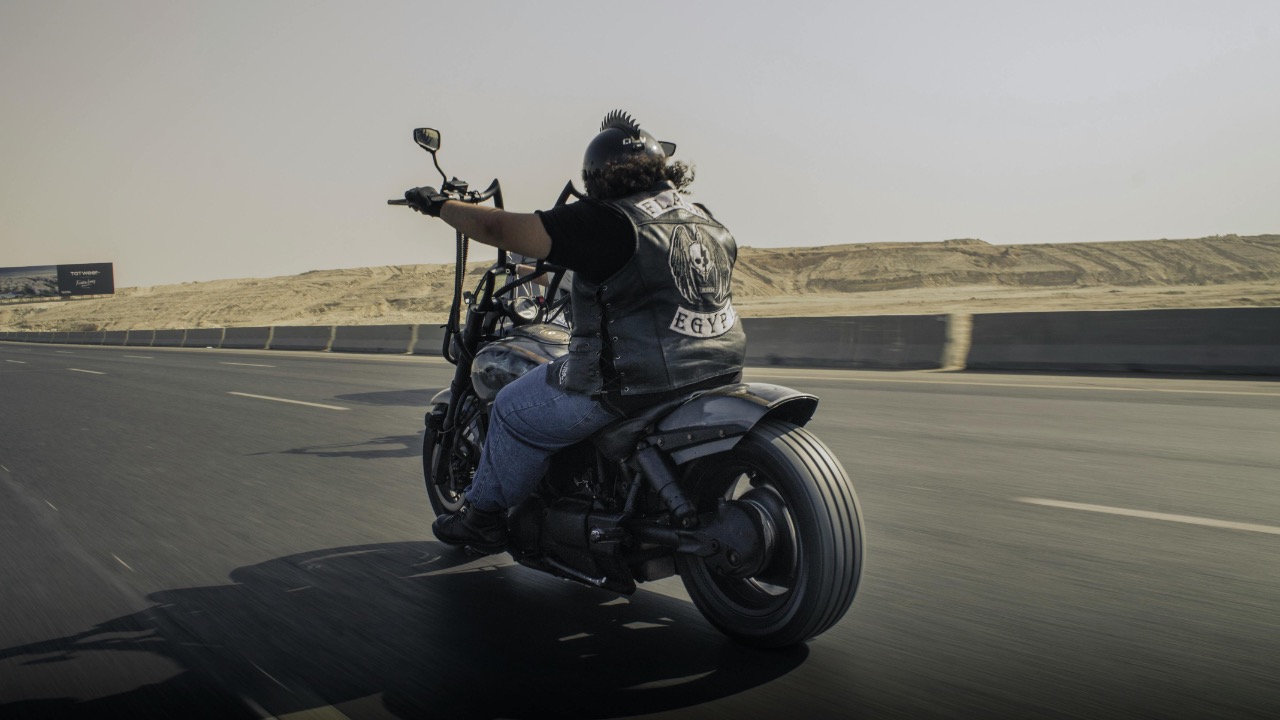
Investigators identify the defendant as Jashanpreet Singh, a 27-year-old California resident who founded the Punjabi Devils Motorcycle Club and positioned it as an outlaw-style gang rooted in the Central Valley. Federal social media updates describe Jashanpreet Singh as the founder of the Stockton, California based Punjabi Devils, tying him directly to a group that authorities now link to illegal weapons. Another official post from the same investigative team refers to Jashanpreet Singh from, underscoring that he straddled both Stockton and Lodi in the San Joaquin County corridor.
In public case summaries, agents frame Singh not as a peripheral rider but as the driving force behind the Punjabi Devils Motorcycle Club, describing him as the 27-year-old founder of the Stockton based gang. A separate case update labels him the Founder of Punjabi who has now pleaded guilty, signaling that federal authorities see the club’s leadership and its alleged gun pipeline as inseparable.
From local biker crew to alleged outlaw gang
What began as a regional motorcycle club has, in the eyes of law enforcement, evolved into an outlaw gang that blends biker culture with access to weapons. Federal posts describe the Punjabi Devils as a motorcycle gang based in Stockton, while local coverage refers to the group as the Stockton Punjabi Devils, a label that places the club squarely within California’s long running ecosystem of biker organizations. Federal agents have gone further, describing Singh as an outlaw motorcycle gang in San Joaquin County, language that signals a shift from social club to suspected criminal organization.
Authorities in California have been explicit that they view the Punjabi Devils as part of a broader pattern of criminal organisations that use biker branding as cover for weapons trafficking and potential violent crime. One detailed account of the case notes that after Singh faced initial state charges, he became a federal target in a probe that focused on criminal organisations and, explicitly tying the Punjabi Devils Motorcycle Club to that higher risk category. Another summary describes Punjabi Devils Motorcycle as the vehicle through which Singh allegedly moved guns, reinforcing the idea that the club’s identity and the weapons case are intertwined.
The gun deal that drew federal attention
According to investigators, the turning point came when Singh allegedly arranged a weapons deal that put him on the radar of multiple agencies. Federal summaries say he ultimately pleaded guilty to unlawfully dealing in firearms and possessing a machine gun, charges that reflect a pattern of repeated transactions rather than a single illegal purchase. One detailed account of the case notes that Singh was accused of selling a cache of weapons and parts, including items that could convert semiautomatic firearms into fully automatic weapons, to what he believed were buyers in the underground market.
Local reporting from San Joaquin County describes how officers investigating the weapons deal linked to the outlaw motorcycle gang leader uncovered not only guns but also explosives, a discovery that significantly raised the stakes. Federal case updates later confirmed that Singh’s plea covered both the unlawful dealing in firearms and the possession of a machine gun, aligning with descriptions that he faced a federal count for possessing a machine as part of the broader investigation.
Explosives, a bomb squad callout and a Lodi search
Once officers moved in on Singh, the case quickly expanded beyond firearms. During the initial enforcement action, investigators in San Joaquin County reported finding a “pineapple” style hand grenade and what they believed to be a military electronic capped Claymore mine at the scene, items that triggered an immediate safety response. The San Joaquin County Sheriff’s Department bomb team was called in to destroy what one account described as a potentially live explosive device, with the San Joaquin County treating the discovery as a serious public safety threat.
The search did not stop at the scene of the initial arrest. A subsequent warrant executed at Singh’s residence in Lodiuncovered a fully automatic machine gun, an additional conversion device, a silencer, high capacity magazines and a revolver, according to detailed case summaries. One report notes that the 27-year-old California resident was already under scrutiny for conversion devices when the Lodi search turned up the machine gun and silencer, deepening the federal case that he was not just a casual gun owner but someone stockpiling prohibited hardware.
The attempted flight out of San Francisco
As the investigation intensified, federal agents say Singh tried to leave the United States. Case summaries describe how The Federal Bureau of Investigations received an alert from U.S. Customs and Border that Singh had booked a ticket out of the country while his gun case was still active. Another account states that the 27-year-old California residentwas intercepted by the FBI at San Francisco airport while attempting to flee to India, turning what had been a regional gun case into an international flight risk scenario.
One widely shared summary of the case describes the episode under the banner “Attempted Escape Foiled,” saying Singh initially faced state charges but became a federal target after trying to board a flight to India. Another detailed report on the case notes that the FBI in San intercepted him before departure, underscoring how quickly a travel alert can trigger a full scale federal response when a defendant is already facing serious gun allegations.
From state case to federal prosecution
Singh’s legal exposure did not start at the federal level. Early in the investigation, he faced state charges tied to the weapons deal and the explosives found in San Joaquin County, with local officers initially booking him into the county system. One detailed account of the case notes that he initially faced state before the attempted escape and the scale of the weapons cache pushed the matter into federal court. That escalation reflects a common pattern in complex gun cases, where local arrests open the door to federal statutes with stiffer penalties.
Once the case moved into the federal system, prosecutors charged Singh with unlawfully dealing in firearms and possessing a machine gun, counts that carry significant potential prison time. A detailed case update from federal agents describes how the CASE UPDATE involved the Founder of Punjabi Devils Motorcycle Club Pleads Guilty to Unlawfully Dealing in Firearms and possessing a machine gun, confirming that the matter had fully shifted into federal jurisdiction. Another detailed summary notes that under federal statutes he faces a potential multi year sentence, underscoring how much more severe the consequences became once the case left state court.
The guilty plea and what it covers
Facing that federal exposure, Singh has now admitted to key parts of the government’s case. Federal agents say the Founder of Punjabi to unlawfully dealing in firearms and possessing a machine gun, a plea that locks in his role as both a gun supplier and a gang leader in the eyes of the court. Another official summary describes how Singh, identified as being from Lodi, admitted that he sold weapons and conversion devices without a license, conduct that federal law treats as unlawful dealing.
International coverage of the case notes that Jashanpreet Singh, Punjabi, now faces jail over serious federal firearms offences, reflecting the breadth of the plea. Another detailed report explains that under federal statutes he faces a maximum sentence measured in years, not months, and that the plea covers both the illegal arms dealing in the United States and the possession of prohibited devices like conversion kits and a machine gun.
How local reporters and federal agents pieced it together
While federal agents drove the prosecution, local reporters in San Joaquin County and Lodi helped sketch the human and geographic contours of the case. One detailed story from Wes Bowers, identified as a News Sentinel Staff Writer, describes how a Lodi man pleaded guilty in federal court and how a bench warrant was issued for his arrest after he allegedly tried to flee. Another reference to News Sentinel Staff coverage underscores that local outlets were tracking the case from the moment Singh’s name surfaced in court records.
Federal agents, for their part, used official social media channels to keep the public updated as the case moved from arrest to plea. A prominent CASE UPDATE from @fbi.sacramento highlighted that the Founder of Punjabi Devils Motorcycle Club Pleads Guilty to Unlawfully Dealing in Firearms and possessing a machine gun, while another post described Stockton, California as the base of the Punjabi Devils. Together, those local and federal narratives show how a case that started with a San Joaquin County arrest grew into a multi platform story about guns, gangs and a thwarted attempt to leave the country.
What the case signals for biker gangs and gun enforcement
For law enforcement, the Singh case is already being cited as an example of how quickly a local biker investigation can escalate when guns, explosives and international travel intersect. Detailed coverage of the outlaw motorcycle gangarrest in San Joaquin County emphasizes that officers are increasingly prepared to treat biker clubs as potential hubs for weapons and parts, not just as social groups. Federal case summaries that describe Singh as the Punjabi Devils founderwho pleaded guilty in federal court reinforce that message, signaling that leadership roles in such clubs can carry heavy legal consequences when guns are involved.
The case also highlights how federal and local agencies are using travel data and border alerts to prevent defendants from slipping away once charges are filed. The alert from Customs and Border that Singh had booked a ticket, and the subsequent interception by the FBI in San, show how those systems can work in tandem. And as one detailed report on the case notes, under federal sentencing guidelines the final sentence will be determined by the court, a reminder that for biker leaders who mix guns, explosives and attempted international flights, the margin for error is vanishingly small.

Leo’s been tracking game and tuning gear since he could stand upright. He’s sharp, driven, and knows how to keep things running when conditions turn.