New research suggests Bering Strait dam could help stabilise vulnerable AMOC ocean current in worst-case climate scenarios
You have probably followed enough climate news to know that the Atlantic Meridional Overturning Circulation plays a quiet but enormous role in the weather patterns you experience. This vast system of currents moves warm surface water north from the tropics, releases heat into the atmosphere, and sends colder, denser water back south along the ocean floor. It keeps winters milder across much of Europe and helps stabilize temperatures and rainfall on both sides of the Atlantic. For decades, observations and models have shown the circulation slowing as greenhouse gases warm the planet and melt ice sheets, sending extra fresh water into the North Atlantic. That fresh water makes the surface layer less dense, so it sinks less readily and the whole loop weakens.
The latest modeling work adds a new layer to the picture. Researchers ran simulations of how the system responds to steadily rising carbon dioxide levels and tested what happens when the narrow passage known as the Bering Strait is artificially closed off. Their results suggest that, in certain conditions, blocking that passage could give the circulation extra breathing room before it reaches a dangerous threshold. The study, published in April 2026, treats the idea as a proof of concept rather than an immediate plan, but it shows how interconnected distant parts of the ocean really are.
The ocean circulation system under threat
Scientists track the AMOC because its strength directly shapes regional climates you depend on every day. When it runs at full power, warm water travels far north, moderating temperatures in places like Britain and Scandinavia that sit at the same latitude as parts of Canada. A significant slowdown or collapse would shift weather belts, potentially cooling parts of Europe while altering monsoon patterns elsewhere and raising sea levels along the U.S. East Coast by several feet over time. Observations from buoys and satellites already show signs of reduced flow, though pinpointing exact rates remains tricky because natural variability mixes with the long-term trend.
Fresh water from melting Greenland ice and increased river runoff adds to the stress. The extra volume dilutes the salty surface water that normally becomes dense enough to plunge downward near Iceland and Greenland, powering the return leg of the circulation. Models agree that continued emissions push the system closer to a tipping point where small additional changes could trigger rapid weakening. This is why researchers keep testing interventions that might buy time, even ones that sound far-fetched at first glance.
Fresh water flows that weaken the currents
Pacific water entering the Arctic through the Bering Strait is relatively fresh compared with Atlantic water. Once in the Arctic, it mixes and eventually spills into the North Atlantic, further lightening the surface layer there. That lightening works against the dense sinking that drives the AMOC. Over geological time, when the strait was naturally closed by a land bridge, evidence suggests the circulation ran stronger because less fresh water reached the sinking zones.
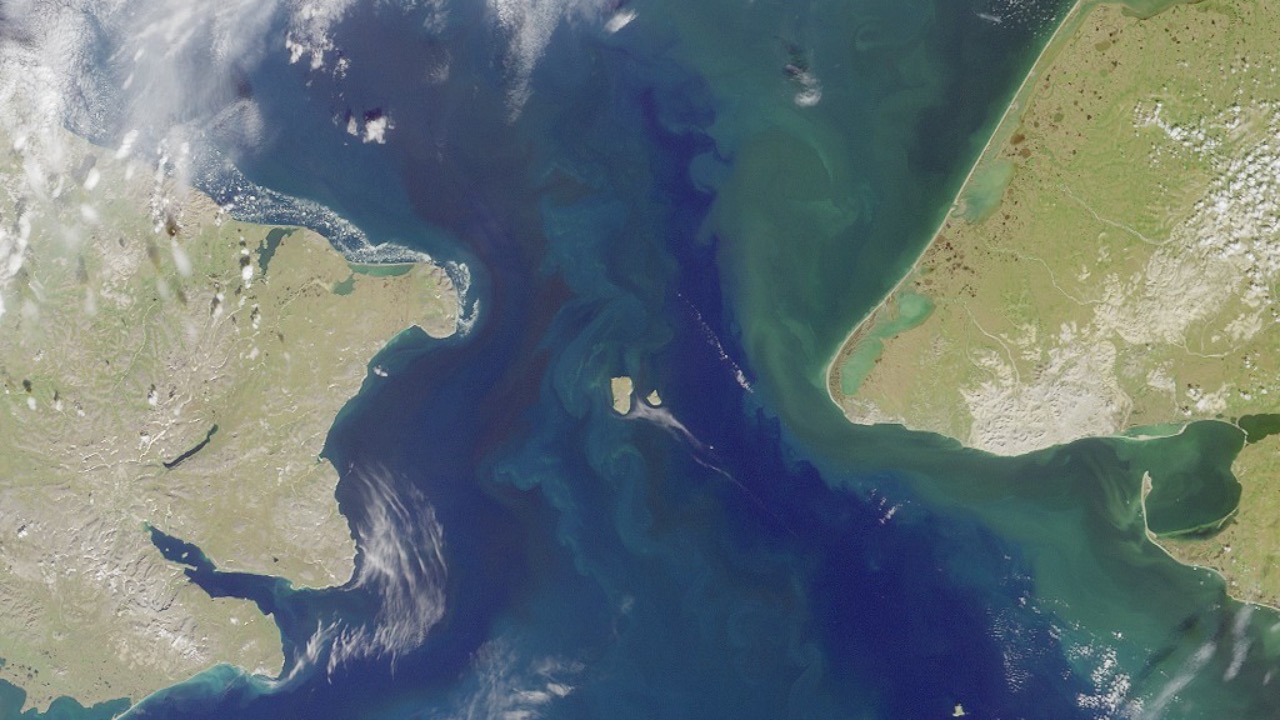
Today the strait stays open, about eighty kilometers wide and shallow enough that a series of dams could theoretically seal it. The modeling shows that stopping the Pacific inflow reduces the fresh-water load heading south. In the simulations, this change makes the North Atlantic saltier and denser, helping the sinking process continue even as atmospheric carbon dioxide climbs. The effect is modest under present-day conditions but grows meaningful when the circulation is already strained by warming.
The Bering Strait connection to the Arctic
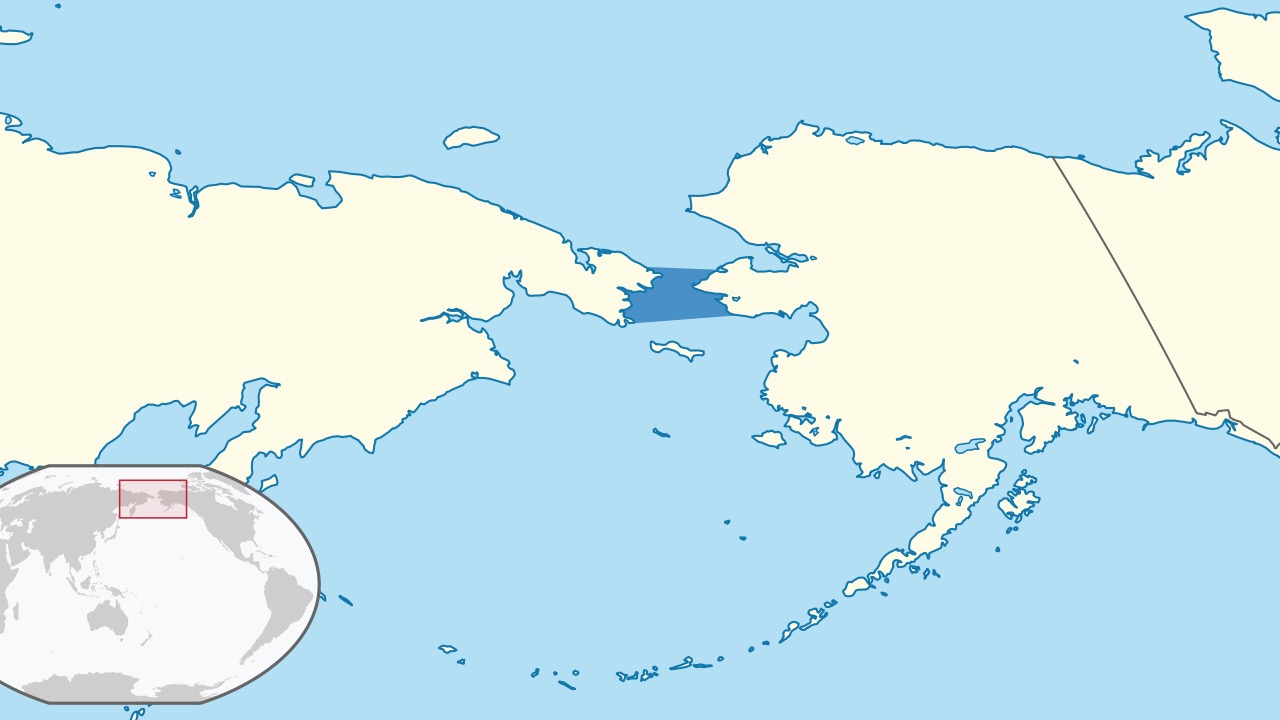
You might picture the Bering Strait as a remote sliver between Alaska and Siberia, yet it links two major ocean basins in a way that matters for global currents. Warm, relatively fresh Pacific water flows northward through it at a steady rate, joining Arctic waters before some of that mixture finds its way into the Atlantic. Closing the strait would reroute that flow and alter salinity patterns across thousands of kilometers of ocean.
The researchers used an Earth-system model called CLIMBER-X to run hundreds of simulations with different starting conditions for the ocean. They applied gradual carbon-dioxide increases to mimic future emissions and then tested the impact of an instant closure at various moments. The results hinge on the circulation’s state at the moment the strait is blocked. The strait itself is narrow enough that three linked dams could span it, accounting for two small islands in the middle, making the engineering concept at least physically plausible on paper.
What the latest models reveal about a closure
The simulations demonstrate that an artificial closure can strengthen the AMOC by roughly two and a half sverdrups when the system starts from current levels. That boost translates into a larger “safe carbon budget,” meaning the atmosphere could hold more carbon dioxide before the circulation tips into rapid decline. The models track how salinity, temperature, and density evolve across the North Atlantic and Arctic, showing clearer sinking and faster overturning when the Pacific inflow stops.
Importantly, the study does not claim the dam would fix the underlying problem of greenhouse-gas emissions. It simply explores whether a targeted physical barrier could stabilize one vulnerable part of the system while societies work on cutting emissions. The researchers emphasize that their work relies on simplified representations of the real ocean, so real-world outcomes would include uncertainties from winds, sea-ice changes, and other factors not fully captured.
Scenarios where blocking the strait helps
When the AMOC remains relatively robust at the time of closure, the models show the circulation holding steady longer under rising temperatures. The reduced fresh-water input keeps salinity higher in key sinking regions, delaying the point where density-driven overturning falters. In these runs, the system tolerates higher cumulative emissions before crossing a tipping threshold, effectively extending the window for mitigation efforts elsewhere.
This outcome appears most clearly in simulations where emissions rise moderately and the circulation has not yet lost much strength. The extra stability comes from a straightforward physical mechanism: less dilution in the North Atlantic allows the dense water to form and sink more reliably. For now, the finding remains confined to the model world, but it illustrates how small changes in distant ocean gateways can influence large-scale currents.
The risks of getting the timing wrong
If the circulation has already weakened beyond a certain point, closing the strait produces the opposite result in the models. The same blockage then reduces an important source of lighter water that helps maintain balance in an already fragile system. Below roughly sixteen percent of historical strength, the intervention accelerates the decline rather than slowing it.
This threshold effect means the window for any possible benefit is narrow and depends on accurate real-time monitoring of the AMOC. Once past that line, the models indicate the dam would push the system closer to collapse, not farther from it. The researchers stress that deciding the right moment would require far better observational data and higher-confidence forecasts than exist today.
Practical challenges in building across the strait
Constructing a barrier roughly fifty miles long in one of the world’s most remote and stormy regions would demand enormous engineering resources. The water is shallow on average, but ice, strong currents, and harsh weather add layers of difficulty. Three separate sections would be needed to bridge the islands, and the structure would have to withstand earthquakes, shifting ice, and long-term sea-level changes.
Beyond the technical hurdles, the project would cross the maritime boundary between the United States and Russia, requiring diplomatic agreements on construction, maintenance, and potential environmental liability. Costs would run into the tens or hundreds of billions, and the timeline could stretch decades. No serious proposal exists yet; the modeling simply shows what might happen if such a structure were ever built.
Potential ripple effects on Arctic ecosystems
Shutting off the Pacific inflow would change water temperatures, salinity, and nutrient flows throughout the Arctic. Marine species that migrate through the strait, from whales to fish, could face new barriers, while plankton communities that rely on the current mixing patterns might shift. Sea-ice formation and melt cycles could also adjust, altering habitats for polar bears, seals, and seabirds that live along those coasts.
On the Pacific side, blocked water might back up and raise coastal sea levels slightly or change local currents near Alaska and Siberia. These ecosystem responses remain poorly quantified in the current models, but any large-scale intervention would need careful study of biological consequences before anyone considered moving forward. The Arctic is already changing rapidly; adding a human-made barrier would introduce another variable into an already stressed environment.
Broader questions for climate intervention strategies
This modeling exercise fits into a larger conversation about whether societies should pursue large-scale geoengineering when emissions reductions fall short. The researchers treat the dam idea as a possible last-resort measure, not a substitute for cutting carbon pollution. They point out that geoengineering carries its own risks and uncertainties, and public acceptance would be far from guaranteed.
Still, the work highlights how tightly coupled distant ocean regions are and how interventions in one place can influence systems half a world away. It encourages more detailed modeling and monitoring so that, if the AMOC approaches a tipping point, decision-makers have clearer options on the table. For now, the study serves mainly as a reminder that creative thinking about the climate system can surface unexpected connections worth exploring.

Asher was raised in the woods and on the water, and it shows. He’s logged more hours behind a rifle and under a heavy pack than most men twice his age.