One of the largest salmon runs on record returns to U.S. rivers
One of the largest salmon migrations in modern memory is surging back into rivers across the United States, from Alaska to New England and deep into California’s interior valleys. After years of drought, warming waters and habitat loss, the sudden strength of these runs is reshaping debates over dams, water policy and the future of coastal fishing communities.
The scale of the return is not uniform, but taken together, record and near-record counts on multiple rivers point to a rare window of abundance. Biologists, tribal nations and local water agencies are racing to understand how much of this resurgence can be locked in through long-term restoration and how much might fade if climate pressures intensify again.
From Alaska to California, a surge in salmon numbers
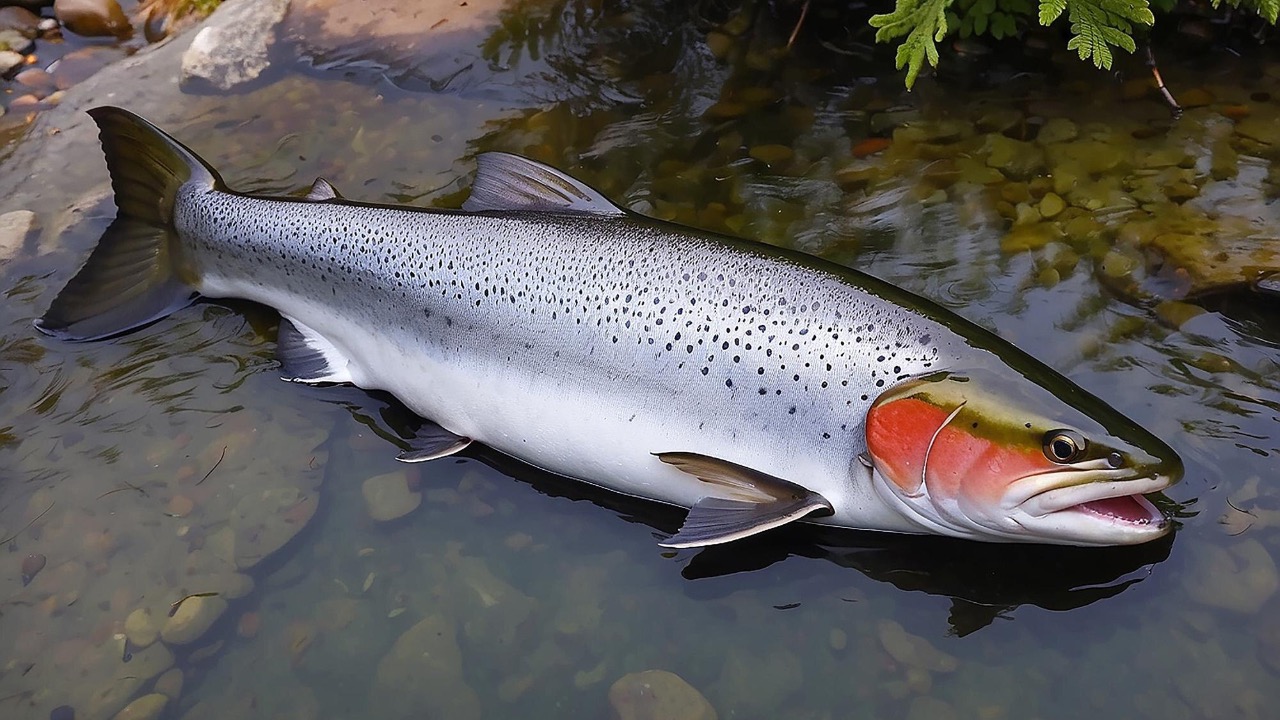
Across the Pacific coast, recent seasons have delivered a string of eye-catching salmon counts that would have seemed unlikely a decade ago. Alaska’s Bristol Bay has continued to live up to its reputation as a powerhouse for wild sockeye, while smaller rivers in California that once seemed written off are suddenly seeing fish in numbers not recorded in generations. The pattern is not identical in every watershed, yet the combined effect is a continental-scale pulse of returning salmon.
In the far north, Bristol Bay has produced repeated record and near-record sockeye runs, including a 2022 season when an estimated 69.7 m fish returned. Further south, California rivers such as the Mokelumne River and Putah Creek have logged their highest Chinook counts since systematic tracking began, while fall Chinook in the Sacramento River are rebounding after several years of higher flows. Taken together, these numbers show that when habitat, flows and ocean conditions briefly line up, salmon can still respond at remarkable scale.
Bristol Bay’s record sockeye runs set the pace
Bristol Bay has become the clearest symbol of what a relatively intact salmon ecosystem can still produce. The watershed’s vast network of lakes and rivers, combined with strict management of commercial harvests, has allowed sockeye to reach levels that dwarf most other fisheries on the continent. The 2022 return of 69.7 m fish was not an outlier but part of a multiyear trend that has kept Bristol Bay at the center of global salmon supply.
That strength has continued into mid-decade. In 2025, Bristol Bay sockeye harvests reached 41.5 m fish, exceeding preseason forecasts and reinforcing Bristol Bay’s role as a cornerstone of Alaska’s fishing economy. Reporting from Alaska has also noted that the 2025 Bristol Bay run and harvest increased again, with fish sizes a bit larger than the previous year, a trend highlighted by Yereth Rosen in coverage of Alaska’s 2025 season. State biologists now describe the upcoming 2026 Bristol Bay sockeye run as strong, even if not exceptional compared with these recent highs, which still places it among the most productive wild salmon fisheries on record.
Columbia River and Pacific Northwest: strong but managed returns
Farther south in the Pacific Northwest, the Columbia River illustrates how large salmon runs can coexist with heavy regulation and complex tradeoffs. Managers are forecasting a 2026 upriver spring Chinook return of 147,300 fish, slightly below the 154,703 that came back in the previous year but still above the recent 10-year average. The forecast shapes when and how recreational and commercial seasons open, as agencies try to protect weaker stocks while allowing harvest on healthier components of the run.
Those figures come from the detailed preseason outlook that guides Columbia River spring fishing, and they show how even a strong year is now judged against a backdrop of long-term decline. The Columbia system remains heavily dammed and managed, with hatchery production intertwined with wild fish. Yet photographs of bright Chinook moving through lower river pools, shared through resources such as state fishery images, underscore that sizable runs still pulse through this engineered river when conditions allow.
California’s interior rivers stage a quiet comeback
Perhaps the most surprising part of the current salmon story is unfolding in California’s interior valleys, where years of drought and low flows had pushed many populations toward crisis. On the Mokelumne River, managed by the East Bay Municipal Utility District, fall-run Chinook have surged to unprecedented levels, turning a once marginal tributary into a showcase for restoration. The river’s turnaround has been driven by targeted flow releases, habitat improvements and close coordination between water deliveries and fish passage.
The East Bay Municipal Utility District has reported that the Mokelumne River salmon run has broken records for two consecutive years, with officials emphasizing both the ecological and community value of the recovery. A related count at the Woodbridge Diversion Dam recorded 29,912 fall-run Chinook passing the structure by mid-November, described as the highest tally since record keeping began in 1940, in a social media update that highlighted the Woodbridge Diversion Dam as a critical monitoring point. Local coverage has also noted a record-setting count of 28,698 Chinook on the Mokelumne River, reinforcing how quickly a coordinated management strategy can translate into more fish on the spawning grounds.
Putah Creek and small tributaries punch above their weight
Smaller tributaries in Northern California are also emerging as unlikely bright spots in the broader salmon resurgence. Putah Creek, an 85-mile stream that runs through agricultural and suburban landscapes, has been the focus of a 25-year revitalization effort that reconnected side channels, improved spawning gravel and adjusted flow regimes to mimic a more natural pattern. Those investments are now paying off in dramatic fashion.
Statewide coverage has described how Putah Creek, the 85-mile long stream, produced a record-breaking salmon spawn after decades of work by local partners. A separate report from Northern California noted that a record number of Chinook returned to Putah Creek in 2025, marking a major milestone for one of Northern California’s most intensively managed urban creeks. Video coverage of the 2025 season described a record-breaking 2100 Chinuk salmon returning to spawn in Puda Creek, with biologists from UC Dav explaining how these fish had found their way back into a channel that had long been written off as a drainage ditch, as seen in footage of Chinuk moving through shallow riffles.
Atlantic echoes: Penobscot River and the eastern runs
While most attention has focused on the Pacific, there are parallel signs of recovery in parts of the Atlantic basin. The Penobscot River in Maine has historically hosted the largest run of Atlantic salmon in the United States, and its fortunes have become a bellwether for the species on the East Coast. After dam removals and habitat work, biologists have begun to see the first sustained upticks in returning adults.
A federal overview of the Penobscot River Salmon 2011 described how The Penobscot River, once home to Historically Large Salmon Runs of Atlan salmon, is slowly rebuilding after industrial impacts hit salmon, shad, river herring and other species hard. Although absolute numbers remain far below historic levels, the improving trend on the Penobscot shows that targeted dam removal and fish passage projects can revive even the most depleted Atlantic runs when combined with careful harvest restrictions.
Hydrology, climate and the Sacramento River connection
Hydrology sits at the center of every salmon story, and nowhere is that clearer than in California’s Sacramento River system. After a sequence of wet years and managed high flows, fall Chinook in the Sacramento have begun to rebound, hinting at what might be possible if water management consistently prioritized fish needs alongside agriculture and urban supply. The river’s response also illustrates how quickly salmon can take advantage of improved conditions, since most Chinook spend only a few years at sea before returning.
Recent reporting on the region’s weather described how an atmospheric river set to bring more flooding and heavy mountain snow came alongside data showing that Fall Chinook salmon numbers in the Sacramento River rose after three years of higher flows. That link between sustained releases and adult returns reinforces arguments by fish advocates that flow schedules should be designed around salmon life cycles, rather than treating fish as an afterthought once other demands are met.
Urban agencies, tribes and local partners drive change
The recent surge in salmon numbers did not happen by accident. Urban water agencies, tribal governments and local conservation groups have all played central roles in reshaping river systems so that salmon can complete their migrations. On the Mokelumne River, the East Bay Municipal Utility District has used its control over reservoir releases and diversion structures to manage flows specifically for fish passage, while also engaging nearby communities through outreach and education.
EBMUD’s work on the Mokelumne River has been amplified through digital channels, including updates on platforms such as EBMUD social media and neighborhood networks that share volunteer opportunities. Similar partnerships are visible in Alaska, where state biologists, commercial harvesters and local communities coordinate around Bristol Bay management, and in Maine, where tribal nations and conservation groups have pushed for dam removals on the Penobscot. These alliances show that salmon recovery often depends as much on governance and public engagement as on any single engineering project.
The risks ahead and what the big runs really mean
Even as one of the largest collective salmon returns in years moves through U.S. rivers, scientists warn against assuming that the recovery is secure. Many of the same pressures that drove earlier declines, including warming ocean temperatures, shifting currents and ongoing habitat loss, remain in place. A few strong year classes can mask deeper structural problems if managers treat them as a sign that business as usual is acceptable again.
State biologists in Alaska have already framed the 2026 Bristol Bay outlook as strong but not exceptional, a reminder that even record runs must be understood within a longer climate and management cycle. In the Pacific Northwest, the Columbia River forecast of 147,300 spring Chinook compared with 154,703 the previous year shows that returns can fluctuate quickly, even under tight regulation. Meanwhile, place-based perspectives from communities along rivers such as the Sacramento corridor and the Bristol Bay region emphasize that long-term success will depend on continued investment in habitat, careful harvest limits and a willingness to treat salmon as a central measure of river health rather than a secondary benefit.

Asher was raised in the woods and on the water, and it shows. He’s logged more hours behind a rifle and under a heavy pack than most men twice his age.