Pentagon seeks to reinvent the bunker-buster bomb
The U.S. military has long grappled with adversaries who bury critical facilities deep underground to shield them from attack. Recent operations against hardened sites in Iran highlighted both the strengths and shortcomings of existing weapons. Now the Pentagon is pushing forward with efforts to develop more effective tools for reaching those deeply buried targets. This work reflects a practical recognition that threats continue to evolve, requiring steady adaptation in capabilities.
You encounter this reality when looking at how nations invest in tunnels and reinforced complexes. The Air Force and defense contractors are actively testing ideas to improve penetration, guidance, and overall effectiveness against such targets.
The limits of existing heavy penetrators
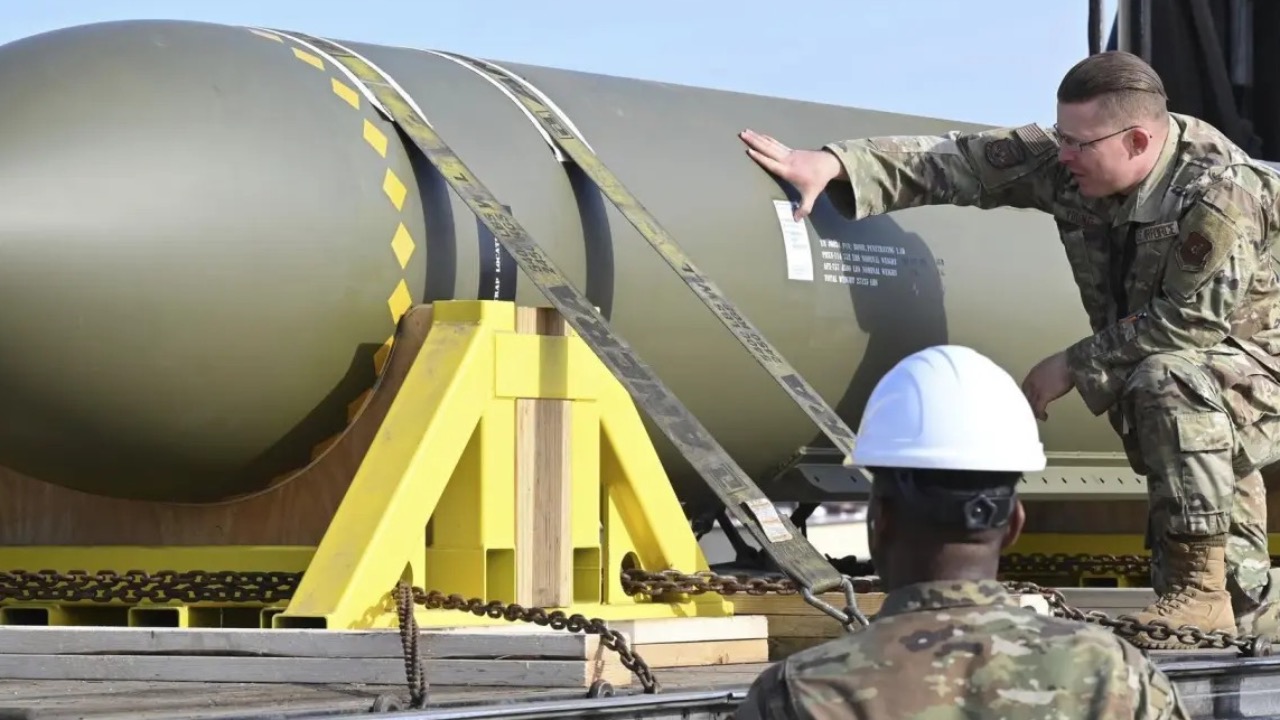
The GBU-57 Massive Ordnance Penetrator has served as the primary conventional option for striking very deep, hardened facilities. Carried exclusively by B-2 bombers, its 30,000-pound weight allows it to burrow through substantial rock and concrete before detonating. In 2025 operations over Iran, these weapons demonstrated their ability to hit precise underground locations.
Even so, the strikes revealed challenges. Large bombs place heavy demands on delivery platforms and inventory levels. Replenishing stocks after use takes time, and adversaries can respond by digging deeper or strengthening their defenses. These factors drive the search for alternatives that maintain reach while addressing practical constraints.
Why a next-generation penetrator is in development
The Air Force awarded a contract in late 2025 to Applied Research Associates for prototyping what it calls the Next Generation Penetrator. This effort aims at a lighter design, around 22,000 pounds, that could offer more flexibility across aircraft. Developers focus on better materials for the casing and refined shapes to improve how the weapon moves through earth and rock.
Work also includes enhanced guidance that functions without relying solely on GPS signals. Such features matter in environments where jamming occurs. The goal remains reaching the target depth reliably while reducing dependence on a single bomber type.
Smarter fuzing and detonation options
One area receiving attention involves advanced fuzes that can count voids or layers as the weapon penetrates. This allows detonation at the most effective point inside a facility rather than simply on impact. Combined with improved explosives, these changes could increase the chance of collapsing tunnels or rendering spaces unusable.
Testing and simulation continue to refine these systems. Engineers examine how different configurations perform against various soil types and construction methods. The emphasis stays on measurable performance gains drawn from recent operational data.
Smaller penetrators expand the toolkit
Alongside the push for a new large penetrator, the military has fielded and used the GBU-72, a roughly 5,000-pound class weapon. These have seen action against missile sites and other hardened targets. Their smaller size means more platforms can carry them, increasing operational options.
This approach lets planners mix weapons based on the specific threat. Not every target requires the heaviest bomb available. Having a range of sizes supports more efficient use of air assets while still addressing underground challenges.
Exploring non-kinetic and alternative methods
Beyond traditional explosives, DARPA and other offices examine ways to disrupt buried sites through shock waves, electromagnetic effects, or other means. These concepts aim to complement kinetic strikes rather than replace them outright. Some focus on sealing entrances or creating rubble that blocks access long-term.
Such research acknowledges that brute force alone may not always prove sufficient or desirable. Multiple avenues give commanders more choices when planning missions against protected infrastructure.
Implications for strategic competition
These developments occur against a backdrop of competition with peers who maintain extensive underground networks. Improvements in bunker-busting technology send a clear signal about U.S. willingness to invest in countering such strategies. At the same time, they highlight the ongoing cycle where defenses adapt to new offensive capabilities.
You watch this process unfold through contracts, tests, and occasional public statements. The Pentagon’s work on reinventing these weapons underscores a commitment to maintaining options in an era when underground facilities play a growing role in military planning.

Asher was raised in the woods and on the water, and it shows. He’s logged more hours behind a rifle and under a heavy pack than most men twice his age.