Presidents who quietly shaped U.S. gun policy behind the scenes
Presidential power over guns is often measured in big, televised moments, from signing ceremonies to prime-time speeches after mass shootings. Yet some of the most consequential shifts in U.S. firearms law have come from quieter maneuvering, incremental regulations, and backroom compromises that never became defining campaign slogans. I want to trace how a handful of presidents, some remembered as gun-rights champions and others as reluctant regulators, reshaped the landscape in ways that still structure every modern fight over the Second Amendment.
Looking at these less theatrical decisions reveals a pattern: presidents using administrative tools, tax codes, and party leverage to change who can buy guns, what kinds of weapons are legal, and how the industry is policed, often while publicly downplaying the politics. From Franklin D. Roosevelt’s crime-driven tax scheme to Ronald Reagan’s evolution from California governor to elder statesman for background checks, the story of U.S. gun policy is as much about quiet engineering as it is about loud culture-war clashes.
Early foundations: Franklin D. Roosevelt and the first federal gun framework
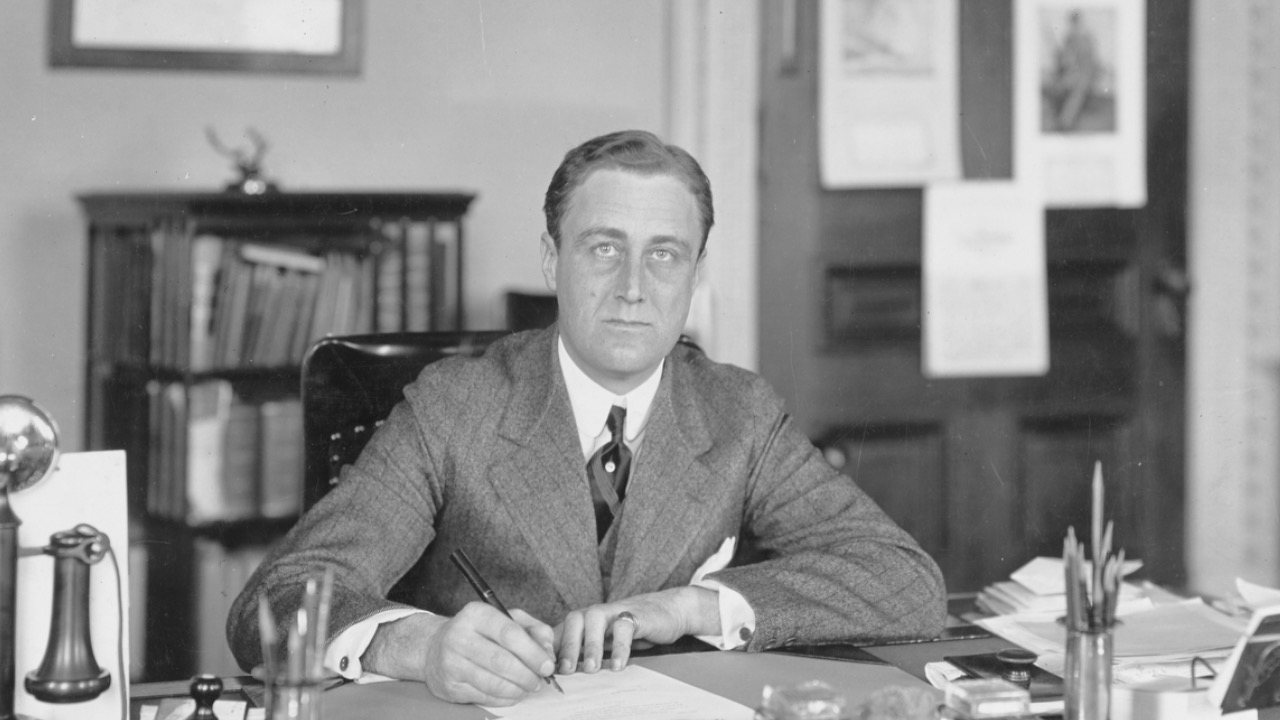
Modern federal gun regulation begins less with sweeping bans than with a targeted tax strategy crafted under President Franklin D. Roosevelt. Faced with a surge in violent crime that prominently featured the Thompson submachine gun, Roosevelt’s administration backed the National Firearms Act as a revenue measure that used the federal taxing power to regulate weapons associated with gangsters rather than ordinary hunting rifles. The law imposed registration and a steep tax on items like machine guns and silencers, and it was introduced by President Franklin D. Roosevelt as a direct response to public safety concerns tied to weapons such as the Thompson, a fact underscored in contemporary descriptions of the National Firearms Act.
That approach, treating gun control as a tax and recordkeeping issue instead of a frontal assault on ownership, set a template that later presidents would quietly reuse. The NFA’s structure, which targeted specific categories of weapons and relied on federal registration rather than outright confiscation, allowed Roosevelt to claim he was cracking down on crime while avoiding a broad confrontation with gun owners. Later timelines of U.S. firearms law describe the NFA as the first national gun control statute, noting that it passed in 1934 as part of a broader crime package and became the foundation for subsequent federal regulation of the firearms industry, a status that is clear in historical overviews of the NFA’s legacy.
From crime bills to consumer regulation: Lyndon Johnson’s quiet pivot
By the time Lyndon B. Johnson reached the White House, the federal government already had the NFA on the books, but the assassinations of John F. Kennedy, Martin Luther King Jr., and Robert F. Kennedy created pressure for a broader response. Johnson publicly demanded sweeping reforms, yet what ultimately emerged was a more technocratic shift that treated guns as consumer products subject to licensing, recordkeeping, and import restrictions. The Gun Control Act of 1968 tightened regulation on interstate sales and barred certain categories of buyers, and later historical timelines describe that statute as the most significant expansion of federal oversight since 1934, emphasizing how it increased regulation on the firearms industry in 1968 legislation.
Johnson’s behind-the-scenes work mattered as much as his public rhetoric. He leaned on his mastery of congressional procedure to salvage what he could from a more ambitious agenda, accepting compromises that stripped out national registration and licensing but preserved new categories of prohibited purchasers and dealer rules. Later legal scholarship on guns and American politics notes that this era cemented a pattern in which presidents framed gun measures as crime control or consumer safety, not ideological disarmament, a dynamic that is evident in broader analyses of gun politics that trace how incremental statutes accumulated into a complex regulatory regime.
Gerald Ford and the politics of stalling
Gerald Ford rarely appears in popular narratives about gun control, yet his administration played a pivotal, if understated, role in slowing the momentum for new federal restrictions. As crime and gun violence remained salient issues in the mid 1970s, Ford’s team faced pressure to endorse tougher measures, but internal deliberations focused on how to avoid alienating gun owners while still appearing responsive. Archival research on the Ford years describes how, in the spring of 1975, with the next presidential election approaching, Gerald Ford’s administration felt mounting pressure to address firearms policy and weighed different solutions to the problem, a tension detailed in studies of the Ford administration.
Rather than championing new bans, Ford leaned on administrative tweaks and rhetorical support for enforcement of existing laws, effectively using the presidency to keep more ambitious proposals off the table. Later analyses of his term show that this strategy helped Republicans recalibrate their relationship with emerging gun-rights groups, signaling sympathy without fully embracing the absolutist positions that would dominate the party in later decades. A separate section of the same archival work notes that, in the spring of 1975, Ford’s advisers explicitly framed gun policy as an electoral risk, underscoring how the White House’s quiet decisions to stall or dilute legislation can shape the trajectory of national firearms debates, a pattern that becomes clear in the detailed account of Ford’s political calculus.
Ronald Reagan, the Mulford Act, and a Republican reorientation
Ronald Reagan is often remembered as a conservative icon closely associated with modern gun-rights politics, but his record is more complicated and includes some of the most consequential low-profile restrictions of the late twentieth century. Before reaching the White House, Reagan as California governor signed the Mulford Act, which banned the open carry of loaded firearms in public after armed members of the Panthers appeared at the California State Capitol. Legal scholarship on gun politics notes that the Mulford Act remains in effect in California and that it was signed into law by then-governor Ronald Reagan after the Panthers staged their protest, a sequence that is carefully reconstructed in discussions of the Mulford Act.
Reagan’s evolution continued into his post-presidential years, when he lent his name and prestige to support specific federal measures. One of the most striking examples came when he endorsed a national background check system and limits on certain semi-automatic weapons, breaking with the increasingly hard-line stance of parts of his party. Contemporary accounts recall that he played a critical role in backing a California open-carry ban and that, despite the law being enacted over the objections of some gun-rights advocates, it passed by a margin of two votes, a narrow outcome highlighted in narratives about how Reagan learned to. Later, as an elder statesman, he joined other Republicans in supporting targeted restrictions, showing how a president’s quiet letters and endorsements can shift the internal balance of a party even after leaving office.
Republican crosscurrents: Reagan’s letter and the assault weapons debate
Reagan’s behind-the-scenes influence surfaced again in the early 1990s, when Congress debated a federal limit on certain semi-automatic firearms. While the public fight centered on lawmakers like Senator Dianne Feinstein, who authored the bill in the Senate, the support of prominent Republicans helped give the measure bipartisan cover. Historical accounts of the Federal Assault Weapons Ban note that, in November 1993, the proposed legislation passed the Senate and that Dianne Feinstein and other advocates relied on backing from figures outside the chamber, a dynamic captured in detailed histories of the assault weapons ban.
Reagan’s most consequential move came in the form of a joint letter to Congress urging lawmakers to support restrictions on what he called “semi-automatic assault guns,” a phrase that signaled his willingness to distinguish between categories of firearms. Commentators at the time stressed that his support was significant in persuading wavering Republicans, with supporters of the ban repeatedly citing the letter as evidence that even a conservative icon saw a need for limits. Later reflections on the episode emphasize that his intervention helped dry up the supply of certain guns to criminals by bolstering political will for the ban, a point underscored in analyses of how Reagan’s letter influenced Republican votes.
Bill Clinton’s incrementalism: background checks and beyond
Bill Clinton’s presidency is often associated with high-profile gun legislation, but much of his impact came from methodical, sometimes unglamorous work to tighten the system around the edges. His administration treated firearms policy as a central domestic issue, and internal strategy framed gun measures as part of a broader crime agenda rather than a standalone ideological crusade. Overviews of the gun control policy of the Clinton administration describe how the White House integrated firearms provisions into larger bills and used executive authority to refine enforcement, a pattern that is evident in summaries of Clinton-era policy.
Clinton’s team also recognized the importance of building a narrative that emphasized responsible ownership rather than outright opposition to guns. Official accounts note that gun control was a major priority for the White Hous and that Bill Clinton personally championed measures like the Brady Bill, which created a federal background check system for handgun purchases. A more detailed breakdown of his approach highlights how the administration framed these steps as common-sense safeguards, with the White Hous presenting them as tools to keep guns out of the hands of criminals while respecting the rights of law-abiding citizens, a balance described in focused discussions of Clinton’s priorities.
The Federal Assault Weapons Ban and the power of ex-presidents
The Federal Assault Weapons Ban, enacted during Clinton’s tenure, illustrates how former presidents can quietly shape current policy debates. While Clinton signed the law, the political groundwork involved a coalition that extended beyond the sitting administration, including ex-presidents who lent bipartisan legitimacy to the effort. Detailed histories of the ban explain that, in May 1994, former presidents publicly backed restrictions on what they called “semi-automatic assault guns,” reinforcing the message that such weapons posed a distinct public safety risk, a point documented in accounts of the former presidents’ support.
The law itself was narrow and time-limited, focusing on specific models and features, but its passage reshaped the political terrain by normalizing the idea that certain categories of firearms could be singled out for special treatment. At the same time, the ban’s sunset provision and the intense lobbying around its renewal showed how fragile such gains could be. Later legal and political analyses argue that the episode demonstrated both the potential and the limits of presidential influence, since Clinton and his allies could secure a temporary restriction but not a durable consensus, a tension that continues to inform contemporary debates over whether to revive or expand the assault weapons framework.
Barack Obama’s cautious recalibration of the gun debate
Barack Obama entered national politics acutely aware of the electoral risks surrounding gun policy, particularly for Democrats seeking support in swing states. During his early campaigns, he emphasized respect for the Second Amendment and highlighted endorsements from gun owners to blunt attacks from rivals. Scholarly analysis of his political strategy notes that Obama countered the Clinton and McCain attacks by continuing to trumpet his support for gun rights and by running ads featuring endorsements from hunters and other gun owners, a tactic that helped him blunt criticism from gun groups, as described in research on Obama’s positioning.
Once in the White House, Obama’s most significant moves on guns often came through executive actions and regulatory reinterpretations rather than sweeping new statutes. He used the bully pulpit after mass shootings to call for expanded background checks and limits on certain accessories, but he also directed agencies to clarify who must register as a dealer and to improve data sharing for the existing system. A more granular look at his presidency emphasizes that he sought to reframe the issue as one of public health and community safety, while still signaling cultural respect for lawful gun ownership, a balancing act that is further detailed in extended studies of Obama’s gun policy.

Leo’s been tracking game and tuning gear since he could stand upright. He’s sharp, driven, and knows how to keep things running when conditions turn.