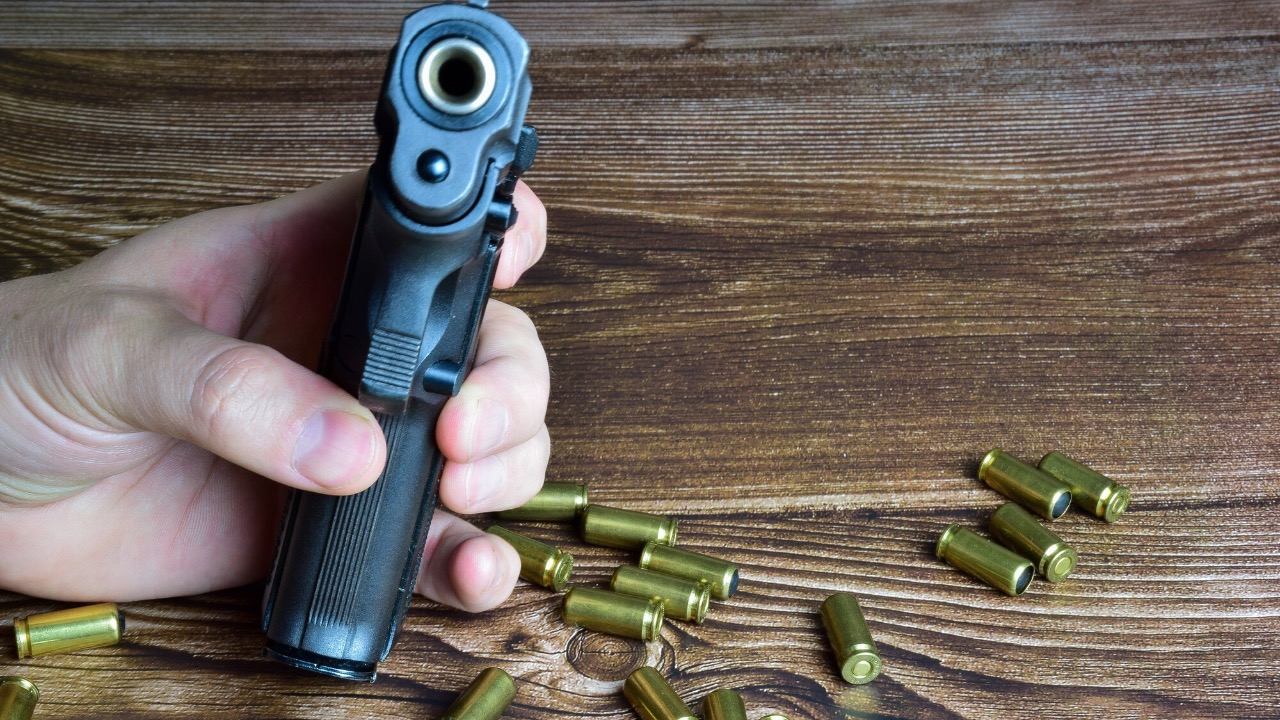
Reliable calibers commonly chosen for self-defense
Choosing a defensive firearm is only half the equation. The caliber you load into it shapes recoil, reliability, and how effectively you can stop a threat without creating new dangers for people on the other side of a wall. Reliable calibers commonly chosen for self-defense tend to share a few traits: broad availability, proven performance in real incidents, and manageable recoil that lets ordinary people shoot accurately under stress.
I focus here on the handgun and rifle cartridges that repeatedly surface in training classes, expert recommendations, and user communities. The goal is not to crown a single “best” round, but to explain why certain calibers have earned trust, where they shine, and what tradeoffs you accept when you pick one over another.
How experts define a “reliable” self-defense caliber
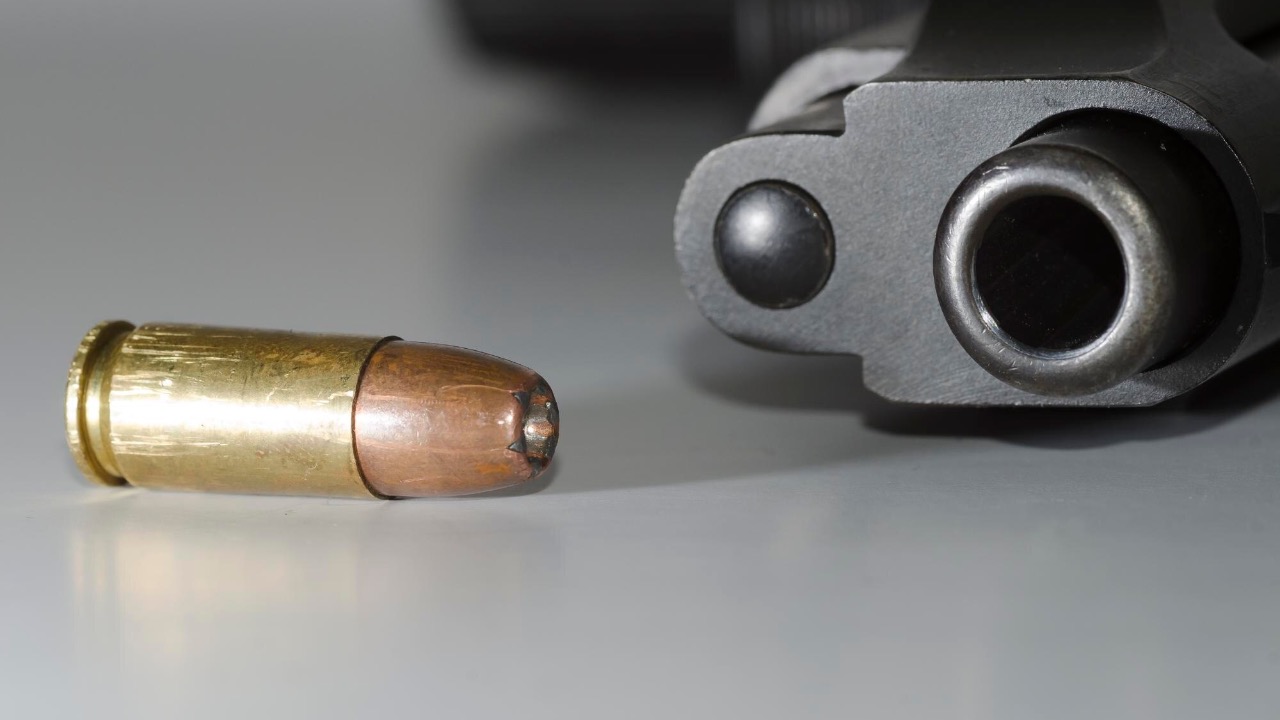
When instructors and ballistics specialists talk about reliable defensive calibers, they are usually describing a balance of penetration, expansion, and controllability rather than raw power. A dependable round must reach vital organs after passing through clothing and intermediate barriers, yet avoid excessive overpenetration that could endanger bystanders. Analyses of common defensive cartridges emphasize that modern hollow points in service calibers are designed to meet these performance goals while still being shootable for people who are not elite competitors, which is why several mainstream handgun rounds are repeatedly highlighted as practical choices in self-defense discussions.
Training-focused sources also stress that reliability includes logistics and human factors. A caliber that looks ideal on paper loses value if ammunition is scarce, too expensive to practice with, or unpleasant enough in recoil that shooters avoid regular range time. Instructors who walk students through the question of what’s the best tend to frame the answer around what a person can control quickly and accurately in their chosen platform, not just what generates the highest muzzle energy. That is why the same short list of cartridges keeps appearing in police holsters, civilian carry guns, and home-defense rifles.
Why 9mm Luger dominates modern defensive carry
Among centerfire handgun rounds, 9mm Luger has become the default recommendation for many armed citizens and law enforcement agencies. Its popularity is not just fashion; it reflects a long track record of real-world use and continuous improvement in bullet design. Modern 9mm hollow points are engineered to expand reliably while still penetrating deeply enough to reach vital structures, which is why they are frequently grouped with other “Personal Defense Caliber Candidates” in expert overviews of stopping power. At the same time, 9mm’s relatively mild recoil in compact and full-size pistols lets most shooters fire rapid, accurate follow-up shots, a factor that matters more in real confrontations than theoretical one-shot stops.
Cost and availability reinforce 9mm’s dominance. Community discussions about 9mm Luger ammo repeatedly note that it is widely stocked and comparatively affordable, which encourages the kind of frequent practice that builds competence. Training-oriented guides that compare service calibers often conclude that 9mm, .40, and .45 all have decades of proven results, but they still give 9mm an edge for most people because it combines adequate terminal performance with higher magazine capacity and easier control. In my view, that combination of ballistic effectiveness, shootability, and logistics explains why 9mm is the baseline against which other defensive calibers are judged.
.45 ACP, .40 S&W, and the enduring big-bore debate
Even as 9mm has surged, larger handgun calibers retain a loyal following among shooters who prioritize bigger bullets and heavier recoil impulses. The long-running argument over 9mm versus .45 ACP reflects this divide. Analyses of 9mm and 45 point out that both calibers have extensive service histories and can be highly effective with modern hollow points, but they differ in recoil, capacity, and gun size. .45 ACP typically launches a heavier projectile at lower velocity, which some shooters believe offers better momentum through intermediate barriers, while others note that the softer, slower recoil can feel more controllable in a full-size pistol even though the impulse is larger overall.
.40 S&W occupies a middle ground between 9mm and .45 ACP, and it remains a practical option despite some agencies moving back to 9mm. Analyses of why Many police departments adopted .40 S&W emphasize its balance of power and control, with higher energy than 9mm but more capacity and often less recoil than .45 ACP in similar platforms. For shooters who can manage the sharper snap of .40, it offers a compelling mix of performance and magazine size. When I weigh these big-bore options, I see them as viable for people who are willing to accept lower capacity and more demanding recoil in exchange for heavier bullets, but they are no longer necessary to achieve effective terminal performance given how far 9mm ammunition has advanced.
.380 ACP and .22 LR: where smaller calibers fit in
Not everyone can comfortably carry or control a service-caliber handgun, especially in very small pistols or for people with limited hand strength. That is where .380 ACP and, in some cases, .22 LR enter the conversation. Guides that list 380 ACP among common self-defense calibers note that it is often chosen for ultra-compact concealed carry guns where 9mm recoil would be difficult to manage. In those small platforms, .380 ACP can offer quicker follow-up shots and better accuracy for some shooters, though it typically sacrifices penetration and expansion compared with 9mm, especially through heavy clothing or intermediate barriers.
.22 LR is even more controversial. Overviews of best handgun calibers usually recommend carrying something larger than .22 LR for serious defensive use because the tiny bullets and limited energy reduce the likelihood of rapid incapacitation. At the same time, some instructors acknowledge that a .22 LR pistol that a person can shoot accurately and frequently may be better than a more powerful gun they avoid practicing with or cannot control. In my assessment, .380 ACP can be a reasonable compromise for deep concealment or recoil-sensitive shooters who choose high-quality defensive loads, while .22 LR is best reserved for training, small-game hunting, or as a last resort when no better option is practical.
Revolvers and the 38 Special versus 357 Magnum choice
For those who prefer revolvers, the classic debate centers on 38 Special and 357 Magnum. At a glance, these cartridges look similar, but their performance and recoil differ significantly. Technical comparisons of 38 and 357 explain that 357 Magnum operates at much higher pressures and velocities, which translates into greater energy and deeper penetration. That extra power can be valuable against larger threats or when shooting from a longer barrel, but it also produces substantially more recoil and muzzle blast, especially in lightweight snub-nose revolvers commonly used for concealed carry.
Many defensive revolver shooters settle on 38 Special +P loads as a compromise. Detailed breakdowns of 38 Special +Pnote that these cartridges increase pressure and velocity over standard 38 Special, improving expansion and penetration while remaining more controllable than full-power 357 Magnum in small-frame guns. Beginner-oriented guides that discuss Firearm platform: Some calibers emphasize that 38 Special in revolvers is often a better starting point for new shooters because it offers manageable recoil and simple operation. In my view, 357 Magnum remains a strong choice for experienced revolver users who can handle its blast, while 38 Special +P is a more realistic everyday defensive load for most people carrying small wheel guns.
Rifle calibers for home and property defense
While handguns are easier to carry, rifles offer significant advantages in stability, accuracy, and terminal performance, which is why some households stage carbines for home or property defense. The most common choices in this role are intermediate rifle cartridges like 5.56 NATO and .308 Winchester, each with distinct strengths. Technical comparisons that focus on 308 vs 5.56 describe .308 Winchester (.308 Win) as a full-power rifle round with excellent long-range energy and penetration, while 5.56 NATO is lighter recoiling, allows higher magazine capacity, and is optimized for shorter carbines and rapid handling in confined spaces.
Ballistic analyses that frame the Caliber Comparison between 308 and 5.56 often conclude that both can be effective for defense, but they give a slight edge to 5.56 in close-quarters scenarios because of its lower recoil and faster follow-up potential. At typical home-defense distances, 5.56 NATO from a quality carbine can deliver rapid, accurate fire with less risk of overpenetration than some handgun or shotgun loads, depending on bullet construction. In my assessment, .308 Winchester is better suited to rural property defense or situations where longer-range shots are plausible, while 5.56 NATO is usually the more practical choice for defending a typical house or apartment.
Real-world preferences: what shooters actually carry
Beyond lab data and expert opinion, it is useful to look at what ordinary gun owners choose when they spend their own money. Community threads on best caliber for home defense often reveal a pragmatic streak: many contributors recommend starting with a straightforward 9mm handgun, a reliable 5.56 carbine, or a 12-gauge shotgun rather than chasing exotic calibers. The reasoning is consistent with instructor advice, emphasizing that common calibers offer abundant ammunition choices, proven reliability, and easier access to training resources. When people describe their actual nightstand or carry setups, 9mm pistols and 5.56 rifles dominate, with .38 Special revolvers and .45 ACP pistols appearing as secondary options.
More detailed exchanges within those communities highlight how users weigh tradeoffs between recoil, capacity, and overpenetration. In one discussion that drills down on specific gun and ammo combinations, participants note that with “those three guns” in mainstream calibers, a new owner can cover most defensive scenarios without overcomplicating things, a sentiment captured in a focused segment of the Best caliber for conversation. I read these real-world choices as a vote of confidence in mainstream service calibers and a reminder that reliability in practice often matters more than theoretical advantages of niche rounds.
How trainers frame the “no perfect caliber” problem
In structured training environments, instructors are quick to point out that there is no single perfect defensive cartridge. Comprehensive guides that present Choosing the Best Defense typically list several cartridges as “best for” different roles, such as concealed carry, home defense, or budget-conscious practice. These resources emphasize that 9mm, .40 S&W, .45 ACP, .380 ACP, and 38 Special have all earned their reputations through decades of proven results, and that the right choice depends on the shooter’s environment, skill level, and firearm platform. The same guides often highlight that ammunition from established manufacturers like Federal, PMC, and Hornady, which are stocked by retailers such as Primary Arms, is a key part of the reliability equation.
Other expert summaries go further, explicitly stating that the self-defense cartridge you should prefer is a personal decision and that there is no one-size-fits-all answer. One widely cited analysis notes that There is no perfect self-defense caliber, and what works well for one person might be an absolute nightmare for another. Training-focused breakdowns that start by Understanding What Makes a cartridge “Best” for Self Defense Before diving into calibers reinforce this point, arguing that reliability is as much about the shooter’s ability to place rounds accurately under stress as it is about the cartridge’s ballistics. From my perspective, this is the most important takeaway: a reliable caliber is one you can train with consistently, control effectively, and feed with quality ammunition that has a proven track record.
Matching caliber to role: concealed carry, home defense, and beyond
Once you accept that several calibers can work, the next step is matching the cartridge to the specific defensive role. Training resources that break down Each threat profile emphasize that concealed carrying, home defense, and rural property protection impose different requirements. Concealed Carrying often favors slimmer pistols in 9mm or .380 ACP that can be hidden under everyday clothing, while home defense can take advantage of larger 9mm or .45 ACP pistols, 38 Special revolvers, or 5.56 carbines with weapon-mounted lights. For people who spend time on large properties, .308 Winchester or 357 Magnum may be more appropriate due to their extended range and barrier penetration.

Leo’s been tracking game and tuning gear since he could stand upright. He’s sharp, driven, and knows how to keep things running when conditions turn.