Scientists discovered ravens following Yellowstone wolves—and the reason surprised them
If you spend enough time watching wildlife, you start to notice patterns that most people miss. In places like Yellowstone National Park, those patterns sometimes reveal relationships between species that seem unlikely at first glance. One of the most fascinating involves ravens and wolves.
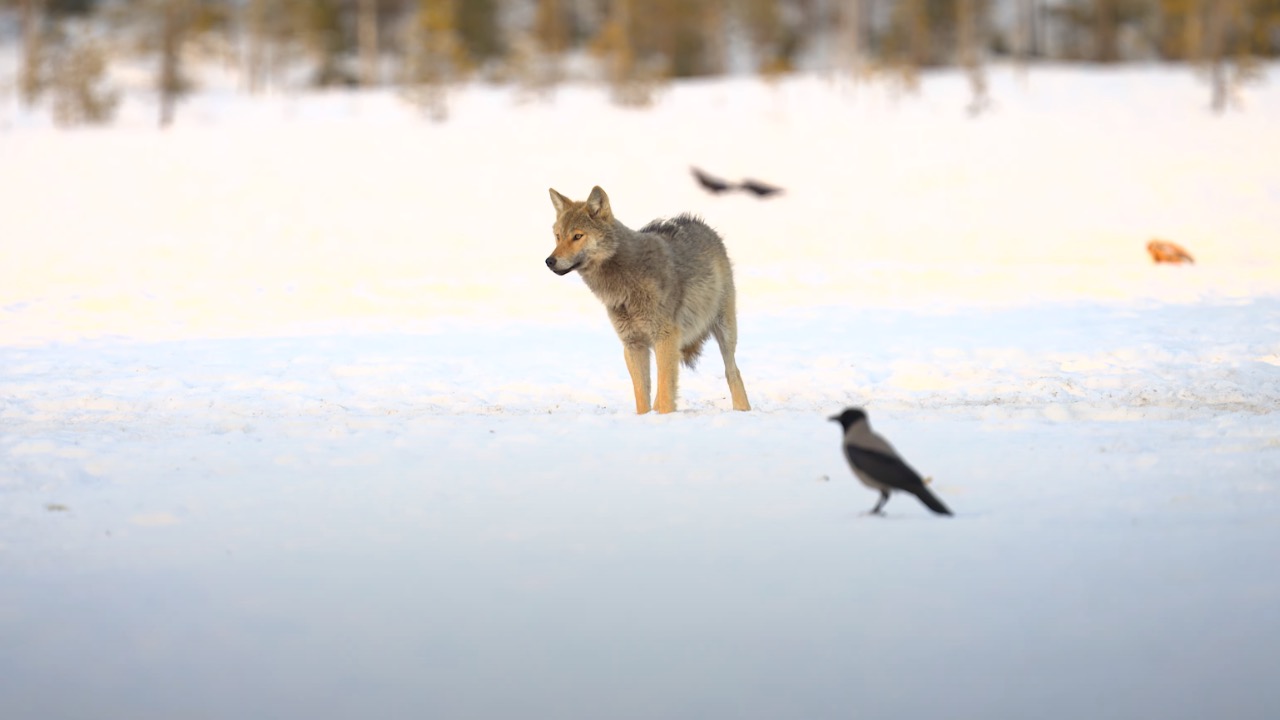
Researchers studying wolf packs in Yellowstone began noticing that Common Raven regularly followed Gray Wolf packs across the landscape. At first glance it looked like coincidence—birds simply showing up where wolves happened to hunt. But long-term observation told a different story. Ravens weren’t randomly appearing. They were actively tracking wolves, sometimes trailing them for miles.
The more scientists watched, the clearer it became that the birds were doing far more than scavenging leftovers. Ravens were reading wolf behavior, anticipating kills, and in some cases arriving at carcasses before other scavengers even knew food existed. The relationship turned out to be more complex—and more strategic—than many biologists expected.
Ravens Use Wolves as Moving Food Finders
When you follow wolves across Yellowstone long enough, you see how difficult hunting can be. Packs travel miles every day searching for vulnerable elk, deer, or bison. Ravens have figured out that trailing wolves dramatically increases their odds of finding food.
Instead of searching randomly across a huge landscape, a raven can watch wolf movements and wait for the moment a hunt succeeds. Once a kill is made, the birds move in quickly. Even large wolf packs can’t consume an entire carcass immediately, and scraps are scattered around the site.
For a raven, that’s a reliable meal. By sticking close to wolves, they turn the predators into mobile food scouts. Scientists studying this behavior noticed that ravens often appear shortly after wolves begin feeding, sometimes arriving in groups that seem to materialize out of nowhere.
Ravens Can Read Wolf Behavior
One surprising discovery was how closely ravens pay attention to wolf behavior. They don’t simply follow packs blindly. They watch body language and movement patterns.
When wolves begin stalking prey, ravens often circle above or land nearby to observe. Researchers noticed that birds become especially attentive when wolves show hunting behavior—spreading out, slowing down, or focusing on a herd.
You can sometimes see ravens perched on nearby trees or ridges while wolves work through a hunt. The birds appear to recognize the signals that a kill might happen soon. That level of awareness suggests ravens aren’t passive followers. They’re actively interpreting what the wolves are doing.
Some Ravens Track Specific Wolf Packs
Another detail that caught researchers off guard is that certain ravens appear to follow specific wolf packs rather than drifting randomly between them. This behavior has been observed repeatedly in the Yellowstone ecosystem.
Because wolf territories are large, sticking with a single pack can provide consistent opportunities for food. A raven that knows the movement patterns of a particular pack has a better chance of predicting where a hunt might occur.
Biologists watching this relationship believe some ravens learn the habits of individual packs over time. That familiarity allows the birds to stay close enough to benefit from kills without constantly searching the entire landscape.
Ravens Sometimes Lead Other Ravens to Carcasses
When wolves make a kill, ravens often appear rapidly—and sometimes in larger numbers than expected. Scientists believe the first birds on scene may call in others.
Ravens are highly social and communicate with a range of calls. Some of those calls seem to signal the presence of food. When one bird finds a carcass opened by wolves, nearby ravens may respond and join the feeding opportunity.
You might watch a handful of birds at a kill site early on, only to see more arrive within minutes. Over time, a large gathering can develop around a carcass. Wolves remain dominant at the site, but ravens manage to grab scraps whenever the predators step away.
Ravens Help Open Carcasses After Wolves Leave
Wolves are powerful predators, but even they don’t consume every part of a carcass immediately. Once the pack leaves or becomes distracted, ravens take advantage of the opportunity.
Their strong bills allow them to pull at exposed tissue or widen openings that wolves created. While they can’t break through thick hide on their own, they’re extremely efficient at working with what wolves leave behind.
This ability allows ravens to extract nutrition long after the initial kill. In some cases, birds continue feeding for days as other scavengers arrive. Wolves effectively unlock the carcass, and ravens capitalize on the access.
Ravens Also Warn Wolves About Danger
The relationship between ravens and wolves isn’t entirely one-sided. Observers have noticed that raven alarm calls can alert wolves to potential threats nearby.
When ravens spot approaching humans, bears, or other disturbances, they often begin calling loudly. Wolves sometimes react to those calls by looking up, becoming alert, or leaving the area.
This doesn’t mean the birds are intentionally protecting wolves, but their vocal behavior can act as an early warning system. Wolves appear to recognize the meaning of certain raven calls and respond accordingly.
Ravens Are Among the First to Find a Kill
One of the more surprising findings is how quickly ravens locate wolf kills in Yellowstone. Sometimes they arrive even before other predators or scavengers know the carcass exists.
Researchers suspect ravens rely on several cues. They may watch the final stages of a hunt from above, or they may follow wolves closely enough to see when a chase turns into a successful kill.
Their sharp eyesight also helps. Ravens flying overhead can spot movement, blood, or feeding activity that other animals on the ground might miss. That advantage allows them to be early arrivals at fresh carcasses.
The Partnership Shapes Yellowstone’s Food Web
The connection between wolves and ravens reveals something important about how ecosystems function. Predators don’t exist in isolation. Their hunting success influences a wide network of other species.
In Yellowstone, wolf kills provide food for coyotes, foxes, bears, eagles, magpies, and many smaller animals. Ravens are among the most consistent beneficiaries because they’ve learned how to track wolves directly.
Watching a group of ravens trailing a wolf pack across a snowy valley tells you a lot about survival in wild country. Every species looks for opportunity. Ravens simply found a way to let wolves do the hardest part of the work.

Asher was raised in the woods and on the water, and it shows. He’s logged more hours behind a rifle and under a heavy pack than most men twice his age.