Senator says Netanyahu convinced Trump to join Iran strike
Senator Chris Murphy has ignited a new fight in Washington by asserting that Benjamin Netanyahu personally persuaded Donald Trump to bring the United States into the war with Iran. His charge comes as American and Israeli forces continue joint strikes and as lawmakers argue over whether the White House was led, pressured, or simply eager to join the campaign.
The debate now stretches far beyond a single phone call. It reaches into years of coordination between hawkish Republicans, the Israeli government, and advisers who had long pushed for confrontation with Tehran, and it is forcing Congress to examine how the decision to attack was actually made.
Murphy’s allegation: “Netanyahu decided he wanted to attack”
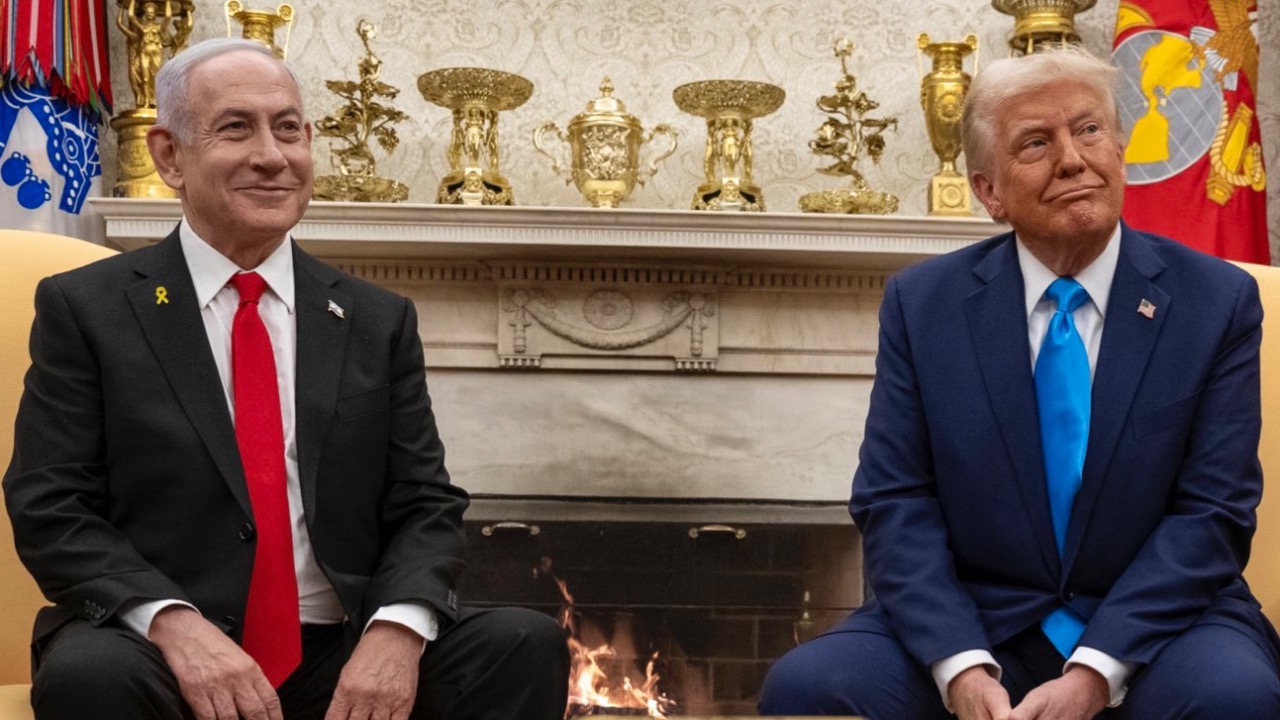
In a clip that spread quickly on social media, Senator Chris Murphy said that Netanyahu decided he wanted to attack Iran and then convinced Trump to go along. In the video, Murphy describes a sequence in which the Israeli leader made up his mind to strike and then successfully lobbied the American president to join, calling it a shameful way for the United States to enter a major war.
The Instagram reel that helped drive the uproar carries the caption that “Senator Murphy says that Netanyahu convinced Trump to join the war against Iran. Shame,” tying his comments directly to Netanyahu, Trump, and Iran. A separate clip, shared by a different account, frames the same controversy with the blunt line, “Why are we at war with Iran? Great question,” before suggesting that “the simplest explanation” is that Israel forced Washington’s hand.
Murphy has a long record of warning against escalation with Tehran. In an earlier video, he criticized the administration of Donald Trump after a classified briefing and questioned its approach toward what the caption called “Ira,” which clearly referred to Iran, accusing officials of being opaque about their goals. His latest comments fit that pattern, but they also go further by naming Netanyahu as the central instigator who allegedly moved the United States from pressure to open conflict.
Murphy’s stature as a prominent Democratic voice on foreign policy heightens the impact. A basic profile of Chris Murphy shows a lawmaker who has built his brand around national security oversight, which makes his charge that a foreign leader essentially “decided” on an American war especially explosive.
The Netanyahu call that “cemented” Trump’s decision
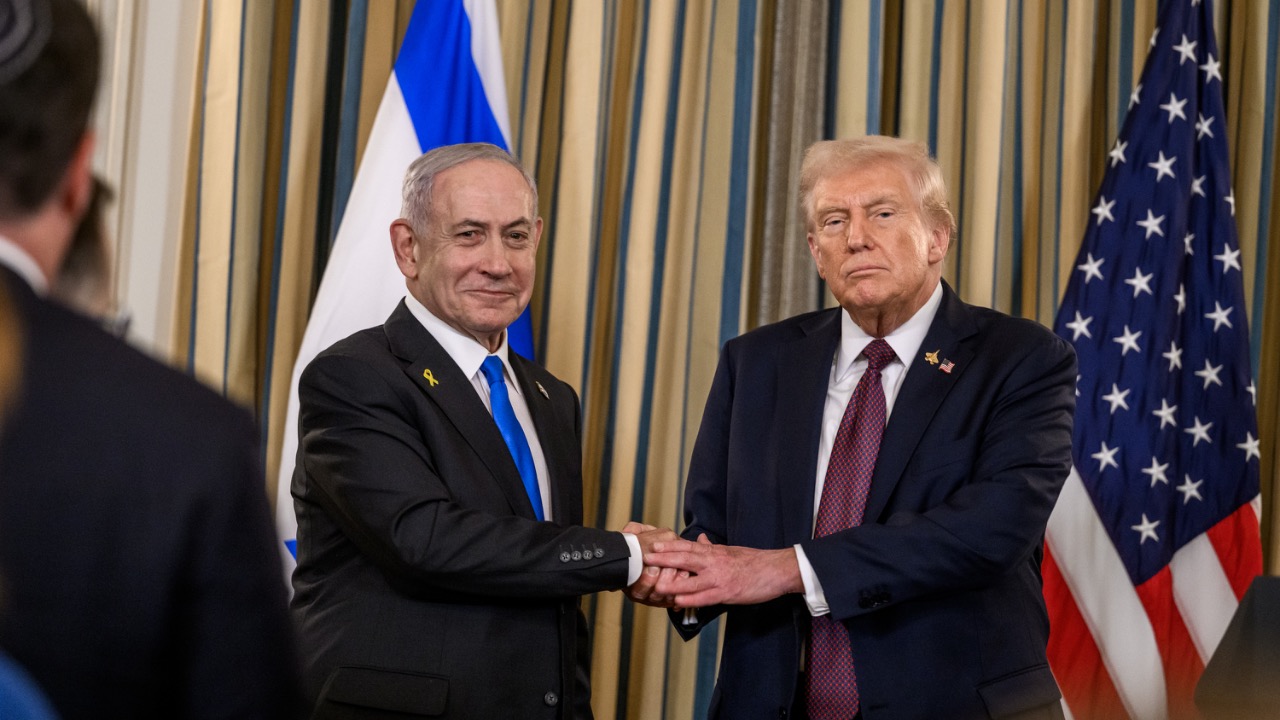
Murphy’s accusation did not emerge in a vacuum. Earlier reporting described a pivotal phone call in February in which Netanyahu and Trump spoke about an opportunity to strike Iran’s leadership. According to that account, Netanyahu told Trump that Iran’s supreme leader, Ayatollah Ali Khamenei, and his advisers would be present at specific locations and that a coordinated operation could decapitate the regime. The report stated that this February 23 call “cemented” Trump’s decision to greenlight strikes.
That narrative aligns with broader coverage of how the war began. A detailed entry on the 2026 Iran war describes joint airstrikes by the United States and Israel that hit military and government sites in Tehran and Isfah and notes that senior Iranian officials were killed. The same conflict is referenced in a Los Angeles Times report that says, according to the Associated Press and the United Nations, American forces participated in Israeli strikes and that Iran’s supreme leader was killed in a U.S. and Israeli attack, a result Trump himself later touted.
Seen in that light, Murphy’s claim that “Netanyahu decided he wanted to attack, and he convinced Trump” does not stand alone. It echoes and sharpens earlier accounts that already placed Netanyahu at the center of the decision chain and described Trump’s choice as heavily influenced by Israeli intelligence and assurances about the target set.
Netanyahu’s own role is now under intense scrutiny. A basic profile of Benjamin Netanyahu underscores his long tenure as Israel’s dominant political figure, and critics like Murphy argue that he has consistently sought to align Washington with his hard line on Iran.
Lindsey Graham’s lobbying and coaching behind the scenes
Murphy has focused on Netanyahu and Trump, but other reports highlight the role of Senator Lindsey Graham in steering the White House toward confrontation. A detailed account of Graham’s activities says that he successfully lobbied President Trump to bomb Iran and that he actively championed the decision. The same report describes Graham’s efforts as part of a sustained campaign to persuade Trump that military action was necessary.
Another story goes further, recounting that several weeks before the latest war in the Middle East began, Graham made numerous trips to Israel to meet members of Mossad and other officials. In those conversations, he reportedly expressed confidence that the United States would join a conflict and even said, “We are going to make a tonne of money” from the war, while Iranian officials insisted they had no ambition to make nuclear weapons. That comment, if accurately reported, casts Graham’s advocacy in a highly transactional light.
One video segment describes how Graham, working with retired General Jack Keane and Marc Thiessen, a former director of speechwriting for President George W. Bush, helped build the case for strikes. According to that account, the trio pressed Trump to see Iran as a house that, if left alone, would “burn your house down,” a metaphor meant to justify preemptive action.
Another segment reports that Graham even coached Netanyahu on how to convince Trump to bomb Iran, advice that allegedly shaped the February phone call that Murphy now cites. That portrayal places Graham not only as a domestic hawk but also as a bridge between Netanyahu and Trump, helping translate Israeli concerns into arguments that would resonate with the president.
Graham’s centrality is not surprising given his own profile. A search for Lindsey Graham highlights his long record as a defense hawk and close ally of Trump on national security, even when they clashed on other issues.
Trump’s calculus and public defense of the strikes
Donald Trump has framed the decision to strike Iran as a necessary response to an imminent threat and a chance to eliminate a historic adversary. He has publicly said that Iran’s supreme leader was killed in a U.S. and Israeli attack, a claim echoed in the Associated Press summary cited by the Los Angeles Times, and he has portrayed that outcome as proof of his toughness.
Supporters argue that Trump faced a choice between accepting Iranian escalation and acting decisively. They point to Iranian activity across the region and insist that the strikes were a justified act of self defense. Some Republican allies also say that Trump, not Netanyahu, made the final call, and that Israel’s role has been overstated by critics who want to paint the president as easily manipulated.
Senator Marco Rubio has tried to reinforce that line. In a television interview, he clarified earlier remarks about Israel’s role and insisted that Trump made the call to strike. The segment, introduced by national correspondent Kayla Gaskins in Washington, emphasized that Israel’s role in the escalating conflict with Iran is under intense scrutiny, but Rubio’s core message was that the decision ultimately belonged to the American president.
Another clip, also featuring Rubio, described how Israel’s role in the conflict with Iran came under renewed focus after Secretary of State Marc, a reference to the current top U.S. diplomat, addressed the crisis. Rubio again stressed that Trump, not foreign leaders, ordered the attack.
Trump’s own profile, visible through a basic search for Donald Trump, is inseparable from his reputation for unilateral decision making. Yet the emerging record around Iran suggests a more complex picture in which he was heavily courted, coached, and presented with a striking opportunity by allies in Jerusalem and on Capitol Hill.
Democratic backlash: “dumb war” and warnings about Netanyahu
Murphy is not the only Democrat accusing Netanyahu and Trump of dragging the United States into an unnecessary conflict. Senator Ruben Gallego has blasted both leaders over what he called a “dumb war,” accusing Donald Trump and Benjamin Netanyahu of recklessness in their approach to Iran. Gallego’s comments, reported in a NewsNation segment, reflect a broader frustration among Democrats who see the conflict as avoidable and strategically unwise.
Another report from Capitol Hill quotes Sen. Ruben Gallego again criticizing Trump and Netanyahu over the Iran war and underscores his view that the conflict was driven more by political agendas than by genuine security needs. He has framed the war as an avoidable disaster that will consume American resources and attention for years.
Senator Chris Van Hollen has added his own warnings. In a CNN appearance, described in one account, the Maryland Democrat, who sits on the Senate Foreign Relations Committee, was asked about a comment that Netanyahu had “outsmarted” President Trump on Iran. Van Hollen responded that Netanyahu “has always wanted to drag” the United States into a war and argued that the Israeli leader’s strategy had finally succeeded.
In a separate Facebook video, Sen. Chris Van Hollen criticized the Trump administration’s handling of U.S. involvement in the Iran conflict and said officials had not been transparent with Congress about goals or exit strategies. The post sparked a flood of comments, some accusing Van Hollen of Trump Derangement Syndrome and others insisting that Iran must be confronted now or the United States would “be sorry later.” The split reaction illustrates how polarized the domestic debate has become.
Murphy’s own earlier video, in which he criticized the administration of Donald Trump after a classified briefing, fits into this pattern of Democratic lawmakers who say they were misled or sidelined as the path to war took shape. Together, their statements paint a picture of a Congress that feels it was presented with a fait accompli rather than a genuine choice.
How much pressure came from Israel and pro-war Republicans
Beyond individual quotes, the emerging record suggests a sustained pressure campaign aimed at pushing Trump toward confrontation with Iran. Netanyahu’s February call, Graham’s trips to Israel and meetings with Mossad, the involvement of Jack Keane and Marc Thiessen, and the messaging that Iran would eventually “burn your house down” all point to a coordinated effort to frame war as both necessary and profitable.
A segment that examined Graham’s comments on making “a tonne of money” from the conflict highlighted how economic and political incentives intertwined. It described how Graham visited Israel several weeks before the war in the Middle East began, met with Mossad members, and returned to Washington more convinced than ever that the United States should join Israel in striking Iran, even as Iranian officials insisted they had no ambition to make nuclear weapons.
Another video report, featuring Mark Caputo White House reporter for Axios, described how Netanyahu’s tip about Ayatollah Ali Khamenei’s location cemented Trump’s decision to strike. The segment framed the call as the moment when years of pressure and lobbying finally paid off, turning abstract hawkish rhetoric into concrete military orders.

Leo’s been tracking game and tuning gear since he could stand upright. He’s sharp, driven, and knows how to keep things running when conditions turn.