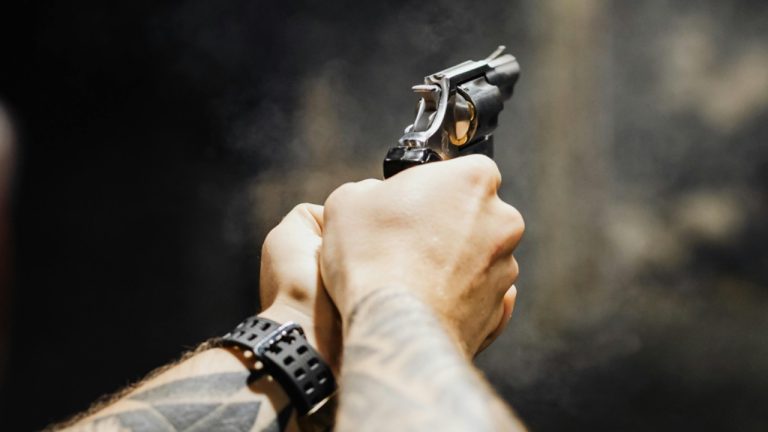
Seven handgun accessories increasingly facing regulatory scrutiny
Regulators are increasingly focused not just on who owns a handgun, but on the accessories that can change how it handles, how fast it fires, and how easily it can be concealed. From stabilizing braces to forced-reset triggers, once niche add‑ons are now at the center of legal fights, enforcement campaigns, and new state-level restrictions. I see seven categories in particular drawing sustained scrutiny, reshaping what both manufacturers and everyday owners can realistically buy, sell, or bolt onto a pistol.
Those battles are unfolding across multiple fronts, from federal agencies and courts in the United States to regulatory debates in Canada and new manufacturing rules in states like Colorado. The result is a patchwork in which the same handgun accessory can be treated as a simple part in one jurisdiction and as a tightly controlled component in another, with real consequences for retailers, importers, and gun owners who misread the line between legal customization and a regulated “firearm” in its own right.
1. Pistol braces and the shifting definition of a handgun

No accessory better illustrates the regulatory whiplash around handguns than the pistol brace. Originally marketed to help stabilize large-format pistols, especially for people with limited arm strength, these devices became a flashpoint once officials argued that some configurations effectively turned pistols into short‑barreled rifles. Under federal law, that shift in classification can trigger registration requirements and tax obligations that many owners never anticipated when they bought what looked like a simple add‑on.
The ATF tried to formalize that view with a rule that treated many braced pistols as regulated rifles, a move that forced owners to choose between registering, modifying, or surrendering their firearms. That rule did not survive intact. After a series of legal challenges, The Department of Justice ultimately dropped its appeal in Mock v. Garland, and the agency acknowledged that the ATF pistol brace rule is now permanently vacated. Even so, the episode signaled that regulators are willing to revisit long‑standing assumptions about what counts as a handgun, and that similar accessories could face renewed attention if they blur the same legal lines.
2. Forced-reset triggers and the speed question
While pistol braces raised questions about form factor, forced-reset triggers have drawn scrutiny for what they do to rate of fire. These compact devices, small enough to fit in the palm of a hand, are designed so that the trigger mechanically “resets” forward after each shot, encouraging extremely rapid follow‑up pulls. Critics argue that in practice they can make a semi‑automatic handgun behave much closer to a fully automatic weapon, even if the mechanism still technically requires one pull per round.
Federal agents have seized forced-reset triggers for years, treating some models as illegal machine guns, and the controversy has only intensified as investigative teams have highlighted how a part that looks like a simple replacement can dramatically increase how fast a gun can fire. One televised I‑TEAM segment described how a forced-reset unit small enough to disappear in a pocket could transform a handgun’s performance, underscoring why regulators see it as more than a benign customization. A separate investigation walked viewers through the mechanics and the legal gray zone, reinforcing that owners who buy such triggers online may be stepping into a category of hardware that enforcement agencies already treat as contraband.
3. High‑capacity magazines and detachable systems
Magazine capacity has long been a political flashpoint, and handguns are increasingly caught in the same net as rifles and shotguns. Several jurisdictions now restrict how many rounds a magazine can hold, arguing that limiting capacity can reduce the lethality of mass shootings and other violent incidents. Those rules often focus on detachable magazines, which can be swapped quickly, rather than fixed designs that are slower to reload.
One federal advisory panel in Canada, for example, urged the government to look closely at “Shotguns and semi‑automatic rifles” with detachable box magazines, recommending that models with easily removable, high‑capacity magazines be considered for further prohibitions. Reporting on that process noted that the panel explicitly contrasted Shotguns and rifles with detachable magazines against those with fixed designs, and highlighted “Detachable versus fixed box magazine” as a key dividing line. A related account of the same panel’s work explained that it flagged “Shotguns and semi‑automatic rifles” with tactical features and detachable magazines for possible bans, while also pointing to specific models of semi‑automatic rifles that could be swept in, a debate captured in detail by Shotguns and semi‑automatic rifles advocates.
4. Lights, optics and the line between utility and “tactical”
Not every accessory under scrutiny is designed to increase firepower. Weapon‑mounted lights and red‑dot optics are now standard add‑ons for many handgun owners, marketed as tools for safer target identification and faster sight acquisition. Retailers describe them as companion purchases, with one industry voice noting that “Lights & More” such as compact weapon lights and miniature red dots often leave the store alongside a new pistol.
That popularity has made specific models, like the Streamlight TLR‑1 and TLR‑7, staples of the handgun accessory market, with one retailer, identified as Brown, saying that “We sell a lot of Streamlight TLR‑1 or TLR‑7” and that these products “practically sell themselves.” The same report on Lights and optics noted that these accessories are often paired together, with red dots and weapon lights treated as a package that boosts both performance and sales. As lawmakers and advocacy groups debate what counts as a “tactical” feature, the ubiquity of products like the Streamlight TLR series makes it harder to draw a clean regulatory line between legitimate defensive tools and gear that might be seen as encouraging offensive use.
5. “Assault‑style” cosmetic upgrades on handguns
Some of the most contentious proposals do not target a single part, but rather a cluster of cosmetic and ergonomic features that can be bolted onto a handgun to mimic the look and feel of a rifle. In online debates, gun‑control advocates have floated the idea of banning accessories commonly associated with “assault weapons,” even when they are attached to otherwise traditional platforms. That approach focuses on the external configuration rather than the underlying firing mechanism.
One widely shared comment in a political discussion forum captured the logic bluntly: the writer argued that they “could put AR‑15 style accessories (flash hider, pistol grip, collapsible stock, barrel shroud, vertical foregrip, etc) onto a Brown Bess flintlock musket and it’s still a flintlock musket,” suggesting that focusing on furniture rather than function can be misleading. The same thread, preserved in a Mar discussion, underscores how polarizing the idea of banning “AR‑15 style accessories” has become, especially when those parts are used to dress up handguns or even antique designs. For regulators, the challenge is that many of these components, from barrel shrouds to vertical foregrips, can change how a handgun is controlled and concealed, yet they remain easy to buy and install without the kind of background checks that apply to the firearm itself.
6. Import controls and pre‑sale scrutiny of handgun parts
Beyond domestic sales, governments are also rethinking how handgun accessories enter the market in the first place. In Canada, proposed regulations would require businesses to provide detailed data to a federal registrar before importing or manufacturing a batch of firearms or related components. The idea is to ensure that every shipment is vetted by the national firearms program before it reaches retailers, closing gaps that critics say allowed questionable models and accessories to slip through.
Advocacy groups have warned that the government is watering down earlier promises to “fully scrutinize” firearms before sale, arguing that the draft rules leave too much discretion to regulators and too little transparency for the public. According to one report, the proposed system would compel importers to submit information about each product line so that it can be assessed by the RCMP’s firearms program, a process described in detail in coverage of how The proposed regulations would work. For handgun accessories, that kind of pre‑clearance could mean longer lead times, higher compliance costs, and the possibility that certain parts are quietly blocked from entering the country at all.
7. State‑level accessory rules, from FOID cards to magazine caps
In the United States, the most immediate constraints on handgun accessories often come from state law rather than federal rules. Illinois, for example, requires a Firearm Owner’s Identification card to purchase and possess firearms and ammunition, and that framework extends to certain accessories. The Firearm Owner’s Identification (FOID) system effectively ties the ability to buy key components to a state‑issued credential, adding a layer of screening that goes beyond the federal background check.
Other states have focused on specific parts. Colorado restricts magazine capacity to a set number of rounds, a rule that applies to handgun magazines as well as those for rifles, while Washington has enacted its own limits on high‑capacity magazines and certain weapon modifications. A detailed guide to state rules notes that Illinois uses the FOID card to gate purchases, Washington’s laws now restrict magazines and some modifications, North Carolina permits open carry but still requires attention to local rules, and Colorado’s cap on magazine capacity directly affects the sale of extended handgun magazines. For owners who travel or move between states, that patchwork can turn a perfectly legal accessory in one jurisdiction into a prohibited item in another.
8. Pressure campaigns on manufacturers and the Colorado test case
Regulatory scrutiny is not limited to formal bans or classification changes. Advocacy groups and some officials have increasingly turned to pressure campaigns that target manufacturers directly, warning companies that continuing to produce certain handgun accessories or configurations could invite lawsuits or regulatory backlash. Those efforts often start quietly, with letters and behind‑the‑scenes conversations, long before any court order or statute is in play.
One recent investigation described how a “Major Gun Manufacturer” was told to cease production of a contested product, with the report emphasizing that pressure on gunmakers “doesn’t start with bans or court orders, it starts with letters, headlines and the quiet threat that a legal” fight is coming. That account, captured in a Jan broadcast and a longer segment online, showed how companies can be nudged away from controversial accessories even without a formal prohibition. At the same time, Colorado has adopted a sweeping new law, slated to take effect in August 2026, that effectively bans the manufacture, sale or purchase of semi‑automatic firearms in the state, with only a few select handguns exempt. Coverage of that measure noted that the law will also affect the production of related components, prompting one red‑state governor to urge firearms makers to leave Colorado in response to what was described as an “anti‑gun push,” a clash detailed in reporting on how The new law could reshape the industry’s footprint.
9. How federal crackdowns and court fights shape the next wave
Hovering over all of these specific accessories is a broader federal effort to treat certain add‑ons as if they were firearms in their own right. The Department of Justice has already moved in that direction with rules that require some owners to apply for permits and pay taxes when they attach particular accessories, arguing that these parts fundamentally change how a weapon operates. One high‑profile example involved a final rule that required gun owners who added a contested accessory to apply for a permit within a set window or face the prospect of enforcement, including the obligation to pay the tax immediately if they missed the deadline.
Those moves have been framed as part of a campaign to “Cracks Down” on “Firearm Accessories” in a “Bid” to “Bolster Gun Safety,” language that appeared in coverage of how the Justice Department approached pistol braces and similar devices. The same reporting explained that owners who failed to comply with the new classification could find themselves in possession of an unregistered, regulated firearm, even if they had passed a background check when they bought the original handgun. As the ATF, the courts, and The Department of Justice continue to test how far they can go in redefining accessories as regulated items, I expect the next wave of scrutiny to focus on the seven categories already in the spotlight, from forced‑reset triggers to high‑capacity magazines, with each new rule or ruling rippling through retailers, importers, and the millions of people who own modern handguns.

Leo’s been tracking game and tuning gear since he could stand upright. He’s sharp, driven, and knows how to keep things running when conditions turn.