Seven handgun accessories now facing new “restricted” classifications
Regulators are steadily reclassifying once-routine handgun add-ons into categories that resemble rifle controls and assault weapon features. From threaded barrels to auxiliary grips and magazine interfaces, accessories that were previously treated as cosmetic are now being written directly into statutes and enforcement guidance.
The result is a patchwork in which seven common handgun components can trigger “restricted” status depending on the jurisdiction, the firearm’s configuration, and how the law defines assault weapon or prohibited device. Owners, retailers, and gunsmiths are being pushed to treat parts selection as a legal question as much as a performance choice.
1. Pistol grips and foregrips that mimic rifle controls
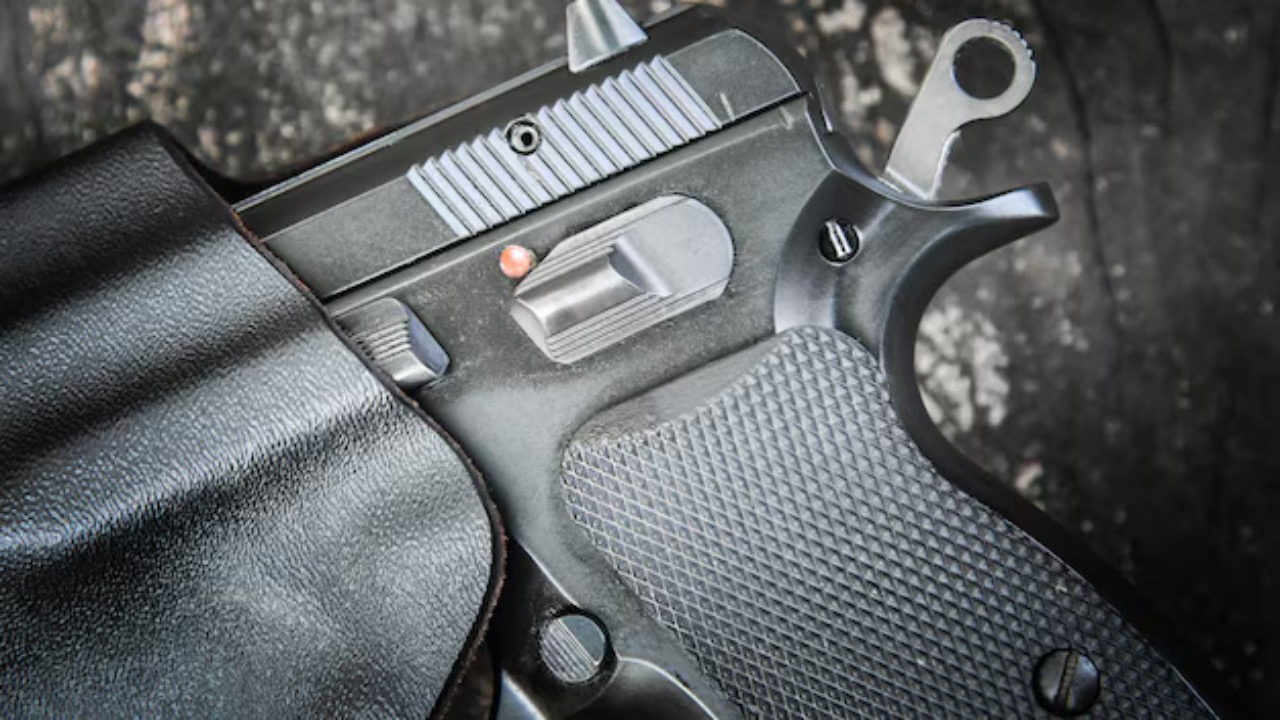
Lawmakers are increasingly treating certain handgun grips as assault weapon features when they resemble the vertical control surfaces long associated with rifles. California’s approach to AR-pattern firearms illustrates the logic: accessories such as pistol grips, thumbhole stocks, and foregrips are grouped together as features that move a firearm closer to an assault weapon configuration, and that same reasoning is now being applied to handguns that share similar ergonomics. A detailed breakdown of California’s New 2026 Laws explains that “The Two New Laws” signed in Oct, identified pistol grips and related control surfaces as key characteristics when classifying rifles and pistols that accept detachable magazines, which signals how regulators think about grip geometry and control surfaces on compact firearms as well.
Educational material for retailers on California AB 1263 goes further by listing “Assault Weapon Features” that apply “Per Penal Code” § 30515, including “Pistol grips and foregrips” and “Folding, telescoping, or thumbhole stocks” along with flash suppression devices. Framed for store owners who need to understand what configurations are legal to sell, this guidance shows that a pistol grip is no longer a neutral ergonomic choice once it crosses the statutory definition of an assault weapon feature. When a handgun adopts a rifle-style foregrip or a grip that allows a wraparound hold similar to an AR-15, it can fall under these “Assault Weapon Features,” which is why the AB 1263 explanation of “Pistol” controls and foregrips has become a reference point for compliance.
2. Folding, telescoping, and thumbhole stocks on handguns
Stocks that adjust length or fold for concealment have long been associated with carbines, yet they are increasingly turning up on large-format pistols and braced handguns. California’s New 2026 Laws describe how “The Two New Laws” treat “pistol grips, thumbhole stocks, folding or telescoping stocks” as core elements in deciding whether a firearm is regulated as an assault weapon, which becomes particularly significant when handgun frames are adapted to accept shoulder stocks or chassis systems. Once a pistol is fitted with a folding or telescoping stock, regulators can argue that its intended use and controllability resemble a short-barreled rifle, which triggers tighter classification and, in some cases, registration or outright prohibition.
Compliance guides for California retailers echo this by warning that “Folding, telescoping, or thumbhole stocks” are counted among the “Assault Weapon Features” that must be screened “Per Penal Code” definitions before a sale. Even when a manufacturer markets a chassis as an accessory for a pistol, the presence of a stock can move the firearm into a new category that is treated differently from a bare handgun frame. The fact that these same stock types are singled out in AR-15 compliance resources, which explain that California law imposes restrictions on configurations that include pistol grips, collapsible stocks, and similar features, shows how handgun accessories are now being measured against the same criteria that govern California-compliant rifles.
3. Threaded barrels and muzzle devices on pistols
Threaded barrels have become one of the clearest dividing lines between standard and restricted handgun setups. Reporting on Illinois’ statewide assault weapons restrictions explains that “Pistols are also restricted if they have a threaded barrel, a second grip, the capacity to accept magazines outside of the grip,” or a combination of these features. By explicitly naming threaded barrels as a trigger for tighter control, Illinois treats the simple act of adding muzzle threads, which allow attachment of compensators or suppressor mounts, as a move into a regulated configuration even if the accessory itself is not installed.
California’s AR-focused compliance materials reinforce how muzzle interfaces are scrutinized by highlighting bans on flash hiders and certain compensators when paired with detachable magazines and pistol grips. While those guides focus on rifles, they shape how regulators and retailers think about threaded handgun barrels that can accept similar devices. Owners who install a threaded barrel on a compact pistol for competition or home defense may find that the part is treated as a restricted feature once combined with other elements such as a second grip or an extended magazine, as described in the Illinois guidance on restricted Pistols.
4. Second grips, magazine wells, and external magazine interfaces
Accessories that add a second gripping surface to a handgun are moving rapidly into restricted territory, especially when combined with changes to the magazine interface. Illinois’ assault weapon criteria state that pistols are restricted if they have “a second grip” or the “capacity to accept magazines outside of the grip,” which directly targets add-on foregrips and magazine well adapters that relocate the feeding device forward of the trigger guard. These components often appear on large-format pistols chambered in rifle calibers, but the statutory language is broad enough to capture smaller handguns once they are outfitted with similar hardware.
California AB 1263 compliance material supports this interpretation by grouping “Pistol grips and foregrips” together within the category of “Assault Weapon Features,” signaling that any accessory that allows a two-handed vertical hold is treated with caution “Per Penal Code” definitions. Retailers are advised that combination kits and parts sets designed for firearm assembly, including those that add or relocate grips and magazine wells, can fall under rate-of-fire or assault weapon provisions described in the AB 1263 educational Assault Weapon Features guidance. The effect is that second grips and external magazine interfaces are no longer treated as simple ergonomics, but as structural changes that can reclassify a pistol.
5. AR-style controls and parts kits on handgun frames
As handgun frames increasingly accept AR-15 style controls and upper assemblies, regulators are responding by folding those hybrid builds into assault weapon frameworks. A detailed overview of California’s New 2026 Laws explains that “The Two New Laws” signed in Oct apply to “common AR-15 components such as pistol grips, thumbhole stocks, folding or telescoping stocks” and other parts used “to produce firearms or accessories.” When those same components are marketed for pistol frames or large-format handguns, they bring the AR regulatory baggage with them, which is why AR-style charging handles, buffer systems, and control groups attached to pistol receivers are drawing more scrutiny.
Guides to AR-compliant parts in California underscore that state law restricts AR-15 configurations that include detachable magazines, pistol grips, collapsible stocks, and flash hiders, and that these elements cannot be viewed in isolation. When a handgun is effectively built from an AR parts kit, or when a pistol lower is combined with an AR upper in a way that preserves these features, regulators can argue that the firearm is functionally an assault weapon. The California-focused explanation of how law treats AR components, including pistol grips and collapsible stocks, shows why hybrid handgun builds that rely heavily on AR parts are increasingly being swept into the same restricted category as full-size New 2026 Laws rifles.

Leo’s been tracking game and tuning gear since he could stand upright. He’s sharp, driven, and knows how to keep things running when conditions turn.