State troopers warn certain truck tool-carry habits may violate 2026 weapons laws
State troopers across the country are quietly updating their talking points for roadside stops, warning that some common ways truckers stash tools and gear could soon be treated as weapons violations under 2026 gun and storage laws. As legislatures tighten rules on how firearms are carried, stored and disclosed, habits that once looked like routine cab organization now sit in a legal gray zone that can turn a traffic stop into a criminal case.
From magnetic holsters tucked beside the driver’s seat to “hidden” compartments under toolboxes, the line between a work truck and a rolling weapons locker is getting thinner, especially for drivers who cross multiple state lines in a single shift. I look at how new statutes, court fights and enforcement policies are converging on the trucking world, and why troopers say it is time for drivers to rethink what they keep within arm’s reach.
Why troopers are eyeing truck cabs as rolling weapons cases

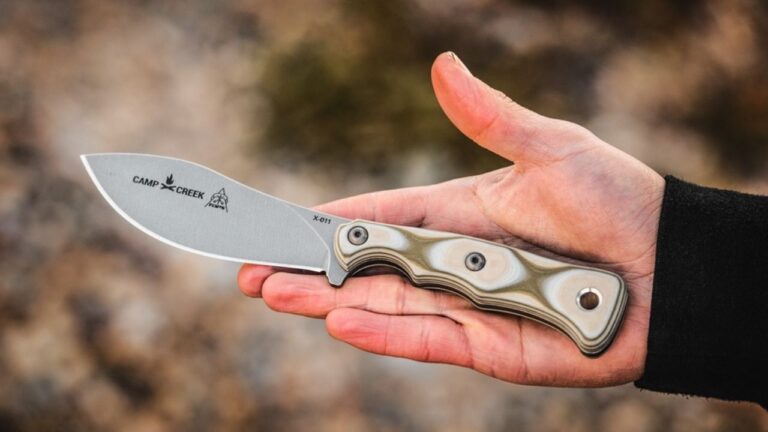
For state troopers, the concern is not just what is in a truck, but how quickly a driver can reach it. A handgun tucked into a door pocket beside a pry bar, a knife clipped to a visor, or a compact rifle case wedged behind the seat can all look like ordinary tools of the trade until a stop goes sideways. When officers talk about “tool-carry habits,” they are increasingly referring to this blend of work gear and personal protection that blurs the line between a toolbox and a weapons cache under evolving 2026 rules on storage and access.
That scrutiny is sharpened by the way truckers live on the road. Long haul drivers often sleep in their cabs, park in dimly lit lots and haul high value freight, so many argue that a firearm within arm’s reach is part of basic self defense. A truck driver who is keeping a Second Amendment challenge alive after facing charges at a state border illustrates how quickly a cab can become the focal point of a gun case once troopers decide a driver’s storage choices violate local law.
How a Minnesota border fight put truckers’ rights in the spotlight
The most visible flashpoint in this debate comes from a driver who has refused to stop hauling freight into a state that does not recognize his home permit. According to reporting on that case, the Date of his latest legal step was recorded as January 09, 2026, with Author and journalist Tyson Fisher describing how the Category of his case spans News, State and courts. The driver argues that being forced to disarm or skip the state entirely turns his cab into a target, while prosecutors say his carry method violated their reciprocity rules the moment he crossed the line.
In a separate account of the same dispute, the litigation is framed as a trucker keeping a Second Amendment fight alive to invalidate a state’s concealed carry reciprocity law that forces him to choose between work and his firearm. For troopers, that kind of case is a reminder that a simple question about what is in the cab can escalate into a constitutional showdown, especially when a driver’s everyday storage habits collide with a state’s view of what counts as unlawful possession.
Parallel lawsuits show how quickly tool storage becomes a legal test
The Minnesota dispute is not the only sign that truck cabs are becoming test cases for gun policy. In another high profile challenge, a pair of drivers described as Two truckers filed suit to carry guns across state lines, arguing that their right to self defense should not vanish at each border. The story, labeled “Wheels of justice” and written By Dana Guthrie, traces how their rigs became the center of a constitutional claim that starts at Home but plays out on The Nation’s highways.
Those plaintiffs say they are not trying to turn their trucks into arsenals, only to keep a lawfully owned handgun near the driver’s seat rather than locked in a trailer or buried under freight. Troopers, however, are trained to treat any firearm within immediate reach as a potential threat, especially when it is stored alongside tools that can double as weapons. Their warnings about tool-carry habits reflect that tension, as they brace for more drivers to cite these lawsuits at the roadside when asked to step out of the cab or open a storage compartment.
Supreme Court arguments are reshaping what “no guns” signs mean on the road
While truckers fight their battles in lower courts, the legal backdrop is shifting at the highest level. In a recent argument captured on a Video feed titled Justices Hear Case on a Challenge to State Gun Regulations, justices probed how far states can go in declaring entire categories of property off limits to firearms. One key issue was whether a state can treat all private businesses as gun free zones unless the property owner gives permission, a rule that would directly affect truckers who pull into hospitals, warehouses or rest areas with “no weapons” signs posted at the gate.
For troopers, the outcome of that case will influence how they interpret signs and posted policies during inspections. If the Court narrows states’ ability to impose blanket bans, drivers may have more leeway to keep a secured firearm in the cab while parked on private property. If it upholds broad restrictions, troopers will have stronger grounds to treat a gun stored beside a tool bag in a hospital loading zone as a violation, even if the driver never leaves the cab.
New 2026 storage rules tighten what “secure” really means
Separate from carry reciprocity, 2026 is bringing stricter expectations for how firearms are physically stored, and troopers are already folding those standards into their roadside warnings. In California, a measure identified as SB 53 would, beginning on January 1, 2026, require a person who possesses a firearm in a residence to keep the firearm securely stored so it is not accessible to anyone other than the owner or another lawful authorized user. A companion description of the same bill explains that it mandates locked storage or equivalent safeguards whenever a gun is not under the owner’s direct control, a standard that is already influencing how officers talk about “readily controlled” weapons in vehicles.
Although SB 53 is framed around a residence, troopers say its logic is bleeding into expectations for sleeper cabs that function as a driver’s home on the road. A separate summary of SB 53 underscores that the firearm must be secured when a child or prohibited person could gain access, which mirrors language in other 2026 laws. That is why officers now warn that a pistol tossed into an open center console beside a flashlight or multi tool may be treated as an unsecured firearm, not just another piece of gear, if a minor passenger or unauthorized co driver could reach it.
Illinois and Virginia show how fast enforcement duties are changing
Other states are rewriting the rules that govern how police respond when they discover a firearm during a stop. In Illinois, legal analysts note that On July 28, 2025, Governor J.B. Pritzker signed House Bill 1373 and Senate Bill 8, creating Public Act 104 0030 and 104 0031. Those measures adjust how officers verify firearm owner identification, track transfers and respond when a gun is reported stolen before a sale is complete, all of which can come into play when a trooper spots a weapon stored beside a driver’s tools.
In Virginia, a 2026 tracking tool for pending measures notes that one bill would allow someone without a concealed handgun permit to carry a concealed handgun in a restaurant that serves alcohol, while also requiring that notice of any prohibition be posted conspicuously at each public entrance of a hospital and similar facilities. That summary, hosted on a VCDL linked legislative page, shows how quickly the map of where guns are allowed is changing. For truckers, that means a tool bag that includes a handgun might be lawful at one delivery dock and a violation at the next, depending on whether the property owner has posted the required signage.
Duty to inform: when a wrench bag and a pistol must be disclosed
Beyond where a gun can be stored, troopers are reminding drivers that some states require them to speak up about any firearm as soon as an officer approaches the window. Training materials on the duty to inform explain that if state or local law imposes such a duty, a driver must disclose the presence of a firearm upon making contact with law enforcement, even if the weapon is unloaded and tucked into a tool compartment. That requirement can surprise truckers who view the gun as just another piece of equipment, especially when they are more focused on logbooks and weight limits than on carry statutes.
A separate breakdown of Duty to inform laws across states starts with the question, What is the duty to inform, and then categorizes states that require immediate disclosure, disclosure upon request, or no disclosure at all. For a driver whose cab doubles as a workshop, that means a trooper’s question about “any weapons in the vehicle” can legally encompass a pistol in a glove box, a shotgun behind the seat, or even a defensive knife stored with other tools, and failing to answer accurately can itself be a violation.
Federal safe passage rules do not always cover real world tool habits
Many truckers assume that a federal law on interstate transport will shield them if they keep a firearm unloaded and locked away, but troopers caution that the details matter. Guidance on Article 926A of the Firearm Owners Protection Act explains that to qualify for safe passage, the firearm must be unloaded and neither the gun nor ammunition can be readily accessible from the passenger compartment. In a discussion of that standard, a commenter named Monty raises the question of whether a locked, secured vault inside the cab counts as “not readily accessible,” underscoring how ambiguous the rule can be in a truck that serves as both vehicle and living space.
The same analysis, hosted on a page that also references the number 46 in another context, notes that courts have not always agreed on what “transport” means when a driver makes extended stops or sleeps in the vehicle. A second link to the interstate travel guidance emphasizes that safe passage is not a blanket permit to ignore state law, especially if a driver keeps a firearm in a tool bag or under a seat where it could be considered readily accessible. Troopers use that nuance to warn that a gun stored beside a torque wrench in a cab compartment may fall outside federal protection, even if the driver believes FOPA has them covered.
California’s 2026 handgun and storage rules ripple into trucking
California’s new restrictions are another reason troopers are warning drivers to rethink how they carry gear. A law identified as Assembly Bill 1127, signed in Oct 2025, bans the retail sale of semi automatic handguns that can be easily converted into fully automatic weapons, with the restriction taking effect beginning July 1, 2026. While that rule targets manufacturers and dealers, it signals a broader push to limit the types of firearms that can be lawfully possessed in the state, which in turn affects what kind of pistol a trucker might legally keep in a cab while hauling into California.
At the same time, California’s storage bill SB 53 reinforces the expectation that firearms be locked or otherwise secured when not under direct control, a standard that troopers are already applying informally to vehicles. A second reference to Oct 10, 2025, in coverage of Assembly Bill 1127 underscores how quickly these timelines are approaching. For truckers, that means a handgun casually stowed beside a drill or impact driver in a cab organizer could draw more scrutiny from troopers who view it through the lens of these tighter 2026 standards.

Asher was raised in the woods and on the water, and it shows. He’s logged more hours behind a rifle and under a heavy pack than most men twice his age.