States seeing the fastest growth in invasive hog populations
Across the United States, feral hogs have shifted from a regional nuisance to a national liability, chewing through crops, wetlands, and infrastructure at a pace that outstrips most control efforts. The states seeing the fastest growth are not always the ones with the biggest herds, but they are the front lines where new invasions are taking hold and long established populations are pushing into fresh territory. I focus here on where that expansion is most aggressive, why these landscapes are so vulnerable, and how officials and landowners are scrambling to keep up.
From scattered invaders to a 39 state problem
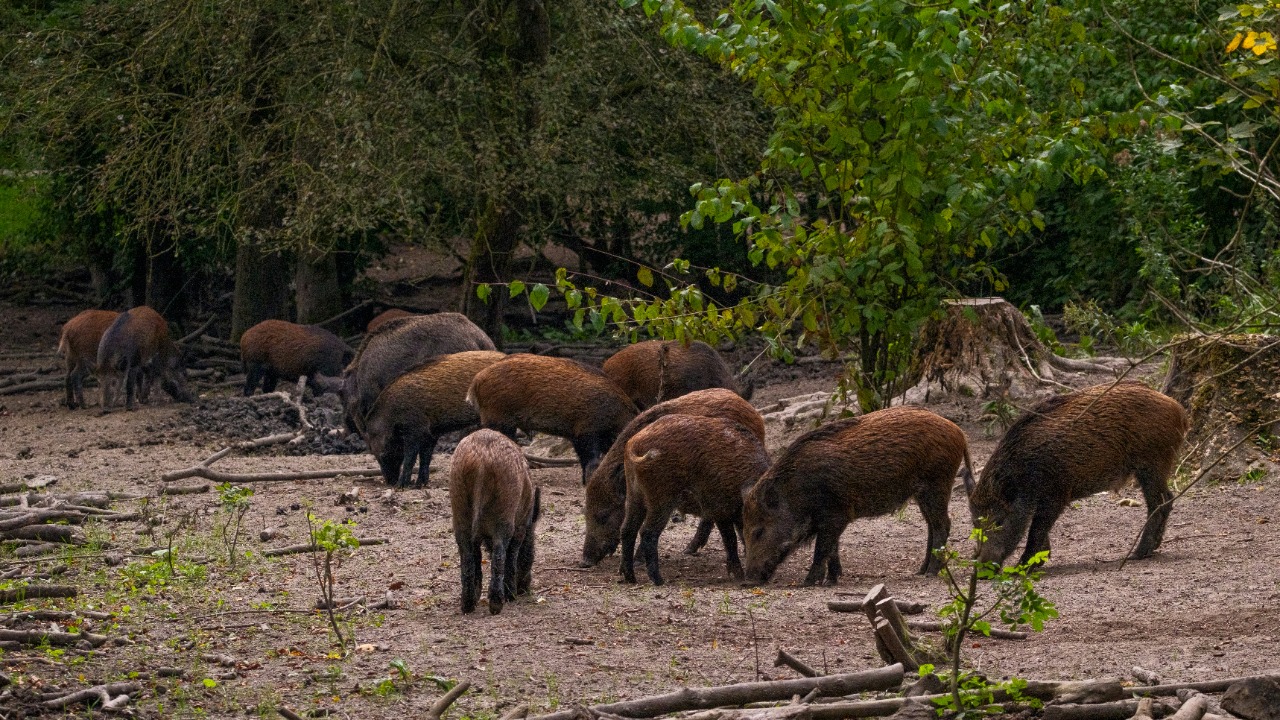
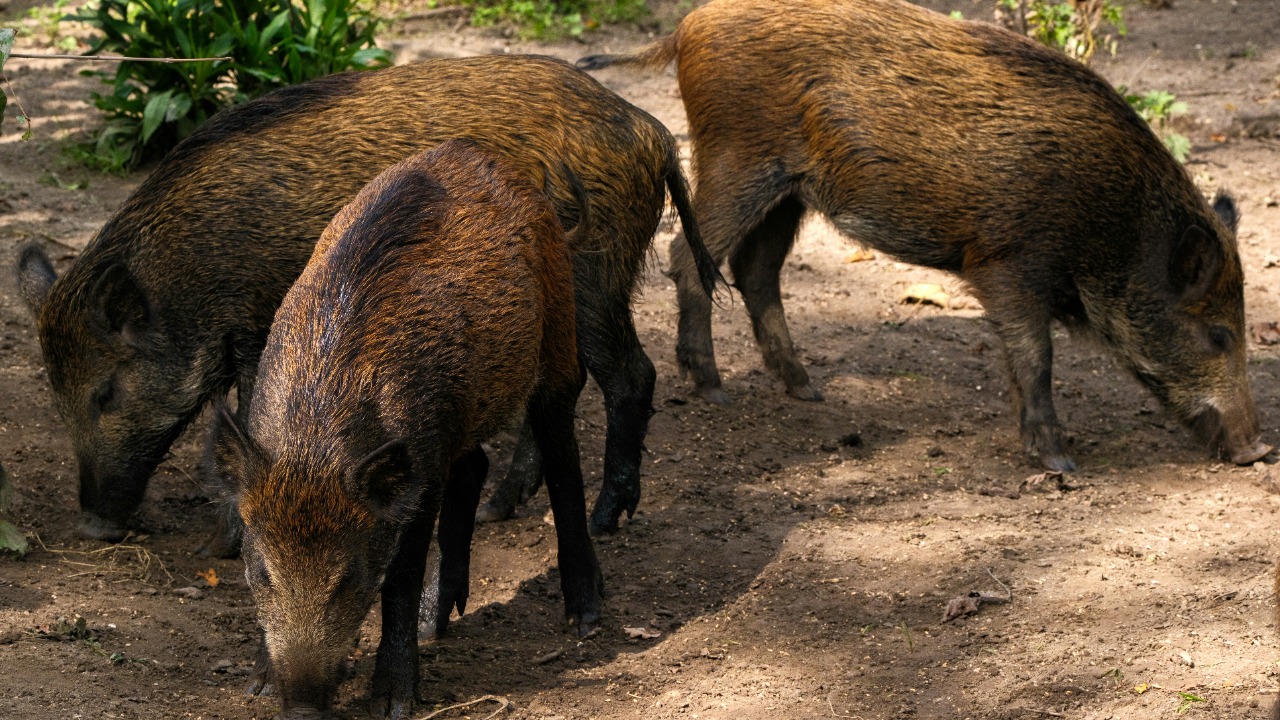
Feral swine are no longer a curiosity confined to a handful of Southern hunting leases. Researchers describe Feral swine (Sus as an invasive species in the United States with an estimated five million animals established in exactly 39 states, a footprint that reflects decades of escape, intentional releases, and natural spread. That scale matters because once feral hogs gain a toehold, their high reproductive rate and flexible diet allow them to convert almost any mix of cropland, pasture, and forest into suitable habitat. I see the current map less as a static snapshot and more as a moving front, with some states already saturated and others just beginning to feel the pressure.
The federal government has tried to slow that front. The National Feral Swine Damage Management Program, created to coordinate state and federal responses, reports that it has reduced the number of states with established populations, a sign that early intervention can still work in places where hogs are not yet entrenched. According to National Feral Swine, that contraction in state count has translated into less damage to farmers nationwide, even as numbers continue to surge in core regions. The tension between those two realities, retreat in some states and rapid growth in others, defines the current phase of America’s pig problem.
The Southern core: Louisiana, Alabama and Georgia
The fastest growth in raw numbers is still anchored in the humid South, where mild winters and abundant crops give feral hogs everything they need. In Louisiana, bottomland hardwoods and rice fields create ideal cover and food, and landowners describe hogs rooting through levees and tearing up sugarcane in a single night. The state’s mix of public wetlands and private farms makes coordinated control difficult, and as I have heard from wildlife managers, that patchwork allows sounders to slip away from trapping efforts and recolonize cleared areas. A second look at Louisiana shows how coastal marshes and river corridors also serve as travel lanes, letting hogs move quietly between parishes and into new watersheds.
Neighboring states are facing similar surges. In Alabama, feral hogs have become a fixture in pine plantations and row crop country, where they uproot seedlings and wallow in irrigation ditches. Georgia’s problem is even more acute, with wildlife officials acknowledging that the state has one of the worst feral hog situations in the country. While Texas has the largest total population of wild pigs, reporting notes that While Texas holds that dubious crown, Georgia’s mix of corn, peanuts, and river bottoms has turned it into a growth engine for new sounders. The state’s own profile, visible in searches for Georgia and again for Georgia, underscores how deeply hogs are now woven into the state’s rural landscape.
Oklahoma and Arkansas: expansion corridors into the Plains
West of the Mississippi, the invasion is defined less by long established herds and more by rapid spread into new counties. Oklahoma is a prime example. While Texas remains the epicenter, recent reporting highlights that Oklahoma‘s hog numbers have been increasing rapidly as they move into new areas and cause significant agricultural damage. Producers in the state describe herds appearing on land that had never seen hog sign a few years ago, a pattern that matches what I hear from wildlife biologists tracking GPS collared animals. The state’s own footprint, captured in searches for Oklahoma and Oklahoma, shows how quickly a state that once sat on the edge of the problem has become a core habitat.
Arkansas is experiencing a similar shift, with feral hogs now described by local agronomists as a top-tier threat to pastures and hay fields. Officials in the state have warned that packs of wild animals are wreaking havoc on rural regions, and one expert quoted in that coverage bluntly noted that Officials see the situation as “fairly serious” because “They reproduce extremely fast.” That reproductive edge is exactly why Arkansas, visible in searches for Arkansas and Arkansas, has become a key expansion corridor into the lower Midwest. From there, hogs can follow river systems north into states that historically had little exposure to the species.
New frontiers: Tennessee, North Carolina and the Mid‑Atlantic
As hogs push out of the Deep South, they are finding footholds in states that once treated them as a distant Southern problem. Tennessee is a case study in how quickly that perception can change. Wildlife officials there now track feral swine across multiple regions, from the Cumberland Plateau to the Mississippi River counties, and landowners report damage to corn, soybeans, and even suburban lawns. The state’s growing profile in searches for Tennessee and Tennessee reflects how feral hogs have moved from isolated pockets in the Smokies to a more generalized presence. I see Tennessee as a bellwether for the central Appalachian region, where steep terrain and mixed land ownership complicate eradication.
To the east, North Carolina is grappling with feral hogs in coastal plain farms and mountain hollows alike, a spread that threatens both industrial hog operations and sensitive wetlands. Further north, states like Pennsylvania have seen scattered populations emerge in forested regions, often linked to illegal releases for hunting. A second look at Pennsylvania underscores how even a few established sounders can threaten native wildlife and ground nesting birds. In my view, these Mid‑Atlantic incursions are especially worrying because they show how quickly feral hogs can leapfrog into entirely new climate zones when human behavior helps them along.
The Northwest and northern tier: Oregon, Washington and beyond
Perhaps the most striking shift in recent years is the appearance of feral hogs in the Northwest, a region once considered too cold and rugged for large populations. Federal invasive species experts note that Feral swine have parts of the Northwest, and they have been invading southwestern and central Oregon since 2004. Those same experts warn that some of these expansions are linked to climate change, which is softening winters and extending growing seasons in places that once limited pig survival. The state profile for Oregon now includes feral swine among its invasive species concerns, a remarkable shift for a state better known for salmon and timber debates.
North of the Columbia River, Washington has also seen incursions, particularly in agricultural valleys where hogs can find grain and shelter. Further inland, states like Idaho and Iowa are watching closely, aware that river corridors and transport networks could carry hogs into their borders. Even Maine, with its long winters, now appears in discussions about potential feral swine habitat as warming trends reshape northern forests. I read these developments as a warning that no state can assume climate alone will protect it from invasion.
Economic stakes: farmers on the front line
Behind every new dot on the feral hog distribution map is a farmer or land manager tallying up losses. Agricultural economists like Daniel Munch have tried to put a price tag on that damage. In his analysis of Feral Hog Populations, Daniel Munch describes The Pig Problem as one where feral hogs are highly adaptable, invasive, and now found in more than half the country, with crop producers reporting significant losses and calling reduction efforts especially important. Because these animals have few natural predators outside of humans and can live in a variety of climates, there is little to slow their spread once they arrive in a new landscape. That combination of biological advantage and economic vulnerability is why I hear so much urgency from producers in newly affected states.
Industry data back up those concerns. One review of the states with the largest wild pig populations notes that Because wild hogs do not have substantial predators outside of humans and can live in a variety of climates, there is little natural check on their numbers, and some states now log hundreds of feral hog reports each year. That reality is visible on the ground in places like Missouri, where row crop farmers describe replanting fields multiple times after hogs root up newly sown seed. In my conversations with producers, the frustration is not just about the direct losses but about the sense that they are fighting a problem that originated far from their own fencerows.
Urban edges and new hot spots: New York, New Jersey and beyond
Feral hogs are often framed as a rural issue, but their spread into more densely populated states raises new concerns about vehicle collisions, disease risk, and conflicts in suburban greenbelts. In the Northeast corridor, states like New Jersey and New York have begun to appear in feral swine discussions, often tied to isolated but worrying sightings. Even if these states do not yet host large established populations, the combination of fragmented forests, golf courses, and exurban farms could provide ample habitat if hogs gain a foothold. I see this as a critical test of early response strategies, because eradicating small, newly arrived groups is far cheaper than managing entrenched herds.
Nationally, commentators have started to describe America‘s pig problem as one in which dozens of states are being overrun by aggressive feral hogs, and they ask whether these animals can be controlled at all. That framing captures the anxiety I hear from wildlife officers who are trying to keep urban fringe areas from becoming permanent hog habitat. In my view, the experience of states like Iowa and Pennsylvania, where early detection has so far kept populations patchy, suggests that aggressive surveillance and rapid response can still work if political will and funding are in place.
Control efforts, from eradication pilots to high‑tech hunts
Managing feral hogs at landscape scale requires more than ad hoc hunting. Federal and state agencies have experimented with targeted eradication zones, and a key lesson from those efforts is the importance of acting before populations explode. A report on early intervention notes that “pilot” areas have identified by the USDA Secretary as under threat from feral swine, with the goal of eliminating pigs completely and then monitoring to ensure the pigs are truly gone. That approach, which relies on intensive trapping, aerial gunning, and close coordination with landowners, has shown promise in states on the edge of the invasion front. I see it as a template for how newly affected states can avoid becoming permanent strongholds.
Private efforts are evolving as well, sometimes in dramatic fashion. One widely shared video shows a coordinated operation in which U.S. farmers and contractors eliminate hundreds of wild hogs in a single campaign, a clip that underscores how serious producers have become about large scale removal. In that footage, which appears in a clip titled Sep, viewers are reminded that despite being thousands of kilometers apart and on opposite sides of the Pacific, Ocean American Afr land managers face similar challenges with invasive pigs. At the same time, popular coverage of the issue, including pieces that ask whether the Feral Hog Population in These Regions and Will It Ever Slow Down, often concludes that the pigs just keep coming despite these efforts. That tension between high profile hunts and relentless reproduction is the central challenge for every state now watching feral hog numbers climb.
Why some states are holding the line
Not every state facing feral hog incursions is seeing runaway growth, and the difference often comes down to policy and coordination. Some northern and Midwestern states have moved quickly to ban transport and release of wild pigs, close loopholes in game ranch regulations, and fund rapid response teams that can trap or remove hogs as soon as they are detected. In those places, the combination of colder winters and aggressive management has so far prevented the kind of expansion seen in Louisiana or Georgia. I see these examples as proof that policy choices still matter, even in an era of climate change and expanding habitat.
At the same time, states that have already been overrun are experimenting with new tools that could eventually help their neighbors. Some are testing toxicants under strict controls, while others refine corral trap designs and remote monitoring systems that allow entire sounders to be captured at once. Popular media, including segments that frame Feral hogs as a nearly unstoppable force, can sometimes obscure these quieter successes. From my vantage point, the states seeing the fastest growth in invasive hog populations are also the ones generating the most innovation, and the rest of the country will need those lessons if it hopes to avoid joining the 39 state club.

Leo’s been tracking game and tuning gear since he could stand upright. He’s sharp, driven, and knows how to keep things running when conditions turn.