The 15 most iconic military rifles ever fielded
From black powder muskets to polymer assault rifles, a handful of long guns have shaped how wars are fought and remembered. The most iconic military rifles combine battlefield impact, technical innovation, and cultural staying power, becoming shorthand for entire eras of conflict. Here I look at 15 such rifles, tracing how each earned its place in military history and why soldiers and historians still argue about them today.
Iconic does not always mean the most advanced or the most accurate. Some of the rifles that matter most were crude, heavy, or outclassed by later designs, yet they armed vast conscript armies or symbolized national resilience. By following these 15 weapons across more than two centuries of combat, I can show how design choices, production scale, and doctrine turned simple infantry arms into enduring legends.
From line infantry to riflemen: Brown Bess, Charleville, and the birth of the American soldier
Long before modern cartridges, smoothbore muskets like the British Brown Bess and the French Charleville defined how infantry fought. When the Continental Congress authorized a national force in the 1770s, those early American troops relied heavily on imported and captured examples of Brown Bess and, firing volleys in tight ranks rather than aiming individual shots. Accuracy was poor, but the combination of bayonet charges and massed fire gave emerging American units a way to stand up to European regulars and laid the foundation for a distinct infantry tradition.
These muskets were not rifles in the technical sense, since they lacked rifled barrels, yet they are essential to any story about iconic military long guns because they framed the problems later designers tried to solve. Their slow reload times, limited range, and dependence on disciplined formations pushed armies to experiment with rifling, better sights, and new tactics. The transition from these smoothbores to true rifles marked the moment when individual marksmanship began to matter as much as drill, a shift that would echo through every later weapon on this list.
Lever action revolution: The Henry Rifle and repeating fire
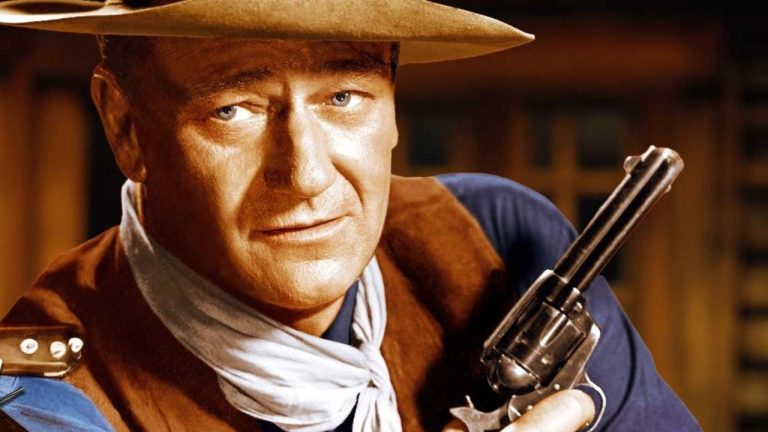
By the mid nineteenth century, industrial machining and metallic cartridges made it possible to fire multiple shots without reloading from the muzzle. The Henry 1860, often simply called The Henry Rifle, showed what that could mean on the battlefield, giving its user a tubular magazine and a lever action that could send a rapid stream of bullets downrange. In an era when most soldiers still carried single shot muskets, a unit armed with Henry rifles could deliver a volume of fire that seemed almost mechanical, changing how commanders thought about defensive positions and ambushes.
Later commentators have described the Henry as one of the few long guns that truly represent Americana, a symbol of both frontier expansion and industrial ingenuity. One assessment of the Greatest Rifles between 1860 and 1920 singles out the Henry 1860 as a defining design, noting how its lever system and magazine capacity set the pattern for generations of repeaters. Even where it was not widely adopted as a standard service arm, its influence on later military and civilian rifles was enormous, proving that firepower could be multiplied without sacrificing portability.
Bolt action dominance: Springfield, Lee-Enfield, and Mosin-Nagant
As smokeless powder and stronger steel became standard, the bolt action rifle emerged as the backbone of twentieth century armies. In the United States, the Springfield M1903 combined a five round internal magazine with refined sights and a strong action, giving American troops a precise, rugged weapon that could reach out across the trenches of France. Later analysis of the most important service arms often places the Springfield near the top of the list, emphasizing how it bridged the gap between nineteenth century marksmanship and modern combined arms warfare.
Other nations followed their own paths. The British Lee Enfield no. 4, built around a smooth bolt and ten round magazine, allowed trained riflemen to fire aimed shots at a rate that startled opponents who thought they were facing machine guns, a reputation reflected in detailed discussions of the Lee Enfield family. On the Eastern Front, the Mosin and Nagant design armed millions of Soviet soldiers, and later variants like the Mosin-Nagant 91/30 Sniper, introduced in the Year 1930, became synonymous with harsh winter campaigns and long range duels. That 91/30 Sniper configuration, often depicted in images credited to simonov on Flickr, helped cement the Mosin and Nagant pairing as one of the most recognizable bolt actions in history.
The M1 Garand and the age of the semi automatic battle rifle
When the United States adopted the M1 Garand, it vaulted its infantry into a new era of firepower. Instead of working a bolt between shots, American soldiers could fire eight rounds from an en bloc clip as fast as they could pull the trigger, a decisive advantage in close combat and on open battlefields alike. Later retrospectives on the Most Iconic Weapons in U.S. Military History consistently highlight the M1 Garand as an Iconic World War II rifle, praising its reliability under mud, sand, and snow and its role in giving American units a psychological and practical edge.
The design was the work of John C. Garand, a Canadian born engineer whose name became inseparable from the weapon itself. In rankings of top infantry arms, the U.S. Rifle, Cal .30, M1 Garand often appears in the number one slot, with commentators stressing how its semi automatic operation reshaped tactics from Normandy to the Pacific islands. Veterans remembered the distinctive ping of the empty clip ejecting, but more importantly, they remembered having a rifle that could keep up with the tempo of modern war, setting expectations for every battle rifle that followed.
Kalashnikov’s AK family and the global spread of the assault rifle
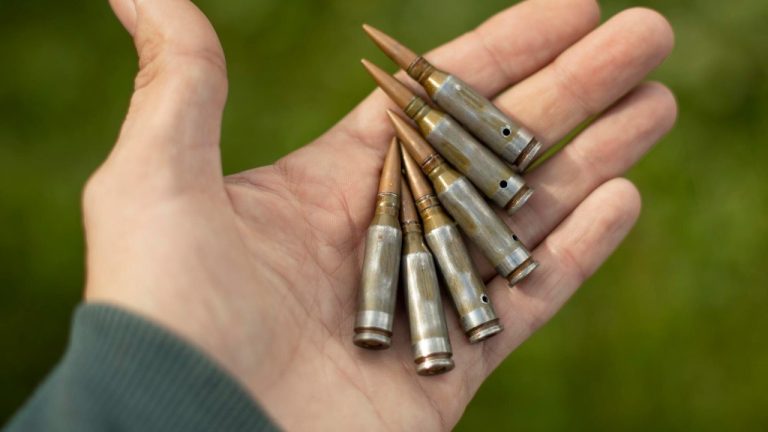
If one silhouette defines the modern assault rifle, it is the curved magazine and gas tube of the Kalashnikov family. Designed for mass production and rough handling, the AK series combined intermediate cartridges with a simple, loose tolerance mechanism that kept working in mud, sand, and jungle. Although the provided sources focus more on American and European designs, any global list of iconic rifles has to acknowledge how the AK pattern became a symbol of revolution, state power, and insurgency alike, appearing on flags, propaganda posters, and in the hands of irregular fighters from Asia to Africa.
Part of the AK’s legend comes from sheer numbers, a factor that parallels how analysts look at the most mass produced military rifles in history. When one review of production figures notes how Today we can trace certain models by the tens of millions, it is clear that the Kalashnikov family belongs in that conversation even if the exact totals are debated. Its influence on later designs, from licensed copies to unlicensed derivatives, means that for much of the late twentieth century, the default image of an armed fighter was someone carrying an AK, regardless of which side they were on.
The M16, M4, and the evolution of the American service rifle
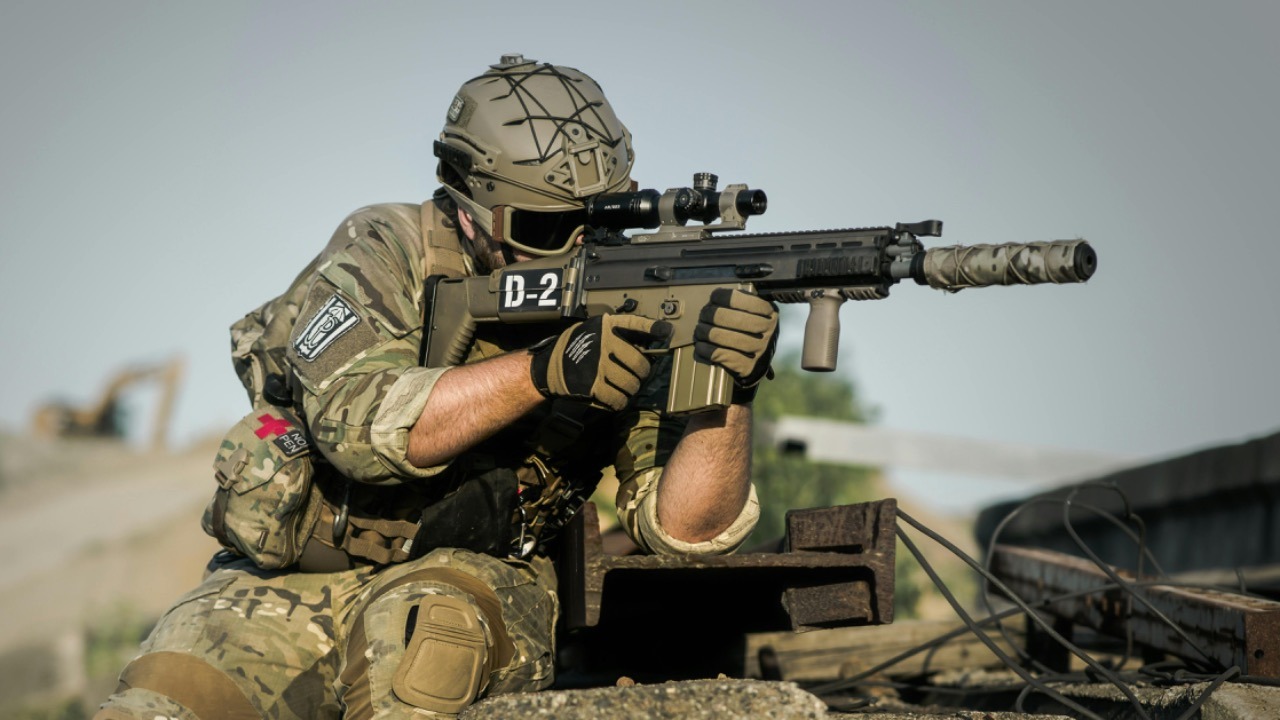
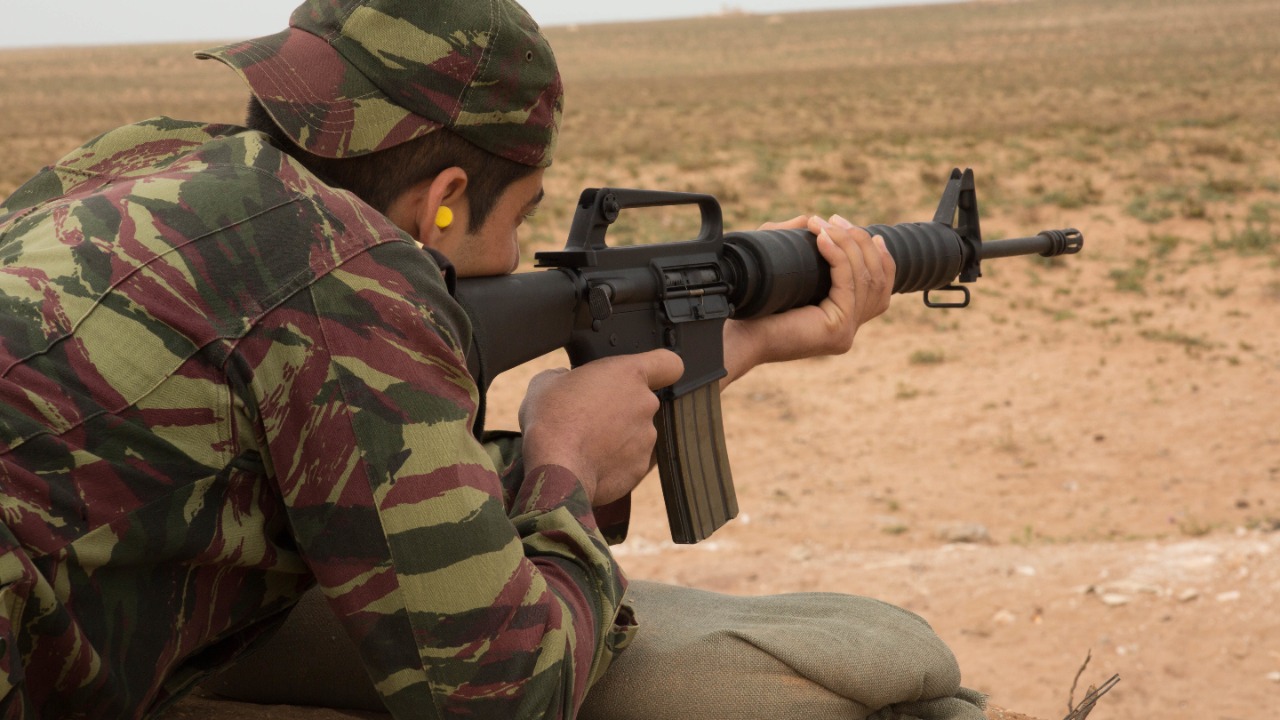
While the AK defined one side of the Cold War, the M16 and its descendants became the face of American small arms. Initially controversial for reliability issues in Vietnam, the platform matured into a lightweight, accurate system that could be adapted to many roles. Later carbine variants like the M4 refined that concept, and modern assessments of U.S. small arms often describe the M4 as an evolution of the M16 that has been widely adopted by military and law enforcement units worldwide since 1950, even though the specific carbine came later. The key point is that the underlying architecture proved flexible enough to survive multiple generations of upgrades.
Within the United States, the M16 and M4 family sits at the center of debates about what makes a rifle truly iconic. One overview of the Most Iconic U.S. Service Rifles in Battlefield History, a Story by Thomas Reed, places these weapons alongside earlier legends like the Garand and the Springfield. That comparison underscores how the black rifle, once derided for its plastic furniture and small caliber, has become a fixture of American military identity, shaping training, doctrine, and even popular culture portrayals of the modern infantryman.
Innovation and experimentation: From hand cannon to modern concepts
Rifles do not exist in a vacuum, and many of the most iconic designs grew out of centuries of experimentation with handheld firearms. A survey of innovative weapons traces that lineage back more than 800 years, starting with the crude but revolutionary Hand Cannon, sometimes spelled Hand Gonne, that fired lead or stone projectiles from a simple tube. That early device was not a rifle, but it introduced the idea that a single soldier could carry explosive power, a concept that would eventually lead to matchlocks, flintlocks, and the rifled barrels that gave later weapons their accuracy.
By the time metallic cartridges and smokeless powder arrived, designers had a long list of tradeoffs to consider, from rate of fire to reliability and weight. Some experimental rifles never moved beyond prototypes, while others entered limited service and influenced later mainstream designs. The path from the Hand Cannon to the modern assault rifle is not a straight line, but the willingness to test new mechanisms, materials, and calibers is a common thread that links every weapon on this list, whether it became a household name or remained a specialist’s curiosity.
Reliability, legend, and the rifles soldiers swear by
Technical specifications only tell part of the story. What soldiers remember most is whether a rifle worked when conditions were at their worst, and that reputation often matters more than any brochure. Retrospectives on the most reliable military rifles highlight how front line troops swore by certain models, from the M1 Garand captured in images by Mitch Barrie, to the Lee Enfield no. 4 photographed by Arthurrh, to the rugged Mosin credited simply as Mosin in some captions. These accounts emphasize that a rifle’s legend is built in mud, snow, and dust, not on the test range.
That same focus on lived experience helps explain why some rifles with modest production runs still loom large in memory, while others produced in huge numbers fade into obscurity. When veterans describe how a particular bolt action cycled smoothly after thousands of rounds, or how a semi automatic kept firing despite neglect, they are adding layers to the weapon’s myth. Over time, those stories merge with official histories and technical analyses, turning certain models into shorthand for reliability and resilience in the face of chaos.
Why these 15 rifles still matter in battlefield history
Looking across these examples, from Brown Bess and Charleville to the M4, a pattern emerges. The rifles that become truly iconic tend to appear at inflection points, when technology, tactics, and geopolitics are all shifting at once. They might introduce a new mechanism, like the lever action of the Henry, or a new concept of firepower, like the semi automatic operation of the Garand or the intermediate cartridge of the AK. They might simply perfect an existing idea, as the Springfield and Lee Enfield did for bolt actions. In each case, they give ordinary soldiers a tool that changes what is possible on the battlefield.
That is why modern lists of Service Rifles and Battlefield History keep returning to the same core set of names, even as new designs appear. Whether framed as the 10 Greatest Rifles, the top 5 military guns, or the 30 iconic rifles that became instant legends, the conversation keeps circling back to these familiar silhouettes. Their continued presence in museums, reenactments, and popular media shows that they are more than obsolete hardware. They are touchstones in the long story of how humans have organized, armed, and risked themselves in war, and understanding them is one way to understand the conflicts that shaped the modern world.

Leo’s been tracking game and tuning gear since he could stand upright. He’s sharp, driven, and knows how to keep things running when conditions turn.