The firearms trends quietly fading away
Firearms culture rarely stands still. Calibers rise and fall, platforms cycle in and out of favor, and once ubiquitous accessories end up gathering dust in range bags and police armories. The shifts are often quiet rather than dramatic, but together they reveal how technology, policy and real-world experience are reshaping what people actually carry and shoot.
Looking closely at the trends that are slipping into the background, rather than the flashy new releases, offers a clearer view of where the gun world is heading. From duty calibers to home‑built kits, the patterns point toward lighter recoil, higher capacity, tighter regulation and a more practical, comfort‑driven approach to everyday carry.
The gun fads that slipped out the back door

Every generation of shooters has its obsessions, and every decade leaves behind a trail of once‑hot ideas that no longer move the needle. Recent coverage of “popular firearm trends that quietly faded away” has highlighted how quickly the market can cool on concepts that seemed unstoppable only a few years ago, from niche calibers to bulky tactical builds that promised more than they delivered. Writer Daniel Whitaker has pointed to this churn as a defining feature of the modern gun economy, where social media buzz and short product cycles can inflate demand before real‑world performance catches up.
As I see it, the trends that fade tend to share a few traits. They are often solutions in search of a problem, or they ask shooters to accept extra weight, recoil or complexity for marginal gains. They may also collide with changing laws or liability concerns, which can turn a once‑booming niche into a regulatory headache. The result is a landscape where some brands and ideas are already on the brink of disappearing, a reality underscored by commentary on six gun brandsthat are “barely hanging on” after losing relevance in a crowded field.
From compact to micro: how small pistols pushed others aside
One of the clearest shifts has been the move from traditional compact pistols to even smaller micro‑compact designs that still carry serious firepower. Industry analysis has described “The Rise Of Micro, Compact Pistols” and noted that “Compact and” micro‑compact pistols have surged because they offer more rounds than their predecessors in a slimmer package. These guns are purpose‑built for concealed carry, and their popularity has quietly pushed older, thicker single‑stack designs and midsize duty pistols out of many holsters, as buyers gravitate toward models that hide more easily under everyday clothing while still delivering service‑grade performance, a pattern detailed in coverage of concealed trends.
Manufacturers have raced to meet that demand, and the product names tell the story. Reports on current trends highlight how “Next came Smith & Wesson’s Shield Plus, Ruger’s Max‑9 and the Taurus GX4,” each one a micro‑sized pistol that packs double‑digit capacity into a footprint that used to mean five or six rounds at best. As these models proliferate, older compact pistols without optics cuts, modern triggers or high‑capacity micro frames are losing ground. In my view, the quiet casualty here is the once‑standard compact that is now too big to conceal as comfortably as a micro, yet offers no real advantage over the new wave of guns like the Shield Plus and Max‑9.
The slow fade of .40 S&W as 9mm takes over
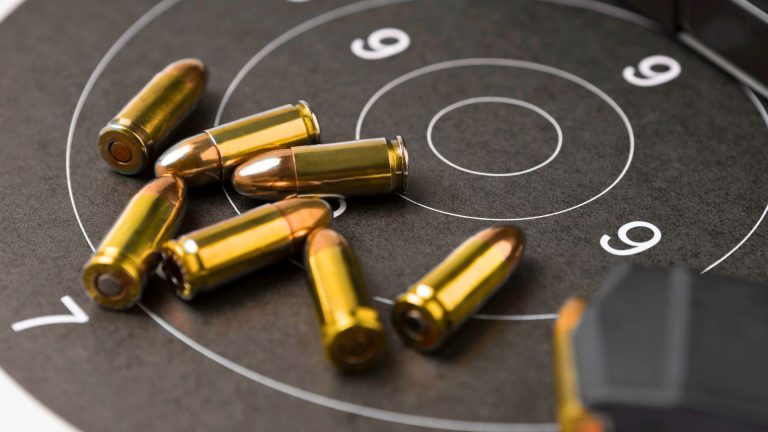
Few reversals have been as striking as the decline of .40 S&W in law enforcement and civilian carry. The cartridge was once marketed as the ideal balance between 9mm and .45 ACP, and for years it dominated police holsters. That changed when the FBI announced in 2015 that it was returning to 9mm ammunition, citing advancements in ballistic technology and increased accuracy and control for some agents. That decision signaled that modern 9mm loads could match the terminal performance that agencies once sought from .40 S&W, without the extra recoil and wear on guns.
The ripple effects have been significant. Commentators now describe how “The .40 S&W has been the quintessential American law enforcement caliber for the last 20 years, but that is gradually changing,” as departments trade in .40 pistols and move to the smaller caliber as budgets allow. The same analysis notes that these police trade‑ins are flooding the commercial market, where bargain‑priced .40 handguns appeal to some buyers but do not reverse the broader trend. In parallel, ammunition experts point out that “The 9mm diehards are going to expound on the fact that advancements in JHP (hollow point) technology have brought the 9mm round” to a level where it can compete directly with .40, a case laid out in a detailed comparison of the two calibers.
Why 9mm’s comeback pushed other calibers into the shadows
The resurgence of 9mm did not happen in a vacuum. Historical coverage notes that “MONUMENTAL, AMMO, THE, LUGER, WAS, BEING” abandoned in the 1980s and 1990s by law enforcement agencies in favor of more potent rounds, even though the cartridge itself did not change. What did change was bullet design and powder technology, which gradually transformed 9mm from a perceived compromise into a first‑choice duty and defense round. That evolution is now reflected in global market forecasts that attribute the widespread use of a 9mm caliber to its varied performance and technological developments, with analysts projecting the ammunition market size to hit USD 51.93 billion by 2034 and crediting the latter’s improved performance in defensive roles, as outlined in a recent ammunition market report.
On the ground, this shift has real consequences for other calibers. A social media post from HoytBowhunting bluntly states that “40 S&W and . 45 ACP” are being eclipsed, arguing that advancements in 9mm are so important that the former cartridge, .40 S&W, is dying off and that the performance of 9mm has closed the gap with larger rounds like .45 ACP. At the same time, a long‑form video analysis of why “millions of Americans quietly switched to these guns” emphasizes that the move to 9mm is not about hype or brand tribalism, but about finding a sidearm that fits the hand, the lifestyle and the realities of concealed carry, a theme explored in depth in a widely viewed discussion of everyday carry choices.
Ghost guns: from booming niche to regulated risk
Another trend that has lost its freewheeling edge is the home‑built “ghost gun” market. For years, hobbyists could buy unfinished frames and “80%” lowers, then complete them at home without serial numbers or paperwork. Legal analysis explains that “Typically, a firearm is built at home with unserialized components like 80% lowers and 3D printed frames,” and that “Recently, in an effort to” tighten oversight, federal regulators moved to treat some of these parts more like complete firearms, especially when companies offered “buy build shoot” kits for sale, a shift detailed in a breakdown of the ATF rule change.
The stakes of that crackdown became clear as “Gaps in federal regulation have allowed ‘privately made firearms,’ or ‘ghost guns,’ to proliferate,” with legal scholars noting that “Until August” 2022, “firearm kits could be purchased without a background check.” Investigative reporting has since documented how “Mass shooters used them to kill office workers and classmates,” prompting the Biden administration to crack down and leading to a vanishing act in parts of the ghost gun market over a seven‑year span, as described in a detailed look at the ghost gun market. In California, new rules now mean that “As of” 2025, state law requires owners who have “an unfinished frame or 80% lower sitting in your garage” to either serialize it through proper channels or get rid of the parts legally, a requirement spelled out in guidance on California roster and ghost gun options.
Shotguns lose ground in patrol cars and home hallways
For generations, the pump shotgun was the default long gun for both police and home defense. One technical overview notes that “Pump, Action Shotgun For” years and years the only real option for a combat shotgun was a pump action, and that choices were limited, with the Remington 870 the most prevalent example in cruisers and closets, a dominance described in a feature on the home‑defense shotgun. That era is fading as patrol rifles and compact carbines offer greater precision, capacity and range, and as homeowners increasingly choose handguns or pistol‑caliber carbines that are easier to maneuver indoors.
The shift is visible in both policing and personal defense debates. Historical analysis of the “thin blue line” notes that “After” high‑profile incidents such as the 1997 North Hollywood shootout, many police departments began equipping patrol officers with rifles to match the firepower sometimes encountered on the street, a turning point chronicled in a history of North Hollywood and its aftermath. More recently, “Debate continues regarding the use of shotguns by police, with some experts citing their lack of precision and others highlighting rifles for their increased accuracy and range,” a tension laid out in reporting on the Debate over shotguns after a fatal incident at UPMC Memorial. In the home, handgun specialists now say “We like shotguns and rifles for home defense, but we really like handguns, too,” and emphasize that “Full‑size handguns are legit options for home defense,” alongside sub‑compacts and revolvers, a perspective shared in guidance on Full‑size defensive pistols.
Big iron vs. carry guns: full‑size pistols step back
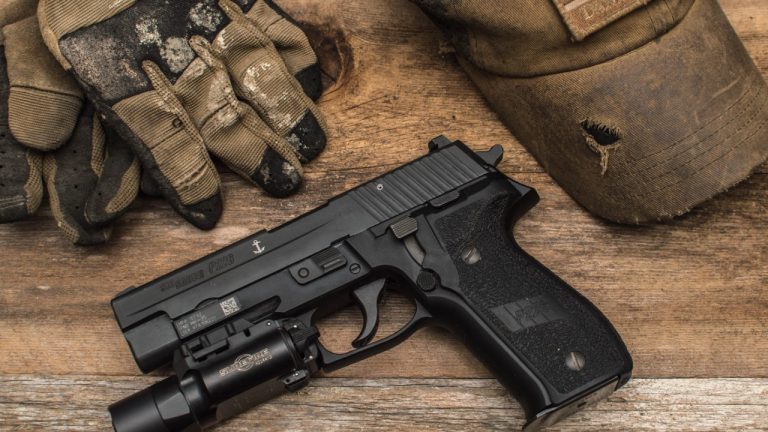
As concealed carry has become more common, the classic full‑size duty pistol has quietly ceded ground to smaller, lighter designs. One practical guide defines “A full‑size handgun, a big gun when compared to carry‑focused optoins, is made without prioritizing concealment or a compact form factor,” which makes it harder to hide under normal clothing and more likely to be left at home, a trade‑off explained in advice on best concealed carry. In my experience covering this space, the guns that get carried daily are the ones that balance shootability with discretion, which is why compact and micro‑compact pistols now dominate holster sales even among experienced shooters who appreciate the control of a larger frame.
That does not mean full‑size pistols are obsolete, but their role is shifting. They are increasingly seen as home‑defense or range tools rather than everyday companions, while the new generation of micro‑compacts, backed by the same 9mm ammunition advances that revived the caliber, handles daily carry. Video commentary on why millions of Americans have quietly switched to certain guns underscores that it “isn’t about hype or brand tribalism,” but about choosing a sidearm that fits the hand and lifestyle, a point reinforced in the widely shared sidearm discussion that has influenced many first‑time buyers.
Accessories: from tacticool clutter to ergonomic essentials
Accessories have gone through their own boom‑and‑bust cycle. The era of bolting every possible gadget onto a rail is giving way to a more restrained, comfort‑driven approach. Market observers note that “A trend in the firearm accessory market is the growing emphasis on ergonomics and comfort,” and that “Many companies are focusing on designing accessories that enhance the user’s shooting experience, like ergonomic grips,” a shift documented in a survey of in‑demand accessories. As shooters log more time on the range, they are prioritizing upgrades that actually improve control and reduce fatigue over purely cosmetic add‑ons.
In practice, that means some once‑trendy accessories are fading. Oversized quad rails, heavy vertical grips and bulky lights that unbalance compact pistols are being replaced by slimline optics, low‑profile weapon lights and carefully contoured backstraps. The same consumer who might once have chased every new gadget is now more likely to invest in a better holster or a grip module that fits the hand. In my view, this is one of the healthier evolutions in the gun world, as it reflects a maturing focus on how a firearm actually feels and performs rather than how aggressive it looks in photos.

Leo’s been tracking game and tuning gear since he could stand upright. He’s sharp, driven, and knows how to keep things running when conditions turn.