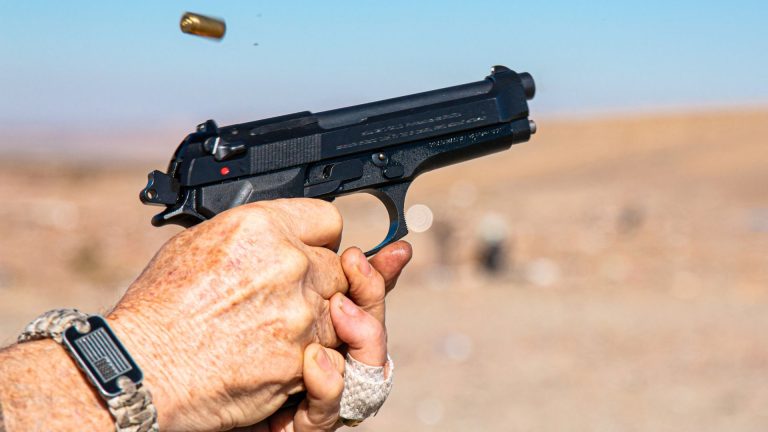
Five all-metal pistols elite units were known to carry
All-metal pistols have outlasted trend cycles and procurement fashions because elite units tend to prize proven reliability over novelty. Even as polymer-framed sidearms dominate new contracts, a handful of metal-framed handguns remain closely associated with special operations teams, naval commandos, and specialized police units. I want to look at five of those pistols and how their design, history, and battlefield record earned a place on the short list of sidearms that professionals trusted when failure was not an option.
Each of these handguns reflects a different moment in small-arms development, from classic single-action designs to double-stack service pistols and unconventional gas-delayed systems. What unites them is not nostalgia but a track record of surviving harsh environments, high round counts, and demanding mission profiles in the hands of elite users. Their continued presence in armories, training photos, and historical accounts shows why metal frames still matter in a world of lightweight polymers.
The enduring appeal of metal-framed sidearms

When I compare metal-framed pistols to their polymer counterparts, the first difference that stands out is how they handle recoil and heat under sustained fire. Steel and aluminum frames add weight, which can be a liability on long patrols, but that mass also soaks up recoil and keeps sights flatter during rapid strings. Elite units that train with high round counts often value that controllability, along with the way metal frames dissipate heat from extended firing, which helps maintain consistent performance in demanding drills and real-world engagements.
There is also a cultural and historical dimension to why certain all-metal pistols remain in service with top-tier units. Some sidearms have accumulated reputations over decades of deployments, becoming part of a unit’s identity as much as a piece of equipment. Reporting on what keeps these guns in holsters highlights a mix of mechanical reliability, combat history, and the confidence that comes from a weapon system that has already proven itself under fire. For elite operators, that combination can outweigh the weight savings or modularity offered by newer designs.
SIG Sauer P226 Mk25 and the Navy connection
Among modern metal-framed pistols, the SIG Sauer P226 Mk25 is one of the clearest examples of a sidearm whose reputation was built through quiet, consistent service. The P226 platform is a full-size, double-action / single-action 9 mm pistol with an aluminum frame and a reputation for reliability in harsh maritime environments. Its Mk25 variant, with corrosion-resistant finishes and specific sighting and accessory features, became closely associated with naval special operations, where saltwater, sand, and constant carry can quickly expose weaknesses in lesser designs.
The manufacturer notes that the P226 Mk25 uses a longer barrel that yields better ballistic performance and accuracy, and that this configuration is identical to the pistol carried by the U.S. Navy SEALs when it served as their official sidearm. That detail underscores how the SIG Sauer P226 was selected not for marketing appeal but for its ability to function reliably in a maritime special operations context. The Mk25’s combination of robust construction, precise barrel fit, and corrosion resistance made it a benchmark for what an all-metal combat pistol could be in the late twentieth and early twenty-first centuries.
Beretta 92 series and the Military M9 legacy
The Beretta 92 series is another all-metal design that became synonymous with front-line service, particularly through its adoption as the M9 by the United States armed forces. Built around an alloy frame and an open-slide design, the 9 mm Beretta 92 uses a double-stack magazine that dramatically increased capacity compared with earlier single-stack service pistols. That shift toward higher capacity reflected a broader move in military procurement toward double-stacked magazines, a trend that reshaped sidearm expectations for both conventional and elite units.
Late in the twentieth century, militaries started looking for guns with double-stacked magazines, and examples often cited include the Walther P38, the Beretta 92 and the Browning Hi Power. For Americans, the Beretta 92FS and its Military M9 variant became especially visible as the official sidearms of the American military, a role that cemented their status in training ranges, deployment photos, and popular culture. Coverage of the Beretta 92FS and Military M9 notes that The Beretta design, with its alloy frame and distinctive slide, is best known to Americans as the sidearm carried by American service members, which in turn influenced what many elite units carried or at least trained with as a baseline standard.
How the Beretta 92FS shaped elite preferences
While the Beretta 92FS and M9 are often associated with conventional forces, their widespread issue meant that special operations units also logged extensive time behind these pistols. That familiarity mattered when units evaluated alternatives, because any new sidearm had to offer clear advantages over a platform that already provided high capacity, manageable recoil, and a long track record of reliability. The 92FS’s metal frame, combined with its open-top slide, helped reduce felt recoil and contributed to the pistol’s reputation for smooth cycling, traits that elite shooters could exploit in rapid, accurate fire.
Accounts of the Beretta 92FS and Military M9 emphasize that The Beretta 92 series pistols are best known to Americans as the official sidearms of the American military, which meant that many special operations candidates first learned handgun fundamentals on this platform. That exposure shaped preferences and expectations, from trigger feel to sight picture, and it set a benchmark for what a duty pistol should deliver. When I look at how elite units later adopted or evaluated other all-metal pistols, the Beretta 92FS often serves as the reference point they were trying to improve upon or, in some cases, return to after experiments with other designs.
The 1911 pattern and the Marine Corps M45A1 CQBP
No discussion of all-metal pistols in elite service is complete without the 1911 pattern, a single-action, steel-framed design that has been in military hands for more than a century. Even after newer double-stack pistols became standard issue, certain units continued to favor the 1911’s crisp trigger, slim profile, and .45 ACP chambering. That preference was not just nostalgia; it reflected a belief among some operators that the 1911’s ergonomics and trigger characteristics made it easier to shoot accurately under stress, especially for those who trained extensively with it.
The enduring appeal of the 1911 is illustrated by the decision of the Marine Corps to bring it back into limited service in 2012 in the form of the M45A1 CQBP. Reporting on the history of U.S. sidearms notes that the 1911 was so popular that the Marine Corps reintroduced it as the M45A1 CQBP, a modernized close quarters battle pistol with updated materials and features. That move signaled that, for certain missions and units, a refined version of a classic all-metal design still met or exceeded operational requirements, even in an era dominated by polymer-framed alternatives.
Heckler & Koch P7 and the GSG 9 connection
While many iconic metal-framed pistols follow conventional layouts, the Heckler & Koch P7 stands out for its unconventional gas-delayed blowback system and squeeze-cocking mechanism. Built with a steel frame and a low bore axis, the P7 was designed to offer fast, accurate shooting with minimal muzzle rise, qualities that appealed to specialized police and counterterrorism units. Its compact dimensions and unique manual of arms made it particularly suited to close-quarters engagements where rapid first-shot accuracy and safe carry conditions were critical.
Coverage of all-metal handguns carried by elite units highlights the Heckler & Koch P7 in connection with GSG 9, the German federal police unit created for high-risk counterterrorism operations. In that reporting, the P7 is listed alongside other metal-framed pistols that were selected because they matched a specific mission profile from the start, rather than being adapted from a general-issue sidearm. The inclusion of the P7 in a list of all-metal handguns that elite units actually carried underscores how its distinctive design, though never as widely issued as the Beretta 92 or SIG Sauer P226, earned a dedicated following among operators who valued its specific strengths.
Why late twentieth century militaries chased capacity
Looking across these pistols, a clear pattern emerges in the late twentieth century: militaries and elite units increasingly prioritized magazine capacity and rapid follow-up shots. Earlier single-stack designs like the 1911 offered eight rounds or fewer in the magazine, which was acceptable in an era of different tactics and engagement expectations. As doctrine evolved and units anticipated more sustained firefights, the appeal of double-stack magazines grew, particularly in 9 mm platforms that balanced manageable recoil with adequate terminal performance.
Analyses of modern military pistols point out that Late in the twentieth century, militaries started looking for guns with double-stacked magazines, citing examples such as the Walther P38, the Beretta 92 and the Browning Hi Power. That shift did not eliminate all-metal frames; instead, it produced a generation of alloy and steel pistols that combined higher capacity with robust construction. Elite units often led or accelerated this transition, because their mission sets demanded both firepower and durability, and they had the training bandwidth to exploit the advantages of more complex double-action systems.
How elite units balance tradition and modernization
Elite units rarely cling to older weapons out of sentiment alone; they tend to be among the first to test new platforms and the quickest to discard gear that fails to deliver. The continued presence of all-metal pistols like the SIG Sauer P226, Beretta 92FS, 1911 variants, and Heckler & Koch P7 in their inventories reflects a pragmatic balance between tradition and modernization. When a metal-framed sidearm offers proven reliability, controllable recoil, and a trigger system that supports high-level marksmanship, units may see little reason to abandon it, even as they experiment with polymer-framed alternatives.
At the same time, the legacy of these pistols shapes how new designs are evaluated. Operators who grew up on The Beretta 92FS and Military M9, or who trained extensively with the M45A1 CQBP, bring those experiences into trials of newer sidearms. Reports on legendary metal frame 9 mm pistols note that The Beretta 92FS and Military M9 are best known to Americans as the official sidearms of the American military, a status that influences expectations for ergonomics, reliability, and accuracy. In my view, that history explains why certain all-metal pistols remain benchmarks: they set standards that newer designs must meet or exceed before elite units are willing to fully transition away from metal frames.
What these five pistols reveal about elite sidearm choices
Taken together, the SIG Sauer P226 Mk25, Beretta 92 series, 1911 and M45A1 CQBP, and Heckler & Koch P7 show how elite units weigh competing priorities when choosing sidearms. They favor designs that have survived extensive real-world use, that offer controllable recoil and accurate fire, and that can be maintained in challenging environments. Metal frames, whether steel or aluminum, contribute to those goals by adding durability and stability, even if they impose a weight penalty that polymer pistols avoid.
These pistols also illustrate how institutional memory and unit identity influence equipment decisions. The Marine Corps decision to revive the 1911 as the M45A1 CQBP, the association of the P226 Mk25 with naval special operations, and the visibility of the Beretta 92FS and Military M9 as American military sidearms all show that once a pistol proves itself, it can shape preferences for decades. As militaries continue to adopt new sidearms, I expect that the lessons learned from these all-metal workhorses, from the Walther and Beretta 92 lineage to specialized designs like the P7, will continue to inform what elite units demand from whatever they carry next.

Leo’s been tracking game and tuning gear since he could stand upright. He’s sharp, driven, and knows how to keep things running when conditions turn.