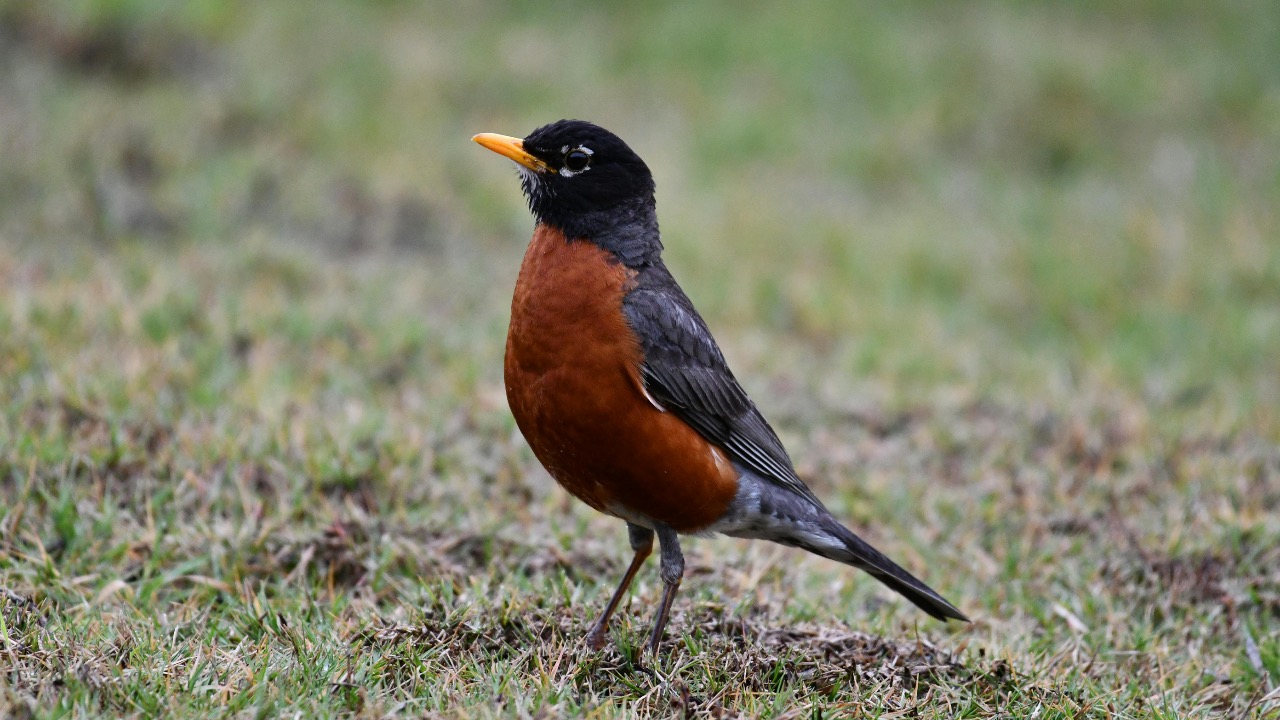
The tiny bird that is now illegal to consume in the US
For generations, Americans thought nothing of shooting a small songbird for the dinner table. Today, one of those once-common backyard targets, the American robin, has become a symbol of how radically the country’s relationship with wildlife has changed. Eating this tiny bird is now a federal crime, a shift that reflects a century of legal and cultural transformation.
The robin’s journey from pie filling to protected icon shows how food traditions can collide with conservation, animal welfare, and even international diplomacy. It also raises a question that reaches far beyond a single species: when does a delicacy become unacceptable to society at large?
What happened
In the nineteenth and early twentieth centuries, Americans routinely hunted small birds for food. Cookbooks and regional histories describe robin meat baked into savory pies or roasted on skewers, treated much like quail or other game. As one food history account notes, the American robin once appeared alongside squirrel, opossum, and even bear in lists of meats Americans used, especially in rural communities where wild protein was a practical staple.
That tradition collided with a growing conservation movement. By the early 1900s, mass commercial hunting for feathers and meat had pushed many migratory birds into steep decline. In response, the United States and Canada negotiated a treaty to protect these species, which Congress implemented through the Migratory Bird Treaty Act. The law made it illegal to hunt, capture, sell, or possess a long list of birds without a permit, and it explicitly covered the American robin as a migratory songbird.
Once the act took effect, eating robin was no longer just frowned upon; it became a violation of federal law. Modern explainers on bird protection point out that the statute still makes it unlawful to kill or consume a robin, putting it in the same legal category as cardinals, blue jays, and many other birds that are in the United States. The law does not distinguish between a backyard hunter and a restaurant chef. Any unpermitted take of a protected species is potentially subject to fines or criminal penalties.
As a result, a bird that once appeared in American recipes effectively disappeared from the plate. Contemporary food writers now treat robin as a historical curiosity, describing how the species went from a kitchen ingredient to a legally untouchable part of the suburban soundscape. One such account traces how the robin, once casually shot for the pot, is now a backyard favorite whose consumption is prohibited by federal wildlife law and by broad public sentiment about songbirds.
The shift did not happen in isolation. Similar protections spread across North America and Europe as governments reacted to collapsing bird populations. In the United States, the Migratory Bird Treaty Act has been expanded and interpreted over time to cover hundreds of species, from shorebirds to raptors. The robin is simply one of the most familiar examples, a bird that many Americans see daily yet can no longer legally hunt or eat.
Why it matters
The robin’s change in status illustrates how conservation law can reshape culture. Once the bird was legally protected, its role in American life evolved. Instead of a source of meat, it became a harbinger of spring, a subject for children’s books, and a symbol of ordinary nature. That transformation reinforced the idea that some animals belong in the realm of wildlife watching, not on the plate.
Legal protection for the robin also reflects a broader ethical shift. Modern Americans still eat plenty of animals, but attitudes toward songbirds and small wild birds have moved sharply. The same country that once served robin pie now spends heavily on bird feeders, binoculars, and backyard habitat. The rise of birdwatching as a hobby, along with concern about biodiversity loss, has helped cement the view that killing a robin for dinner is unacceptable even apart from the law.
At the same time, the robin story sits within a global debate over rare or culturally significant bird dishes. One of the starkest comparisons is the French ortolan bunting, a tiny songbird traditionally trapped, force-fed, and eaten whole under a napkin. The practice is formally banned in France, yet reports describe ongoing poaching and discreet serving of ortolan to well-connected diners. Coverage of this ritual, including detailed accounts of how the illegal ortolan delicacy persists despite legal prohibitions, mirrors the American experience in one key respect: law alone does not erase a taste for forbidden food.
In the United States, however, enforcement and social norms have largely erased robin from the menu. Unlike ortolan, there is no visible black market for robin dishes, no whispered tasting menus for collectors of taboo experiences. That absence suggests that cultural values can move in step with regulation, especially when a species is common in neighborhoods and associated with childhood or everyday life rather than luxury dining.
The robin also highlights how food history can vanish within a few generations. Many Americans today would be shocked to learn that their great-grandparents might have eaten songbirds, or that cookbooks once treated them as ordinary game. Food historians who catalog the once-eaten robin and other now-taboo meats argue that this amnesia shapes current debates. When people assume a dish was never part of their culture, they may underestimate how quickly norms can change again in response to climate stress, economic pressure, or new ethical concerns.
There is also a practical conservation angle. The robin is not currently endangered, but it benefits from a legal framework that does not wait for crisis before acting. The Migratory Bird Treaty Act was designed as a preventative measure, protecting common species before they could be pushed into collapse. In an era of habitat loss and window strikes, keeping legal barriers around abundant birds may help avoid the far more difficult work of recovering them once numbers crash.
Finally, the robin case speaks to how laws around wildlife consumption intersect with identity and tradition. For some communities, hunting small birds was part of subsistence and culture. The loss of that practice can feel like an erosion of heritage. Balancing that history with modern conservation goals remains a recurring tension in debates over hunting rights, traditional foodways, and federal authority.
What to watch next
The robin is unlikely to return to American tables, but the legal and cultural forces that removed it are still evolving. One area to watch is how wildlife agencies interpret and enforce the Migratory Bird Treaty Act. Over the years, regulators have shifted their approach to incidental bird deaths from industrial activity, and any future changes could influence how strictly the law is applied in other contexts, including hunting and possession.
Public attitudes toward eating wild birds may also keep shifting. As interest grows in foraging, nose-to-tail cooking, and local meat, some chefs and hunters are reexamining species that were once dismissed or forgotten. Food historians who track historic American meats see a revival of curiosity about regional game, from venison to wild turkey. That curiosity is constrained by modern wildlife law, which draws a bright line around songbirds like the robin and many other migratory species.
Globally, enforcement of bird protection rules will remain a test of political will. The ongoing controversy over the banned ortolan in France shows how elite demand can keep a practice alive long after it is outlawed. Conservation advocates often point to the American robin and other strictly protected songbirds as evidence that persistent enforcement and cultural change can work together to end such trades.
Science may add new pressure. As research on bird cognition and social behavior advances, the idea of eating highly intelligent or socially complex species faces more scrutiny. Articles that catalog protected bird species often emphasize their ecological roles as insect controllers, seed dispersers, and pollinators. For the robin, which thrives in human-dominated landscapes and helps control garden pests, those ecosystem services bolster the case for protection.

Leo’s been tracking game and tuning gear since he could stand upright. He’s sharp, driven, and knows how to keep things running when conditions turn.