Why surviving WWI trenches was more horrific than history suggests
Popular memory has turned the First World War trenches into a grim but static backdrop, a place of mud, rats and waiting. The reality, pieced together from soldiers’ accounts and later histories, is that simply staying alive in those ditches meant enduring a level of physical and psychological torment that went far beyond the familiar clichés. Survival was not just about avoiding bullets, it was about existing for months in an environment that attacked the body, the senses and the mind at every moment.
What made trench life so harrowing was the combination of industrial killing power, primitive living conditions and the sense that all this suffering served little visible purpose. The war shattered illusions about progress and civilization, leaving many veterans convinced that the conflict had destroyed not only landscapes and cities but also the moral foundations of modern life. To understand why, it is necessary to look closely at what daily survival in the trenches actually involved.
The myth of the doomed charge
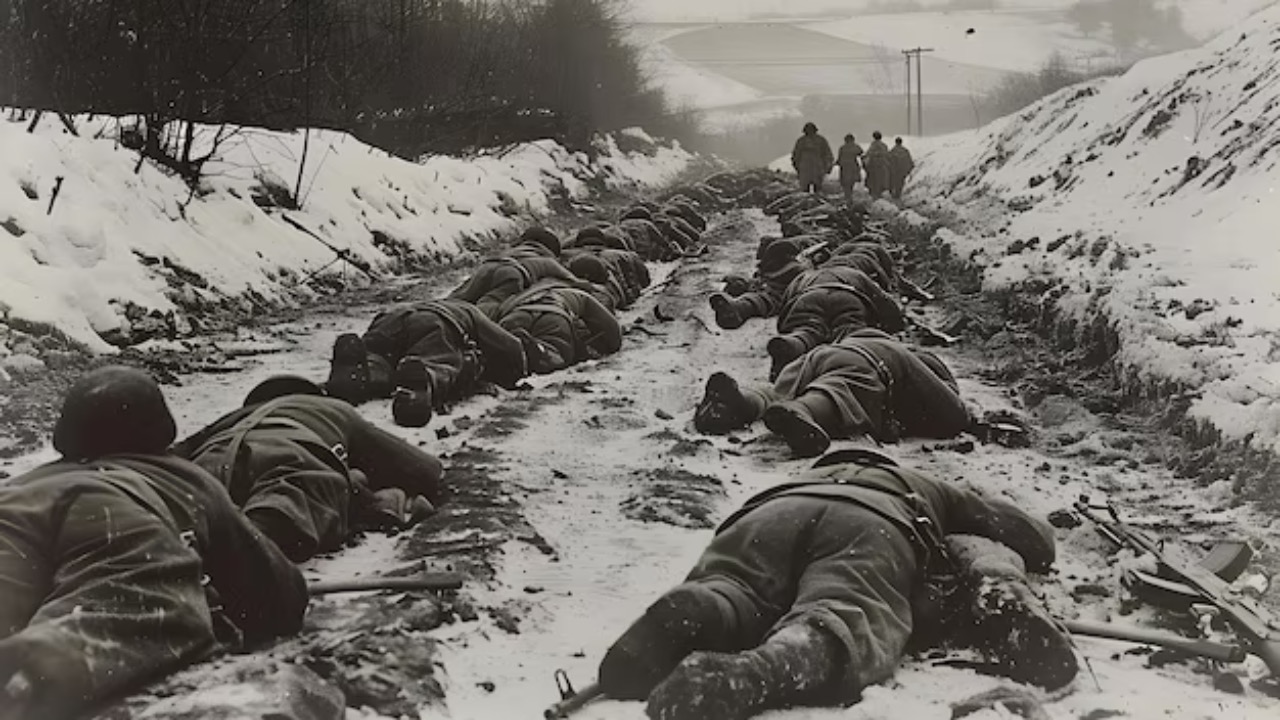
Modern culture often imagines First World War infantry as helpless victims, ordered to climb out of their trenches and walk into certain death under machine gun fire. That image captures the slaughter but misses an uncomfortable truth: many of those attacks did, in fact, gain ground, at least initially. Historians of the First World War point out that assaults across no man’s land sometimes succeeded in overrunning enemy positions before defensive fire fully took hold, even if the gains were usually small and the cost in lives enormous, as detailed in specialist discussions of First World War tactics.
For the men ordered over the top, this meant that survival was a brutal lottery rather than a simple march to execution. Some units reached enemy trenches and fought hand to hand, only to find the attack stalling in shell holes and wire, with survivors pinned down in no man’s land and unable to retreat. Others advanced behind creeping barrages that briefly suppressed defenders, then found themselves stranded once the artillery moved on. The horror lay not only in the high probability of being mowed down but in the knowledge that, even when the plan “worked,” the result was usually a shattered battalion clinging to a few hundred yards of churned earth.
Industrial war and the collapse of meaning
What set this conflict apart from earlier European wars was not just the scale of casualties but the way industrial technology turned killing into a continuous process that seemed to strip combat of any remaining nobility. Heavy artillery, machine guns and gas attacks produced devastation on a scale that left many participants convinced that the war had brought only destruction and decay to modern life and civilization. Literary critics examining works like Ernest Hemingway’s A Farewell to Arms have traced how the conflict eroded any sense of reason and purpose, echoing academic arguments that the war caused only destruction and decay of modern life, civilization and the development of infrastructures, undermining reason and purpose themselves.
Writers and historians have argued that this sense of futility was as damaging as the physical danger. Commentators on the conflict note that what made the World War stand out was the psychological toll it took on those fighting and on their loved ones at home, with the devastation it brought described as huge compared with anything that had come before, a point underscored in analyses of why World War I did not “end all wars.” For soldiers crouched in trenches, the grinding repetition of attacks and counterattacks, with little visible strategic payoff, deepened a sense that they were trapped in a machine that consumed lives without meaning.
Living in a graveyard: stench, corpses and contamination
Trench warfare meant living inside a landscape that was, in effect, a vast open grave. A distinctive feature of the trenches was their awful smell, which contemporaries described as a mix of rotting bodies, overflowing latrines, stagnant mud and the unwashed soldiers themselves. The huge volume of casualties meant it was impossible to clear all of the dead from no man’s land or even from the trench walls, so bodies often lay half buried or exposed for weeks, contributing to the overpowering odour that defined the so‑called war in the.
Firsthand accounts describe the “annihilating stench” of the dead as ever present, with one observer writing of the “manifold smells of putrefaction, each more nauseous than the last,” as corpses were unearthed during the construction of new trenches and dugouts. That constant exposure to decomposing bodies, sometimes with limbs or faces protruding from the trench walls, turned daily movement into a walk through a charnel house, as recorded in detailed recollections of how the stench of the dominated the senses. At places like Gallipoli, veterans later asked who would forget the smell of summer, when the open graveyard that lay around the trenches and between the lines made it impossible to bury all the bodies, a memory preserved in testimonies that recall how Who could ever forget that smell.
Rats, lice and the slow destruction of the body
Even when shells were not falling, the trenches attacked the body in quieter, insidious ways. Soldiers shared their dugouts with pests such as rats, which were attracted by stores of food and the rotting bodies that littered the front. Letters and diaries record how these animals grew bold, running over sleeping men and gnawing at rations, a daily misery captured in educational summaries that note how Soldiers shared their trenches with such pests. In some sectors, observers reported that rats grew cat‑size feeding on corpses, while lice spread diseases like Trench Fever and constant damp produced Trench Foot that could lead to gangrene and amputation, a grim catalogue of afflictions preserved in accounts that describe how Rats and Lice thrived.
Trench foot became one of the most feared non‑combat threats. Standing for days in wet, filthy trenches took its toll, with feet turning black, swollen and numb before infection set in. Veterans’ groups and historians note that Trench foot crippled thousands of WWI soldiers, explaining that Standing for long periods in waterlogged conditions left Feet vulnerable to gangrene and amputation, a pattern highlighted in discussions of what Trench warfare meant for WWI troops. Commentators on the Western Front have emphasized that one of the worst problems WWI, or First World War, soldiers had to endure was trench foot and other diseases caused by the very wet years, a point repeated in public history projects that ask, Did people realize how much Did trench foot would shape life on the Western Front.
Mud, weight and the battlefield that swallowed men
The ground itself became an enemy. At battles like Passchendaele, the rain drenched ground quickly turned into a thick swamp, with clinging mud that caked soldiers’ uniforms and clogged their rifles. Reports from the time describe men drowning in shell holes filled with water, lost forever in the stinking muck when they slipped under the surface and could not be pulled out, a fate documented in analyses of how the rain drenched ground turned battlefields into swamps. Moving across such terrain while under fire was exhausting even before the first shot was fired.
Infantrymen went into these assaults carrying loads that would challenge a modern backpacker. Each man moved slowly under more than 60 pounds of supplies, including 200 bullets, grenades, a shovel, two days’ food and water, and more. When they finally reached the parapet and looked out, they quickly discovered something appalling: the landscape ahead was a maze of craters, wire and mud that offered almost no cover, a reality captured in detailed reconstructions of how Each soldier advanced. For those who stumbled or were wounded, that weight could drag them under in flooded shell holes, turning their own equipment into a death sentence.
Food, water and the erosion of basic dignity
Even when not in combat, daily life in the trenches stripped men of basic comforts that civilians take for granted. Water was brought up in petrol tins and frequently tasted foul, contaminated by fuel residue and the filth of the front. As a result, soldiers often drank from ponds and streams that were themselves polluted by dead animals and human waste, risking disease to quench their thirst, a pattern described in accounts that note how Water reached the front. Rations were monotonous and often inadequate, with hard biscuits, tea and a canteen of water forming the core of many meals.
The broader history of military rations shows how armies have long struggled to feed troops in the field, but the First World War combined industrial scale with primitive distribution. Historians of food in conflict have traced how, for centuries, troops marched off to fight while risking their lives in combat and relying on whatever the supply chain could deliver, asking what soldiers ate in different eras and how those diets affected morale, a theme explored in studies of how rations evolved and But changed over time. In the trenches, the gap between the rhetoric of patriotic sacrifice and the reality of cold tea, stale bread and contaminated water deepened the sense that the men at the front were being treated as expendable.
Noise, sleeplessness and the assault on the senses
Surviving trench life meant enduring a constant assault on the senses, even in lulls between major offensives. The noise and uncomfortable surroundings made it very difficult to sleep, with artillery, machine gun bursts and the sounds of movement in the dark keeping men on edge. Educational summaries of the front note that Soldiers were constantly tired and in danger, and that officers sometimes had to enforce strict routines to avoid men falling asleep while on watch, a reminder that the Soldiers were rarely able to rest properly.
Firsthand narratives from other twentieth century fronts help illuminate what this sensory overload meant. Accounts of soldiers’ first taste of battle often focus on the sights, smells and sounds, describing the chatter of machine gunfire, the thud of shells, the smell of explosives and burning, and the horrific visions witnessed when comrades were hit, as detailed in scholarly work that collects such Accounts of combat. In the trenches, this barrage of stimuli was not a brief episode but a near constant condition, eroding nerves over months until even small noises could trigger panic.
Random death, helplessness and the ethics of rescue
One of the most disturbing aspects of trench survival was the randomness of death. Men in the trenches could be killed instantly and without warning when an artillery shell exploded overhead and came spitting down fragments of metal, a reality described in commemorative essays that recall how Men lived under constant threat. Snipers, stray shells and collapsing dugouts meant that even routine tasks like carrying rations or repairing wire could turn fatal in an instant.
When attacks failed, the wounded often lay stranded in no man’s land, crying out for help that could not safely come. Contemporary reports describe situations where there was no reaching the wounded from either side’s lines, because those who tried to reach them were themselves cut down, a grim calculus recorded in narratives that note how There was no way for the There to be rescue without more deaths. Later reflections on psychological trauma emphasize that so many listened for hours, days and weeks on end to the suffering of dying men, knowing that any attempt to save them would likely mean sacrificing more lives in a futile rescue attempt, a moral torment captured in discussions of how So many veterans carried these memories.

Asher was raised in the woods and on the water, and it shows. He’s logged more hours behind a rifle and under a heavy pack than most men twice his age.