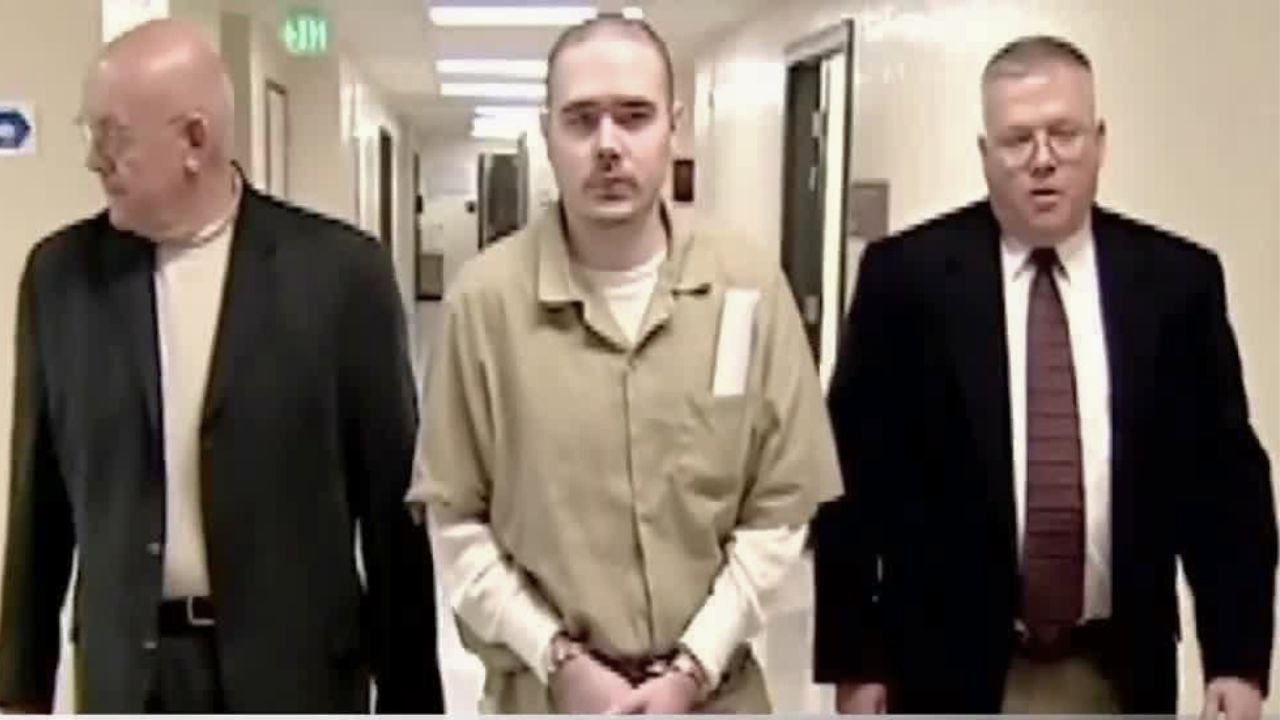
Three US states prepare to execute death row inmates this week in decades-old cases
Three states are preparing to carry out executions in long-running capital cases, compressing decades of legal battles, political choices, and unresolved trauma into a few scheduled hours in the death chamber. The planned executions, all involving crimes from the 1990s, underscore how rarely the United States now uses the death penalty even as it keeps hundreds of people on death row for much of their lives.
Each case carries its own history of brutality, appeals, and public debate. Taken together, they revive familiar questions about fairness, delay, and what justice means when punishment comes a generation after the crime.
What happened
In Tennessee, officials have set an execution date for Christa Gail Pike, the only woman on that state’s death row, for the killing of 19-year-old Colleen Slemmer in Knoxville in 1995. Pike was 18 at the time of the murder, which prosecutors described as a torture killing that lasted up to 30 minutes and involved a box cutter, a meat cleaver, and a piece of asphalt. A Tennessee jury convicted her of first-degree murder and conspiracy, and she received a death sentence after jurors heard about the prolonged nature of the attack and Pike’s own statements about the killing.
Pike’s case has drawn attention because she would be the first woman executed by Tennessee in the modern era of capital punishment. Her legal team has argued that her youth, mental health problems, and a history of abuse should have weighed more heavily against a death sentence, and they have challenged aspects of her trial and sentencing in state and federal courts. Despite those challenges, Tennessee’s governor declined to commute her sentence, and the state’s high court allowed the execution date to stand, putting Pike in line to be killed by lethal injection at the state prison in Nashville. Reporting on the case has emphasized that she remains the only woman among Tennessee’s condemned, and that the crime occurred nearly thirty years ago, a gap that underscores how long capital appeals typically last in the state.
The planned execution in Tennessee comes as the state has struggled with its own lethal injection protocol. Officials previously paused executions after concerns about the drugs and procedures used to carry them out, including questions about whether the chemicals were properly tested and administered. Although the state resumed preparations after internal reviews, defense lawyers have continued to argue that Tennessee’s protocol risks causing severe pain in violation of constitutional protections against cruel and unusual punishment. Those objections have not, so far, stopped the scheduling of Pike’s execution, but they remain part of the broader legal fight around how the state puts people to death, as detailed in coverage of the Tennessee execution.
In a separate case, another state is preparing to execute a man convicted of a 1990s murder that has already been litigated through multiple rounds of appeals, habeas petitions, and clemency requests. The crime, like Pike’s, involved a young victim and allegations of extreme violence that persuaded a jury to impose the death penalty. Over the years, the condemned prisoner has argued that his trial lawyers failed to investigate key mitigating evidence, including childhood trauma and possible intellectual disability, and that prosecutors relied on questionable forensic testimony that would face stricter scrutiny today. Courts have rejected those claims, finding either that they were procedurally barred or that any errors would not have changed the verdict, and the state’s governor has signaled no intention to intervene.
Officials in that state plan to use lethal injection as well, relying on a drug protocol that has been criticized by medical experts and human rights advocates but repeatedly upheld by federal courts. Prison staff have begun the standard pre-execution process, including moving the prisoner to a death watch cell, limiting visits, and conducting practice runs for the execution team. Victims’ relatives have been notified and offered the chance to witness the execution from a designated viewing area inside the prison. The case has attracted less national attention than Pike’s, but for local communities it has reopened painful memories of the original crime and revived long-standing debates about whether the death penalty delivers closure or simply extends the life of a tragedy.
A third execution scheduled for the same week involves a prisoner whose case has become a touchstone for critics of capital punishment. He was sentenced to death for a homicide that took place more than two decades ago, at a time when juries were more likely to impose death sentences and courts were less receptive to certain types of mitigation evidence. Since then, the legal standards around intellectual disability, juvenile offenders, and ineffective assistance of counsel have shifted, yet those changes have not retroactively removed him from death row. His lawyers have pointed to those evolving norms in last-minute filings, arguing that if he were tried today he would likely receive a sentence of life without parole instead of death.
State officials have framed the execution as the final step in a long legal process that has already given the prisoner extensive review. They note that state and federal courts have examined the case multiple times, that jurors heard detailed evidence about the crime, and that the victim’s family has waited decades for the sentence to be carried out. The governor’s office has received petitions from religious leaders, former judges, and advocates urging clemency, but has so far declined to halt the execution. Unless a court issues a stay, the prisoner will be put to death in the state’s execution chamber using a method that has drawn repeated litigation over the risk of botched procedures.
Why it matters
The clustering of three executions in a single week stands out in a country where the use of capital punishment has steadily declined. Fewer states now carry out executions, and those that do often do so sporadically, yet death rows remain populated with prisoners whose crimes date back to the 1980s and 1990s. The cases scheduled this week illustrate that pattern: each involves an older conviction, a long appellate record, and a crime that predates major shifts in public opinion, sentencing practices, and legal protections for vulnerable defendants.
For opponents of the death penalty, the week has become a rallying point. Legal scholars and advocates argue that the executions show how the system continues to impose the ultimate punishment despite growing evidence of racial disparities, wrongful convictions, and arbitrary outcomes. They point to data showing that a small number of counties account for a large share of death sentences, and that defendants of color, particularly when accused of killing white victims, are more likely to receive death. In commentary on the upcoming executions, critics have described the concentration of lethal injections in a short span of time as a “week of death” that should push lawmakers toward abolition, a phrase used in a detailed analysis of capital punishment.
Supporters of the scheduled executions argue that the cases show the system working as intended. They emphasize that each prisoner was convicted by a jury, that appellate courts have reviewed the records for legal errors, and that victims’ families have waited decades for the sentences to be carried out. For them, the length of time between crime and punishment reflects the careful safeguards built into capital cases, not a reason to abandon the penalty. They also stress the brutality of the underlying crimes, including the torture killing in Pike’s case, and contend that some acts are so extreme that no punishment short of death is adequate.
The long delays, however, raise questions that cut across ideological lines. When a person is executed thirty years after a crime, the punishment occurs in a different social and legal context than the one in which it was imposed. Jurors who sentenced defendants in the 1990s did so before the Supreme Court barred the execution of people with intellectual disability and those who were under 18 at the time of their crimes, and before modern research on adolescent brain development became widely accepted in courtrooms. Mental health diagnoses that were poorly understood at the time may now look different to clinicians and judges. Yet capital sentences from that era remain in force unless courts find specific legal defects.
The cases also highlight the ongoing controversy over lethal injection. States have struggled to obtain drugs as pharmaceutical companies refuse to supply them for executions, leading some departments of corrections to turn to compounding pharmacies or alternative chemicals. Litigation has focused on whether certain drug combinations risk causing intense pain or suffocation while the prisoner is paralyzed and unable to signal distress. In some states, documented problems with executions, such as difficulty finding veins or prolonged deaths, have led to temporary moratoriums or reviews of protocols. Even where courts uphold the methods, the disputes fuel public concern about whether executions are carried out in a way that meets constitutional and ethical standards.
Another dimension is the impact on victims’ families. Some relatives say the scheduled executions bring a measure of finality after years of hearings and appeals, allowing them to feel that justice has finally been served. Others report that the drawn-out process has prolonged their grief, forcing them to relive the crime every time a new legal development occurs. In high-profile cases, media coverage can amplify that cycle, with families asked to comment repeatedly as each execution date approaches or is delayed.
For the prisoners themselves, decades on death row mean living under a unique form of confinement that some scholars describe as a separate punishment from the execution. Long-term isolation, constant surveillance, and the psychological weight of an impending death sentence can lead to severe mental health problems, including depression, psychosis, and what some experts call “death row syndrome.” Courts have rarely treated those conditions as grounds to halt an execution, but they shape the reality of capital punishment in a system where appeals often last longer than a typical life sentence.
The week’s executions also carry political implications. Governors hold clemency power and must decide whether to intervene, a choice that can affect their standing with both law-and-order voters and reform advocates. Attorneys general and local prosecutors may face scrutiny over how they defend old death sentences in light of evolving standards. Legislatures in several states are already considering bills to narrow or abolish the death penalty, and the concentration of executions could influence those debates by drawing attention to the practical and moral costs of maintaining the machinery of death.
What to watch next
In the immediate term, all eyes are on the courts and governors’ offices in the three states. Defense teams are likely to file last-minute appeals raising issues such as ineffective assistance of counsel, new evidence of mental illness, or challenges to lethal injection protocols. Federal courts can issue temporary stays if they find a substantial legal question, and the Supreme Court sometimes steps in hours before a scheduled execution. Observers will be watching to see whether any of the prisoners receive a reprieve, a commutation to life without parole, or a full halt to the execution.

Leo’s been tracking game and tuning gear since he could stand upright. He’s sharp, driven, and knows how to keep things running when conditions turn.