Trump under pressure to launch major attack: ‘24 hours of strategic bombing’
Donald Trump is facing intense pressure from hawks inside his circle and in Congress to answer a deadly attack on U.S. forces with a sweeping air campaign, framed by some advocates as “24 hours of strategic bombing.” As the debate plays out in public and behind closed doors, the former president is trying to balance demands for a show of overwhelming force with warnings that a dramatic escalation could ignite a wider regional war.
The push for a short, punishing bombardment has turned a familiar Washington argument about deterrence into a test of Trump’s instincts, his influence over Republican foreign policy and the limits of American power against Iran and its partners.
What happened
The latest confrontation began when a series of attacks linked to Iran-backed forces struck U.S. personnel and assets, including a deadly strike on American troops stationed near Cuba, according to reporting on the emerging crisis. Officials described the incident as part of a broader pattern of Iranian aggression that left multiple U.S. service members dead and injured and destroyed key equipment deployed to monitor regional threats. It followed earlier harassment of U.S. ships and drones in the region, which American officials also tied to Tehran’s network of proxy groups.
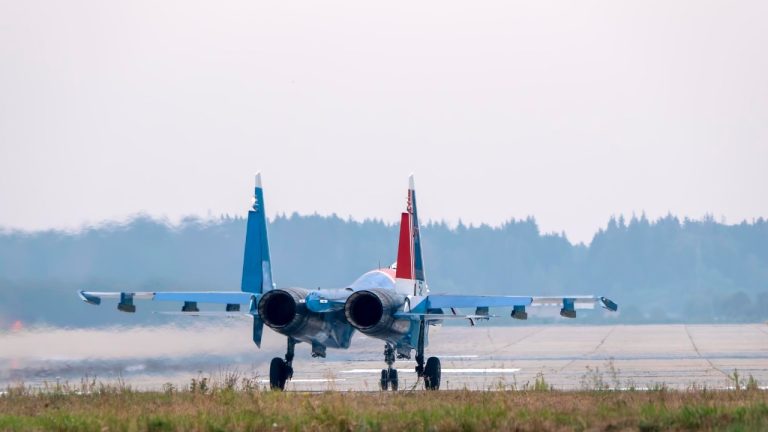
In response, senior Republicans and several of Trump’s informal advisers quickly urged a dramatic show of force. Some called for a concentrated wave of airstrikes against Iranian military infrastructure, missile sites and command centers, packaged as a single day of high-intensity bombardment that could be marketed as limited in duration yet overwhelming in effect. Advocates argued that a 24 hour air campaign would send a message that attacks on U.S. forces, including those near Cuba, carry a direct cost for Iran itself rather than only for its proxies.
Trump’s team, according to people briefed on the internal discussions, has weighed a range of options that include cyber operations, targeted strikes on specific Revolutionary Guard facilities and a broader set of coordinated attacks on Iranian assets across several countries. Some advisers have urged him to embrace the most expansive option, which they believe would reassert American dominance and restore deterrence after what they describe as a series of Iranian provocations. Others, including some with military backgrounds, have privately warned that a massive strike package could trigger retaliation against U.S. bases, shipping lanes and allied governments.
Pressure on Trump has been amplified by conservative media figures and lawmakers who portray any response short of a sweeping air campaign as weakness. They have cited Iran’s role in arming and training militias from the Middle East to the Caribbean and argued that limited, tit-for-tat strikes have failed to stop the pattern of attacks. In their telling, a single day of intense bombing would be a clean, decisive answer that avoids a prolonged ground conflict while still inflicting real damage on Iranian capabilities.
Diplomats and regional analysts, however, have cautioned that the situation is far more complex. Iran has spent years dispersing key assets, hardening underground facilities and embedding its influence through partners and proxies. Some U.S. officials have warned that even a well executed 24 hour campaign might only degrade a fraction of Iran’s network while giving Tehran political cover to escalate in places where American forces and civilians remain exposed.
The debate has unfolded as American intelligence agencies track new Iranian activity in the Caribbean and Latin America. According to reporting on the episode, U.S. officials believe that elements linked to Iran have used Cuban territory and nearby waters to test American defenses and probe for vulnerabilities. The attack that killed U.S. personnel near Cuba, which American analysts connected to that broader effort, has become the immediate trigger for the current push for large scale retaliation, as detailed in a recent account of the crisis involving Iran attacks near.
Why it matters
The outcome of this debate will shape not only the immediate U.S. response to Iran but also the broader rules of engagement that govern how Washington handles proxy warfare and attacks on its forces. A decision by Trump to authorize a short yet intense bombing campaign would signal that the United States is willing to strike directly at a state sponsor, even when the immediate attack is carried out by affiliated groups rather than uniformed forces. Such a move would mark a significant shift from the pattern of targeting militias and commanders while avoiding a direct clash with Tehran.
Supporters of a major air campaign argue that previous, more limited responses have failed to deter Iran and its partners. They point to repeated rocket and drone attacks on U.S. bases, harassment of commercial shipping and the use of proxy groups in places like Iraq, Syria and now the Caribbean. In their view, a concentrated bombardment of Iranian missile sites, air defense systems and Revolutionary Guard facilities would finally impose a cost that Tehran cannot ignore. They also contend that a 24 hour time frame would help contain the risk of an open-ended conflict and reassure Americans wary of another long war.
Critics, however, warn that the logic of a short, sharp shock often collides with reality. Iran has multiple ways to respond indirectly, from targeting U.S. troops in the Middle East to stirring unrest through allied militias. A large strike package could also rally domestic support inside Iran for hard-liners who argue that compromise with Washington is impossible. Some military planners have raised the possibility that Tehran might respond asymmetrically, for example by using naval mines or drones against commercial shipping in the Persian Gulf or by encouraging attacks on U.S. diplomatic facilities.
The stakes extend beyond the U.S.-Iran rivalry. Allies in Europe and Latin America are watching closely, worried that a heavy American response could destabilize energy markets, trigger refugee flows or pull their own forces and citizens into the line of fire. Governments that host U.S. bases or cooperate on intelligence sharing face the prospect of retaliation if Iran or its partners choose to widen the confrontation. For countries that have tried to maintain economic ties with both Washington and Tehran, a dramatic escalation would force difficult choices.
Domestic politics also play a central role. Trump has long cultivated an image of toughness on Iran, including the decision during his presidency to withdraw from the nuclear agreement and impose sweeping sanctions. Some of his supporters now view the Cuba-linked attack as a test of that legacy. Yet public opinion polling has consistently shown deep skepticism about new overseas military commitments, especially those that risk American casualties. Trump must navigate a base that demands strength but is wary of another drawn-out confrontation.
The way this episode is handled will influence U.S. credibility in other theaters as well. Rivals in Moscow, Beijing and Pyongyang will study whether Washington is willing to accept losses without a major response or whether it will risk escalation to protect its forces and partners. Allies in places like Taiwan, Ukraine and the Baltic states will draw their own conclusions about American resolve and predictability. A carefully calibrated response could reinforce deterrence across multiple regions, while a miscalculation could embolden adversaries or fracture coalitions.
What to watch next
The immediate question is whether Trump ultimately authorizes the kind of sweeping air campaign that some advisers have urged or instead opts for a more limited, targeted response. Signals from the Pentagon and intelligence community will matter. If military planners present him with options that promise significant damage to Iranian capabilities with manageable risk, the case for a 24 hour bombardment will grow stronger. Should their assessments highlight serious escalation dangers, Trump may look for alternatives that still appear forceful but keep the confrontation below a certain threshold.

Leo’s been tracking game and tuning gear since he could stand upright. He’s sharp, driven, and knows how to keep things running when conditions turn.