Ukraine expended nearly $100 million in missiles during a single night of defense, Zelenskyy says
Ukraine’s latest overnight battle with Russian missiles came with a staggering price tag, as President Volodymyr Zelenskyy disclosed that the country burned through nearly $100 million worth of interceptor missiles in just a few hours of defense. The figure, which he also framed as about €80 m in European terms, underlines how every large-scale Russian strike now forces Kyiv to make million‑euro decisions in real time simply to keep its cities lit and its people alive.
I see that single night as a compressed snapshot of the entire war’s economic logic: Russia launches relatively cheap drones and cruise missiles, Ukraine responds with high‑end air defense systems that can cost more than the incoming targets, and international partners are left to decide how long they are willing to bankroll that imbalance. Zelenskyy’s unusually blunt accounting was not only a status update from the front, it was a pointed message to allies about what it takes to keep the sky closed.
The night Ukraine spent nearly $100 million to stay alive
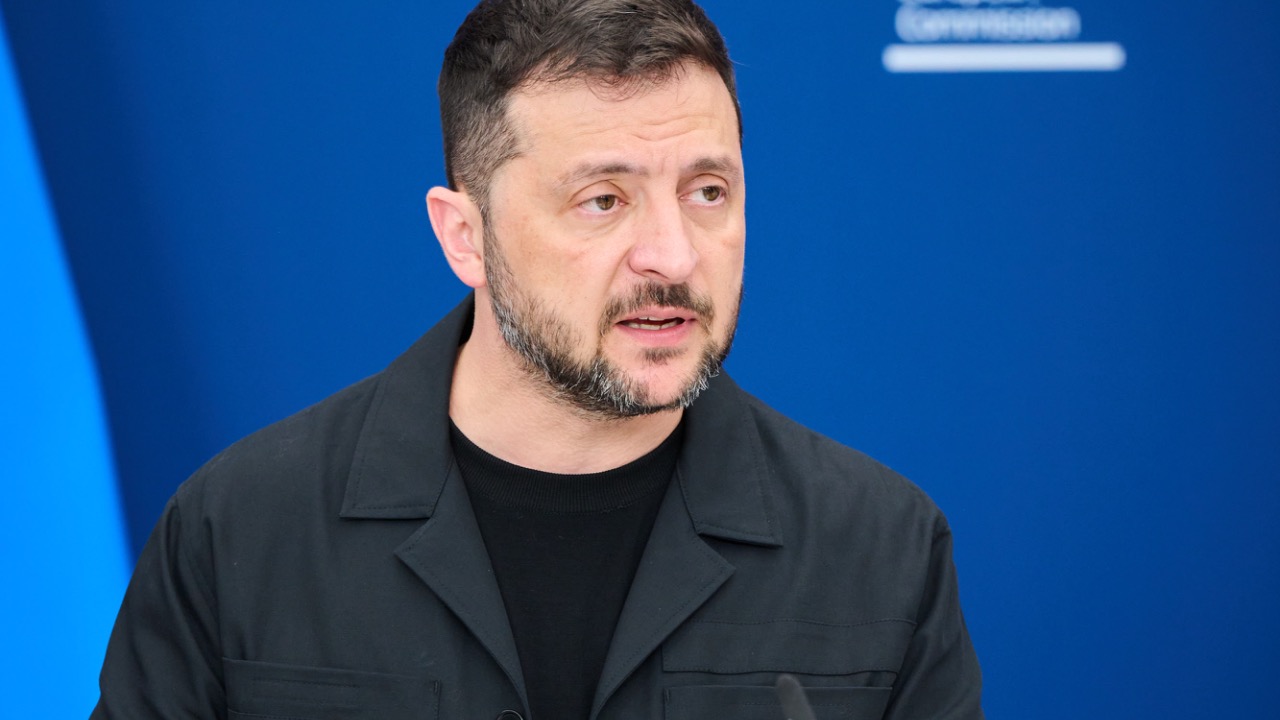
When Zelenskyy spoke about the overnight barrage, he described a defense that was successful in military terms but punishing in financial ones. According to his account, Ukraine fired nearly $100 million worth of interceptor missiles in a single night as its air defense network tried to blunt a wave of Russian cruise missiles and drones, a figure echoed in multiple assessments that put the cost at roughly $100 m or €80 m for that one operation. The president stressed that this was not a theoretical budget line but a concrete bill for a single night’s survival, a reminder that every major Russian attack now translates directly into tens of millions of dollars in outgoing Ukrainian munitions.
Reports citing data from Ukraine’s air force say the country’s defenders launched a mix of Western‑supplied and domestically produced missiles to counter the Russian barrage, with the total value of those interceptors approaching $100 million by the time the sky fell quiet. One detailed breakdown notes that $100 million in missiles were fired that night, while a related analysis of the same engagement describes Ukraine as having “burned” nearly $100 m in air defense ammunition to keep Russian warheads from reaching their targets. Another account, citing Zelenskyy directly, frames the cost as €80 M in air defense missiles, underscoring that the president is deliberately translating the number into both dollars and euros to make it resonate with different audiences.
How Zelenskyy framed the €80 million bill
Zelenskyy did not present the €80 m figure as a complaint about the cost of defending Ukraine, but as a stark illustration of the stakes. In his remarks, he emphasized that the country had no choice but to spend that much on air defense missiles in order to repel a single Russian strike, arguing that the alternative would have been far worse in human and infrastructural terms. He described the outlay as “shocking” yet necessary, a price that Ukraine is prepared to pay but cannot shoulder alone indefinitely, especially when Russia continues to replenish its own missile stocks.
Ukrainian outlets that relayed his comments highlighted that the president was speaking not only to domestic viewers but also to partners in Europe and North America, effectively turning the €80 Million figure into a diplomatic talking point. One report quotes him explaining that Ukrainian President Volodymyr had to authorize the use of extremely expensive air defense missiles to stop the Russian attack, while another notes that he put the cost of repelling that single strike at €80 m and warned that Russia now has more missiles in reserve than before. In coverage attributed to VALENTYNA ROMANENKO, the same figure is repeated, with Zelenskyy stressing that 32 incoming targets were engaged and that the financial burden of such operations is becoming unsustainable without faster and more predictable support from abroad, a point reflected in VALENTYNA ROMANENKO’s account of his remarks.
Missile economics: why defense costs more than attack
The imbalance Zelenskyy is pointing to is not just about one night, it is baked into the economics of modern warfare. Russia can launch relatively inexpensive drones and cruise missiles, often produced at scale and with components that are cheaper than the interceptors used to shoot them down. Ukraine, by contrast, is relying on sophisticated air defense systems whose missiles can cost hundreds of thousands or even millions of dollars each, meaning that every large salvo of Russian weapons forces Kyiv to make a choice between conserving ammunition and protecting infrastructure. That is how a single night of defense can add up to nearly $100 m in outgoing missiles even when the incoming weapons are less costly.
Analysts who have tracked the latest barrage note that Ukraine’s air force command reported shooting down or jamming 27 missiles and 315 drones during the broader campaign of Russian strikes, a tally that illustrates how quickly interceptor stocks can be depleted. The figure of 315 drones in particular shows how Russia is using swarms of cheaper unmanned systems to saturate Ukrainian defenses, forcing the defenders either to expend costly missiles or to rely on cheaper tools like interceptor drones and electronic warfare. In that context, the €80 m that Zelenskyy cited for one night’s worth of air defense missiles is less an outlier than a preview of what sustained high‑intensity air defense looks like when a country is under constant attack.
Counting the cost in euros and dollars
Different reports on Zelenskyy’s comments toggle between dollar and euro figures, but they all converge on the same basic scale of spending. One widely cited estimate says Ukraine “burned” nearly $100 million in missiles during the night in question, while another describes the cost as roughly $100 m, a shorthand that underscores how quickly the numbers round up when each interceptor costs six or seven figures. Zelenskyy’s own framing of the bill as €80 m aligns with those dollar estimates once exchange rates and the mix of systems are taken into account, and it is clear that he is using both currencies to make sure the message lands in Washington, Brussels and beyond.
Several accounts of the same engagement emphasize that the $100 million figure is not a rough guess but is based on data from Ukraine’s air force about how many missiles were fired and what types they were. One analysis notes that Ukraine burned nearly worth of missiles in that single night of defense, while another reiterates that Ukraine fired nearly $100 m in interceptors to counter the Russian barrage. A separate military‑focused report, summarizing Zelenskyy’s remarks, states that Ukraine Spends €80 on Air Defense Missiles Overnight, reinforcing that the president’s headline number is being treated as a concrete benchmark for the cost of a major defensive action.
What Ukraine’s air defense actually did that night
Behind the headline figure is a complex choreography of radar operators, missile crews and command centers that had to react in minutes as Russian missiles and drones approached. Ukrainian officials say the air force and air defense units tracked incoming Russian weapons across multiple regions, prioritizing targets that threatened critical infrastructure and densely populated areas. The decision to fire so many expensive interceptors was driven by the scale of the attack and by the need to protect key nodes in the power grid, government buildings and military facilities, all of which have been repeatedly targeted since the full‑scale invasion began.
One detailed account of the overnight strikes notes that Ukraine’s air force command reported shooting down or jamming dozens of missiles and hundreds of drones, while also acknowledging that some Russian weapons still got through and damaged energy infrastructure. Another report, citing security forces, points out that Ukraine’s elite Alpha unit has previously dealt a $4 billion blow to Russian air defenses, illustrating how Ukrainian forces are not only absorbing attacks but also striking back at the systems that enable them. In the context of the latest barrage, that same report underscores that Ukraine fired nearly worth of missiles in one night to shoot down and destroy Russian drones and missiles, a reminder that the country’s air defense network is both a shield and, through its targeting of Russian launch platforms, a sword.
Russia’s strategy: saturate the sky, strain the budget
From Moscow’s perspective, the logic of these massed strikes is brutally simple. By launching large salvos of missiles and drones, Russia forces Ukraine to expend precious interceptor missiles at a rate that is hard to sustain, especially when resupply depends on foreign aid packages and complex procurement programs. Even when most of the incoming weapons are shot down, the attacker can still claim a kind of victory if the defender is burning through tens of millions of dollars in ammunition each time, particularly if Western political debates slow the flow of replacements.
Ukrainian officials and analysts have warned that Russia appears to be rebuilding and expanding its missile arsenal, with Zelenskyy himself saying that Russia now has more missiles than before and is using them to test and probe Ukraine’s defenses. In coverage that relays his comments, he is quoted as saying that the cost of repelling a single Russian attack reached €80 m and that Russia continues to produce and acquire new missiles, a dynamic that risks turning every major strike into a financial war of attrition. One report that draws on his remarks notes that Russia now has and that Ukrain is being forced to respond with increasingly expensive defensive measures, a pattern that suits Moscow’s strategy of stretching Ukraine’s resources and testing the patience of its allies.
On the ground: blackouts, cold apartments and a battered grid
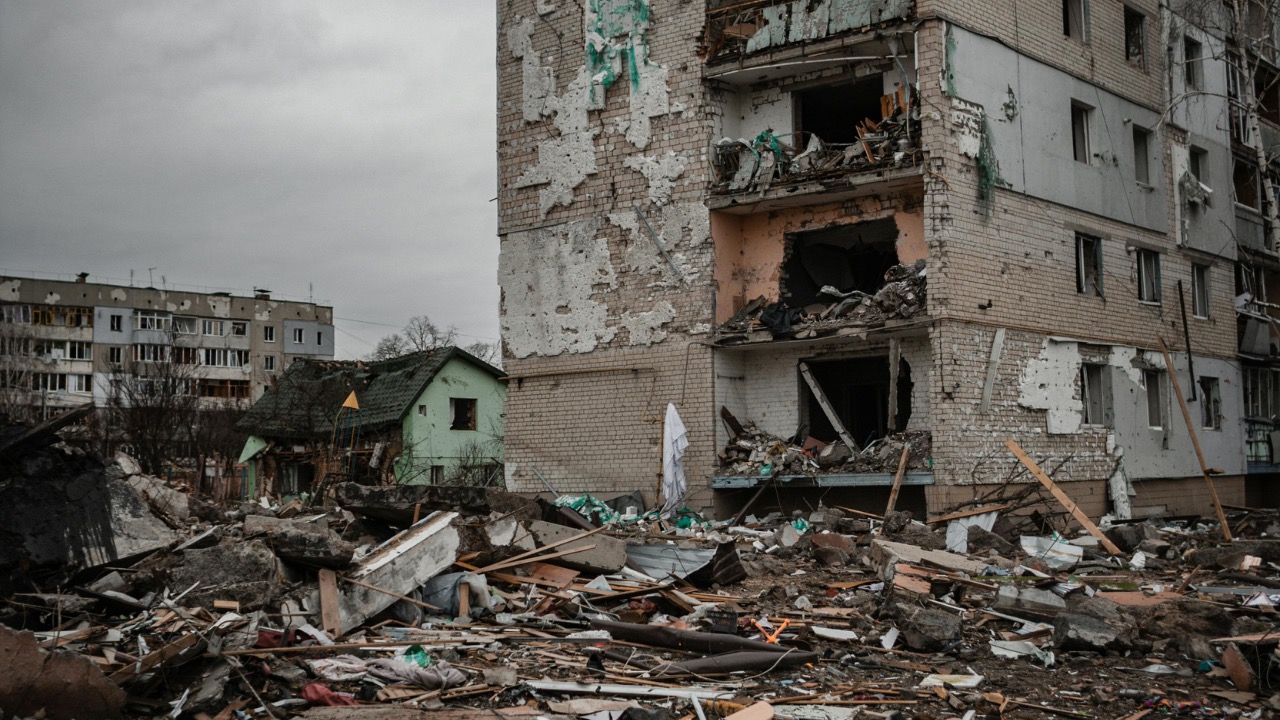
The financial cost of that €80 m night is easier to grasp when set against the physical damage that Russian strikes continue to inflict when they get through. Ukrainian officials say that repeated attacks on the power grid have left entire districts without electricity or heating, sometimes for days at a time, and that emergency crews are constantly racing to repair substations and transmission lines before the next wave hits. The overnight barrage that prompted Zelenskyy’s cost disclosure was part of a broader campaign that once again targeted energy infrastructure, leaving parts of Kyiv and other cities in the dark and forcing residents to rely on generators and improvised heating.
One account of the latest strikes reports that Ukraine’s parliament and roughly half of Kyiv were left without heating after Russian missiles and drones hit energy facilities, even as air defenses managed to intercept many of the incoming weapons. In that report, President Zelensky is quoted as saying that Ukraine had received missiles to repel the overnight attack on Monday and that those deliveries had significantly helped protect the grid, but the fact that half the capital was still without heating underscores how high the stakes are each time the sirens sound. The choice Zelenskyy described, between spending €80 m on interceptors or facing even more widespread blackouts and damage, is not an abstract budget debate for the people living in those cold apartments.
Why Zelenskyy is spelling out the numbers now
Zelenskyy’s decision to publicly attach a price tag to a single night of air defense reflects a shift in how he is communicating with both Ukrainians and foreign partners. Earlier in the war, officials tended to speak in general terms about the need for more air defense systems and ammunition, but now the president is putting specific figures like €80 m and $100 million on the table to show exactly what it costs to keep the country functioning under constant attack. By doing so, he is inviting lawmakers and taxpayers in allied countries to see each aid package not as an open‑ended commitment but as a series of discrete, if expensive, actions that prevent blackouts, casualties and further destruction.

Asher was raised in the woods and on the water, and it shows. He’s logged more hours behind a rifle and under a heavy pack than most men twice his age.