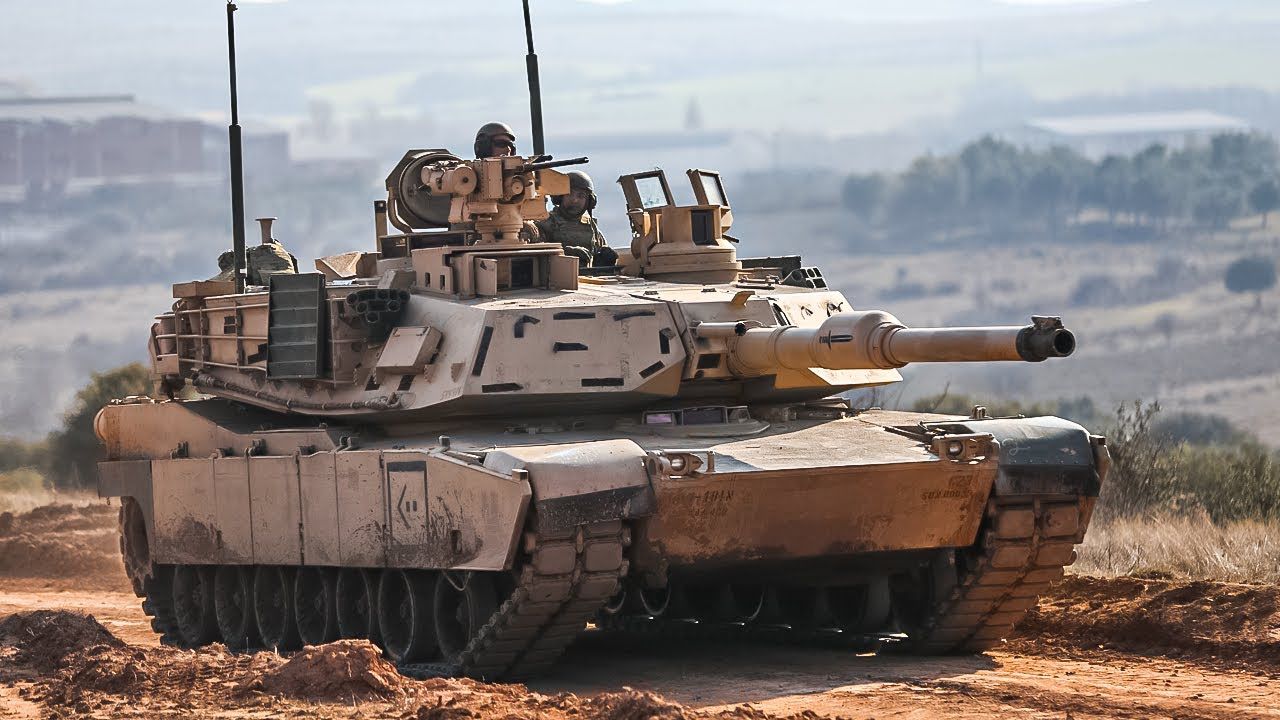
Ukraine receives dozens of M1A1 Abrams tanks as U.S. debate flares
Ukraine’s armored forces are undergoing a rapid transformation as dozens of M1A1 Abrams tanks arrive from abroad, even as arguments in Washington intensify over how far the United States should go in sustaining this heavy armor. The new deliveries, layered on top of earlier U.S. and Australian transfers, give Kyiv one of the most advanced tank fleets in Europe, but they also expose deep worries in the U.S. system about logistics, survivability and political risk. I see the result as a paradox: Ukraine’s front-line units are hungry for every Abrams they can get, while parts of the American defense establishment are increasingly uneasy about what those tanks might signal and how long they can be kept in the fight.
The debate is no longer about whether Ukraine should have Western main battle tanks at all, but about what role they can realistically play on a battlefield saturated with drones and precision artillery. As the number of Abrams in Ukrainian hands climbs into the dozens and beyond, the question in Washington is shifting from “why send them” to “how do we keep them running without getting dragged deeper into the war.”
From 31 to 111: how Ukraine’s Abrams story escalated
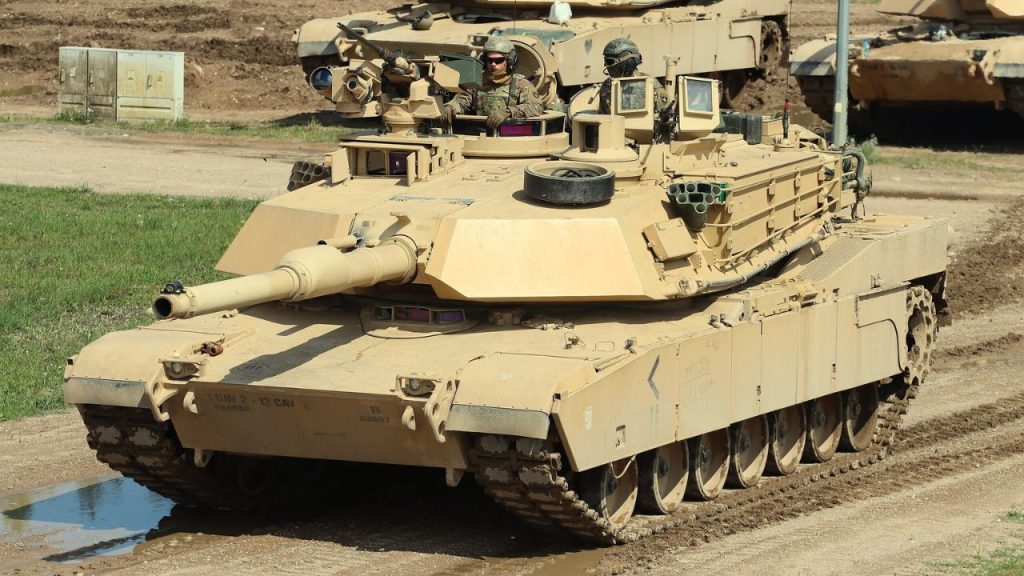
The Abrams journey in Ukraine started modestly, with a first batch of 31 tanks that Ukrainian crews pushed into combat in the east. Soldiers from the 47th Mechanised Brigad described how All of those Abrams were committed near the frontline, a sign of how urgently Kyiv needed heavy armor. Those early deployments highlighted both the tank’s strengths and its vulnerabilities, as crews praised its protection but also pointed to deficiencies that emerged under intense Russian fire and drone surveillance.
By late the following year, the scale had changed dramatically, with reports that Ukraine Has 111 New M1A1 Abrams Tanks and America Isn, Happy At All. That figure, which folded in Australian donations, underscored how quickly a symbolic transfer had turned into a sizable armored fleet. The Abrams Main Battle Tank, described in that reporting as The Abrams Main Battle Tank that closes with and destroys targets, was no longer a token gesture but a central pillar of Ukraine’s heavy forces, and that scale is precisely what now fuels the political argument in Washington.
Australia’s 49 M1A1s and the Operation Kudu bridge
A big part of the recent surge comes from Australia, which decided to hand over its entire fleet of older M1A1s rather than keep them in storage. Canberra framed the effort as a strategic donation and built a dedicated logistics and training mission around it, known as The Operation Kudu. Australian personnel spent months preparing the final tranche of M1A1 Abrams for shipment, highlighting how even a finite donation requires a sustained support footprint to be meaningful once the tanks reach Ukraine.
Those efforts culminated in what Australian officials described as a complete fulfillment of their pledge, with 49 M1A1 Abrams, Diesel Mods, And Drone Cages forming Ukraine, New Armor Boost. Australia confirmed it had delivered 49 Mtanks under this package, and officials stressed that the donation was paired with advice on how to avoid isolated tank employment. In practice, that means urging Kyiv to use the Abrams in combined-arms formations rather than as lone breakthrough tools, a lesson learned painfully on both Ukrainian and Russian sides of the front.
Diesel mods, drone cages and the 80‑tank milestone
As the Australian vehicles rolled in, Ukrainian crews were not receiving stock-standard American configurations. Engineers reworked the tanks with diesel modifications and extra armor to fit Ukraine’s fuel network and the realities of a battlefield dominated by loitering munitions. Reporting on the Australian tranche described how the Abrams arrived with Diesel Mods, And Drone Cages, a nod to the improvised metal lattices that now cover much of the armor on both sides of the front. These changes are not cosmetic; they are an attempt to keep a Cold War design alive under twenty‑first century surveillance and strike conditions.
By the time this wave of deliveries was counted, Ukraine Has 80 New M1A1 Abrams Tanks and, Happy At All, a milestone that reflected both U.S. and Australian contributions. Analysts noted that reaching 80 Abrams Tank platforms gave Kyiv enough mass to equip several brigades, but also raised the stakes for keeping them fueled, armed and repaired under constant Russian pressure. The Image Credit references attached to those reports may be stock photos, yet they capture a real shift: a Ukrainian army that now fields Western armor at scale, not just in token numbers.
Why Washington is nervous about “New” Abrams in an old war
Behind the scenes, U.S. officials have been blunt about their misgivings. Long before the Australian donation, some in Washington argued that the Abrams was ill suited to Ukraine’s conditions and that other vehicles would be more practical. Internal debates described how, Instead of Abrams, Milley and Austin pushed for Strykers and Bradleys, with one account noting that Instead of Abrams tanks, Milley and Austin favored Strykers, Bradleys and other armored vehicles that are lighter and easier to sustain. Their argument was simple: a tank designed for U.S. logistics and air superiority might struggle in a theater where fuel, recovery vehicles and air cover are all in short supply.
Those concerns persisted even as Ukraine Has 49 New M1A1 Abrams Tanks and, Happy One Bit, as one analysis put it. While the donation is a welcome gesture for Kyiv, another assessment stressed that While the, Ukraine welcomed the tanks, U.S. officials privately warned that Ukraine struggled with sustainment and that the Abrams Tank, Image Credit aside, might not be of much use without a deep logistics tail. In my view, that is the core of the American unease: the fear that high‑end hardware could become a political liability if it is seen burning on the steppe or sitting idle for lack of spare parts.
Australian crews, Polish hubs and the human chain behind the steel
None of these tanks move themselves. The Australian mission has put faces and names to the long supply chain that connects factories, ports and Ukrainian units. For Squadron Leader Chris Dilger, a Royal Australian Air Force officer, the work has meant relocating to Poland, where he helps coordinate deliveries. Official photos show Squadron Leader Chris Dilger in Poland, Photo credited to Lieutenant Commander, Thompson, a reminder that this is not just an abstract logistics exercise but a daily grind of rail schedules, customs paperwork and maintenance checks.
Another account, titled For Squadron Leader Chris Dil, describes how his career shifted from mining shifts to delivering tanks, underscoring the breadth of skills now being pulled into the war effort. On the ground, Australian soldiers under Abrams preparation teams have spoken about the “huge undertaking” of getting each vehicle ready, from engine checks to installing extra armor. I see this human chain as one reason the Abrams program has momentum despite U.S. doubts: once so many people and institutions are invested in making it work, reversing course becomes politically and practically difficult.
Support packages, spare parts and the fight over sustainment
Hardware is only half the story; the other half is the money and political will to keep it running. In early February, U.S. officials approved a $185 million package aimed specifically at sustainment. The announcement said Washington Clears a Support Package to Keep Ukraine, Abrams, Bradley and HIMARS in Combat, signaling that the U.S. is prepared to fund not just new deliveries but the spare parts, maintenance and training that make them viable. This is the kind of back‑end support that skeptics like Milley and Austin had argued would be essential if Abrams were ever sent.
At the same time, some foreign observers have downplayed the impact of these moves. One Russian‑leaning analysis argued that The balance at the front will not change, even after The State Department approved the sale of spare parts for weapons to Kiev, a decision reported with a timestamp of Today at 00:44. That skepticism reflects a broader view in Moscow that incremental Western support cannot overcome entrenched Russian defenses. I think the truth lies somewhere in between: sustainment packages will not magically flip the front line, but without them, Ukraine’s Abrams fleet would quickly degrade into a collection of static bunkers.
Dozens more: the “Brand New Fleet” of 49 and the 111‑tank ceiling
The latest twist in the story is the arrival of what some analysts describe as a Brand New Fleet of M1A1s, a fresh batch that has reignited the argument in Washington. Reports from Feb said Feb, Ukraine Just Got a Brand New Fleet of 49 M1A1 Abrams Tanks and America Isn, Happy At All, noting that There were expectations these tanks might replicate earlier U.S. successes in other theaters. Instead, the results so far have been more mixed, with the tanks facing a dense web of Russian defenses and a constant threat from airborne strike.
Another summary of the same development emphasized that Summary and Key included Ukraine sourcing 49 M tanks in early 2026, pushing the total closer to that 111‑tank ceiling mentioned in earlier reporting. When I connect these dots, I see a pattern: each new tranche, whether 49 M or 80 or 111, is greeted in Kyiv as a lifeline and in parts of Washington as a fresh reason to worry about escalation, optics and long‑term commitments.
Battlefield reality: from Strong Europe Tank Challenge to drone kill zones
One reason for the American jitters is that the battlefield the Abrams was built for no longer exists. Analysts have contrasted the current war with training events like The Strong Europe Tank Challenge, an annual competition described as a dynamic, productive and fun venue for NATO crews to hone their skills. A critical assessment argued that Ukraine Gets M1A1 Tanks for a battlefield that no longer exists, pointing out that the kind of maneuver warfare envisioned in those exercises has been replaced by attritional fights under constant drone surveillance, as detailed in Strong Europe Tank commentary.
On the ground, Ukrainian crews have adapted by turning their Abrams into heavily armored fire support platforms rather than breakthrough spears. One analysis of Ukraine Has 49 ‘New’ M1A1 Abrams Tanks and America Does not like it argued that the tanks are now reaching the front with diesel engines to simplify Ukrainian logistics, but also noted U.S. reservations about sustainment challenges, as captured in While the detailed breakdown. I read these accounts as a warning that even the best tank can be reduced to a static target if doctrine and logistics do not evolve as fast as the threat.
Domestic U.S. politics: Trump, Zelenskyy and the optics of heavy armor
All of this plays out against a tense political backdrop in Washington, where President Donald Trump has made Ukraine aid a recurring flashpoint. A widely discussed Oval Office meeting captured in a 46‑minute recording showed Heated exchanges as Trump pressed Volodymyr Zelenskyy on U.S. support and urged faster results, a confrontation documented in a video that highlighted how Heated the Trump, Zelenskyy dynamic has become. In that context, every new Abrams shipment is not just a military decision but a domestic political symbol, one that Trump’s allies and critics both use to argue over America’s role in the war.
Inside the U.S. security establishment, those political pressures intersect with professional doubts. Some analysts have framed the growing Abrams fleet as a case where Ukraine Has 49 ‘New’ M1A1 tanks and America is not happy, one bit, a phrase that captures the mood in parts of the bureaucracy. Others point back to earlier warnings that Ukraine Has 49 ‘New’ M1A1 Abrams Tanks and America Isn, Happy At All, arguing that the concerns voiced then about logistics, training and escalation have only grown as the fleet expanded to 80 and then 111. From my vantage point, the tanks have become a proxy for a larger argument about whether the U.S. is edging from support into co‑ownership of Ukraine’s war effort.

Leo’s been tracking game and tuning gear since he could stand upright. He’s sharp, driven, and knows how to keep things running when conditions turn.