What really happened to North Dakota’s bison
To understand what really happened to North Dakota’s bison, it helps to picture the state’s grasslands before the railroads, the hide markets and the fences. Tens of millions of animals once darkened the horizon; within a few decades they were nearly gone. The story of that collapse, and of the slow return now underway, is one of policy, profit, Indigenous resistance and an evolving idea of what the prairie is for.
The age of abundance on the Plains
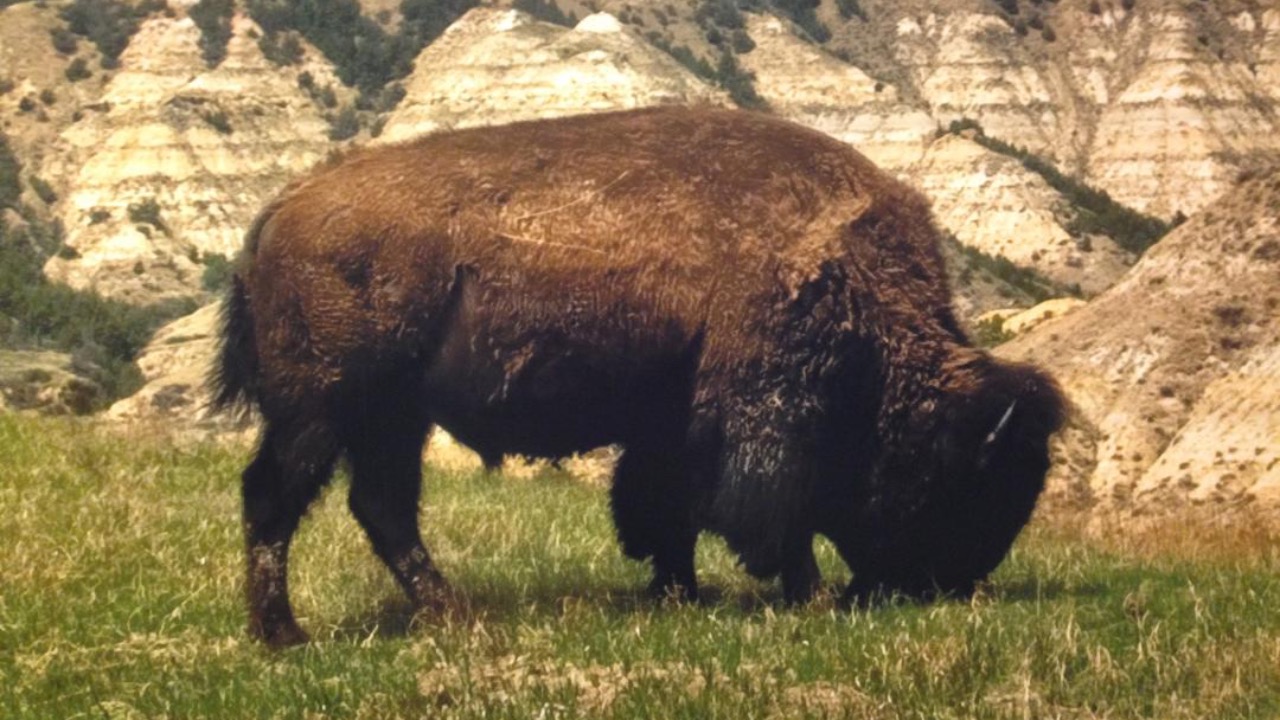
Long before state lines, the animals now called North Dakota’s bison were part of a continental herd of plains bison that roamed from Texas into Canada. One of the most enduring symbols of early western culture in the United States is the bison, and researchers estimate that around 30 to 50 m animals once occupied the Great Plains.
These herds shaped grassland ecology. Their hooves churned soil, their grazing patterns created a patchwork of short and tall vegetation, and their wallows filled with water for birds and amphibians. For many Native nations, including communities that now live within the borders of North Dakota, bison were food, shelter, tools and a central part of spiritual life.
How industrial hunting emptied the prairie
The collapse began when industrial markets met military strategy. As industries expanded in the United States, bison hides became useful materials for factories, and free roaming herds were suddenly viewed as a vast stockpile of leather and bones. According to North Dakota studies, hide hunters poured onto the Plains with new rifles and rail access, shooting animals by the thousands and leaving carcasses to rot once the skins were stripped.
Federal policy magnified the damage. Military commanders openly encouraged the killing of buffalo to starve Native Americans and force them onto reservations. Accounts from the period describe American soldiers and tourists shooting bison for sport from passing trains, a spectacle that turned the Great Plains into a killing ground.
By the late nineteenth century, observers were already recording the indiscriminate slaughter of and the way it split the once continuous herd into northern and southern remnants. The northern segment that included present day North Dakota shrank quickly as hunters followed rail lines and military forts deeper into the region.
The last wild herds in North Dakota
Within a few decades, the vast herds that had defined the northern prairie were reduced to scattered bands. Historical accounts of the last of the bison by state describe how, in places like Colorado in February, hunters encountered the final wild groups and wiped them out. Similar patterns played out farther north as market hunters and settlers pushed into what would become North Dakota.
By around 1900, the animals that survived in the region were mostly in captivity or in tiny, heavily managed groups. While once present throughout North Dakota, bison had been driven off most of the open prairie and confined to fenced ranches, small reserves and zoo collections. The species that had shaped grasslands for millennia was effectively gone from the state’s wild ecosystems.
From a few hundred animals to modern conservation herds
The turning point came when a handful of ranchers, conservationists and tribal leaders began to protect the last animals. National campaigns gathered remnant bison from private herds and zoos and moved them into refuges. That work set the foundation of modern bison herds that would later be reintroduced to federal lands in the northern Plains.
Today, due to protection and reintroduction efforts, their numbers have rebounded from just a few hundred to around 30,000 in conservation herds across the United States. North Dakota’s share of that recovery is concentrated on public lands and tribal ranges, where managers balance genetics, disease risks and grazing limits.
On the state’s western edge, Theodore Roosevelt National holds two of the most visible herds. The South Unit near Medora and the North Unit farther up the Little Missouri River both began with translocated animals that trace back to those early rescue efforts. Six years after the South Unit herd was established, park officials transferred 20 bison to the North Unit to seed a second group and reduce inbreeding.
Theodore Roosevelt and a conservation legacy
The park itself carries the name of Theodore Roosevelt, whose time ranching in the Badlands shaped his later conservation agenda. Although he participated in hunting culture that helped decimate wildlife, his presidency also produced national parks, wildlife refuges and game laws that later benefited bison.
Modern managers at Theodore Roosevelt National Park actively move animals out of the park when herds grow beyond what the fenced units can support. Some of those bison go to other public lands. Increasingly, they are also sent to tribal nations that are rebuilding their own herds as part of a broader cultural revival.
Indigenous nations and Buffalo Nation
For Native communities, the story of North Dakota’s bison is inseparable from dispossession and survival. American military campaigns that targeted buffalo were aimed directly at Native Americans, whose economies, diets and ceremonies relied on the animals. The loss of bison was both an ecological disaster and a deliberate attack on Indigenous sovereignty.
That history is why the current movement to restore buffalo is being led by Indigenous organizations. The InterTribal Buffalo Council and partners such as Buffalo Nation work with dozens of tribes to secure animals, land and funding for new herds. Their goal is not only ecological restoration but also food security, youth programs and a renewed spiritual relationship with buffalo.
In North Dakota, that work is visible on tribal ranges that now anchor tourism and community events. The Standing Rock Sioux Tribe, for example, owns around 250 buffalo in two herds that are highlighted on the Buffalo Trails Tour. Visitors see animals on the prairie, but they are also witnessing a quiet assertion of Indigenous control over land and wildlife.
Private ranchers and neighboring states join in
The recovery story does not stop at state borders. On the South Fork of the Republican River and across the Dakotas, private ranchers have begun to treat bison as both a business and a conservation tool. In Perkins County, just across the line in South Dakota, a rancher named Hanson recently brought bison back to his land after saying, “Probably 10 years ago I thought it would be cool to have buffalo out there.” His herd, released in a private ceremony, reflects a growing interest in grass fed buffalo meat and regenerative grazing.
These private efforts interact with public and tribal herds in complex ways. They expand total numbers and keep the species visible on the prairie, yet they also raise questions about genetics, disease management and the line between wildlife and livestock. In North Dakota, bison are legally considered livestock in many contexts, which shapes how they can be moved, fenced and hunted.
What a bison means on the prairie today
Modern North Dakotans encounter bison in very different settings than their ancestors did. Some see them in national parks, framed by interpretive signs and scenic overlooks. Others see them behind fences on working ranches, or on tribal lands where they are part of ceremonies and school programs.
On the ground, the animals are still impressive. Adult bison can weigh up to 2000 lbs and can reach 5 to 6.5 feet at the shoulder. Newborn calves arrive in late spring, bright orange against the green grass, and quickly join small family groups that move across meadows and breaks.
Conservation groups see bison as a way to repair damaged grasslands. Projects in North Dakota and neighboring states use herds to manage invasive plants, stimulate native grasses and create habitat for birds such as meadowlarks and sharp tailed grouse. One initiative described how Hundreds of Buffalo to Ancestral Lands in a Nationwide, Indigenous, Movement, with buffalo from North Dakota preserves shipped to tribes in places like Texas, Washington and Wisconsin.

Asher was raised in the woods and on the water, and it shows. He’s logged more hours behind a rifle and under a heavy pack than most men twice his age.