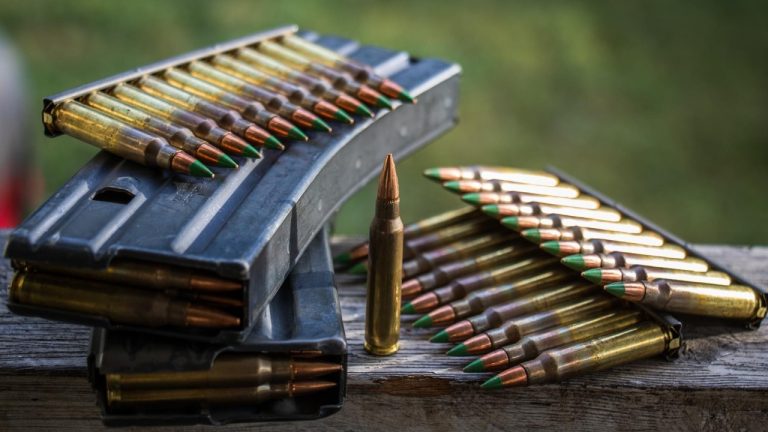
Why certain calibers get unfair reputations
Certain cartridges inspire almost tribal reactions, praised as flawless or dismissed as useless long before anyone looks at real performance data. Calibers become shorthand for identity, internet arguments, and marketing slogans, and some end up with reputations that lag years behind the technology and context that actually define how they work. When I look closely at how shooters talk about these rounds, the gap between myth and reality is often wider than the difference in ballistics.
The calibers that get tagged as “too small,” “too weird,” or “obsolete” usually suffer less from physics than from perception, availability, and expectations that were never realistic in the first place. By unpacking how those narratives form, and comparing them with what modern loads and real-world use show, I find that several supposedly “bad” or “pointless” cartridges are simply misunderstood tools for specific jobs.
The anatomy of a caliber reputation
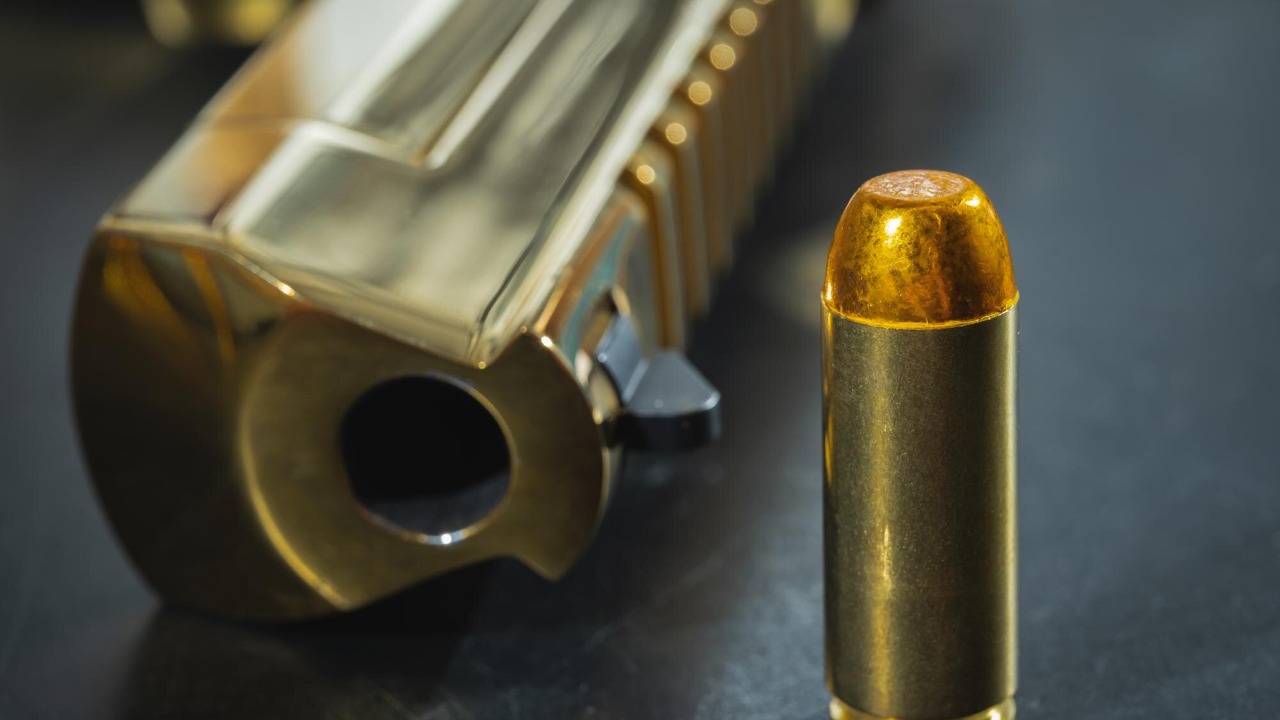
Every cartridge carries three overlapping reputations: what it did historically, what it does on paper, and what people say about it online and at the range. The first is shaped by war stories, police reports, and early adopters who may have used outdated bullets. The second comes from charts that list velocity, energy, and penetration, which look authoritative but rarely capture how a round behaves in real bodies or barriers. The third, the social reputation, is the loudest, and it tends to flatten nuance into simple labels like “stopping power” or “mouse gun,” even when those labels ignore how ammunition design has changed.
Once a narrative hardens, it becomes self reinforcing. If a cartridge is branded as weak, owners may choose lighter loads or compact guns that accentuate its limitations, then share those experiences as proof that the stereotype was right. Online debates about the “Top” or “Best” calibers, echoed in threads that also ask about the “worst” or “most pointless” rounds, reward strong opinions more than careful context, so the same talking points get repeated until they sound like facts. I see that dynamic every time a niche or older caliber is dismissed without anyone asking what role it was actually meant to fill.
How online debates skew perceptions
Internet forums and social media have become the main arena where calibers are judged, and the format encourages snap verdicts. A single post that opens with “Hey everyone, looking to get some thoughts” on the supposed worst cartridges quickly fills with confident claims about which rounds are “most pointless” or “worst at the job,” even when the posters are comparing wildly different use cases. In those conversations, nuance about barrel length, bullet construction, or realistic engagement distances is usually crowded out by one line zingers about what is “underpowered” or “overkill.”
Lists of “Top 10 calibers” and “Best calibers” for everything from home defense to bear country create a false sense that there is a universal ranking that applies to every shooter. When I read through those arguments, I notice that cartridges are often condemned not because they fail in their intended niche, but because they do not match the expectations of someone using a different platform or role. A round designed for compact carry, for example, is judged against full size duty performance, and the verdict is then broadcast as a general truth about the caliber itself.
Obscure workhorses and the problem of availability
Some cartridges earn a bad name not because they perform poorly, but because they are hard to feed. When components and factory ammunition are scarce, shooters understandably shy away, and that lack of adoption then reinforces the idea that the caliber must be flawed. In discussions of “best calibers that are not popular,” I see people point out that it is hard to find components for certain revolver rounds, and that even factory ammo can be a challenge. That scarcity becomes part of the reputation, regardless of how the round behaves on target.
Revolver cartridges like the 327 and 32 families illustrate this cycle. Enthusiasts note that current 327 snub nose revolvers are often used as hosts for 32 H&R loads, precisely because the guns offer flexibility across related calibers. Yet the same conversations acknowledge that tracking down brass, bullets, and loaded ammunition for those 32 options is difficult, which discourages new shooters from trying them at all. The result is a feedback loop where a capable, low recoil option for small frame revolvers is treated as a curiosity instead of a serious choice, largely because the market does not reward stocking it.
Why 9mm went from suspect to standard
Few cartridges illustrate the swing from mistrust to mainstream acceptance as clearly as 9mm. For years, critics argued that it lacked “stopping power” compared with larger bore options, and those views were shaped by early loads that used older bullet designs and propellants. In one detailed Comments Section on why people used to hate the 9mm cartridge, posters point out that Bullet technology and propellants have gotten a lot better over time, and that many of the old complaints were tied to full metal jacket or primitive hollow points that did not expand reliably.
Modern 9mm, especially in +P defensive loads, benefits from decades of research into controlled expansion and penetration. When I look at current guidance on self defense choices, the 9mm Luger loaded with a hollow point projectile is often described as offering an outstanding balance of power, penetration, capacity, and concealability. That balance, combined with lower recoil and higher magazine capacity than larger calibers, has turned a once controversial round into the default choice for many law enforcement agencies and civilian carriers. The reputation did not change because the diameter grew, but because the bullets finally matched what the cartridge could deliver.
The misunderstood .380 ACP
If 9mm shows how a caliber can outgrow its bad press, the 380 ACP shows how a cartridge can still be stuck in the middle of a reputation shift. Critics often dismiss 380 as “barely adequate,” especially when fired from ultra compact pistols with very short barrels. Yet modern defensive loads are engineered specifically for those constraints. One example is a Hornady 90-grain FTX Critical Defense load chosen for a small P3AT style pistol, where the bullet is tuned to expand at the lower velocities typical of pocket guns while still reaching useful penetration in soft tissue.
When I compare 380 ACP to 9mm, the gap in performance is real but not as dramatic as the rhetoric suggests, especially at the close distances where most defensive shootings occur. The tradeoff is that 380 allows truly tiny pistols that can be carried when a larger gun would be left at home, and a gun that is actually on the belt is more effective than a theoretically superior caliber in a safe. The unfair reputation comes from judging 380 by the standards of duty sized handguns, instead of recognizing it as a compromise that prioritizes concealment and controllability for people who might otherwise not carry at all.
“Worst caliber” lists and the context problem
Whenever shooters debate the “worst” calibers, context is usually the first casualty. A cartridge that is mediocre for one role can be excellent for another, yet online discussions often treat performance as a single axis. In a thread that explicitly asks about the “Most pointless” or “worst at job” rounds, posters quickly nominate everything from tiny rimfires to big bore magnums, often without specifying whether they are talking about self defense, hunting, or target shooting. The result is a pile of anecdotes that sound damning but rarely compare like with like.
I find that many of the cartridges labeled as pointless are either overkill for the shooter’s needs or underpowered for the unrealistic tasks they are assigned. A light revolver round might be criticized for poor performance on large game, even though it was never intended for that use, while a heavy recoiling magnum is mocked as impractical for concealed carry. Those judgments say more about mismatched expectations than about the inherent value of the caliber. Without a clear job description, any cartridge can be made to look bad, and “worst caliber” lists thrive on that ambiguity.
Expert views on what really matters
When I turn from forum debates to instructors and long time trainers, the emphasis shifts away from caliber tribalism and toward fundamentals. Experienced voices note that, Today as in the past, there is heated argument over what caliber is suitable for self defense, but they consistently stress that shot placement, reliability, and the ability to make fast, accurate follow up shots matter more than a few hundredths of an inch in bullet diameter. In that perspective, the choice between common service calibers is less critical than choosing a gun and load that a shooter can control under stress.
Those same experts often point out that cartridges once considered marginal, such as the 30 Carbine round, have been used effectively when paired with appropriate platforms and training. The lesson is that context, not caliber alone, drives outcomes. A well designed load in a familiar gun, carried consistently and practiced with regularly, will outperform a theoretically superior round that the shooter finds unpleasant or intimidating. That view undercuts the idea that there is a single magic caliber and helps explain why some rounds get unfairly maligned when they are simply misapplied.
Balancing popularity with performance
Market forces also shape which calibers are praised and which are ignored. Popular rounds benefit from economies of scale, broad ammunition selection, and constant refinement, which in turn make them perform better and reinforce their dominance. Guidance that highlights the 9mm Luger as a leading choice for self defense reflects not only its ballistic balance but also its availability, lower cost per round, and the wide range of hollow point designs tuned for different roles. Those advantages make it easier for shooters to train regularly and to find loads that function reliably in their specific firearms.
Less common calibers, by contrast, may be just as effective in narrow niches but suffer from limited factory support and fewer modern bullet options. When shooters struggle to find practice ammo or defensive loads, they are more likely to abandon the caliber and share that frustration with others, which feeds the perception that the round itself is flawed. In reality, the problem is often logistical rather than ballistic. Recognizing that distinction helps explain why some cartridges with solid on target performance are still treated as oddities, while others with only modest advantages are celebrated simply because they are everywhere.
How I weigh caliber choices amid the noise
After sifting through data, expert commentary, and the passionate arguments that fill gun culture, I have come to see caliber choice as a hierarchy of questions rather than a single verdict. First, I ask what job the gun must do: deep concealment, home defense, competition, or hunting. Then I look at which cartridges offer reliable penetration and expansion for that role, using modern loads rather than outdated assumptions. Only after that do I factor in availability, cost, and how the recoil and blast affect my ability to train and shoot accurately under pressure.
In that framework, many calibers with bad reputations find a place. The 380 ACP becomes a rational answer for ultra compact carry when paired with a load like a 90-grain FTX Critical Defense round. Niche revolver cartridges in the 327 and 32 families make sense for shooters who value low recoil and flexibility, provided they accept the challenge of sourcing components. Even the much argued 9mm, once derided in older discussions, stands out as a balanced option precisely because modern Bullet design and propellants have addressed the shortcomings that fueled earlier skepticism. When I filter out the noise and focus on role, performance, and practicality, very few calibers are truly “bad,” and many that are mocked online turn out to be unfairly judged.

Leo’s been tracking game and tuning gear since he could stand upright. He’s sharp, driven, and knows how to keep things running when conditions turn.