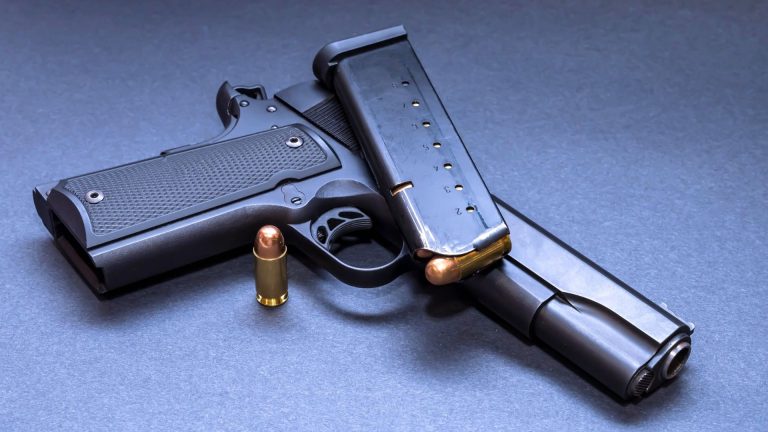
Why handgun stopping power is often misunderstood
Handgun owners love to argue about which caliber “hits harder,” but the way people talk about stopping power rarely lines up with how handguns actually work on human bodies. Real defensive shootings are messy, unpredictable, and driven more by shot placement and behavior than by a magic number on a box of ammo. When you peel back the marketing and the campfire stories, handgun stopping power turns out to be far less dramatic and far more limited than most folks want to believe.
I have carried, trained, and watched this debate churn for years, and the pattern is always the same: people chase a caliber that will solve problems for them instead of building the skills that really end fights. To understand why handgun stopping power is so often misunderstood, you have to look at physics, physiology, and the way myths spread faster than data.
How the “one-shot stop” fantasy took hold

The modern stopping power obsession grew out of a simple desire: people want a handgun that will drop an attacker instantly with a single hit. That idea is comforting, especially if you carry for self-defense and know you might only get one clean shot. Over time, that hope hardened into a belief that certain calibers or loads could reliably deliver a “one-shot stop,” even though real-world shootings show wildly inconsistent results with every common handgun round.
Instructors and writers have been pushing back on this for years, pointing out that no handgun caliber can reliably claim to be superior at instantly shutting someone down. The problem is that “one-shot stop” stories are sticky, especially when they involve dramatic outcomes or famous cartridges. A tale about a .45 ending a fight with a single center-mass hit spreads a lot faster than a dry explanation of wound channels and blood loss, so the fantasy keeps getting recycled as fact.
What handguns actually do to the human body
Handguns are lethal, but they are not magic wands. Compared with rifles and shotguns, they launch relatively small bullets at modest velocities, which means their wounding mechanism is mostly about crushing and cutting tissue in a narrow path. Unless a bullet hits the brain, spinal cord, or a major artery, the body can often keep functioning for seconds or even minutes, which is an eternity in a fight.
That is why many experienced carriers argue that “Stopping power” is a myth as it relates to handguns, because the wounding mechanism is simply not violent enough to guarantee an immediate collapse unless you strike a vital structure like a major nerve or artery, a point echoed in a detailed discussion of Stopping power. The body can absorb surprising damage and keep going, especially when adrenaline, drugs, or sheer determination are in play. That is not comforting, but it is reality, and it matters far more than the caliber stamped on the barrel.
Caliber myths: why “bigger” is not a guarantee
Caliber debates usually start with the claim that larger bullets automatically stop threats faster. You will hear people dismiss smaller rounds as “mouse guns” and insist that anything less than a big bore is irresponsible. The trouble is, history and street experience do not back that up. People have been killed with tiny cartridges and have survived hits from much larger ones, which tells you that caliber alone is a poor predictor of outcome.
One widely cited breakdown of common gun myths points out that a .22 has killed plenty of people, and so have a 32, a 380, a 9-milly, a .357, and a .357 Sig, which undercuts the idea that only big calibers “work” while smaller ones bounce off attackers. That same analysis, under the heading of Myth Caliber Matters, drives home that shot placement and penetration matter far more than chasing a specific diameter. Once you are in the range of service calibers that penetrate deeply enough, the differences in real-world effect are much smaller than the arguments on gun forums would have you believe.
Hollywood physics vs real-world momentum
Movies and TV have done more to confuse people about handgun performance than any marketing brochure. On screen, a bad guy takes a hit and flies backward like he caught a fastball to the chest, sometimes even flipping over furniture. That image is burned into the public mind, but it has nothing to do with how physics works. If a handgun round had enough momentum to launch a person through the air, it would do the same to the shooter on the other end of the gun.
Experienced trainers like to joke about the scene where the Bad guy flies backwards like he caught a fastball to the chest, then remind students that Except that is not how momentum works in the real world. A detailed breakdown of handgun stopping power myths explains that handgun bullets simply do not carry enough energy to throw people around, and that even solid hits often produce surprisingly undramatic reactions. In real shootings, attackers may stumble, flinch, or not visibly react at all, even when they are mortally wounded, which is a hard thing for people raised on action movies to accept.
Why “stopping power” talk distracts from what matters
The biggest problem with the stopping power obsession is not that it is technically sloppy, it is that it pulls attention away from the things that actually improve your odds in a fight. When people spend their time arguing about 9 mm versus .45 ACP, they are usually not working on drawing from concealment, shooting on the move, or making fast, accurate hits under stress. The caliber debate becomes a way to outsource responsibility to the gun instead of owning the need to train.
Seasoned instructors who have looked hard at real shootings keep coming back to the same priorities: carry a handgun you can control, feed it quality ammunition that penetrates adequately, and practice until you can put rounds where they need to go. That is the core message behind pieces like The Great Stopping Power Myth, which argue that no handgun round is a guaranteed fight-ender and that chasing a magic caliber is a dead end. Once you accept that, it becomes a lot easier to focus on practical skills like managing recoil, running the trigger cleanly, and making multiple hits quickly.
Physiology, psychology, and why people fall down
When people talk about stopping power, they usually mix up two very different things: the body’s ability to function after being shot and the mind’s willingness to keep fighting. Physiologically, the only reliable ways to shut someone down instantly are to destroy the brain or upper spinal cord, or to cause such catastrophic blood loss that the brain can no longer function. Handguns can do that, but only with precise hits or multiple rounds, and even then there can be a delay before the attacker collapses.
Psychological stops are a different animal. Many people give up the moment they realize they have been shot, regardless of caliber, while others keep fighting through devastating wounds. That variability is one reason experienced carriers on forums and in classes keep stressing that “Stopping power” is a myth when it is treated like a fixed number, and that behavior, mindset, and pain tolerance can matter as much as the specific round used, a point that comes through clearly in the CCW discussion of Stopping power. When you understand that, you stop expecting any handgun to flip a switch in your attacker and start planning for the possibility that you will need to shoot accurately more than once.
What I actually look for in a defensive handgun

After years of carrying and training, I have settled on a pretty boring checklist for a defensive pistol, and none of it hinges on mythical stopping power. I want a gun that is reliable, that I can conceal comfortably, and that I can shoot well at realistic speeds. I pair it with a load that penetrates deeply enough in gel testing and expands consistently, but I do not kid myself that a particular bullet design will turn a handgun into a lightning bolt.
I also put a lot of weight on capacity and controllability, because there is No guaranteed one-shot stop with any handgun, a point hammered home in the breakdown of handgun stopping power myths. A pistol that holds more rounds and lets you make fast, accurate follow-up shots gives you more chances to hit something vital, which is the closest thing you will ever get to “more stopping power” in the real world. When you look at it that way, the smartest move is not to chase a caliber that promises miracles, but to pick a solid, shootable handgun and put in the work so you can run it well when it matters.

Asher was raised in the woods and on the water, and it shows. He’s logged more hours behind a rifle and under a heavy pack than most men twice his age.