Why more hunters are carrying sidearms in the backcountry
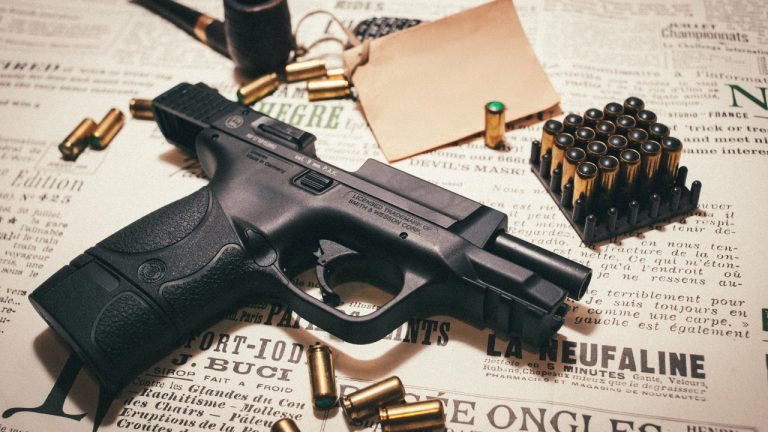
You spend enough time in the backcountry, and you start thinking differently about risk. It’s not paranoia—it’s experience stacking up. Weather turns fast. Terrain humbles you. And animals don’t always follow the script. That’s part of why more hunters are strapping on a sidearm these days.
It’s not about replacing your rifle or bow. It’s about covering the gaps—the moments when your primary tool isn’t in your hands or isn’t enough. You’re seeing a shift, especially among guys who spend serious time deep in. Here’s what’s driving it.
Encounters With Predators Feel Less Theoretical

You don’t have to spend long in grizzly or wolf country to realize those aren’t campfire stories. Sightings are up in some regions, and hunters are pushing deeper into less pressured ground.
That changes the equation. When you’re quartering an animal or packing meat, your rifle might be leaned against a tree or buried under gear. A sidearm stays on you. It gives you something immediate if a bear comes in quiet or a wolf pack circles closer than you’re comfortable with. It’s not about looking for trouble—it’s knowing you might not get time to react if it finds you first.
Field Dressing Leaves You Exposed
The most vulnerable moment in any hunt isn’t the shot—it’s what comes after. You’re bent over, hands busy, attention locked in. Blood’s in the air, and that carries.
That’s when other animals show up. Sometimes it’s coyotes hanging back. Sometimes it’s something bigger. A sidearm gives you a way to respond without breaking away completely or scrambling for your rifle. You’re already in a compromised position, and having something within reach changes how quickly you can deal with a problem before it escalates.
Packing Meat Changes Everything
Once the animal’s down, the work starts. Heavy loads, multiple trips, long miles. Your rifle ends up slung, strapped, or tied onto a pack while you focus on footing and balance.
That’s a bad time to need it in a hurry. A sidearm fills that gap. It stays accessible when your hands are full and your attention is split between the trail and the weight on your back. Hunters who’ve packed meat in steep country understand this quick. You don’t always get to choose when something goes wrong, and you won’t always be in a position to grab your primary weapon.
Remote Terrain Means You’re On Your Own
When you’re a few miles from the truck, help isn’t close. When you’re ten or fifteen miles in, it’s not coming anytime soon. That reality shapes how you prepare.
A sidearm isn’t a cure-all, but it’s another layer. Whether it’s a two-legged threat, a wounded animal, or something you didn’t expect, you’ve got an option that’s always within reach. A lot of hunters aren’t thinking in terms of worst-case scenarios—they’re thinking in terms of time. How long before help arrives? Out there, the answer is usually longer than you’d like.
More Hunters Are Training With Handguns
It used to be that carrying a sidearm in the woods was hit or miss. Now, more hunters are putting in real time at the range with them.
That matters. A handgun isn’t forgiving under stress. If you’re going to carry one, you need to know how to use it cold, tired, and under pressure. As more people take that seriously, confidence goes up, and so does adoption. You’re seeing hunters treat sidearms as part of their kit, not an afterthought. That shift doesn’t happen without time spent learning how to run one properly.
Lightweight Gear Makes It Easier to Carry
Backcountry hunters count ounces. If something doesn’t earn its place, it gets left behind. That used to work against carrying a sidearm.
Now, lighter handguns, better holsters, and smarter loadouts make it easier to justify. Chest rigs and belt setups keep the weight balanced and accessible without getting in the way of a pack. When the carry is comfortable and doesn’t interfere with movement, more hunters are willing to bring one along. It’s not a burden like it used to be.
Close-Range Follow-Up Situations Happen Fast
Not every shot ends clean. Sometimes an animal goes down and gets back up. Sometimes you track into thick cover where visibility drops to nothing.
That’s where things get tight. A long gun can feel slow and awkward in brush or at arm’s length. A sidearm gives you control in those moments. It’s quicker to bring up, easier to manage in confined space, and stays with you if you have to move fast. Hunters who’ve been in those situations don’t forget them, and many start carrying a handgun afterward.
Peace of Mind Counts More Than People Admit
You can argue ballistics and scenarios all day, but there’s a mental side to this that matters. When you know you’ve got a backup within reach, you move a little differently.
It doesn’t make you reckless. If anything, it keeps you steady. You’re less likely to rush, less likely to panic if something unexpected happens. That’s worth something in the backcountry, where small mistakes turn into big problems. A sidearm doesn’t replace good judgment or awareness—but it supports both when things get uncomfortable.
More hunters are carrying sidearms because they’ve spent enough time out there to see where the gaps are. It’s not a trend built on theory. It’s built on experience, close calls, and the understanding that the backcountry doesn’t always give you a second chance.

Asher was raised in the woods and on the water, and it shows. He’s logged more hours behind a rifle and under a heavy pack than most men twice his age.