Why More Shooters Are Downsizing Quietly
Across the United States, a quiet shift is reshaping how people arm themselves. Instead of chasing ever larger calibers and extended magazines, many shooters are moving toward smaller, lighter, and more concealable setups, often without broadcasting the change at the range or on social media. I see that trend emerging from a mix of political pressure, changing crime patterns, and hard lessons about what actually works when a gun leaves the display case and enters daily life.
That move toward compact gear is not simply a fashion cycle. It reflects how debates over mass shootings, new state laws, and the economics of a cooling gun market are converging on the same point: the era of conspicuous firepower is giving way to something more discreet, more utilitarian, and, in many cases, more complicated for both public safety and gun culture.
The new politics of looking “less tactical”

For many owners, downsizing starts with optics, not ballistics. After years in which AR‑style rifles and oversized pistols became cultural markers, the political climate around mass shootings has made some gun buyers wary of anything that looks overtly aggressive. Public anger after high profile attacks, including the killing of six people at a Christian elementary school in Nashville, has focused heavily on the appearance of weapons and their easy access. I hear from instructors who say students now ask whether a gun looks “civilian” enough to avoid drawing attention if police or neighbors see it.
Legislative debates reinforce that instinct. Much of the policy response has centered on restricting features that signal high capacity or battlefield styling, from pistol braces to large magazines. In one state, for example, much of the gun safety package was crafted by Democrats after the shooting at Oxford High School, with proposals that touched on how firearms are stored and accessed by minors. Even when such bills stall, they send a clear message about what kinds of guns are likely to attract scrutiny, nudging owners toward slimmer, less conspicuous options.
Mass shootings, murder trends, and the perception of risk
The emotional weight of mass shootings still shapes how people think about self‑defense, even as the broader picture of violent crime grows more complex. Data analysts have documented a rapid rise in mass shooting incidents over the past decade, with one review noting that there is a large disparity between states and that the pattern closely tracks the political geography of the United States. That uneven risk map encourages some owners in high profile states to carry more often, but it also pushes them toward guns that can disappear under a T‑shirt instead of riding openly on a duty‑style belt.
At the same time, the overall murder rate has been moving in the opposite direction. Experts who spoke with Experts at The Reload described a roughly 20 percent decline in murders as a sign that the pandemic‑era spike was an anomaly, even if the trend in mass shootings is less clear cut. When people see headlines about fewer homicides but persistent, spectacular attacks, many recalibrate their sense of danger: they want a gun that is there if needed, but not one that dominates their identity or daily routine. That calculus favors compact pistols and minimalist setups over full‑size hardware.
From “Trump slump” to practical carry
Politics at the national level also shapes what sits in gun store display cases. Under President Donald Trump, the industry has wrestled with what retailers sometimes call a “Trump slump,” a period when the fear of sweeping new federal restrictions receded and demand cooled. One dealer described how his shop, Bullseye Shooting Supplies, saw little benefit from a statewide boom in background checks, and he blamed a mix of market saturation and policy stability, including the fact that federal restrictions on machine guns remained in place. When panic buying slows, buyers become more selective, and that often means prioritizing guns they will actually carry.
In that environment, I see more customers walking past the largest handguns and gravitating toward mid‑size or subcompact models that promise a balance of concealment and shootability. The shift is not just about size, it is about purpose. With fewer people rushing to stockpile rifles for hypothetical bans, the conversation in many shops has turned to how a single, well‑chosen pistol can handle daily carry, home defense, and range practice. That practical mindset naturally favors downsized platforms that fit into ordinary lives instead of dominating them.
Why tiny guns are harder to shoot than they look
The irony is that the smallest guns, which seem ideal for discreet carry, are often the hardest to use well. Ballistics do not scale down just because the frame does. As one technical explainer notes, the force exerted when gunpowder ignites is the same regardless of the firearm, but a lighter, shorter pistol has less mass to absorb that energy, which translates into more felt recoil for the shooter, a point highlighted with the simple phrase But. That physics lesson shows up on the firing line when new carriers discover that their ultra‑slim pistol bucks and twists more than a larger handgun in the same caliber.
Training specialists warn that this tradeoff can undermine the very safety people hope to gain. While it is tempting to pick the smallest gun for easy hiding, one guide on defensive shooting stresses that this choice can make it harder to shoot accurately under stress, especially when fine motor skills deteriorate in a real confrontation. The author notes that While a tiny pistol may vanish in a pocket, it often demands more practice to run safely and effectively. That reality is pushing some shooters toward a middle ground: downsized compared with duty guns, but not so small that recoil and control become liabilities.
Capacity, magazines, and the quiet compromise
Magazine capacity sits at the center of both policy fights and personal decisions about downsizing. Some police officers and gun rights advocates argue that reducing magazine size will not prevent mass shootings, pointing out that a determined attacker can carry multiple magazines or weapons. One rights supporter framed the debate starkly, saying that unlike anti‑rights opponents, rights supporters deal in facts, and then emphasizing the advantages of magazine‑fed firearms, including the ability to balance capacity with the overall weight of the magazine, a point captured in the phrase Unlike. That logic resonates with carriers who want enough rounds to feel prepared but do not want the bulk of a full‑size grip and extended magazine.
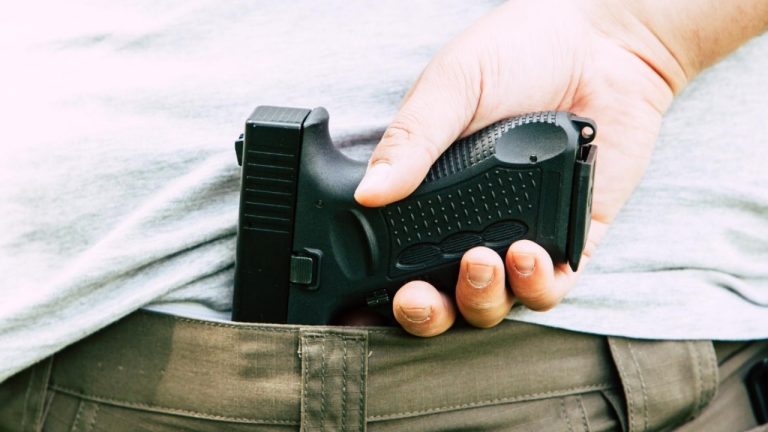
In practice, many concealed carriers are settling into a quiet compromise. They accept state limits where they exist, or voluntarily choose 10 to 15 round magazines that keep the gun slim and easier to hide. From what I see in classes, the conversation has shifted from “maximum capacity” to “enough capacity plus control.” Shooters talk about how a slightly shorter grip prints less under clothing, how a lighter magazine reduces belt sag, and how carrying a spare magazine in a pocket can offset the reduced on‑board capacity. Downsizing here is less about surrendering capability and more about redistributing it in a way that fits real‑world carry patterns.
Advocacy groups, silencers, and the optics of “quiet” gear
Downsizing is not only about pistols. It also shows up in how shooters think about accessories that promise to make guns physically quieter or less conspicuous. Larger gun groups like the National Rifle Association and National Shooting Sports Foundation, often referred to as the National Rifle Association, have backed efforts to normalize suppressors and market them to civilians as safety tools that protect hearing and reduce noise pollution. That campaign has helped move silencers from the fringes of tactical culture into mainstream hunting and home‑defense conversations.
Yet the same devices that promise quieter shooting also raise alarms among critics who see them as “quiet killers,” tools that could make it harder for victims or police to recognize gunfire. That tension feeds into the broader trend of subtlety. Some owners now choose low‑profile suppressors, minimalist optics, and neutral‑colored gear that does not scream “tactical” in photos or traffic stops. The goal is to enjoy the functional benefits while avoiding the political baggage that comes with more aggressive styling, a balancing act that mirrors the move toward smaller, less ostentatious firearms.
Training culture catches up to compact carry
As more people downsize, training culture is slowly catching up. Instructors who once built curricula around full‑size duty pistols now design drills specifically for compact and subcompact guns, emphasizing grip strength, recoil management, and realistic draw strokes from concealment. One widely shared safety guide on handgun choice underscores that small guns demand more deliberate practice, warning that a pistol chosen solely for its tiny footprint can be harder to control in the intense stress of danger, a point reinforced in the discussion that begins with the word While. I see more classes where students are encouraged to bring the exact gun and holster they carry, not a larger stand‑in.
Technical writing is evolving in the same direction. Detailed breakdowns of pocket‑sized pistols now walk readers through how the constant force of gunpowder interacts with lighter frames, explaining why short barrels and small grips can amplify muzzle flip and perceived recoil, as described in the analysis that pivots on the word But. That kind of granular advice helps shooters make informed choices about where to compromise: a slightly larger gun that is easier to shoot, or a smaller one that is easier to hide. The more that training and technical resources focus on compact platforms, the more normalized downsizing becomes.
Media narratives, public outrage, and policy gridlock
Media coverage plays a complicated role in this shift. Newsrooms devote intense attention to mass shootings, with detailed reporting on victims, weapons, and the failures that allowed attackers to obtain guns. Public outrage is swift after these events, particularly when children are involved, and coverage of the Christian school shooting in Public reports from Nashville highlighted how quickly grief turns into calls for action. That cycle reinforces the idea that any gun associated with such attacks, especially rifles and high‑capacity pistols, carries a stigma that some owners would rather avoid.
Yet policy often lags behind the outrage. Detailed accounts of state‑level debates describe how ambitious gun safety packages, including those shaped by Much of the Democratic caucus after Oxford High School, can take more than a year to move and still face steep odds of becoming law. That gridlock leaves a vacuum where culture and personal preference do more to shape behavior than statutes. In that space, many shooters respond to the social pressure generated by coverage and commentary by choosing guns that look less like the ones on the evening news, even if the law does not require it.
Industry branding, legacy groups, and the future of “quiet” ownership
Gun makers and advocacy groups are adjusting their messaging to match this quieter reality. The National Rifle Association still presents itself as a defender of traditional gun rights, with its official site, accessible through the home page, featuring familiar imagery of hunting, competition, and self‑defense. But the products that dominate trade shows and marketing campaigns increasingly include slim carry pistols, compact carbines, and accessories aimed at everyday carriers rather than collectors of oversized firepower. The National Shooting Sports Foundation, referenced alongside the NRA in discussions of suppressor advocacy, has likewise leaned into branding that emphasizes safety, sport, and responsible ownership.
News organizations, including large wire services reachable through portals like AP, continue to frame gun stories around public safety and political conflict, but they also cover the economic struggles of retailers and the evolution of gun culture under President Trump. That broader lens helps explain why more shooters are quietly trading in large, attention‑grabbing firearms for smaller, more practical tools. The downsizing trend is not a retreat from gun ownership, it is a recalibration, one that reflects a country where the politics of visibility now weigh almost as heavily as caliber and capacity.

Leo’s been tracking game and tuning gear since he could stand upright. He’s sharp, driven, and knows how to keep things running when conditions turn.