Why “overbuilt” guns still have a following
Firearms that are heavier, bulkier and seemingly “overbuilt” keep selling in a market obsessed with slim polymer pistols and ultra-light carry guns. Their appeal runs deeper than nostalgia, touching on reliability, durability and a sense of trust that is hard to quantify but easy to recognize when lives are at stake. I see that tension play out everywhere from military procurement to civilian concealed carry, where some shooters still choose steel and surplus over the latest micro-compact.
At first glance, these guns look out of step with an era of minimalist gear and tight weight limits. Yet the same qualities that make them feel old fashioned, thick slides, generous safety margins and rugged small parts, are exactly what keep them in service decades after sleeker designs have come and gone. The following sections trace why that “too much gun” reputation continues to attract loyal followers, and how specific models, from service pistols to World War II relics, show the tradeoffs in practice.
What shooters really mean by an “overbuilt” gun

When people in gun culture describe a pistol or rifle as “overbuilt,” they are usually talking about a design that is stronger than it strictly needs to be for its cartridge and role. In practice that can mean thicker frames, beefy locking lugs, oversized recoil springs and small parts that look like they belong on a larger weapon. On a popular firearms forum, one user posting as mrp1ttens argued that the recent wave of “micro nines” only arrived after companies stopped overbuilding small pistols, a nod to how older compacts often shared components with full size duty guns. That comment captures a common view that overbuilding is about engineering margin, not marketing hype.
In my experience, the label also carries a cultural charge. Calling a gun overbuilt can be praise, suggesting it will “run forever,” or criticism, implying wasted weight and capacity. The same pistol that a law enforcement officer trusts for hard use might feel like a brick to a concealed carrier in summer clothing. The debate is not just about ounces, it is about what problems the gun is expected to solve, how often it will be fired and how forgiving it should be of neglect, bad ammunition or harsh environments.
From medieval steel to modern slides, why heavy gear persists
The instinct to add material for safety and longevity is not unique to firearms. In a video on historical arms, the creator known as Oct points out that many historical weapons are actually “wonderfully light and nimble,” and that popular myths about impossibly heavy medieval swords do not hold up. That observation cuts both ways for guns. It shows that older technology was often optimized for handling, but it also highlights how modern users sometimes romanticize weight as a proxy for toughness, even when history shows that good design can be both strong and light.
At the same time, Oct’s broader discussion of why some weapons are heavy and overbuilt, especially in eras without precise metallurgy or quality control, helps explain why certain gun designers still err on the side of mass. Extra steel can compensate for unknowns in ammunition pressure, rough field maintenance or manufacturing variance. When a pistol is expected to digest tens of thousands of rounds in military service, or a rifle must survive mud, sand and abuse, a few more millimeters of slide or trunnion can be cheap insurance. That logic continues to shape how many shooters judge modern handguns, even as materials and testing have improved.
Service pistols that wear their durability on their sleeves
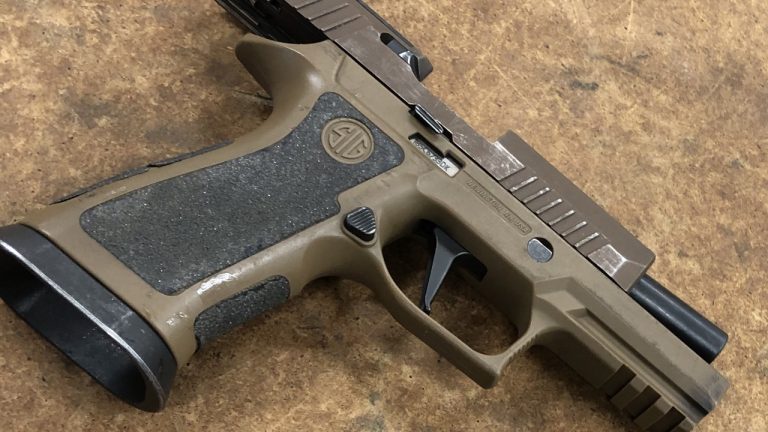
Few modern handguns embody the “built like a tank” mindset as clearly as the SIG Sauer P226 family. The P226 MK25, marketed as the variant issued to United States Navy SEALs, is a full size, all metal pistol with a robust slide, alloy frame and corrosion resistant coatings. It is not the lightest 9 mm on the market, nor the highest capacity, but its reputation rests on surviving harsh maritime environments and high round counts. That kind of pedigree appeals to buyers who equate military adoption with proof that a gun can handle more abuse than they will ever dish out.
Heckler & Koch’s USP line sits in a similar space. On a dedicated discussion board, one user trying to explain what makes the USP and USPc special pointed to their lineage from the MK23, a pistol designed for extreme testing that pushed the limits of endurance. That heritage, combined with a recoil reduction system and generous slide dimensions, gives the USP a reputation for shrugging off high pressure loads and hard use. For many owners, that is the essence of overbuilding, a gun that feels like it was designed to survive tests most shooters will never replicate.
“Built to last forever” as a selling point
Durability is not just a side effect of overbuilding, it is often the main marketing hook. In a video aimed at enthusiasts, a host walks through “handguns that will outlive you,” highlighting models that seem to refuse to wear out in a world of disposable gadgets. The pitch is simple. In an era when phones and laptops are expected to be replaced every few years, a pistol that “simply refuses” to die stands out. That framing turns extra steel, conservative springs and old school machining into a kind of anti-consumerist statement, a promise that the buyer is investing in something that will still function for the next generation.
That same video, available at Dec in the description, leans heavily on the idea that longevity is the “actual secret” behind a good handgun. I see that message resonate strongly with older shooters who grew up with all metal service pistols and revolvers, and with younger buyers who are skeptical of cost cutting in mass produced polymer guns. For them, an overbuilt firearm is not just a tool, it is a hedge against planned obsolescence, even if the practical difference in service life might never be tested in ordinary use.
Why WWII workhorses still show up in modern wars
The clearest proof that rugged, overbuilt weapons have staying power comes from battlefields where World War II designs are still in use. A Quick Read on WWII firearms notes that World War II ended generations ago, yet rifles, submachine guns and machine guns from that era “refuse to retire.” The reasons are straightforward. These weapons are rugged, affordable and easy to repair in low resource environments. Thick receivers, simple gas systems and generous tolerances make them forgiving of dirt, poor maintenance and improvised spare parts, all classic hallmarks of overbuilt engineering.
That same analysis, also available at a second WWII link, underscores how cost and logistics drive weapon choices in conflicts far from high tech supply chains. When an army or militia can keep a seventy year old machine gun running with basic tools and locally made springs, the fact that it is heavy and awkward matters less than its ability to fire when needed. I see the same logic at work in civilian choices, where some shooters favor surplus bolt actions or old service pistols precisely because they were designed for a world where repair, not replacement, was the default.
Revolvers, reliability and the comfort of “too much gun”
Nowhere is the emotional side of overbuilding clearer than in the ongoing debate over revolvers. In a Facebook discussion titled “Four Reasons a New Shooter SHOULD Carry a .38 Snubnose,” one of the first points listed is Reliability. The argument is blunt. If a gun will not function, it does not matter how many rounds it holds or how fast it can be reloaded. A sturdy steel snubnose, with its solid frame and simple mechanism, is held up as the opposite of a finicky semi automatic that might choke on limp wristing or cheap ammunition. That framing treats the revolver’s extra weight and bulk as a feature, not a flaw.
Another Facebook thread asking whether revolvers are obsolete leans heavily on Nostalgia For older designs. Commenters describe how revolvers hearken back to a simpler time, Whether that is from watching a Western movie or remembering police service guns from decades past. I see that nostalgia intersect with practical concerns. A heavy K frame or L frame revolver may carry fewer rounds than a modern compact, but its solid construction and long track record give some owners a sense of security that no spec sheet can match. In their minds, the gun’s “overbuilt” nature is part of its personality and its promise.
Tradeoffs: weight, capacity and the modern carry boom
For all their virtues, overbuilt guns come with real costs, especially in the age of concealed carry. The same thick slide and steel frame that make a pistol feel bombproof on the range can turn it into a burden on the belt. That is why the comment from Mar about companies finally moving away from overbuilding small pistols matters. As manufacturers learned to tune springs, locking systems and materials more precisely, they could shave weight and size without sacrificing basic safety. The result is a wave of micro compact 9 mm pistols that offer double digit capacity in packages that would have been unthinkable when the first subcompact service pistols appeared.
Yet I still see many experienced carriers choose larger, sturdier guns for daily use, especially when they can dress around the firearm. They accept the tradeoff in comfort for a gun that is easier to shoot well, more tolerant of high pressure loads or simply inspires more confidence. That is where the concept of “overbuilt” becomes subjective. For a small framed person in a hot climate, a full size steel pistol might be impractical. For a uniformed officer or a rural homeowner, the same gun might feel like the right balance of shootability and durability. The market now offers both extremes, and the ongoing demand for heavy duty designs suggests that the appetite for extra margin has not disappeared.
Engineering margin versus myth in “heavy and overbuilt” weapons
Returning to Oct’s analysis of historical arms at Why, I find a useful caution against romanticizing weight for its own sake. The video stresses that many historical weapons were carefully balanced, and that stories about unwieldy, ultra heavy swords are largely modern inventions. The same pattern shows up in gun culture, where some shooters equate heft with quality even when lighter designs have proven just as durable in testing. Overbuilding in the engineering sense is about stress limits, fatigue life and safety factors, not about making a gun feel substantial in the hand.
That distinction matters when evaluating modern pistols like the USP. On a dedicated forum, one user explained that the USP’s connection to the MK23 gives it “the great advantage of one of the most tested” handgun designs, while still offering a reasonable round count with a polymer frame. That comment, preserved in a permalinked thread, highlights how overbuilding can coexist with modern materials and ergonomics. The USP is not simply heavy for its own sake. Its internal components, recoil system and slide geometry were designed to handle extreme test protocols, and the resulting weight is a byproduct of that goal rather than a marketing flourish.
Why the “overbuilt” niche is not going away
Looking across these examples, from the 10 Handguns video to surplus WWII rifles and modern service pistols, I see a consistent pattern. There is a segment of shooters who value redundancy, longevity and proven track records over the latest innovation. For them, a gun that feels overbuilt is reassuring precisely because it seems to ignore trends. It promises to function in bad weather, with imperfect maintenance and under stress, long after lighter competitors have been replaced or upgraded. That promise is hard to quantify, but it shows up in how often these owners talk about passing guns down to children and grandchildren.

Leo’s been tracking game and tuning gear since he could stand upright. He’s sharp, driven, and knows how to keep things running when conditions turn.