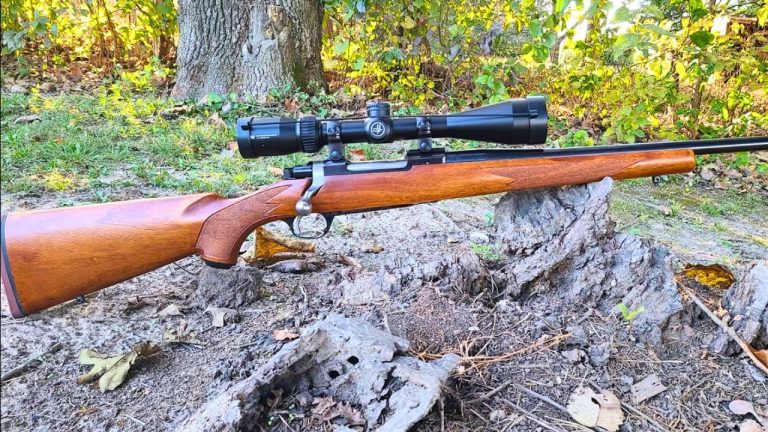
Why Some Calibers Feel Better in the Field
Some rifle cartridges simply feel “right” when the shot breaks, tracking smoothly onto game and recoiling in a way that keeps you confident instead of braced for impact. That sensation is not just nostalgia or brand loyalty, it is the product of ballistics, ergonomics, and how a given caliber matches the terrain and animals you hunt. When I look at why certain rounds inspire trust in the field, the pattern that emerges is less about raw power and more about how predictably a cartridge behaves under real pressure.
From sheep country to whitetail woods, hunters keep gravitating to a handful of calibers because they balance recoil, trajectory, and terminal performance in ways that make tough shots feel manageable. Understanding those tradeoffs, and why some cartridges punch above their paper specs, is the key to choosing a rifle that feels like an extension of your body instead of a tool you fight against.
Why “feel” matters more than raw power

On paper, it is easy to chase velocity and energy figures, but in the field what matters is whether you can place a bullet precisely when your heart rate spikes. I have watched hunters in steep country flinch away from heavy magnums, then shoot calmly with milder cartridges that still carry enough authority for big game. That difference in confidence, and the ability to call your shot, often matters more than a few hundred extra foot-pounds on a ballistics chart.
One Alaska resident named Jun, who hunts everything from sheep to brown bear, has described feeling more vulnerable with a heavy bolt gun than with a lighter, better balanced rifle that lets him move quickly and stay on target while he is climbing and glassing in Alaska. His experience underlines a basic truth: the cartridge is only part of the equation, and a caliber that looks ideal in a catalog can feel clumsy or punishing once you add pack weight, weather, and fatigue. When a round matches your body and your environment, the rifle comes to the shoulder naturally and the shot process feels repeatable instead of forced.
Recoil, rifle weight and the physics of comfort
Felt recoil is one of the biggest reasons some calibers are more pleasant to shoot than others, even when their ballistics are similar. The physics are straightforward: the same cartridge in a heavier rifle will push you less, and a lighter bullet at moderate speed will usually be easier on the shoulder than a heavier one driven hard. That is why a compact mountain rifle chambered in a stout round can feel harsher than a heavier all-around gun in a slightly smaller caliber, even if the energy on target is comparable.
Detailed breakdowns of the Factors That Affect highlight how Firearm Weight, stock design, and even recoil pad material change what your shoulder experiences. As manufacturers develop new calibers and push performance, they often increase pressure and velocity, which can raise felt recoil unless they also add mass or better ergonomics. In practice, that means a hunter who chooses a slightly milder cartridge in a well balanced rifle can shoot more comfortably, practice more often, and ultimately place shots more accurately than someone who dreads every trigger pull from a punishing magnum.
Accuracy, confidence and why some rounds just track better
Beyond recoil, some calibers earn a reputation for “shooting straight” because they combine consistent manufacturing with forgiving ballistics. When I see a hunter settle behind a rifle that stacks tight groups at the range, their body language changes in the field; they trust that if they do their part, the bullet will go where the crosshairs rest. That psychological edge is reinforced when a cartridge is known for inherent accuracy and predictable trajectories across different loads.
One modern example is the 6.5 Creedmoor, which has been praised as “the most inherently accurate” among a slate of big game cartridges, with shooters noting that they have “never met one” that would not group well even with factory ammunition in 6.5 Creedmoor rifles. That kind of track record feeds into hunter confidence. Educational resources that stress how Caliber Impacts Precision also emphasize that the right cartridge choice supports humane hunting by reducing suffering. When a round groups tightly and maintains stability through the transonic range, it is easier for a hunter to make clean, ethical hits instead of marginal wounds.
Ballistic coefficient, bullet design and long-range “feel”
At longer distances, the way a caliber feels is shaped by how its bullets buck wind and retain velocity. High ballistic coefficient projectiles tend to drift less and drop more predictably, which simplifies holdovers and makes the rifle feel more “laser guided” once you have a solid dope chart. That is especially true when you are shooting across canyons or open prairie, where even a modest crosswind can push a low BC bullet off the vitals.
Technical analyses point out that Where high-BC bullets really shine is at long and extremely long distances, where they hold velocity and resist wind better than blunt designs. Competitive shooters have leaned into that advantage, with detailed surveys noting that Thanks to bullet manufacturers like Berger and Hornady introducing high BC match bullets in the 131 to 135 g range, some mid sized cartridges now match the wind performance of larger 6.5mm loads but with noticeably less recoil. That combination of flatter trajectory, reduced wind drift, and softer push at the shoulder makes these calibers feel forgiving when you are dialing turrets or holding off hair in gusty conditions.
Slow and heavy vs fast and light in real hunting terrain
Hunters have argued for generations about whether slow, heavy bullets or fast, light ones feel better in the field. In thick timber or brush, a big, moderate speed projectile can deliver decisive penetration at close range without excessive meat damage, and the arcing trajectory is less of a concern. In open country, a flatter shooting round can make range estimation errors less punishing and keep your point of impact closer to your point of aim across varied distances.
Classic comparisons like 45-70 versus 30-30 illustrate the tradeoff. Analyses of the 30-30 Winchester note that it has a flatter trajectory, making it a suitable choice for smaller game where precise shot placement matters, while both bullets perform well within typical woods ranges. On the other end of the spectrum, varmint shooters praise the .220 Swift for its “Laser-beam like trajectory,” describing how that 220 caliber’s speed makes it ideal for small varmints where misjudging holdover by a couple of inches can mean a clean miss, as detailed in discussions of the .220 Swift and its Laser like performance. In practice, the “better feeling” option is the one whose trajectory and terminal behavior match the distances and target sizes you actually face.
Why some calibers are easier to shoot accurately
Accuracy is not just about the shooter, it is also about how a cartridge interacts with the barrel and the expanding gases behind the bullet. Certain bore diameters and case shapes seem to produce more consistent pressure curves and less sensitivity to small variations in powder charge or seating depth. When a caliber is inherently forgiving, it tends to produce smaller groups across a wider range of loads, which makes it feel easier to tune and trust.
Technical discussions of what makes specific rifle calibers more accurate often start with internal ballistics, noting that As the gas expands in the case, the pressure is applied to the entire surface area of the bullet that is inside the case neck and throat, and small differences in that geometry can change how uniformly the bullet is launched into the rifling. Precision shooters on dedicated forums also point out that smaller calibers loaded with relatively heavy bullets can offer a Higher ballistic coefficient (lower drag), which helps them retain velocity and buck wind better, a combination that shooters like ELR, LVR, Gunn and others have highlighted when explaining why these rounds feel so predictable on steel and game.
Lessons from calibration, cameras and other fields
Interestingly, the idea of a “well calibrated” system that feels intuitive shows up far beyond hunting rifles. In machine learning, for example, researchers have shown that Calibrated models show improved accuracy, precision, and AUC compared to uncalibrated counterparts, with Recall and F1-score also improving when predictions are tuned to match reality. That same principle applies when a hunter dials in a rifle and load so that point of aim and point of impact align across temperatures and elevations; the system becomes more trustworthy, and the shooter can focus on decision making instead of second guessing the gear.
Camera operators talk about “feel” in similar terms. When they use vest stabilizers that shift the rig’s center of gravity, they report that stronger center of and less dead weight dragging their arms down, they can hold shots steadier and stay in a better mood on set. A hunting rifle that balances correctly, with a caliber that does not punish the shooter, functions the same way: it reduces strain, keeps the sight picture stable, and lets the user stay mentally fresh through long days in the field. When I match a cartridge to my body, my terrain, and my tolerance for recoil, the rifle stops feeling like a compromise and starts feeling like a natural extension of my intent.

Leo’s been tracking game and tuning gear since he could stand upright. He’s sharp, driven, and knows how to keep things running when conditions turn.