Why some shooting fundamentals get misunderstood online
When the National Rifle Association and professional instructors talk about “fundamentals,” they are usually thinking about safety, accuracy, and repeatable skill, not social media views. Yet on Instagram, YouTube, and Reddit, clips of fast draws and flashy drills often drown out slower, more methodical practice. That gap between formal training culture and online gun content is one reason basic shooting concepts get twisted or oversimplified.
The same pattern shows up again and again: a useful idea, like dry fire or target transitions, gets pulled out of context, then repeated until the nuance disappears. Misunderstandings spread faster than corrections, especially when a dramatic video is more shareable than a quiet explanation. To make sense of those arguments, it helps to compare what serious training sources say with what tends to go viral.
How social media incentives warp “fundamentals”
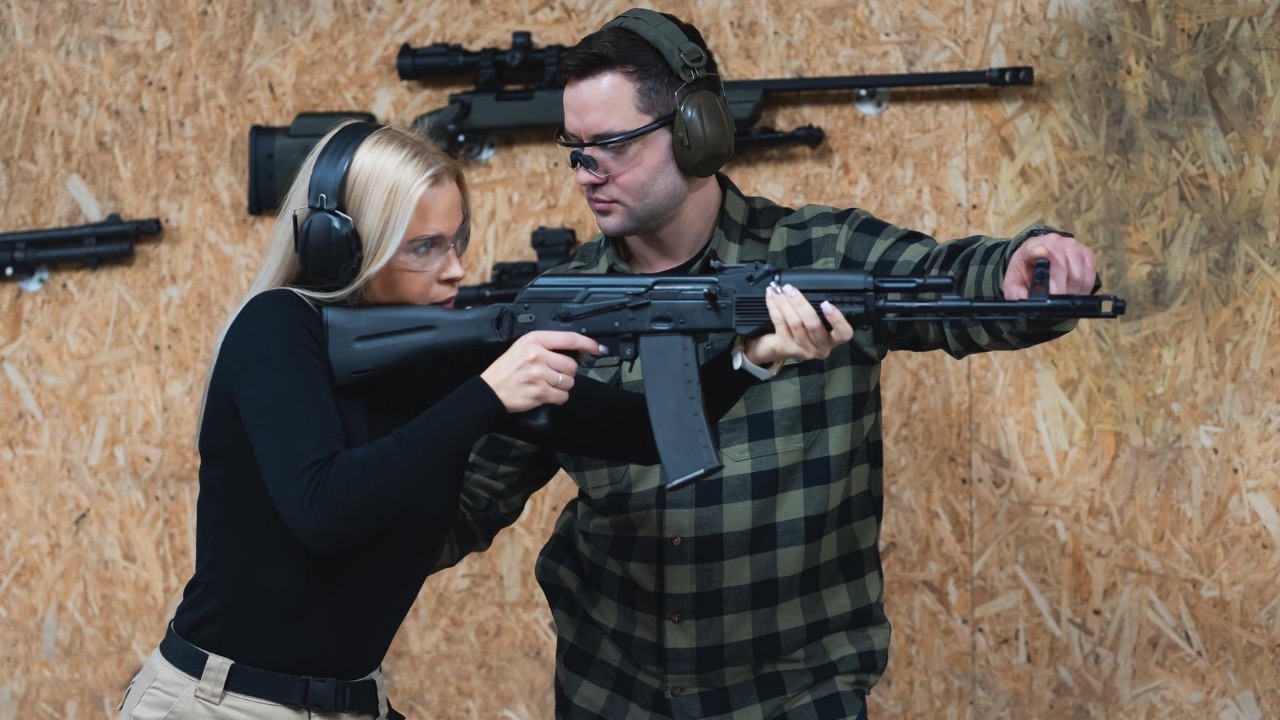
The first problem starts with how platforms reward attention. Many creators feel pressure to post drills that look extreme, such as rapid strings on multiple targets or tight camera shots of muzzle blast. As one training guide on online conduct notes, Social platforms can push people to “show off” or exaggerate for likes and attention, which can be dangerous when firearms are involved. That same pressure nudges shooters toward content that looks impressive on video, not necessarily toward the slow, sometimes boring work that actually builds skill.
Because the algorithm favors spectacle, subtle fundamentals like grip pressure, trigger control, and visual processing rarely get equal screen time. A clip of someone racing through a course can rack up views even if the shooter is slapping the trigger or ignoring safe backstops. Viewers then copy what they see, without the context or coaching that would normally come with in-person instruction. Over time, the loudest examples reshape what new shooters think “good” technique looks like, even when experienced instructors and groups like the Jan Social safety guidance warn against treating the internet as a training class.
Formal training culture versus online gun talk
Offline, the structure looks very different. The NRA, spelled out as the NRA, National Rifle organization, has long focused on firearm safety training and marksmanship. Its courses and instructor certifications are built around clear standards, step by step progressions, and a heavy emphasis on safe handling before speed. That culture values consistency over flash, and it expects students to demonstrate competence under supervision rather than in front of a phone camera.
On the organization’s main site, the home.nra.org portal highlights education, safety programs, and structured shooting sports. By design, that world moves at a slower pace than social media. Instructors talk through stance, grip, sight alignment, and trigger press, then watch students apply those ideas at measured distances. When those same fundamentals reach online gun forums or short-form video, they often appear stripped of context, as if a single “hack” can replace the layered approach used in formal classes.
Dry fire, recoil, and why “reps” get misread
Another common misunderstanding involves dry fire. Many online debates frame dry practice as optional or as a trick only advanced shooters need. In reality, Certain skills are more easily acquired without live ammunition. One training article explains that Certain skills are more easily developed through dry practice because recoil can hide problems that show up clearly when the gun does not move. For example, a shooter who anticipates recoil might look fine on video during live fire, yet push the muzzle low and left every time during dry work.
When creators post only live fire highlight reels, viewers miss that behind the scenes, those shooters may be doing hundreds of dry repetitions. Without that context, people assume the visible live strings are what built the skill. That leads to advice like “just shoot more” instead of “shoot more with a plan, and add focused dry work.” The more the internet treats recoil as the main teacher, the easier it is to forget that careful dry practice exposes grip and trigger issues that recoil can mask, as described in the Feb Certain training guidance.
Speed drills and the myth of “go faster first”
Fast shooting drills are another area where online clips can mislead. In one widely shared video lesson on misunderstood drills, the instructor talks about setting up a Target on the left at 180 degrees and a Target on the right, then working transitions between them. The drill itself is not the problem. It is a useful way to train movement of the eyes and gun between distinct aiming points. The trouble comes when viewers see only the high-speed version, without the earlier stages where the shooter built accuracy and control at a slower pace.
People watching that kind of content often hear “speed up and get your hits” and focus on the first half of the phrase. They chase faster split times without first locking in grip, sight tracking, and trigger control. That is how a drill designed to reinforce fundamentals turns into a race that hides errors. The original lesson, which walks through the logic of the drill and stresses that hits still matter, lives in the full Oct Target 180 explanation. Stripped of that context, the same drill becomes an internet challenge that seems to reward speed for its own sake.
Vision, “tactical gaze,” and the limits of what you see
Visual processing is another area where online advice often oversimplifies. Many posts talk about “keeping your head on a swivel” or “seeing everything,” as if human vision were unlimited. Research on tactical gaze control points out that, However, human visual perception has its limitations on multiple levels. There are physical limits, such as the narrow area of sharp central vision, and cognitive limits, such as how much information a person can process under stress. Those constraints matter for both target shooting and defensive scenarios.
When instructors talk about picking up the front sight or tracking a red dot during recoil, they are working within those limits. They know a shooter cannot truly see every detail at once. Instead, they train specific patterns of eye movement and attention. Online, that nuance often disappears. Viewers hear “see more” and assume they can simply will themselves into broader awareness. The research on However human visual shows why that is unrealistic and why drills that train specific gaze patterns matter more than vague slogans.
Group size, standards, and the “good enough” debate
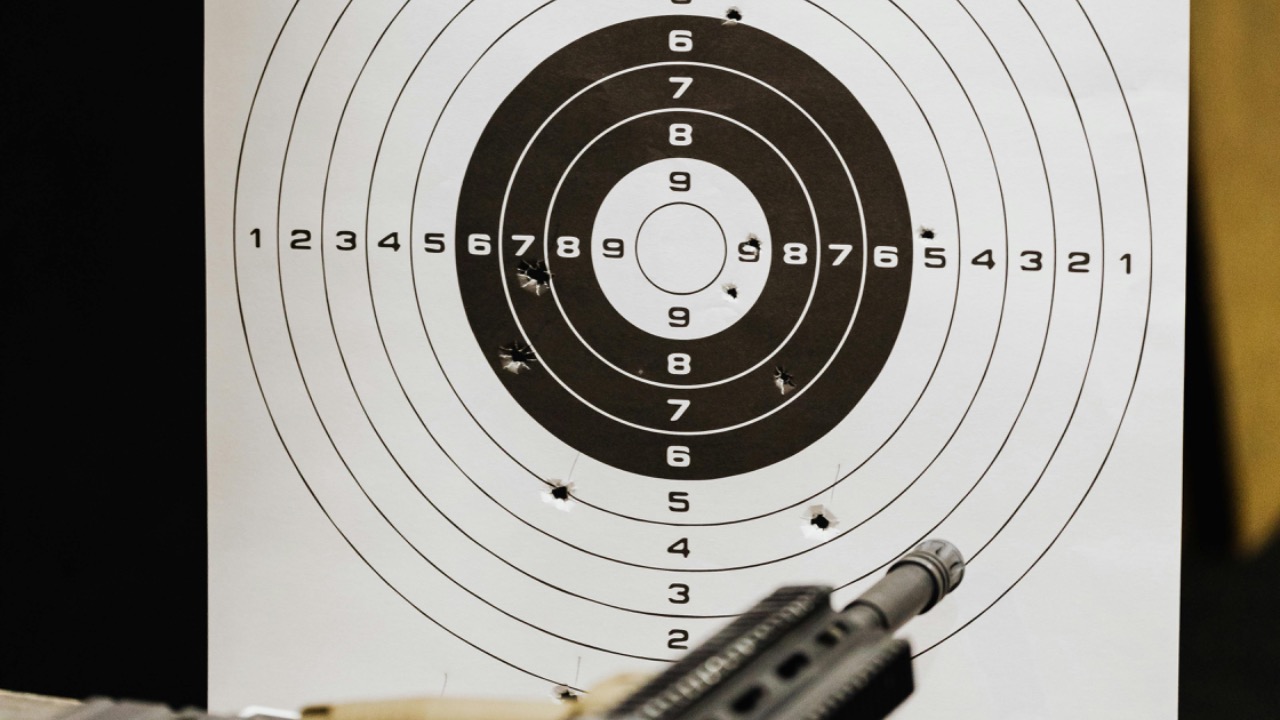
Few topics spark more online argument than what counts as “good” accuracy. Some shooters post one tight group at close range and declare victory. Others insist that only match-level performance matters. Formal standards tell a more grounded story. The NRA Pistol Instructor shooting qualification, for example, requires a shooter to put 16 of 20 shots into a 6 inch group at 15 yards, untimed. That benchmark is demanding enough to require solid fundamentals, yet still reachable for a dedicated student.
On Reddit, discussions of everyday carry accuracy often cite that exact standard as a reference point. When people share their own targets, they compare them to the requirement that 16 of 20 rounds stay inside a 6 inch circle at 15 yards. This gives newer shooters a concrete goal instead of vague praise or criticism. Without that kind of context, a photo of a single group at 7 yards can mislead both the poster and the audience about actual skill. Linking back to the NRA Pistol Instructorstandard helps anchor online claims in a real qualification test.
Safety messaging that gets lost in translation
Safety is the quiet backbone of every reputable shooting program, yet it is often the first thing trimmed from online clips. The NRA and other training groups build courses around safe handling rules, range commands, and procedures for loading, unloading, and clearing malfunctions. Those steps are not optional extras. They are the conditions that make any live fire drill acceptable. When a video skips straight to rapid strings or moving and shooting, viewers may not realize how much safety work sits underneath what they see.
Some instructors and organizations try to bridge that gap by posting safety-focused content and by reminding followers that no drill is worth a negligent discharge. They stress that fundamentals include muzzle awareness, trigger discipline, and knowing the target and what is beyond it. The official NRA home resources put that message front and center, but social media feeds often bury it under more eye-catching footage. As a result, new shooters may think of “fundamentals” only as grip and stance, not as the safety habits that keep every shot from turning into a tragedy.
Why terminology and context matter
Even the language around guns can cause confusion when it jumps from formal training to casual online talk. In structured classes, terms like “double action,” “sight picture,” or “natural point of aim” have specific meanings. In forums and comment threads, those same phrases can get blurred or misused. A simple example is the use of “NRA” as shorthand. In a training glossary, NRA is spelled out as NRA, National Rifle Association, American organization whose goals include firearm safety training, marksmanship training, and protection of second amendment rights of US citizens. That definition reminds readers that the group is tied to both safety and advocacy.
When someone online writes “NRA drill” or “NRA rules” without that context, readers may not know whether the reference is to a formal qualification, a general style of training, or a political stance. Clear definitions help keep the conversation grounded. Referring back to a gun talk dictionary or similar resource can prevent arguments that stem from people using the same word to mean different things.
Bringing online advice back to real-world practice
For shooters trying to learn, the challenge is not avoiding online content altogether, but filtering it through what formal training and research already show. That means treating social clips as demonstrations, not as complete lessons. When a video shows a complex drill, it helps to ask what fundamentals it depends on: grip, trigger control, visual tracking, or movement. It also helps to check whether the creator talks about dry fire, structured standards like the NRA Pistol Instructor qualification, and the limits of human vision described in tactical gaze research.
The more viewers connect those dots, the less power viral myths have. Instead of treating every new trick as a shortcut, shooters can use online material to supplement, not replace, in-person coaching and careful study. That might mean reading through the back to basics guidance on dry practice, then watching a drill video with fresh eyes. In the end, the fundamentals themselves have not changed. What changes is how clearly we see them once the noise of online performance is stripped away.

Leo’s been tracking game and tuning gear since he could stand upright. He’s sharp, driven, and knows how to keep things running when conditions turn.