10 military missions so dangerous few believed they could succeed
Military history is full of plans that looked impossible on paper. Commanders sometimes ask small groups of men to attempt operations that seem reckless, hoping speed, surprise, and courage can make up the difference. When those missions succeed, they tend to reshape the way people think about warfare.
You usually hear about the famous ones—D-Day or the raid that killed Osama bin Laden—but history holds plenty of lesser-known operations that were just as risky. These were missions where the odds were stacked against the people carrying them out. Weather, distance, enemy defenses, or simple bad luck could have wrecked the whole thing.
Yet in each case, someone still stepped forward and went.
Operation Biting
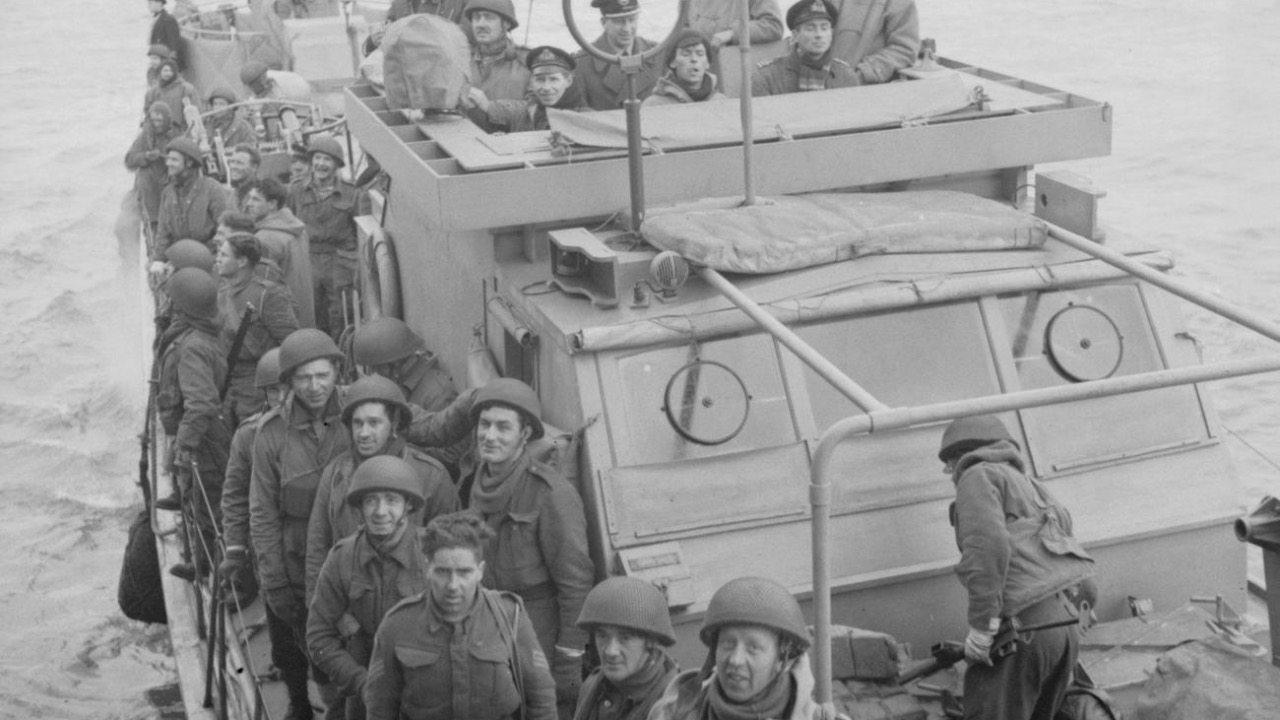
In early 1942, British intelligence needed a close look at German radar technology guiding Luftwaffe night fighters. The problem was the radar installation sat on the French coast, deep in occupied territory. Any conventional attack would destroy the equipment they needed to study.
The solution became Operation Biting. British paratroopers dropped directly beside the radar site near Bruneval, dismantled key components, and carried them to the beach under fire. Royal Navy landing craft waited offshore for extraction.
Everything depended on timing. If German reinforcements arrived too soon, the raiders would be trapped. Instead, they escaped with crucial radar parts and documents. The intelligence gained helped the Allies understand German radar systems and improved electronic countermeasures used later in the war.
Operation Chariot
By 1942, German battleships like the German battleship Tirpitz threatened Atlantic convoys. One concern kept British planners awake: the massive dry dock at Saint-Nazaire on the French coast. If damaged German warships could reach that dock, they could be repaired and return to sea.
The British launched Operation Chariot to remove that possibility. An old destroyer packed with explosives was rammed into the dock gate while commandos stormed the port facilities.
The odds were brutal. German coastal guns, searchlights, and machine-gun positions covered the harbor. Many raiders were killed or captured, but the explosives detonated hours later and wrecked the dock. The port stayed unusable for the rest of the war, removing a critical repair facility for Germany’s largest ships.
Operation Tidal Wave
In 1943, Allied planners wanted to cripple Germany’s fuel supply by attacking the oil refineries at Ploiești, Romania. The target was heavily defended, surrounded by anti-aircraft guns and fighter bases.
The mission, known as Operation Tidal Wave, sent American B-24 bombers flying at extremely low altitude to avoid radar. Crews crossed the Mediterranean and the Balkans before diving straight into one of the most heavily defended industrial zones in Europe.
The attack inflicted damage but came at a staggering cost. More than 50 bombers were lost. Crews flew through smoke, flak, and burning oil facilities at rooftop height. Despite the losses, the raid became one of the most daring air missions of World War II.
Operation Claymore
Early in World War II, Britain needed a way to strike back against German positions in occupied Norway. The coastline was long, remote, and defended by garrisons that could quickly trap any landing force.
The answer was Operation Claymore. British commandos sailed north and launched surprise attacks on German facilities in the Lofoten Islands. Their targets included fish-oil factories used to produce glycerin for explosives.
The raiders destroyed equipment, captured prisoners, and seized valuable code materials before withdrawing. The mission showed that small amphibious forces could strike deep into occupied territory and vanish before the enemy could react.
Operation Halyard
By 1944, dozens of American airmen shot down over occupied Yugoslavia were hiding with local resistance fighters. Getting them out looked nearly impossible. German troops controlled most transportation routes, and airfields were under constant watch.
The rescue effort became Operation Halyard. Serbian resistance members cleared a makeshift airstrip in a remote valley while American transport planes attempted nighttime landings.
Pilots flew low across hostile territory with minimal navigation aids. One mistake would expose the entire mission. Over several flights, more than 500 Allied airmen were evacuated. It became the largest rescue of downed American flyers behind enemy lines during World War II.
Operation Jericho
In early 1944, the Allies faced a difficult situation in occupied France. Members of the French Resistance were imprisoned in Amiens and scheduled for execution. A rescue attempt on the ground would likely fail against the prison walls and German guards.
The RAF chose a risky alternative: destroy the prison walls with precision bombing. The mission, known as Operation Jericho, required low-level attacks by Mosquito bombers.
Pilots flew through winter weather and anti-aircraft fire, dropping bombs close enough to breach the walls without collapsing the entire structure. The strike opened escape routes and allowed many prisoners to flee. The mission demanded exact timing and extraordinary flying skill.
Operation Cottage
In 1943, American and Canadian forces moved to retake the Aleutian island of Kiska after Japanese forces had occupied it earlier in the war. Intelligence suggested thousands of enemy troops were waiting in fortified positions.
The invasion, called Operation Cottage, prepared for a brutal fight in fog, mountains, and freezing weather. Soldiers landed expecting ambushes at any moment.
Instead, they discovered the Japanese had secretly evacuated weeks earlier. Despite the absence of defenders, confusion and poor visibility led to friendly-fire incidents and accidents that caused casualties. The mission shows how even an apparently successful landing could turn dangerous under harsh conditions.
Operation Chastise
In 1943, the British planned an unusual air raid targeting dams in Germany’s Ruhr industrial region. Destroying those dams could flood factories and disrupt power production supporting the German war effort.
The attack, known as Operation Chastise, required specialized “bouncing bombs” dropped at very low altitude. Pilots had to fly straight toward the dams at night while avoiding anti-aircraft fire.
Accuracy had to be nearly perfect. Crews practiced for weeks to master the technique. Several dams were breached, releasing massive floods and damaging industrial infrastructure. The mission became one of the most famous precision bombing operations of the war.
Operation Postmaster
In 1942, British intelligence identified three Axis ships hiding in the neutral Spanish harbor of Santa Isabel on the island of Fernando Po. Attacking them openly could create a diplomatic crisis with Spain.
Instead, a small team carried out Operation Postmaster. Commandos entered the harbor at night using small boats and quietly boarded the ships.
Within minutes they seized control and towed the vessels out to sea before local authorities could react. The operation removed the ships without triggering open conflict, demonstrating how covert raids could solve strategic problems with minimal force.
Operation Paul Bunyan
In 1976, a confrontation inside the Korean Demilitarized Zone nearly sparked a war. North Korean soldiers killed two U.S. officers during a dispute over a tree blocking visibility along a guard post.
The U.S. response became Operation Paul Bunyan. American and South Korean forces returned days later with a massive show of force, including troops, helicopters, bombers, and fighter aircraft.
Their objective sounded almost absurd: cut down the same tree. But the operation carried enormous risk. One shot fired could have triggered full-scale fighting on the peninsula. Engineers cut the tree while armed troops stood ready. The mission ended without further violence, though tensions remained high.

Asher was raised in the woods and on the water, and it shows. He’s logged more hours behind a rifle and under a heavy pack than most men twice his age.