12 Greatest marksmen in history
When you strip away the myth and movie gloss, the greatest marksmen in history all share the same core traits: patience, fieldcraft, and an almost stubborn calm under pressure. From frozen forests to city ruins and desert rooftops, these 12 shooters turned a rifle into a strategic weapon, changing battles and, sometimes, entire wars.
1. Simo Häyhä, the White Death
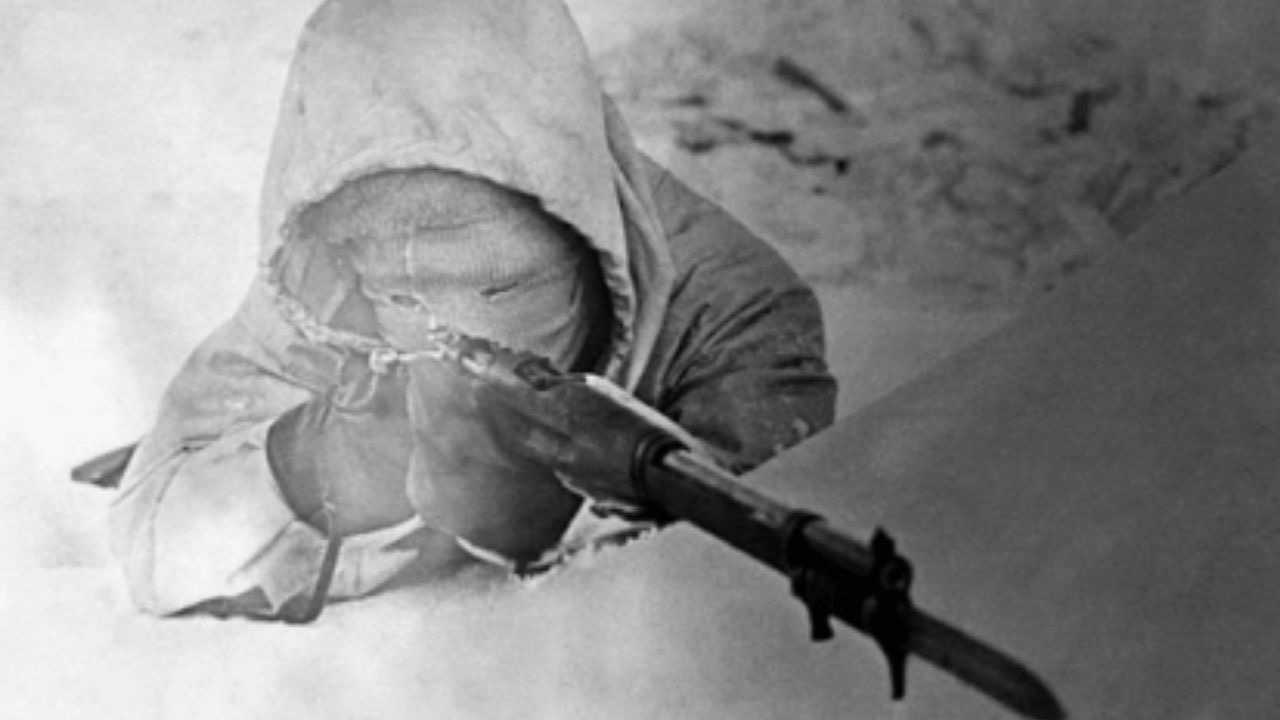
Simo Häyhä sits at the top of any serious list of snipers. In the Winter War between Finland and the Soviet Union, the Finnish hunter turned soldier racked up at least 505 confirmed kills, with some records noting more than 505. Other accounts state he killed more than 500 enemy soldiers, and consequently he is widely regarded as the deadliest sniper in any major war.
One report notes that Simo held off 4,000 Soviets with only 31 other men, killing over 500 in less than 100 days. In the Winter War against the Soviet Union, this small Finnish marksman used iron sights, white camouflage, and careful fieldcraft to stay hidden in brutal snow conditions. As detailed in a profile of the Finnish sniper, his success showed how a single rifleman could stall a much larger force.
2. Vasily Zaytsev, Hero of Stalingrad
Vasily Zaytsev became a legend in the rubble of Stalingrad. Credited with 225 confirmed kills during that single battle, he turned the ruined city into a hunting ground, using broken walls and factory floors as hides. In lists of the top snipers, his Stalingrad tally is always front and center, because it came at a moment when the Soviet Union desperately needed a morale boost.
Zaytsev’s impact went beyond numbers. His exploits were broadcast to inspire other Soviet troops, and he helped train new snipers who copied his urban stalking tactics. In a fight where every street mattered, his ability to remove German officers and machine-gun crews helped slow assaults and gave Soviet infantry breathing room, proving how precision fire can shape a grinding city campaign.
3. Lyudmila Pavlichenko, Lady Death
Lyudmila Pavlichenko earned the nickname “Lady Death” with 309 confirmed kills as a Soviet sniper in World War II. She operated on some of the Eastern Front’s toughest sectors, including around Odessa and Sevastopol, where she hunted German and Romanian troops from concealed positions. Modern rundowns of elite snipers consistently rank her near the top, both for the raw number and for doing it under relentless artillery and air attack.
Pavlichenko’s record mattered politically as well as tactically. She became a symbol of Soviet resistance and of women serving on the front line, later touring abroad to rally support. On the battlefield, her focus on officers and observers disrupted enemy coordination. For anyone who thinks of sniping as a purely male domain, her career is a hard, documented counterexample built on cold, accurate shooting.
4. Carlos Hathcock, White Feather
Carlos Hathcock, known as “White Feather” for the plume he wore in his hat, recorded 93 confirmed kills in Vietnam. Accounts of the war’s deadliest shooters repeatedly highlight how Marine Carlos Hathcock used patience and stalking skills to get within range, often crawling for days to reach a firing position. His tally of 93 may understate the true number of enemy he hit.
Hathcock’s influence went far beyond his own rifle. He later helped shape Marine sniper training, and his exploits, including extreme-distance shots and high-risk missions to protect fellow Marines, are detailed in coverage of sniper legends. In Vietnam, his ability to remove key threats saved patrols and convoys, showing how one disciplined shooter can act as a force multiplier for an entire unit.
5. Chris Kyle, American Sniper
U.S. Navy SEAL Chris Kyle became widely known as “American Sniper” after serving multiple tours in Iraq. Official records credit Navy SEAL Chris Kyle with 160 confirmed kills, a figure that made him the most lethal sniper in U.S. history at the time, as noted in discussions of how he replaced earlier records. Unverified based on available sources are some higher, unofficial estimates.
Kyle’s work from rooftops and overwatch positions protected Marines and soldiers moving through Iraqi cities. By focusing on insurgents planting IEDs or setting up ambushes, he helped reduce casualties on crowded streets. His later memoir and the film based on it turned him into a cultural figure, but the core of his reputation rests on disciplined shooting in chaotic urban fights.
6. Adelbert Waldron, Vietnam Ace
Adelbert Waldron built his reputation from the deck of a riverine boat in Vietnam. Credited with 109 confirmed kills, he used a scoped rifle to pick off enemy fighters along the banks while his unit patrolled dangerous waterways. Lists of the top snipers in history regularly point to his 109 figure as one of the highest American tallies of the war, especially impressive given the unstable firing platform.
Waldron’s work mattered because river patrols were prime ambush targets. By spotting and eliminating threats before they could fire RPGs or machine guns, he helped keep crews alive and routes open. His success also pushed the U.S. military to take sniper training more seriously, proving that precision fire from small teams could secure terrain that larger formations struggled to control.
7. Zhang Taofang, Chinese Sharpshooter
Zhang Taofang, a Chinese sniper in the Korean War, is credited in some accounts with 214 kills using only 71 bullets, a statistic that has made him a legend among precision shooters. Another report lists Zhang Taofang as a Chinese sniper with 200 confirmed kills during the Sino Japanese War, highlighting how his name has become shorthand for extreme accuracy.
Whatever the exact figure, the core point is that Zhang’s hit ratio was extraordinary. Operating in harsh terrain against well-armed opponents, he relied on careful range estimation and patience rather than high-tech optics. His story underscores a broader lesson that shows up across eras: the deadliest marksmen are usually the ones who fire the fewest shots, because every trigger pull is deliberate.
8. Francis Pegahmagabow, Indigenous Legend
Francis Pegahmagabow, an Ojibwe Canadian, was one of World War I’s most effective snipers. His skill made him one of the deadliest marksmen of the entire war, with 378 confirmed kills and more than 300 German soldiers captured, according to a detailed account of his wartime record. Those numbers put him at the top tier of all Allied snipers on the Western Front.
Working in the mud and wire of trench warfare, Pegahmagabow combined marksmanship with stealthy scouting. His ability to slip into no man’s land, gather intelligence, and then eliminate enemy observers or machine-gun crews gave Canadian units a real edge. For Indigenous veterans and modern military snipers alike, his story shows how traditional hunting skills can translate directly into battlefield effectiveness.
9. Henry Norwest, Cree Sniper
Henry Norwest, a Cree sniper in the Canadian Expeditionary Force, recorded 115 confirmed kills in World War I. Operating in the same brutal trench systems as Pegahmagabow, he became known for his patience and his knack for finding concealed firing positions. Modern lists of elite snipers consistently cite his 115 figure as one of the highest among Canadian soldiers of that era.
Norwest’s work had outsized impact because he specialized in counter-sniper and harassment fire. By targeting German snipers, sentries, and machine-gun nests, he helped reduce casualties among his own infantry during raids and advances. His career also highlights how Indigenous soldiers, often overlooked in official histories, played critical roles in some of the war’s most dangerous jobs.
10. Rob Furlong, Record Holder
Rob Furlong, a Canadian sniper serving in Afghanistan, set a long-range benchmark that stood for years. In 2002 he made a confirmed kill at 2,430 meters, a shot that pushed the limits of .50-caliber ballistics and field marksmanship. That single trigger pull put him into every discussion of record-setting snipers and showed what a trained team with good glass and solid data could do.
The tactical effect of that shot was immediate, removing an enemy machine-gun operator who threatened coalition forces. Strategically, it spurred fresh interest in extreme long-range shooting, influencing how militaries and civilian shooters think about calibers, optics, and ballistic calculators. Furlong’s record highlighted that modern sniping is as much about math and teamwork as it is about a steady hand.
11. Carlos Hathcock, Scope Killer
Carlos Hathcock earns a second mention for one of the most famous shots in sniper lore, the “scope kill.” Accounts of the Vietnam War’s greatest sniper describe how he killed an enemy by sending a single round through the opponent’s rifle scope at more than 2,000 yards, a shot that required perfect alignment and timing. Coverage that invites readers to meet the Vietnam often centers on this moment.
Beyond the drama, that shot illustrates the cat-and-mouse nature of counter-sniper work. Hathcock was hunting an enemy specialist sent to kill him, and by winning that duel he protected countless Marines operating in the area. The story has become a teaching tool in sniper schools, emphasizing observation, patience, and the willingness to wait for a tiny window of opportunity.
12. Chris Kyle’s Cinematic Counterpart
Modern audiences often meet these marksmen first on screen, and Chris Kyle’s story is a prime example. The film American Sniper turned his Iraq tours into a character study of a modern warrior, blending real events with Hollywood pacing. In roundups of the greatest marksmen in movies, Kyle’s portrayal sits alongside fictional sharpshooters who echo traits of historical figures like Simo and Hathcock.
Those cinematic shooters, highlighted in discussions of the greatest marksmen on film, shape how the public imagines sniping. While the reality is slower and far less glamorous, the core themes carry over: a lone rifleman, high stakes, and the pressure of knowing that one shot can change everything. For better or worse, those stories keep the legends of real-world marksmen alive.

Asher was raised in the woods and on the water, and it shows. He’s logged more hours behind a rifle and under a heavy pack than most men twice his age.