6 Things never to say at a gun store counter
Walking into a gun store as a centrist is like stepping onto a firing line where every lane is already claimed by one side or the other. The wrong sentence at the counter can shut down conversation, mark you as an outsider, or even raise safety concerns. Here are six things I never say at a gun store counter if I want to learn something, stay safe, and avoid turning a gear run into a political brawl.
1. Don’t Announce Yourself as a Centrist
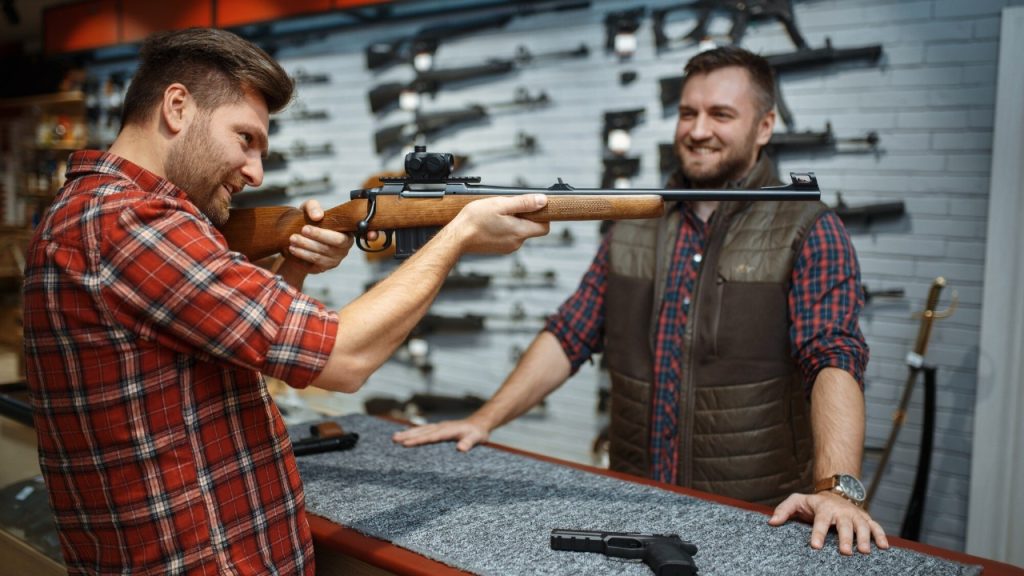
“Hi, I’m a centrist” is not an icebreaker at the gun counter, it is a label that can box you in before anyone hears what you actually think. Reporting on a self-described centrist walking into a gun shop shows how quickly the room can sort people into “with us or against us,” making it hard to shoot for the middle once that tag is out there. The second you lead with ideology, clerks and customers may assume you are there to argue, not to buy.
I keep my cards close and start with practical questions about calibers, actions, or local range rules. That lets people judge me on whether I listen and handle firearms responsibly, not on where I sit between left and right. In a space where trust and safety matter more than slogans, letting your behavior speak first usually opens more honest, useful conversations than any political label ever will.
2. Avoid Questioning the Political Lean of the Crowd
Walking up to the counter and asking, “So, is everyone here conservative?” is a fast way to make the room tense. Guides on things to never say in a gun store already warn that personal or loaded questions can sour the mood, even before politics enters the mix. When a centrist visitor notices the flags, bumper stickers, and cable news on the shop TV, the lean is usually obvious without needing to poke at it out loud.
I focus on the shared ground, like safe handling and clear laws, instead of interrogating the room about its worldview. Once you start asking people to declare sides, you turn a retail space into a debate stage and put the clerk in the middle. That is unfair to the staff, who are there to move guns and keep customers safe, not referee a poll about who voted for whom.
3. Steer Clear of Seeking Balanced Gun Debates
Trying to launch a “both-sides” policy seminar at the counter is usually a mistake. The centrist who tried to explore middle-ground ideas in that gun shop found the environment was built around firm narratives, not nuanced back-and-forth, so attempts to moderate the conversation fell flat. I have seen the same thing when someone tries to turn a simple purchase into a panel discussion on background checks and magazine limits.
If I want a real policy debate, I save it for a range club meeting or a town hall, not the sales floor. Staff are juggling forms, safety checks, and other customers, and they do not have time to unpack the finer points of what Justice Souter once said about whether the Court or Congress should decide a school gun law. At the counter, I keep questions specific to the firearm, the law as written, and how to stay on the right side of it.
4. Don’t Express Hesitation on Partisan Gun Views
Announcing, “I’m not sure I agree with either party on guns,” can sound harmless, but in a polarized shop it often lands like a challenge. The centrist account of visiting a gun store shows how quickly noncommittal views get read as soft or suspect when everyone else is speaking in absolutes. Once people think you are there to poke holes in their beliefs, the advice dries up and the temperature rises.
I have learned to frame my uncertainty as a request for technical clarity, not a verdict on anyone’s politics. Instead of saying I doubt a partisan talking point, I ask how a specific law affects buying a particular pistol or rifle. That keeps the discussion grounded in real-world consequences, like whether you can legally carry while you shop or why unholstering a concealed gun in a store is, as one range video bluntly puts it, the number one thing you do not do at a gun store.
5. Refrain from Probing for Moderate Opinions
Questions like “So, are there any moderates here?” sound innocent but usually backfire. In one conversation while at the gun shop, a customer noted that, “But not surprising. There doesn’t seem to be any bottom to the moronic things people will say in a gun store. It’s basically a psych ward,” which shows how quickly people retreat into insults when they feel judged. Asking strangers to self-identify as moderate can feel like you are sorting them into “reasonable” and “extreme” buckets.
I have better luck listening first and letting people reveal their nuance over time. Some of the most thoughtful gun owners I know support certain restrictions and stronger training, but they will never say that to someone who walks in demanding to know who the “sane” ones are. Respecting the room and keeping my curiosity low key usually leads to more honest, offhand comments that tell me far more than a blunt poll ever would.
6. Skip Comments on Bipartisan Gun Solutions
Pitching “bipartisan gun solutions” at the counter sounds constructive, yet it often triggers the same reflexive defenses as any other political slogan. Short clips warning, “Don’t talk politics in the gun store,” capture how quickly a casual remark can spiral, and one creator even opens with “Don” and “Let” as he urges viewers to leave those arguments at the door. In a place where people are handling live firearms, emotional debates are not just awkward, they can be unsafe distractions.
When I am in that environment, I keep my focus on safe handling, clear communication, and respect for store rules. Broader fixes to gun violence, like whether “Someone has to make a conscious decision to pull the trigger” or whether “We don’t have a gun problem,” belong in civic spaces, not at a crowded counter. The more I treat the shop as a place for gear and training, not grand bargains, the more useful and calm my time there becomes.

Asher was raised in the woods and on the water, and it shows. He’s logged more hours behind a rifle and under a heavy pack than most men twice his age.