Hunting bans are turning private land ownership into conditional access
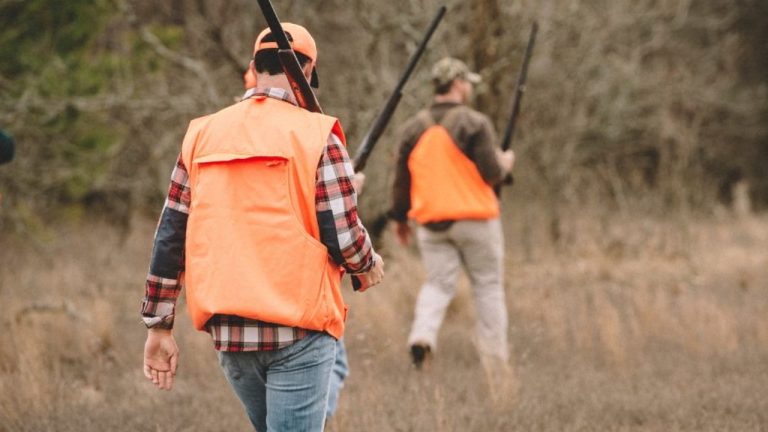
Across the country, new hunting restrictions are quietly rewriting what it means to own rural land. Rules that once focused on seasons and bag limits are increasingly dictating when, how, and even whether landowners themselves can hunt on their own property. The result is a patchwork of policies that, in practice, turn private ownership into something closer to conditional access, contingent on regulatory carveouts, court orders, and political fights far from the fence line.
As debates over wildlife management, public safety, and energy infrastructure intensify, hunting has become a pressure point where competing visions of property rights collide. From courtroom battles in the Mid‑Atlantic to ballot initiatives in the Pacific Northwest, the question is no longer just who may hunt, but how much control an owner really has over land that is technically private yet heavily regulated.
From property right to regulated privilege

For generations, hunting on one’s own acreage was treated as a core incident of ownership, especially in states where rural culture and wildlife management are tightly intertwined. That assumption is eroding as legislatures and agencies layer new conditions on when landowners may allow or deny access, and in some cases whether they can hunt at all during certain activities. In places like Maryland, where dense development and major infrastructure projects intersect with long‑established farms and hunting clubs, the friction is especially sharp.
At the same time, states that historically leaned on private landowners as partners in wildlife conservation are tightening the screws on how that partnership works. New rules in the Mid‑Atlantic and New England, along with emerging fights in the West and South, show regulators increasingly comfortable treating hunting as a revocable privilege rather than a default right tied to the deed. That shift is not uniform, but the trend line points toward more conditions, more permits, and more situations where the state’s priorities override the owner’s preferences on their own land.
Maryland’s MPRP fight: when courts tell landowners they cannot hunt
The most vivid recent example of this shift is unfolding along the route of a controversial power transmission project in Maryland. As part of the Maryland‑based Mid‑Atlantic Power Reliability Project, the energy company PSEG asked a court to halt hunting on private parcels where it plans to conduct surveys. In an effort described by opponents as the company’s Latest Motion Seeks to impose a Ban Hunting order on Private Land, the New Jersey utility, identified as a $40 billion company, argued that firearms activity could endanger survey crews and disrupt its schedule.
Judge Adam Abelson of the Maryland District Court sided with the company’s safety concerns. In a ruling issued after a hearing on a Tuesday, Following arguments from both sides, Judge Adam Abelson of the Maryland District Court ordered that hunting will be prohibited on affected properties during designated survey days, and that landowners must negotiate timing with PSEG. For those owners, the decision effectively means that a distant infrastructure plan now dictates when they can exercise a basic use of their land, underscoring how quickly private rights can be subordinated once a project is deemed essential.
Sunday bans and carveouts: New England’s conditional access model
Nowhere is the idea of conditional access more literal than in the long‑running bans on Sunday hunting in parts of New England. Maine and Massachusetts have been the last states to maintain blanket prohibitions on Sunday hunting, a legacy of blue laws that treat one day a week as off‑limits regardless of who owns the land. In practice, that means a landowner in rural Maine or Massachusetts can post their property, manage habitat, and pay the taxes, yet still be barred from hunting there one day out of seven.
Other New England states have started to chip away at those blanket rules, but often in ways that highlight how contingent landowner authority has become. In Connecticut, hunters celebrated when lawmakers approved Sunday hunting on private land after decades of lobbying. Advocates argued that Repealing laws restricting hunting on Sundays would likely increase participation and benefit the state’s wildlife management goals. Yet even that reform underscores the premise that the state, not the owner, ultimately decides whether a Sunday hunt is lawful, and can toggle that permission on or off by statute.
Regulation creep: seasons, permits, and baiting on private ground
Beyond outright bans, a quieter form of regulation creep is reshaping how private land can be used for hunting. In Virginia, new rules for the 2025–2026 seasons adjust bear management across a long list of counties, including Albemarle, Alleghany, Amherst, Appomattox, and Augusta. The state’s wildlife agency has shortened or shifted Bear seasons in these areas and clarified that certain methods are only lawful when explicit permission has been granted by the landowner. On paper, that language respects property rights, but it also embeds private decisions inside a dense regulatory framework that can change from one cycle to the next.
Other states are layering on method‑specific rules that apply only to private parcels. A set of new baiting regulations promoted by Realtree illustrates the trend. The announcement explains that the new rules go into effect in Aug on private land only, and that a baiting permit will be required starting in 2026. That structure effectively tells landowners that even if they are comfortable with baiting on their own property, they must secure state permission and comply with a separate set of conditions that do not apply in the same way on public ground.
Western flashpoints: criminalization campaigns and open fields
In the West, the stakes are even higher, with some activists seeking to outlaw traditional uses of private land altogether. In Oregon, a campaign known as the Oregon Initiative to Criminalize Hunting, Fishing, and Farming Regroups for 2026 would, if successful, redefine long‑accepted practices as criminal acts regardless of whether they occur on private or public land. For ranchers and landowners, the proposal is not just about wildlife ethics, it is about whether the state can effectively nullify traditional uses of property that have shaped rural economies for generations.
At the same time, courts are reinforcing doctrines that give government agents broad latitude to enter private land in the name of enforcement. A recent decision upholding what critics call The Open Fields doctrine has been described as destroying the point of having private land, because it treats fences, gates, posted signs, and other barriers as legally meaningless when wildlife officers decide to enter. For hunting clubs and individual owners, that ruling signals that even when the state has not banned hunting outright, it reserves the right to cross property lines without a warrant to check compliance, further blurring the line between private space and regulated zone.
States pulling in opposite directions: bans, expansions, and experiments
Not every jurisdiction is moving toward tighter restrictions, but even expansions of hunting access tend to reinforce the idea that the state is the gatekeeper. In Massachusetts, wildlife officials are gathering public input on future regulations that could reshape how and where hunting occurs, including on private parcels that have long been off‑limits on Sundays. In neighboring Maine, officials have announced that the 2026 hunting regulations aim to ensure sustainable wildlife management and safety, and that They cover hunting seasons, methods, and specific rules for private land. Even when these processes invite landowner input, they reinforce that the ultimate authority rests with regulators who can adjust the terms of access every few years.
Elsewhere, agencies are fine‑tuning seasons and methods in ways that ripple across private holdings. In Montana, a package of New 2026 and 2027 Hunting Regulations announced from HELENA, Mont Earlier this winter adjusts elk, deer, and mountain lion season dates, which in turn affects how outfitters and landowners schedule access on leased ranches. In the South, states like Tennessee are also revisiting their frameworks, weighing pressure from hunters who want more opportunity against concerns from suburbanizing communities that are wary of firearms near homes and schools. The result is a landscape where the rules can change quickly, and where owning land no longer guarantees a stable set of hunting rights.
What conditional access means for rural communities
For rural communities, the shift toward conditional access is not an abstract legal debate, it is a daily reality that shapes income, culture, and land stewardship. When courts in Maryland tell landowners they cannot hunt during survey windows, or when blue laws in Maine and Massachusetts reserve Sundays for non‑hunting uses, the economic fallout hits guides, processors, and small businesses that depend on predictable seasons. In states experimenting with new baiting permits or shortened bear seasons in counties like Albemarle, Alleghany, Amherst, Appomattox, and Augusta, outfitters must constantly adjust bookings and landowners must decide whether the regulatory burden is worth the revenue.
At the same time, the political fights around initiatives like the Oregon campaign to criminalize hunting, fishing, and farming, and the legal reinforcement of the Open Fields doctrine, send a clear message that private land is increasingly treated as a platform for public policy rather than a domain of owner autonomy. Some reforms, such as Connecticut’s decision to allow Sunday hunting on private land, show that lawmakers can expand landowner discretion when they choose. Yet taken together, the trend lines point toward a future in which owning acreage gives you less control over how it is used for hunting, and more responsibility to navigate a maze of conditions that can shift with each new rule, court ruling, or ballot measure.

Asher was raised in the woods and on the water, and it shows. He’s logged more hours behind a rifle and under a heavy pack than most men twice his age.